
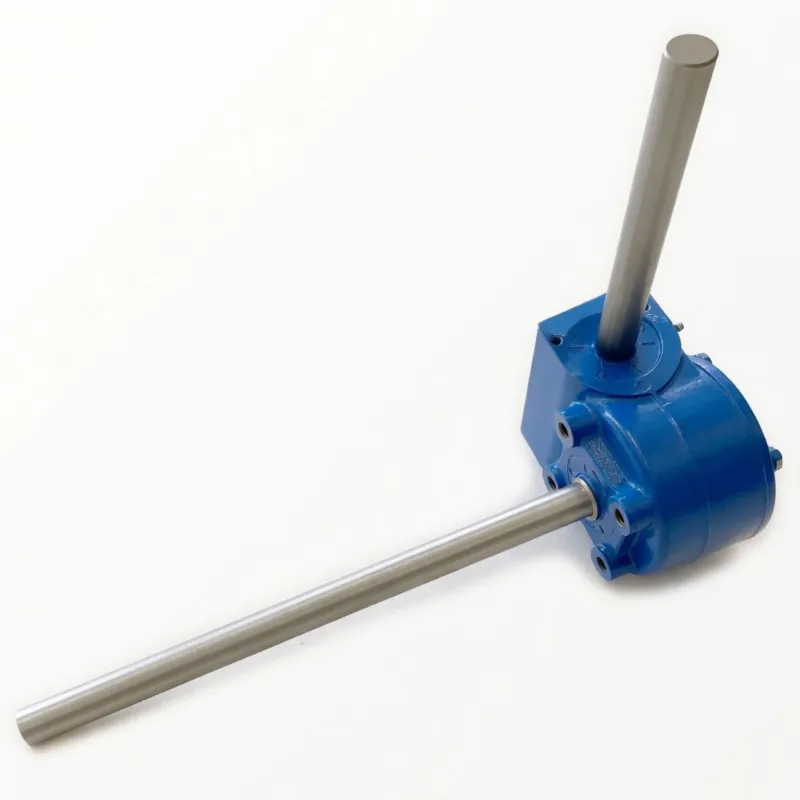
Description
EP — Salt Spreader Gearbox with Sprocket for Road Snow Removal
Precision power transmission engineered for demanding winter road maintenance — from highland Brazilian rodovias to North American interstates
1. Technical Specifications
The following table lists 20 key technical parameters for the EP-SSG-S096 salt spreader gearbox. Data is drawn from engineering drawings and bench test records for this model series. On mobile devices, scroll the table horizontally to view all columns.
| Parameter | Specification | Remark |
|---|---|---|
| Product Model | EP-SSG-S096 | SCH096 series compatible |
| Gear Type | Helical Bevel | Hardened tooth flanks |
| Input Shaft Speed | 540 RPM | Standard PTO speed |
| Output Shaft Speed | 900 RPM | At rated input speed |
| Gear Ratio | 1 : 1.67 | Speed-increasing configuration |
| Rated Input Torque | 35 N·m | Continuous duty |
| Rated Output Torque | 58 N·m | Continuous duty |
| Rated Input Power | 3.5 kW (4.7 HP) | Mechanical efficiency ≥ 96% |
| Input Shaft Diameter | 1.000 in (25.4 mm) | With 1/4″ keyway |
| Output Shaft Diameter | 1.000 in (25.4 mm) | With 1/4″ keyway |
| Sprocket Pitch Diameter | 6.000 in (152.4 mm) | ANSI #50 roller chain compatible |
| Mounting Pattern | 4-Bolt @ 5.42″ (137.7 mm) PCD | M10 × 1.5 thread |
| Rotation Direction | Clockwise | Viewed from input shaft end |
| Lubrication | SAE 80W-90 GL-4 Gear Oil | Change every 500 operating hours |
| Oil Capacity | 0.32 L | Check level via sight plug |
| Operating Temperature | -35°C to +65°C (-31°F to +149°F) | Suitable for alpine and subarctic use |
| Protection Class | IP55 | Dust-protected, jet-wash resistant |
| Overall Dimensions (L×W×H) | 182 × 127 × 100 mm | Excluding shaft protrusions |
| Net Weight | 2.75 kg (6.1 lb) | Without oil charge |
| Warranty | 12 Months / 500 Operating Hours | Subject to recommended maintenance |
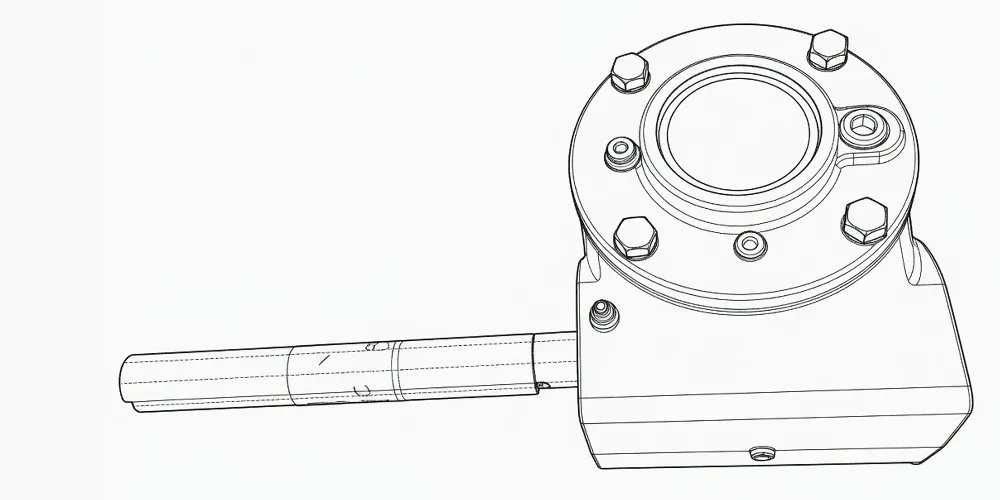
2. What Is a Salt Spreader Gearbox and Why Does It Matter?
A salt spreader gearbox is far more than a simple mechanical coupling — it is the operational core of any serious winter road maintenance programme. Without a well-engineered gearbox, the energy generated by the vehicle’s drive system cannot be converted into the precise, controlled rotation the spinner mechanism needs to distribute de-icing material evenly across a road surface. Every gram of salt wasted due to uneven dispersal is a safety risk and a cost burden, which is exactly why the design of the salt spreader gearbox deserves serious attention from fleet operators, road maintenance contractors, and municipal engineers alike.
This EP-series salt spreader gearbox with sprocket is built to serve as a direct-fit replacement or primary install for SaltDogg SCH-series spreaders, including the SCH072SS, SCH072SSX, SCH096C, SCH096CX, SCH096SS, SCH096SSX, SCH120SS, and SCH120SSX models. It delivers a steady 900 RPM output from a standard PTO or hydraulic motor input, using a hardened helical bevel gear set housed in a cast-iron body that resists the corrosive assault of road salt and road spray encountered season after season. The integrated 6-inch sprocket is dimensioned for plug-and-play engagement with the standard SCH-series chain drive, eliminating the guesswork that often complicates salt spreader gearbox replacement in busy maintenance yards.
From the frozen mountain roads of Rio Grande do Sul and Santa Catarina in southern Brazil — where DNIT-managed federal highways like BR-116 and BR-282 see frost and periodic snowfall — to municipal road networks across Canada, the northern United States, and Central Europe, the operational demands on a salt spreader gearbox are similar: reliable starts in sub-zero temperatures, consistent torque delivery throughout a long shift, and resistance to premature wear caused by salt ingress and thermal cycling. This unit is designed with all of those environments in mind.
3. Key Components of the Salt Spreader Gearbox with Sprocket
Understanding each element of the salt spreader gearbox helps maintenance teams make better decisions about inspection schedules, lubricant selection, and component replacement. Below is a functional breakdown of what sits inside the housing of this unit.
Gear Train
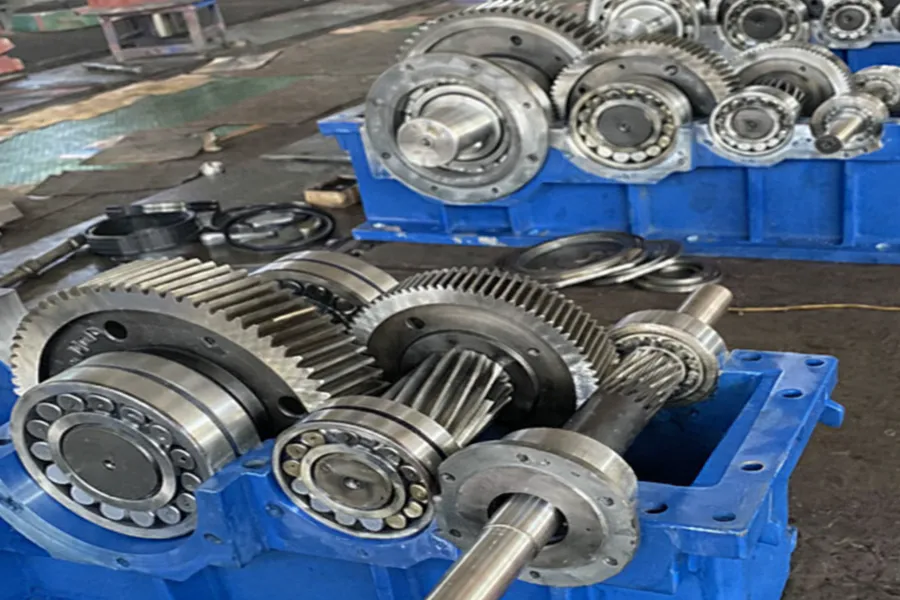
The core of the salt spreader gearbox is its helical bevel gear train. Unlike spur gears, helical bevel gears engage gradually along an angled tooth profile, reducing shock loading and operating noise — a critical advantage when the spreader is running at full speed over uneven road surfaces. The gear ratio is fixed at 1:1.67, stepping up the standard 540 RPM PTO input to the 900 RPM output the spinner mechanism requires.
Input Shaft
The 1.000-inch diameter input shaft connects directly to the PTO-driven salt spreader drive system or hydraulic motor output. The shaft is machined from medium-carbon alloy steel and features a keyway for positive torque transfer. Proper alignment during installation is essential — misalignment at the input end is one of the leading causes of premature bearing failure in salt spreader gearbox equipment.
Output Shaft & Sprocket
The 1.000-inch output shaft carries a 6.000-inch pitch-diameter sprocket that connects to the spreader’s chain drive. The sprocket is machined in one piece with the shaft collar and hardened to resist the abrasion caused by chain engagement under load. When replacing a worn saltdogg gearbox, verifying the sprocket tooth count against the original is an essential step that is sometimes overlooked.
Bearings
Four deep-groove sealed ball bearings support the input and output shafts within the cast-iron housing. Sealed bearings are a deliberate choice for salt spreader parts operating in environments where airborne salt crystals and road spray represent a continuous contamination risk. The bearing bores are machined to H7 tolerance for reliable interference fits that resist fretting under vibration.
Shaft Seals & Housing
Double-lip nitrile oil seals at both shaft exit points stop SAE 80W-90 gear oil from weeping out and prevent salt-laden moisture from migrating in. The grey cast iron housing is shot-blasted, zinc-phosphate primed, and powder-coated before assembly, giving the salt spreader gear box an extra layer of corrosion protection beyond what paint alone can provide. Four M10 mounting bosses accept the 4-bolt pattern at 5.42-inch bolt circle.
4. Five Key Product Advantages
Precision Helical Bevel Gear Set
Hardened 20CrMnTi alloy steel gears ground to ISO 1328 Grade 6 accuracy — quieter engagement, longer tooth life, and a consistent 900 RPM output regardless of input speed fluctuation.
Drop-In SaltDogg Compatibility
Verified dimensional fit for the full SCH-series spreader range makes this the go-to saltdogg spreader gearbox replacement option for fleet service departments needing zero fabrication and minimal downtime.
Corrosion-Resistant Multi-Layer Finish
Zinc phosphate primer beneath electrostatic powder coat gives the housing a combined coating system that outperforms single-stage paint in ASTM B117 salt-spray testing — essential for equipment that literally works in salt.
IP55-Rated Sealing System
Double-lip nitrile seals rated to IP55 keep lubricant in and contaminants out, even during the high-pressure washing cycles that fleet maintenance demands after every road de-icing run.
Extended Service Intervals
Designed for 500 operating hours between oil changes using SAE 80W-90 GL-4 gear oil — longer than many competing salt spreader gearbox parts kits demand — reducing total maintenance cost per season.
5. Salt Spreader Gearbox Working Principle
The salt spreader gearbox working principle follows a straightforward sequence of mechanical energy conversion steps, but the engineering details embedded in each step are what separate a well-made unit from a field failure waiting to happen. Here is how the power flows through this system during a typical road snow removal run.
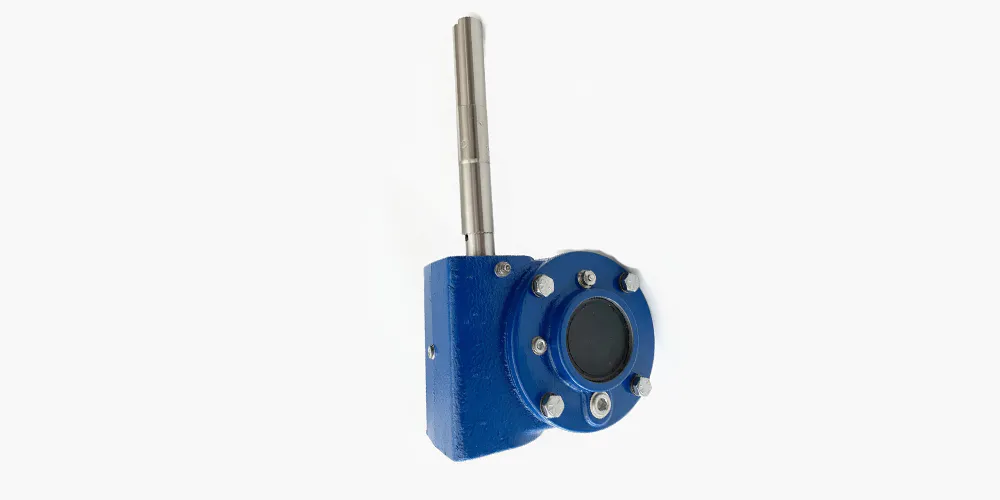
6. Material Composition
The longevity of any salt spreader gearbox in real-world service depends heavily on material selection. Cutting corners on metallurgy may reduce purchase cost by a few percent but typically shortens service life by 50% or more in highly corrosive operating conditions. This unit draws on materials selected specifically for the thermal cycling and salt exposure that characterise de-icing work.
Housing — GG25 Grey Cast Iron
The housing is cast from GG25 grey cast iron, a material with excellent vibration-damping properties and high compressive strength. After casting, each housing is shot-blasted to Sa 2.5 cleanliness, zinc-phosphate converted, and electrostatic powder-coated in safety grey. This three-stage surface preparation is what sets this housing apart from units with single-stage paint finishes when exposed to the salt-saturated atmosphere around a working spreader.
Gears — 20CrMnTi Case-Hardened Alloy Steel
Both the bevel pinion and ring gear are hobbed from 20CrMnTi low-alloy steel bar stock, then gas-carburised to achieve a surface hardness of 58–62 HRC to a case depth of 0.8–1.2 mm. The tough, unhardened core beneath provides impact resistance while the hard surface resists pitting fatigue — the primary failure mode seen in poorly specified salt spreader gearbox parts. Gear accuracy is verified to ISO 1328 Grade 6 using a gear-tooth CMM after finishing.
Shafts — 42CrMo4 Quenched & Tempered Steel
Input and output shafts are turned and ground from 42CrMo4 (AISI 4140) alloy steel, quenched and tempered to 28–32 HRC. Journal diameters are ground to h6 tolerance for reliable bearing seats. Keyways are broached after heat treatment to maintain geometry, and all shaft shoulders are radius-blended to minimise stress concentration — a detail that matters when the spreader encounters the jarring shock loads of rough road surfaces.
Sprocket — Induction-Hardened Carbon Steel
The 6-inch output sprocket is machined from 45-grade medium-carbon steel and induction-hardened at the tooth flanks to 50–55 HRC. This surface treatment extends the sprocket’s wear life without making the teeth brittle enough to chip under chain shock. The bore and keyway are finished after hardening on a CNC grinding centre to ensure concentricity within 0.02 mm, which is critical for smooth, vibration-free operation of the downstream chain drive in this salt spreader gearbox equipment.
7. Application Scenarios
The salt spreader gearbox finds use across a wide range of winter road maintenance and de-icing applications. The following scenarios represent the most common deployments encountered in field service from South America to Northern Europe.
Municipal Highway De-Icing — Brazil & South America
In the Sul do Brasil region — particularly along BR-116, BR-282, and SR-470 — frost and occasional snowfall events between June and August create hazardous conditions on mountain passes and elevated highways. State road agencies in Rio Grande do Sul, Santa Catarina, and Paraná operate truck-mounted spreaders equipped with salt spreader gearbox units identical or equivalent to this model. The ability to begin spreading within seconds of engagement is valued above all else in rapid-response operations where road closure windows must be minimised.
Airport Runway & Taxiway Maintenance
Airport operators cannot tolerate the briefest loss of traction on movement areas. Truck-mounted salt and calcium chloride spreaders fitted with a reliable snow removal spreader gearbox allow apron maintenance crews to treat runway threshold areas and taxiway intersections in a single pass before aircraft operations resume. The clockwise sprocket drive in this unit matches the chain-routing geometry used on the most common airport utility spreader platforms, making it a proven choice for aerodrome infrastructure maintenance teams.
Commercial Property & Logistics Park Management
Large logistics parks, distribution centres, and retail facilities that cannot close during winter weather events rely on compact truck-bed salt spreaders to keep access roads, loading docks, and fire lanes clear. A salt spreader gearbox for sale specifically compatible with the SCH-series is frequently sought by property maintenance contractors who service multiple sites with a standardised SaltDogg fleet, as it allows a single spare unit to cover the entire fleet rather than stocking model-specific spares.
Mountain Resort & Ski Area Access Roads
Access roads to ski resorts and mountain lodges in the Andes, the Alps, and the Rockies demand winter road maintenance gearbox reliability at sub-zero temperatures that conventional equipment fails to sustain. The -35°C lower operating limit of this salt spreader gearbox — made possible by the SAE 80W-90 oil’s low-temperature fluidity and the nitrile seal’s flexibility at cold temperatures — makes it a dependable choice for alpine operators who cannot afford a gearbox failure kilometres from the nearest workshop.
Agricultural Farm Road Maintenance
In agricultural regions where frozen farm tracks prevent harvest-critical vehicle movements during brief winter events, the PTO-driven salt spreader gearbox is valued for its ease of integration with existing tractor PTO outputs. No dedicated hydraulic circuit is required — the farmer simply attaches the spreader to the rear three-point hitch, engages the PTO, and the salt spreader gearbox converts that standard 540 RPM shaft rotation into the spinner speed needed to treat kilometres of farm road in a single morning.
8. Regulatory Compliance and Industry Standards
Road maintenance equipment — including every component of a salt spreader gearbox system — must satisfy the regulatory frameworks of the countries and regions in which it is operated. The following overview covers the key standards relevant to buyers across Brazil, the European Union, North America, and beyond.
Brazil — ABNT, DNIT, and CONTRAN Requirements
In Brazil, road maintenance equipment used on federal and state highways must comply with ABNT NBR technical standards, particularly ABNT NBR ISO 9001 for quality management systems. The Departamento Nacional de Infraestrutura de Transportes (DNIT) sets operational requirements for equipment used in federal highway maintenance under Resolução DNIT and associated portarias. CONTRAN (Conselho Nacional de Trânsito) Resolution No. 432/2013 and subsequent updates regulate the operation of road maintenance vehicles, including spreader-fitted trucks. Additionally, NR-12 (Norma Regulamentadora 12) — Brazil’s machinery safety standard — mandates specific guarding requirements for rotating power transmission components, including the PTO shaft and sprocket chain drive attached to this salt spreader gearbox. Operators in Brazil should verify that all rotating parts are shielded in compliance with NR-12 before deploying the equipment on public roads.
European Union — Machinery Directive & EN Standards
Equipment sold or used within the EU must carry CE marking under the Machinery Directive 2006/42/EC. Gearboxes and associated drive components must meet EN ISO 11684 (safety signs) and EN ISO 4413 / ISO 4414 for hydraulic and pneumatic-driven systems where applicable. Gear design and load capacity must align with ISO 6336 (gear bending and contact strength calculation). REACH Regulation (EC) No. 1907/2006 governs the chemical composition of lubricants and coating materials used in the gearbox.
United States & Canada
In the USA, OSHA 29 CFR 1910.219 mandates guarding for all exposed mechanical power transmission components. ANSI/AGMA standards — particularly AGMA 2101 (metric edition of the fundamental rating factors for spur and helical involute gears) — are widely referenced for gear quality verification. In Canada, CSA Z432 (Safeguarding of Machinery) applies to all power transmission equipment used in occupational settings. SaltDogg SCH-series spreaders are designed and sold primarily for the North American market, so buyers purchasing this salt spreader gearbox replacement unit for use in the USA or Canada should additionally confirm compliance with applicable state or provincial road authority equipment lists.
International ISO Standards
Beyond regional regulations, internationally recognised standards provide the technical foundation for verifying gear performance. ISO 1328-1 (gears — accuracy classification system) and ISO 6336 (calculation of load capacity of spur and helical gears) are the principal references for quality assessment of the salt spreader gearbox gear set. ISO 9001:2015 quality management system certification provides assurance that manufacturing processes are documented, monitored, and subject to continuous improvement — a baseline expectation for municipal procurement in most countries.
9. Maintenance Guide for Long-Term Reliability
Proper maintenance is what separates a salt spreader gearbox that delivers five seasons of reliable service from one that fails mid-winter during the busiest week of a road maintenance contract. The schedule below is based on engineering recommendations and feedback from fleet operators who have run this unit type in high-cycle municipal service.
Before Each Season
Drain the old gear oil regardless of hours accumulated during the previous season — salt-contaminated oil darkens and acidifies over a winter even if the unit has not reached 500 hours. Refill with 0.32 L of fresh SAE 80W-90 GL-4. Inspect all four mounting bolts for fretting and corrosion; replace any that show thread damage. Check the sprocket teeth for hooked or mushroomed profiles — a sign of chain elongation causing single-tooth loading.
Every 50 Operating Hours
Wipe the housing with a water-dampened cloth and inspect the powder-coat for chipping or scratching. Touch up bare metal immediately with cold-galvanising compound followed by paint to prevent the rust bloom that telegraphs into the cast iron beneath. Check the oil level via the sight plug — a drop below the minimum line indicates seal wear and warrants a full seal inspection before the next run.
Every 500 Operating Hours
Full oil change. Inspect both double-lip shaft seals; replace if the inner lip shows any tracking groove. Remove the gearbox from the spreader and check the bearing preloads by rotating each shaft by hand — a rough or uneven resistance indicates a bearing that needs replacement before the next season begins. Document the inspection against the salt spreader gearbox location tag on the fleet maintenance record.
End-of-Season Storage
After the final run of the season, wash the exterior with fresh water — never high-pressure — to displace as much salt residue as possible. Drain the gear oil while the housing is still warm for a more complete drain. Apply a light corrosion-inhibiting oil to exposed shaft surfaces and wrap with a breathable cloth before storage. Storing the unit dry rather than in oil is a deliberate choice: oil left over winter can absorb atmospheric moisture and accelerate internal corrosion.
10. Agricultural PTO Shaft Integration
When the power source for this salt spreader gearbox is a tractor or agricultural utility vehicle rather than a truck-mounted hydraulic motor, an agricultural PTO shaft serves as the mechanical bridge between the vehicle’s output and the gearbox input. There are four practical points that field engineers and purchasing managers should keep in mind.
Compatibility verification: The PTO shaft must match the input shaft’s 1.000-inch diameter and the gearbox’s clockwise rotation direction when viewed from the tractor end. Most 540 RPM Category 1 PTO shafts fit without modification, but always confirm spline count (6-spline for SAE 1-3/8″ or 21-spline for CAT 2) against your tractor’s PTO stub before ordering.
Length adjustment: Telescoping PTO shafts should be adjusted so that at full coupling engagement, no more than two-thirds of the inner tube is covered by the outer tube — this ensures adequate engagement while leaving room for the angular deflection that occurs when the spreader body pitches on uneven ground. An over-compressed shaft is one of the most common causes of PTO-side input shaft seal failure in salt spreader gearbox equipment.
PTO guard compliance: Regulations in Brazil (NR-12), the EU (Machinery Directive), and North America (OSHA 1910.219) all mandate that PTO shafts carry a fully intact plastic guard sheath over all rotating sections. Never operate the PTO-driven salt spreader gearbox with a damaged or missing guard — the consequences of entanglement are severe and the regulatory penalties are significant.
11. About Our Manufacturing Capability
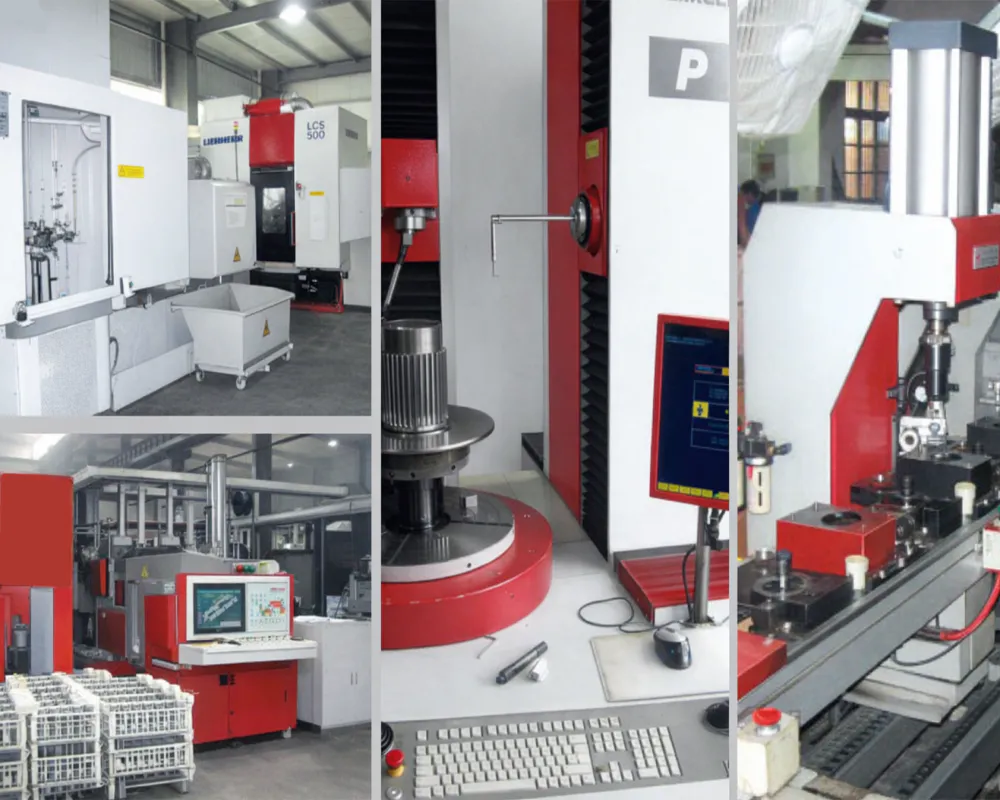
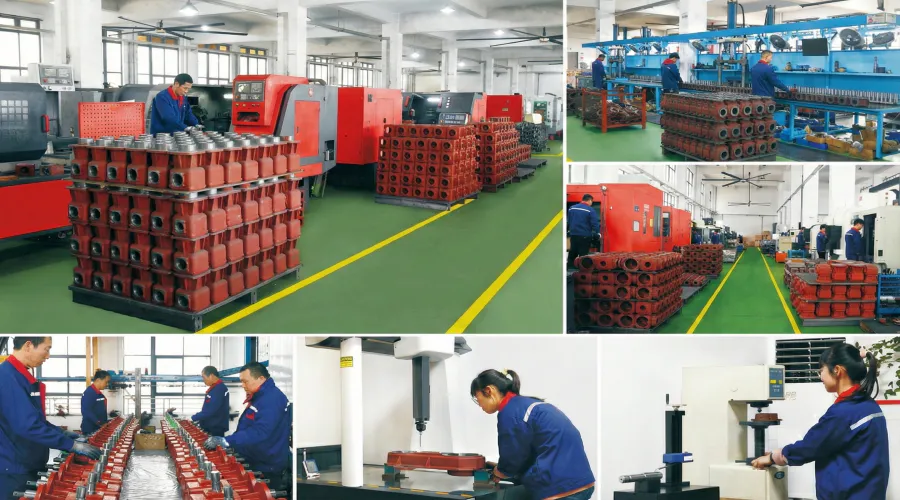
Our production line follows ISO 9001:2015-certified processes from raw material receiving through final assembly and function testing. Every salt spreader gear box that leaves our facility has been bench-tested under load to verify output speed and leak-free sealing. We maintain CNC gear hobbing and grinding equipment capable of achieving ISO 1328 Grade 5 accuracy — well above the Grade 6 specification required for this product series. Our quality control laboratory is equipped with gear-tooth CMM capability, 3D dimensional measurement, and salt-spray test chambers aligned with ASTM B117 to validate coating performance before releasing new housing batches.
WorkShop
12. Related Products — Complete System Solutions
A salt spreader gearbox does not operate in isolation. The full efficiency and lifespan of your spreading system depends on the quality of every connected component. We manufacture a full line of complementary power transmission products designed to work as an integrated system with our gearboxes.
PTO Shafts — Direct-Fit Input Drive
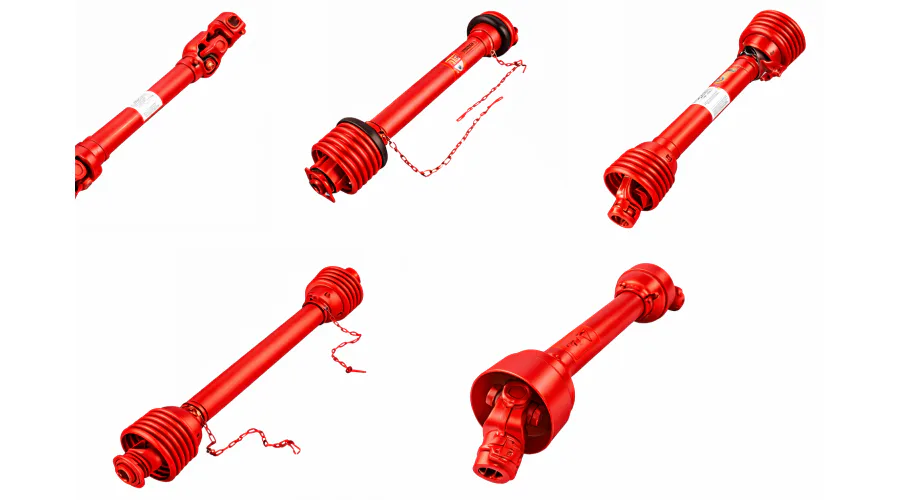
Our agricultural PTO shafts are manufactured to match the input specifications of this salt spreader gearbox. Available in Category 1 and Category 2 spline configurations, with adjustable telescopic lengths and full-wrap plastic safety guards. One-stop compatibility means no adaptation hardware is needed between the tractor and the gearbox — everything is dimensionally verified at the factory before shipping.
Drive Sprockets & Roller Chains
The output sprocket on your salt spreader gear box works as part of a chain-and-sprocket transmission, and the quality of the driven sprocket and roller chain on the spreader side is just as important as the gearbox sprocket itself. We supply hardened carbon steel driven sprockets and heavy-duty ANSI #50 roller chains dimensioned for the SCH-series spreader, ensuring the entire drive train is sourced from a single supplier with documented material compatibility.

Frequently Asked Questions
Editor: PXY