Description
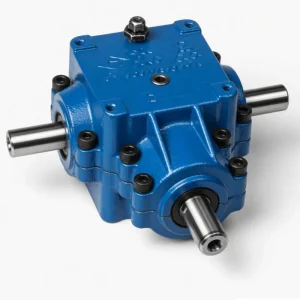
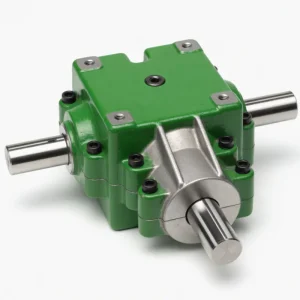
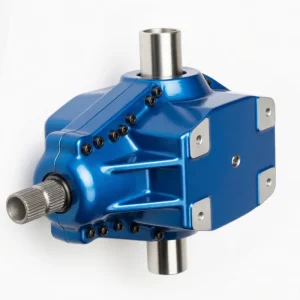
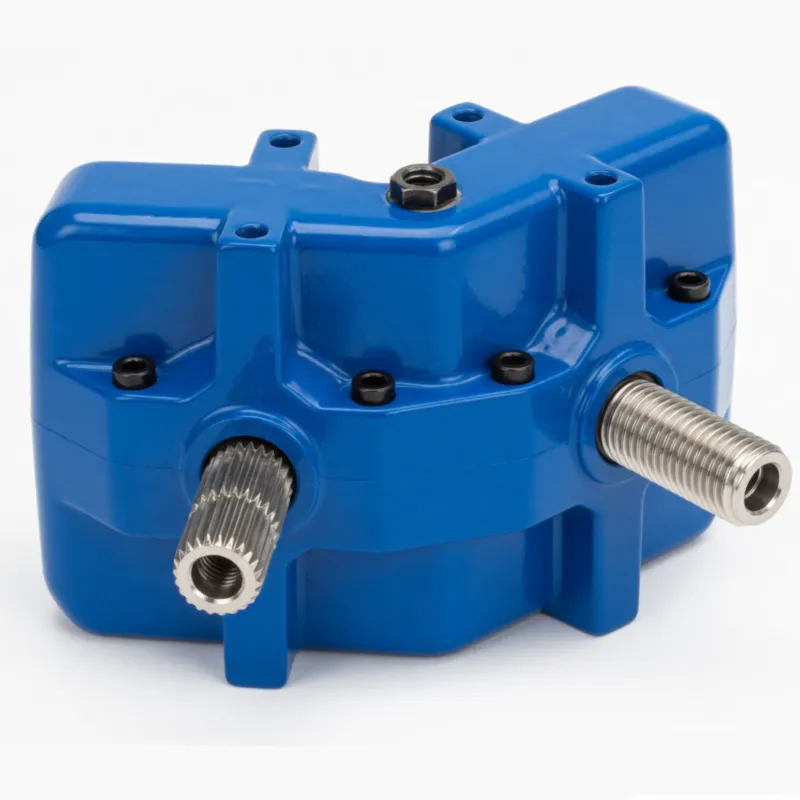
EP-H130 Series — Gearbox for Agricultural Machinery
SKU: EP-H130 | Category: Agricultural Machinery Gearbox | Hay Tedder & Implement Drives
Two-Piece Aluminum Housing | 1.6:1 Ratio | Straight Bevel | PTO-Driven 100/540/1000 RPM
1. Technical Specifications
The following 20 parameters summarize the EP-H130 Series under standard operating conditions. For application-specific calculations or non-standard configurations, contact the engineering team with your application load profile and mounting requirements.
| # | Parameter | Specification / Value |
|---|---|---|
| 1 | Model Number | EP-H130 Series |
| 2 | Gearbox Type | Right-Angle Bevel Gearbox (Agricultural Machinery) |
| 3 | Reduction Ratio | 1.6:1 |
| 4 | Gear Configuration | 18 / 29 Teeth Forged Straight Bevel |
| 5 | Rated Input Speed Options | 100 / 540 / 1000 RPM |
| 6 | Input Power @ 540 RPM | 74.85 HP / 55.82 kW |
| 7 | Input Power @ 1000 RPM | 108.91 HP / 81.22 kW |
| 8 | Output Torque @ 540 RPM | 14,075 in-lbs / 1,590 Nm |
| 9 | Output Torque @ 100 RPM | 19,049 in-lbs / 2,152 Nm |
| 10 | Housing Material | Cast Aluminum Alloy — Two-Piece |
| 11 | Shaft Material | High-Strength Alloy Steel (Heat-Treated) |
| 12 | Shaft Diameter (Standard) | 1.375″ (34.92 mm) |
| 13 | Bearing Type | Tapered Roller Bearings (Both Shafts) |
| 14 | Factory Lubricant | 80W90 Gear Oil — Pre-Filled |
| 15 | Lubrication Method | Splash Lubrication |
| 16 | Factory Leak Test | Yes — 100% Units Tested |
| 17 | Weight (Including Oil) | 35 – 40 lbs (16 – 18 kg) |
| 18 | Transmission Efficiency | ≥ 95% |
| 19 | Operating Temperature Range | -20°C to +80°C |
| 20 | Overall Dimensions (L × W × H) | 185 × 155 × 140 mm |
* Values are reference figures for standard configuration. Custom specifications available on request.

2. Five Key Advantages of the EP-H130 Series
When comparing options within the agricultural machinery gearbox category for implement OEM assembly or replacement procurement, the EP-H130 Series offers five distinguishing characteristics that directly translate into operational reliability and lower total cost of ownership.
1. Two-Piece Cast Aluminum Housing — Strength Without the Weight Penalty
The EP-H130 uses a two-piece cast aluminum housing rather than the cast iron found in many competing units. Aluminum is engineered here specifically for its thermal capacity and corrosion resistance — two properties that matter in the subtropical and tropical climates where much of Brazil’s agriculture operates. The housing dissipates heat generated by gear mesh friction far more quickly than cast iron, keeping oil temperature stable during extended field runs. It also resists the galvanic corrosion and pitting that affect iron housings exposed to humid air, fertilizer residue, and acidic plant juices from crop processing. The two-piece design simplifies internal service access: bearings and seals can be inspected or replaced without pressing the housing apart destructively, extending the overall serviceable life of the agricultural machinery gearbox parts inside.
2. Precision-Forged 18/29 Straight Bevel Gears at 1.6:1 Ratio
Gear quality is where many agricultural gearboxes either hold up or fail prematurely. The EP-H130 uses forged-and-then-machined 18-tooth and 29-tooth straight bevel gears — not cast or sintered — delivering a 1.6:1 reduction ratio with the grain flow characteristics that forging produces. Forged gears resist bending fatigue at the tooth root and pitting fatigue at the active flank substantially better than cast gears of the same geometry. After forging, the gears are finished-machined and heat-treated to achieve correct tooth profile accuracy and surface hardness. The result is a quiet, efficient power transfer at the specified ratio with the kind of service life that keeps implements running through multiple harvest seasons without drivetrain repair — a core expectation for a well-engineered gearbox for agricultural machinery.
3. Tapered Roller Bearings on Both Shafts — Higher Load Capacity, Longer Life
Tapered roller bearings on the input and output shafts provide a critical capability that simple ball bearings cannot match: they handle combined radial and axial thrust loads at high capacity and maintain correct running position under load. In an agricultural field implement, the axial thrust generated by bevel gear mesh and by operator-induced implement loading (raising, lowering, engaging) produces significant axial force on the gearbox shafts. Tapered roller bearings absorb these forces without the premature wear or axial shaft displacement that affects ball-bearing-only designs. For operators specifying the best agricultural machinery gearbox for high-hour applications — contracting operations, large farms, commercial fleet machines — the tapered roller bearing arrangement is the difference between a gearbox that reaches 10,000+ hours and one that fails at 4,000 hours.
4. Factory Oil-Filled & Leak-Tested — Install and Run
Each EP-H130 is filled with 80W90 gear lubricant at the factory, pressure-tested for seal integrity, and sealed before shipment. This means an implement OEM assembler or farm workshop mechanic installing an agricultural machinery gearbox kit does not need to source oil, set up a fill procedure, or guess at the correct oil level before first operation. The unit arrives ready to run. From the buyer’s perspective, this eliminates a small but time-consuming step — and, more importantly, eliminates the risk of under-filling that causes immediate bearing damage on the first day of operation. For Brazilian workshops where technician time during pre-harvest preparation is a real constraint, factory commissioning is a meaningful convenience.
5. 1.375″ High-Strength Steel Shaft Standard — Broad Implement Compatibility
The 1.375″ (34.92 mm) shaft diameter is the de facto standard for North American and South American agricultural implement PTO spline interfaces. By standardizing on this dimension, the EP-H130 integrates directly with the universal joint yokes, safety guards, and PTO coupling components available through virtually every agricultural parts distributor across the Americas — including Brazilian distributors servicing the implement workshop market. The shaft is machined from high-strength steel with appropriate heat treatment and surface finish to accept repeated universal joint coupling and uncoupling cycles without wear-induced backlash. This dimensional standardization also simplifies agricultural machinery gearbox replacement: a workshop fitting an EP-H130 into an existing implement frame can expect direct PTO coupling without shaft adapters or machining.
3. Agricultural Machinery Gearbox Working Principle
The agricultural machinery gearbox working principle for the EP-H130 is the classical right-angle bevel drive: the tractor’s PTO shaft delivers rotational power along one axis, and the gearbox redirects that power 90 degrees to drive the implement’s working element along a perpendicular axis. This redirection of rotational axis is essential because most agricultural implements — hay tedders, rotary rakes, post-hole diggers, land augers, vertical-shaft tools — need their working drive perpendicular to the tractor’s forward direction of travel.
Power enters the EP-H130 through the 1.375″ input shaft, which is coupled via a universal-jointed PTO drive shaft to the tractor’s PTO output. The input shaft rotates the 18-tooth forged straight bevel pinion gear, which meshes at 90 degrees with the 29-tooth bevel gear mounted on the output shaft. Because the output gear has more teeth than the input gear, each revolution of the input shaft produces less than one revolution of the output shaft — specifically, one output revolution for every 1.6 input revolutions. This reduction ratio multiplies torque correspondingly: a given input torque value becomes approximately 1.6 times that value at the output shaft, minus the small transmission loss (typically 3–5%) to gear mesh friction and bearing friction.
At rated PTO input of 540 RPM — the standard agricultural PTO speed — the EP-H130 accepts up to 74.85 HP (55.82 kW) of input power and delivers up to 14,075 in-lbs (1,590 Nm) of output torque. At a higher 1000 RPM PTO input, the gearbox accepts up to 108.91 HP (81.22 kW) of input power with an output torque capability of 11,059 in-lbs (1,249 Nm). Lower-speed applications running at 100 RPM PTO input achieve the highest output torque at 19,049 in-lbs (2,152 Nm), making the gearbox suitable for heavy-duty low-speed drives as well.
Internal lubrication is handled through splash lubrication: the rotating output bevel gear continuously dips into the 80W90 oil sump at the housing bottom and flings oil upward to coat the mesh zone, bearing races, and seal surfaces. This passive lubrication approach — requiring no external pump or electrical control — is inherently reliable and maintenance-simple, which is exactly why it remains the dominant approach in field-operated agricultural machinery gearbox design.
4. Material Composition & Build Quality
Every material choice in the EP-H130 is made against the operational realities of field-deployed agricultural machinery: temperature cycling, vibration, moisture ingress, dust exposure, and the repeated shock loading of intermittent cutting or digging operations. This is not a showroom gearbox — it is engineered to survive a working life in the dirt, and the material specification reflects that.
The housing is cast from aluminum alloy in a two-piece configuration, with mating surfaces machined flat and parallel to maintain precise bearing bore alignment between halves. Aluminum provides approximately three times the thermal conductivity of cast iron, meaning heat generated at gear mesh and bearing contact points is conducted through the housing walls and dissipated to ambient air faster — keeping oil viscosity stable and preserving the hydrodynamic film between gear teeth even during sustained high-load runs. Aluminum also offers excellent corrosion resistance against atmospheric moisture and most agrochemical residues, which is a meaningful durability advantage in Brazilian agricultural conditions where equipment frequently operates in high humidity and is exposed to fertilizer, herbicide, and sugarcane juice residues.
The forged bevel gears are manufactured from case-hardening alloy steel — typically 20CrMnTi or equivalent grade depending on application — rough forged to near-net tooth form, then finish-machined, heat-treated, and precision-ground. Gas carburizing builds a case depth of approximately 0.8–1.2 mm with surface hardness in the 58–62 HRC range, while the ductile core is retained at 35–40 HRC to absorb shock loads without fracture propagation. The 1.375″ shafts are machined from high-strength alloy steel and heat-treated for combined surface wear resistance and bending fatigue strength at the shaft shoulder transitions where stress concentrations are highest. Tapered roller bearings are ISO 355 dimensional standard, ensuring replacement bearings can be sourced from any major bearing distributor globally — which matters practically for workshops in remote parts of Brazil’s Cerrado or Amazônia Legal agricultural frontier, where specialist bearing inventory may not be available locally.
5. Agricultural Machinery Gearbox Application Scenarios
The EP-H130 is engineered for a defined but broad agricultural machinery gearbox application range. Each scenario below reflects real deployment contexts where the unit’s torque capacity, shaft geometry, and housing robustness align with the task requirements.
Hay Tedders & Rotary Rakes
Single-rotor and twin-rotor hay tedders and rotary windrow rakes are the most common end-use application for the EP-H130 Series. The 1.6:1 ratio and compatible PTO speeds (100/540/1000 RPM) match the rotational requirements of tine-carrier drums and rotor arms typical in forage machines used across Brazil’s southern hay-producing states — Rio Grande do Sul, Santa Catarina, and Paraná. For dairy and beef operations growing ryegrass, oat, or tropical grass hay, a reliable agricultural machinery gearbox in Brazil haymaking implement is the difference between meeting a weather-window harvest schedule and losing crop quality to rain damage.
Post-Hole Diggers & Land Augers
Post-hole diggers for fence construction and vineyard/orchard establishment, along with earth augers used for deep-foot-foundation planting of perennial crops, place high intermittent torque loads on the gearbox during auger engagement with compacted soil. The EP-H130’s 19,049 in-lbs (2,152 Nm) torque capability at 100 RPM input speed is well suited to low-speed, high-torque auger drive applications, and the tapered roller bearing arrangement handles the axial thrust loads produced by auger down-force during boring. Compatible agricultural machinery gearbox operation in these conditions depends on bearing load capacity at precisely this kind of shock-loaded duty.
Roller Mills & Feed Processing Equipment
Stationary and mobile roller mills for grain crushing, feed mixing equipment for livestock operations, and other feed processing machinery use right-angle bevel drives similar to the EP-H130 for power redirection from engine or electric motor input to horizontal roller or auger output. For large-scale dairy feedlots and beef confinement operations in Brazil’s livestock belt, dependable feed processing equipment is central to daily farm operations, and the reliability of the driving gearbox is a direct determinant of uptime. The EP-H130’s 95% transmission efficiency and moderate input power range fits the duty profile of small-to-medium feed processing machines.
Mowers & Finishing Deck Equipment
Finishing mowers and pasture mowing decks used in orchard floor management, small-plot agricultural machinery, and municipal agricultural grounds maintenance equipment use right-angle gearboxes to drive horizontal-axis cutting blades from a PTO input. The EP-H130 weight class (35–40 lbs including oil) is well-suited to mower decks that must remain light for tractor lift capacity constraints. Brazilian orchard and perennial crop operators — particularly in citrus, coffee, and tropical fruit growing regions — commonly specify gearboxes in this class for their mower equipment and find the EP-H130 a practical option for standard mower drive replacement.
OEM Implement Assembly — Regional Equipment Manufacturers
Brazilian and South American implement OEMs producing regional variants of hay tedders, cultivators, and small-scale machinery specify the EP-H130 Series as a pre-qualified right-angle gearbox for their drive systems. Standardizing on a known gearbox platform reduces BOM complexity, consolidates spare parts support obligations, and shortens product-introduction lead times when new implement models are being developed for local conditions. Support for small production-run order quantities combined with the capability to accept custom modifications make the EP-H130 practical for mid-sized regional OEM builders who cannot commit to the high volumes that larger European gearbox suppliers typically require.
6. Regulatory Compliance & International Standards
Agricultural machinery gearboxes and the implements they power are governed by safety, product liability, and environmental regulations in every major importing jurisdiction. Buyers, importers, and OEM builders should understand the compliance obligations applicable to their target markets when specifying gearbox components.
Brazil — MAPA, ABNT & INMETRO
In Brazil, agricultural machinery is regulated by the Ministério da Agricultura, Pecuária e Abastecimento (MAPA) and is subject to technical standards from the Associação Brasileira de Normas Técnicas (ABNT). Relevant standards include ABNT NBR ISO 11684 on agricultural machinery safety signs and hazard pictograms, ABNT NBR 14990 on agricultural equipment general safety requirements, and ABNT NBR ISO 4254 on the safety of self-propelled and non-self-propelled agricultural machinery. The Instituto Nacional de Metrologia, Qualidade e Tecnologia (INMETRO) may require conformity assessment for safety-critical sub-assemblies entering Brazilian commercial channels. Technical documentation and operator manuals for agricultural machinery sold commercially in Brazil must be available in Portuguese. Importers sourcing an agricultural machinery gearbox in Brazil from overseas suppliers should confirm that the manufacturer can provide Portuguese documentation and appropriate conformity statements as part of the standard order package.
European Union — CE Marking, Machinery Directive & ISO 4254
Agricultural machinery placed on EU markets must comply with the Machinery Directive 2006/42/EC — to be replaced by EU Machinery Regulation 2023/1230 from January 2027 — which requires a risk assessment, appropriate technical file, and Declaration of Conformity or Incorporation. Harmonized standards include EN ISO 4254-1 (general safety for agricultural machinery) and EN ISO 11684 (safety signs). CE-marked components require a declaration from the manufacturer confirming compliance with the essential health and safety requirements of the applicable directive, accompanied by a technical file held for a minimum of ten years.
United States & Canada — ASABE, OSHA, CSA
In the United States, the American Society of Agricultural and Biological Engineers (ASABE) publishes voluntary engineering practice standards widely adopted by equipment manufacturers, including ASABE S318 on agricultural machinery terminology, EP496 on agricultural implement safety, and S390 on PTO rotational speed standards. OSHA 29 CFR 1910 governs mechanical power transmission equipment used in commercial agricultural operations. In Canada, CSA standards provide similar coverage. Distributors and resellers of agricultural machinery gearbox manufacturers supplying the US and Canadian markets should verify alignment with applicable ASABE and CSA standards.
Australia & New Zealand
In Australia, the AS 4024 Safeguarding of Machinery series and Safe Work Australia codes of practice govern the safety of powered equipment used in primary production. New Zealand applies the Health and Safety at Work Act 2015 and WorkSafe New Zealand guidance on agricultural machinery safety. Gearbox components imported into these markets should carry materials certification and dimensional documentation appropriate for AS/NZS compliance.
International ISO Standards
Globally, ISO 4254-1 through ISO 4254-7 (agricultural machinery safety), ISO 500-1 and ISO 500-3 (tractor PTO and three-point linkage standards), ISO 6336 (gear load capacity calculations), and ISO 9409-1 (mounting flanges for rotating tool holders) provide the design and documentation baseline for agricultural gearbox products traded across markets. Units engineered against these standards facilitate regulatory compliance in multiple jurisdictions and serve as a consistent technical foundation for buyer-supplier communication regardless of geographic destination.
7. About Our Manufacturing Capability
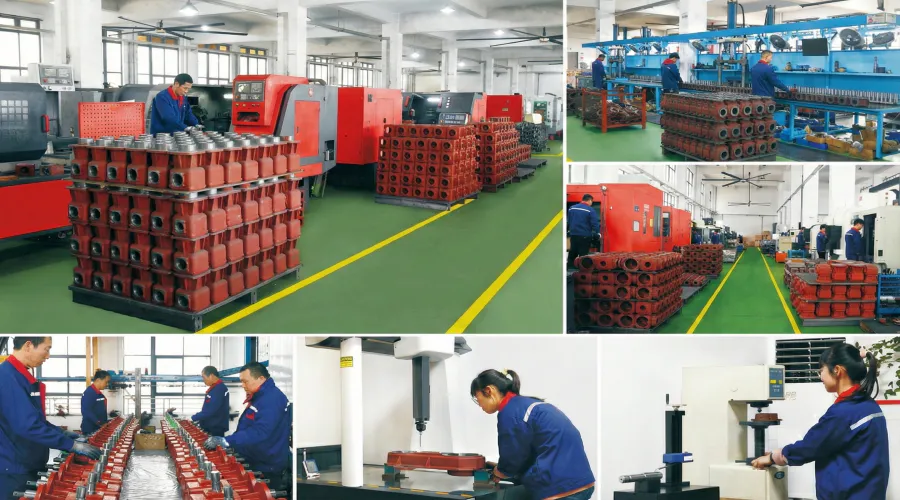
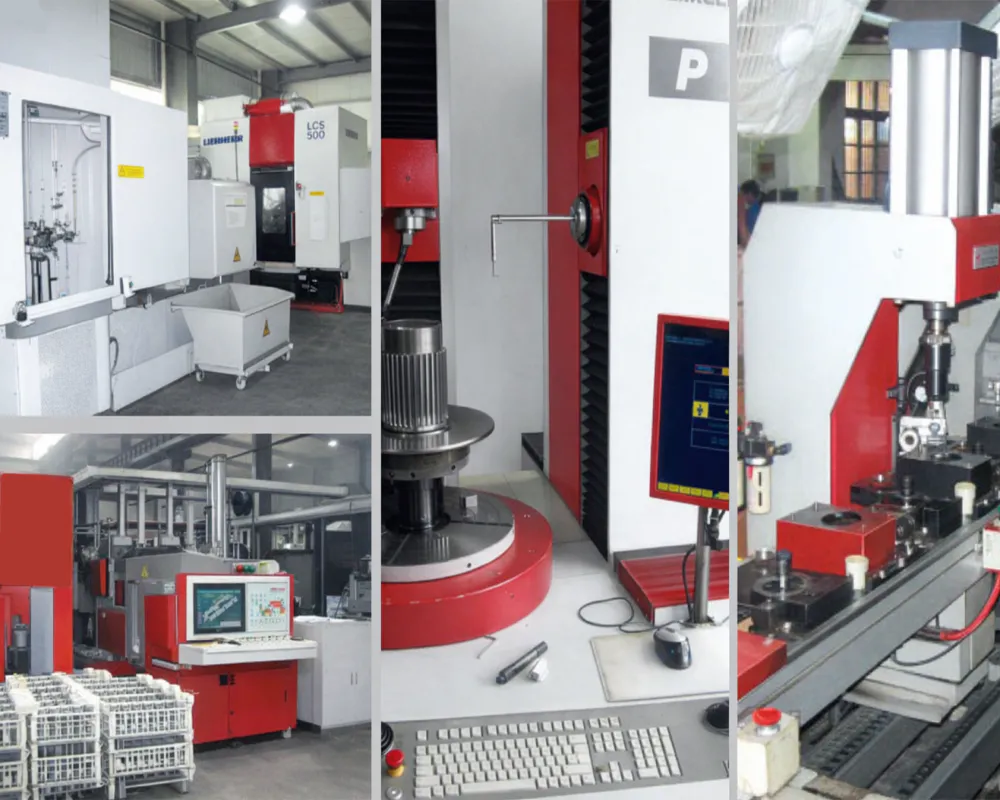
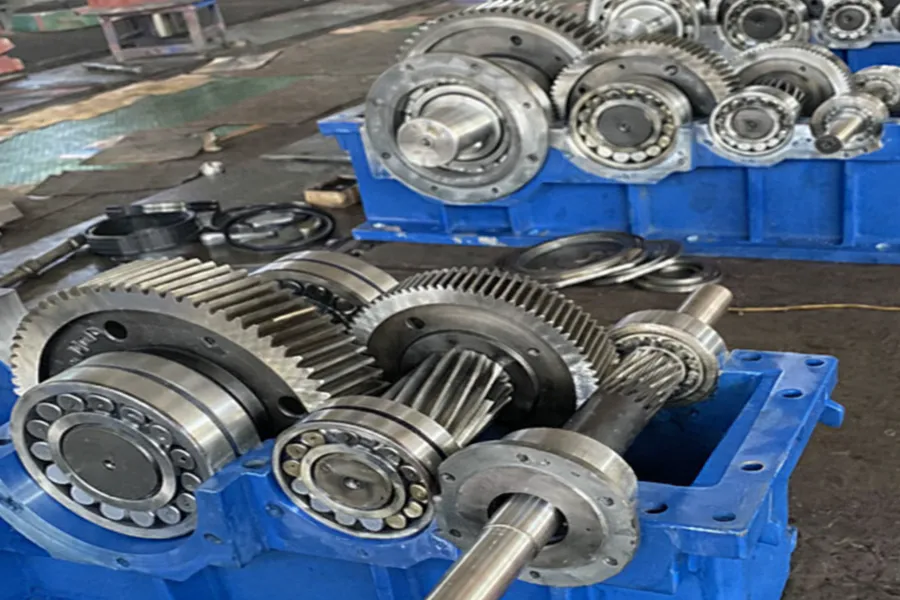
We are a specialist manufacturer of agricultural power transmission components with production capabilities covering the complete spectrum of agricultural machinery gearbox types — including right-angle bevel gearboxes, worm gearboxes, hydraulic drive gearboxes, PTO shafts, and associated implement drive accessories. Our production facility operates CNC turning and milling centers, gear hobbing and profile-grinding equipment, controlled-atmosphere heat treatment furnaces, aluminum die-casting capability, and coordinate measuring machines that together ensure consistent dimensional accuracy across production volumes ranging from small-batch custom orders to multi-thousand-unit OEM runs.
WorkShop
8. Related Products — Complete Agricultural Drive Supply
A reliable agricultural implement drivetrain depends on every component in the driveline being dimensionally and dynamically compatible with its neighbors. Sourcing PTO shafts, chains, and sprockets from the same supplier as the gearbox eliminates the interface mismatches that often arise when driveline components come from multiple uncoordinated vendors. We manufacture and supply a complete range of agricultural power transmission accessories engineered for full compatibility with the EP-H130 Series. Explore our full range at agricultural-gearbox.net.
PTO Shafts for Agricultural Implements
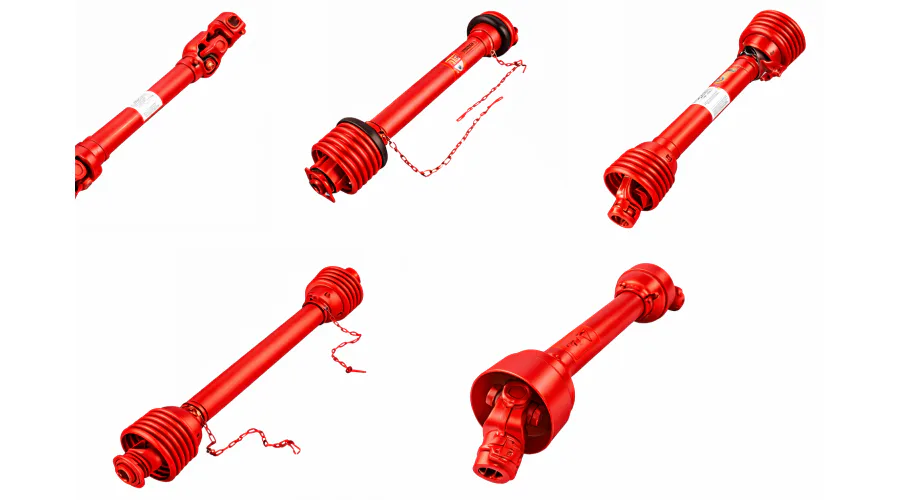
PTO drive shafts are the direct coupling between tractor PTO output and the EP-H130 input shaft, and the quality of the universal joints in that shaft has a proportional impact on gearbox bearing life. Our telescopic PTO shafts with full-length safety guard tubes are available in 1 3/8″ 6-spline and 1 3/8″ 21-spline profiles at both 540 and 1000 RPM speed ratings, with universal joints torque-rated to match the EP-H130’s input power specification. Replacement cross-kits for universal joints are available as individual service parts, allowing operators to rebuild a worn PTO shaft without replacing the entire assembly.
Sprockets & Drive Chains for Secondary Transmission
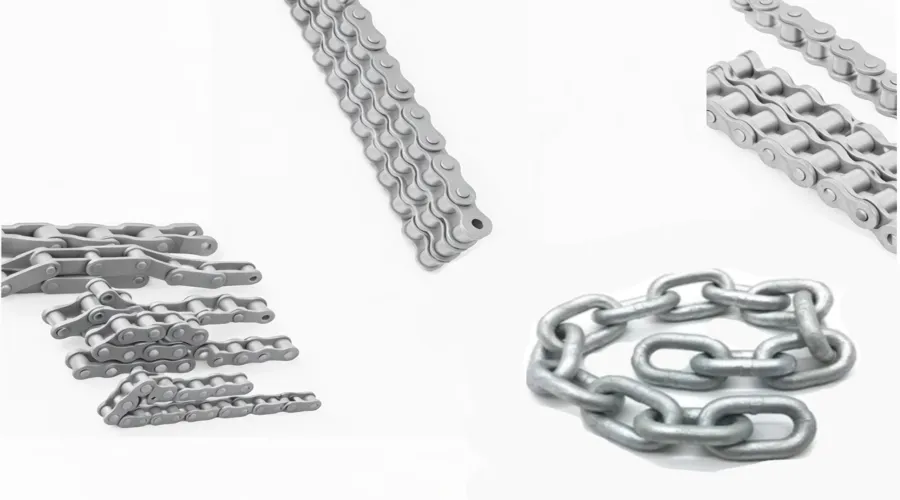
Many implement designs route power from the EP-H130 output shaft through a chain-and-sprocket secondary drive to reach the working element — particularly in multi-rotor rakes and compound implement designs. Matched chain-and-sprocket sets from a single supplier ensure pitch-line compatibility and avoid the accelerated wear that develops when chain elongation characteristics and sprocket tooth geometry come from manufacturers with different tolerance philosophies. Our agricultural drive chains in ANSI 40, 50, 60, and 80 pitch series are manufactured from case-hardened alloy steel with corrosion-resistant surface finishes suited to outdoor agricultural environments, and our precision-machined sprockets in matching pitches meet ISO 606 dimensional requirements.
Frequently Asked Questions
Editor: PXY