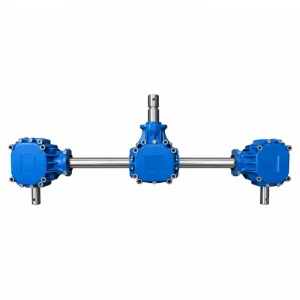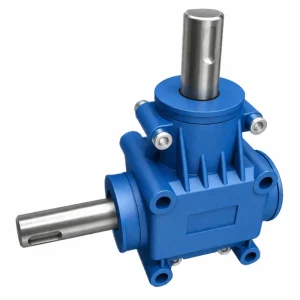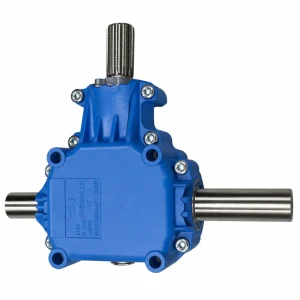
Description
EP-L25A Fertilizer Spreader Gearbox – Replacement of Comer Code
1. Technical Specifications – EP-L25A
The following table presents 20 verified technical parameters for the EP-L25A fertilizer spreader gearbox. All dimensional data are given in SI units. Operators sourcing gearbox for fertilizer spreader replacement parts should verify shaft tolerance compatibility with their existing equipment before installation.
| Parameter | Value / Specification |
|---|---|
| Model | EP-L25A |
| Gear Type | Bevel Gear |
| Ratio – Increasing Mode | 1 : 3 |
| Ratio – Reducing Mode | 3 : 1 |
| Input Power (Increasing) | 5 kW / 6.8 HP |
| Input Power (Reducing) | 2.2 kW / 3 HP |
| Output Torque (Increasing) | 2.9 daNm |
| Input Shaft Diameter (Shaft X) | Ø 25 mm h6 |
| Output Shaft Diameter (Shaft Z) | Ø 25 mm h6 |
| Housing Material | Aluminium Alloy (Die-Cast) |
| Net Weight | 4.2 kg |
| Max. Oil Capacity | 0.35 L |
| Oil SAE Viscosity Grade | 80W-90 |
| First Oil Change Interval | 50 – 70 operating hours |
| Subsequent Oil Change Interval | 500 h or min. once per year |
| Clutch Type | Integrated Freewheeling Clutch |
| Operating Temperature Range | -20 °C to +60 °C |
| Protection Class (IP Rating) | IP54 |
| Mounting Position | Horizontal / Vertical |
| Overall Dimensions (L × W × H) | 185 mm × 120 mm × 145 mm |
Note: The gearbox is supplied without oil. It must be filled with 80W-90 gear oil before first use. Always consult the original equipment manual for oil fill procedures.
2. Five Key Product Advantages
These advantages reflect real operational feedback gathered from farms and equipment dealers across South America, Europe, and Southeast Asia. Each point addresses a recurring challenge faced by agronomists and equipment operators who rely on a dependable fertilizer spreader gearbox season after season.
01 — Direct Comer Code Compatibility
The EP-L25A is a drop-in replacement that mirrors the bolt pattern, shaft dimensions, and mounting geometry of the original Comer L-25A. This means zero downtime for adaptation work. Equipment dealers and farm workshops in Brazil, Colombia, and Argentina can swap the gearbox during a single maintenance shift without machining or custom brackets, restoring the spreader to full operation immediately.
02 — Dual-Ratio Flexibility
With a selectable gear ratio of 1:3 (increasing) or 3:1 (reducing), the EP-L25A adapts to a wide range of application scenarios — from high-speed broadcast spreading to slow, precision band application. This built-in versatility makes it one of the more practical fertilizer spreader gearbox parts options for operations that run multiple fertilizer programs within the same season.
03 — Lightweight Aluminium Housing
Weighing only 4.2 kg, the precision die-cast aluminium housing reduces the overall mass of the spreader implement, decreasing fuel consumption and reducing wear on the PTO shaft and tractor linkage. Aluminium also offers natural resistance to corrosion from fertilizer dust and residue, extending the service life of the housing without protective coatings that can chip or degrade.
04 — Integrated Freewheeling Clutch
The built-in freewheeling clutch decouples the output from the input during tractor deceleration or directional changes, eliminating reverse-torque shock that can crack gear teeth or damage the spreader disc assembly. For operators working on irregular terrain or in orchards with frequent turning, this protection mechanism represents a meaningful improvement in drivetrain reliability over gearboxes without a clutch mechanism.
05 — Low Maintenance, Long Service Intervals
With an oil change interval of 500 operating hours (using SAE 80W-90 gear oil) and a maximum oil capacity of only 0.35 L, the EP-L25A places a minimal servicing burden on the farm team. The compact design and accessible oil drain point make routine maintenance straightforward even in field conditions. Proper lubrication adherence is all that is required to achieve a multi-season operational lifespan.
3. Working Principle of the Fertilizer Spreader Gearbox
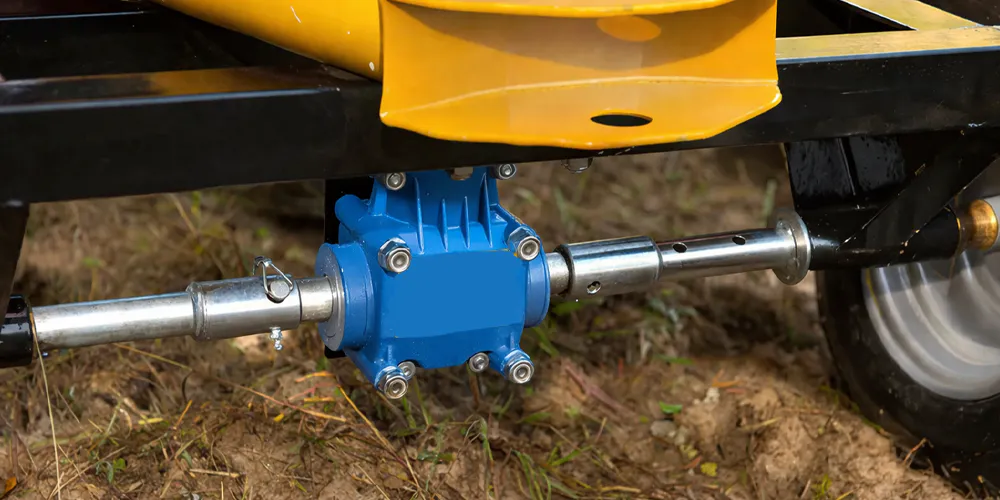
The EP-L25A operates on a bevel gear transmission principle. Rotational energy enters the gearbox through the input shaft (Ø25 mm, h6 tolerance), which is connected directly to the tractor’s Power Take-Off (PTO) shaft via a compatible drive coupling. The input bevel gear meshes with the output bevel gear at a 90-degree angle, converting the axial rotation from the PTO into a perpendicular output rotation that drives the spreader disc or distribution mechanism of the implement.
In the increasing-ratio mode (1:3), the gearbox accelerates the output shaft to three times the input RPM, which is used when a high disc speed is required for wide-area broadcast spreading. In the reducing-ratio mode (3:1), the output speed is lowered to one-third of the input speed, delivering higher torque at the output for heavier granular materials or precision band spreading applications. The ratio selection is determined by the physical orientation of the gearbox assembly during installation — a straightforward mechanical configuration that requires no additional controls or actuators.
The integrated freewheeling clutch is positioned on the output side and engages automatically under normal operating torque. When the input speed drops below the output inertia — such as during a rapid deceleration — the clutch disengages to allow the output shaft to coast freely, preventing reverse-load transmission back through the gear mesh. This is a passive, automatic protection feature that operates without driver intervention, making it particularly effective in continuous-field operations where the PTO is frequently engaged and disengaged. The entire mechanism is lubricated by a small quantity of 80W-90 gear oil retained within the sealed aluminium housing, which provides boundary-film lubrication at the gear contact faces and bearing surfaces throughout the full operating temperature range.
4. Material & Construction Quality
The selection of materials in the EP-L25A reflects the realities of agricultural field conditions rather than laboratory benchmarks. The housing is produced from high-pressure die-cast aluminium alloy, chosen for its combination of light weight, thermal conductivity, and natural resistance to fertilizer-driven corrosion. In tropical field environments — such as those prevalent across the Cerrado region of Brazil, where daytime temperatures can exceed 38 °C for extended periods — the aluminium housing dissipates gear-generated heat more efficiently than cast iron alternatives, which contributes to longer lubricant life and more stable operating viscosity at the gear mesh interface.
The bevel gears themselves are machined from medium-carbon alloy steel and subjected to a case-hardening treatment that produces a hard, wear-resistant tooth surface over a tough, impact-absorbing core. This hardened layer resists abrasive wear from the fine metallic particles that can accumulate in the gear oil over extended operating periods, while the ductile core absorbs the periodic shock loads that occur when the PTO is engaged under load. Gear tooth profiles are ground to a controlled tolerance class that ensures quiet meshing, minimal backlash, and consistent power transfer throughout the full service life of the gearbox.
Shaft seals are produced from NBR (nitrile butadiene rubber), a compound selected for its resistance to both petroleum-based gear oils and the dilute chemical exposure common in fertilizer application environments. The seal lips are spring-loaded to maintain consistent contact pressure as the seal material ages, preventing lubricant leakage and ingress of fertilizer dust even after multiple seasons of continuous field use. All fastening hardware uses stainless steel or zinc-plated carbon steel to resist surface oxidation in humid field conditions.
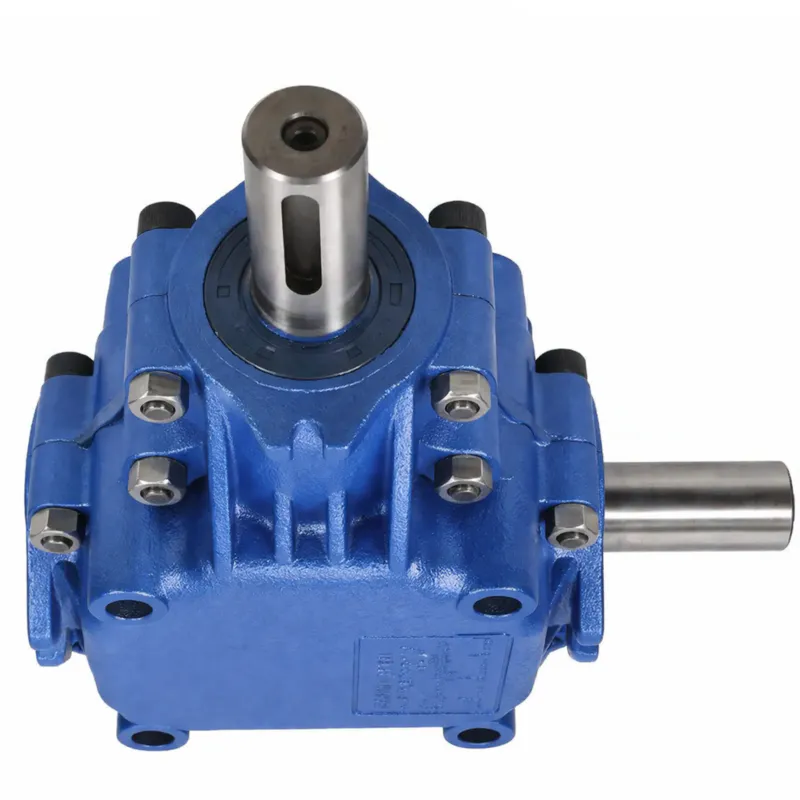
5. Application Scenarios
The EP-L25A fertilizer spreader gearbox is engineered to operate reliably across a range of agricultural and land-management settings. The following scenarios represent the primary environments and equipment configurations in which this model is commonly deployed.
Grain Crop Fertilization (Brazil & Argentina)
Across the Mato Grosso, Paraná, and Pampas regions, soybean and corn operations use centrifugal disc spreaders driven by tractor PTOs to apply urea, MAP, and compound NPK fertilizers at planting and topdressing stages. The EP-L25A’s 1:3 increasing ratio delivers the disc speed needed for broadcast widths of 12–24 metres, allowing a single tractor pass to cover wide beds efficiently and reducing the number of field operations per campaign.
Pasture & Grassland Management
Livestock farms throughout Brazil’s Cerrado and Colombia’s Llanos Orientales use tractor-mounted spreaders to apply lime and phosphate fertilizers over large pasture blocks. Operating conditions often involve rough terrain and frequent PTO engagement cycles. The integrated freewheeling clutch in the EP-L25A protects the drivetrain from abrupt stop-start loads, making it well suited to the irregular duty cycles typical of pasture fertilization work.
Sugarcane Ratoon Fertilization
Brazil’s sugarcane industry — the world’s largest — requires intensive nitrogen and potassium applications during ratoon regrowth periods. Spreader equipment fitted with the EP-L25A operates in narrow inter-row spacing conditions, where precise application rate control is critical. The 3:1 reducing ratio option allows the operator to run the spreader at lower disc speeds for targeted, low-drift application of granular urea in band placement configurations.
Horticulture & Specialty Crops
Vegetable growing districts in Chile, Peru, and southern Brazil use smaller tractor-mounted spreaders for calcium, sulphur, and micronutrient applications across intensive cultivation beds. The compact dimensions (185 × 120 × 145 mm) and low weight of the EP-L25A make it compatible with mid-size utility tractors commonly used in horticultural operations, where equipment size and versatility are as important as mechanical durability.
Lawn Care & Landscaping
Beyond row-crop agriculture, the EP-L25A can be adapted for use in commercial turf management — sports stadiums, municipal parks, and golf course rough areas in Uruguay, Brazil, and beyond. When paired with a compact spreader attachment, the gearbox powers even distribution of slow-release granular fertilizers, lime, and gypsum over large turf areas at the controlled disc speeds required for fine granule handling.
6. How to Use the Fertilizer Spreader Gearbox
Correct installation and operation of the fertilizer spreader gearbox directly determines both the accuracy of fertilizer distribution and the long-term reliability of the equipment. The steps below reflect standard industry procedure for gearbox for fertilizer spreader how to use guidance and should be followed in conjunction with the spreader manufacturer’s own documentation.
Step 1 — Fill with Oil Before First Use. The EP-L25A is supplied dry. Before connecting to any equipment, fill the housing with the specified 80W-90 gear oil to the maximum fill mark (0.35 L). Operating a dry gearbox, even briefly, will cause irreversible gear and bearing damage.
Step 2 — Select Fertilizer and Calibrate the Spreader. Match the fertilizer type, particle size, and target application rate to the appropriate spreader disc speed setting. For broadcast applications requiring high disc RPM, the 1:3 increasing configuration is preferred. For low-drift or banded placement, use the 3:1 reducing arrangement.
Step 3 — Verify PTO Shaft Compatibility. Confirm that the PTO shaft connecting the tractor to the fertilizer spreader gearbox is rated for the required power, is the correct length, and that the spline profile matches the input shaft (Ø25 mm h6). Mismatched or worn PTO shafts are a leading cause of premature gearbox failure.
Step 4 — Load Fertilizer and Set the Spread Width. Once the calibration is complete, load the hopper and set the spread-width deflectors or vane adjusters according to the target coverage pattern. Verify the pattern on a static test area before beginning field work.
Step 5 — Engage the PTO Gradually. Start the tractor moving at operating speed before engaging the PTO. Engaging the PTO while stationary can create a torque spike that exceeds the gearbox’s rated input capacity. The freewheeling clutch provides some protection, but smooth engagement practice is always preferable.
Step 6 — Monitor Distribution During Operation. Periodically inspect the spread pattern for symmetry and uniformity. Uneven distribution can indicate a blocked outlet, a damaged disc, or a shaft misalignment problem — all of which should be investigated before continuing to apply fertilizer.
Step 7 — Disengage and Clean After Each Session. Disengage the PTO before stopping. After each field session, clean fertilizer residue from the exterior of the gearbox housing and check for any oil seepage at the shaft seals. Fertilizer dust is hygroscopic and will attract moisture that can accelerate corrosion if left in contact with the housing over extended periods.
7. Safety & Operating Precautions
Safe fertilizer spreader gearbox operation requires attention to both personal safety and equipment integrity. The following precautions are relevant to anyone installing, operating, or servicing the EP-L25A in a professional agricultural context.
- Personal Protective Equipment: Always wear gloves, protective eyewear, and dust-resistant clothing when handling fertilizer materials or working near rotating equipment. Fertilizer dust can irritate skin, eyes, and the respiratory tract.
- Read the Full Manual First: Before first use, review the spreader manufacturer’s manual and the gearbox installation guide in full. Pay particular attention to the initial oil fill requirement and the first oil-change schedule.
- Maintain Clearance Around Rotating Parts: Keep bystanders and non-essential personnel away from the operating envelope of the spreader and PTO shaft. Never adjust the spreader or check the disc while the PTO is engaged.
- Do Not Overload: Operating the gearbox beyond its rated input power (5 kW / 6.8 HP in increasing mode) will accelerate gear wear and may cause sudden failure. Use a tractor with an appropriate PTO power rating for the intended application.
- Avoid Adverse Weather: Do not spread fertilizer in high-wind conditions (typically above 20 km/h), heavy rain, or when the soil surface is saturated. These conditions cause uneven distribution and increase the risk of nutrient runoff into waterways — a concern that is regulated under Brazil’s Federal Law No. 12,651/2012 (Forest Code) and associated CONAMA resolutions on water body protection.
- Handle and Store Fertilizer Correctly: Follow the product label instructions for the specific fertilizer being used. Some compound fertilizers can produce gas when wet; ensure the hopper is not left loaded during storage.
8. Regulatory Compliance & Industry Standards
Agricultural equipment deployed in commercial farming operations is subject to a range of regulatory frameworks that vary by region. Operators sourcing a fertilizer spreader gearbox replacement should verify that the equipment they install meets the applicable standards for their jurisdiction. The following is an overview of relevant frameworks across major markets.
Brazil – MAPA & ABNT Standards
In Brazil, agricultural machinery — including fertilizer spreader systems — falls under the regulatory oversight of the Ministério da Agricultura, Pecuária e Abastecimento (MAPA). Equipment sold or operated commercially must comply with relevant ABNT (Associação Brasileira de Normas Técnicas) technical standards. Additionally, fertilizer application practices near water bodies and Legal Reserve areas are governed by Federal Law No. 12,651/2012 and CONAMA Resolution No. 357/2005, which restrict the use of chemical inputs in buffer zones around watercourses.
European Union – Machinery Directive & CE Marking
For equipment deployed within the EU, the Machinery Directive 2006/42/EC requires that agricultural machinery and mechanical power transmission components conform to essential health and safety requirements before CE marking can be applied. Gearbox assemblies used in self-propelled or tractor-mounted equipment are typically assessed against EN ISO 4254-1 (agricultural machinery safety — general requirements) and relevant EN standards for power transmission components.
Argentina – SENASA & IRAM
Argentina’s Servicio Nacional de Sanidad y Calidad Agroalimentaria (SENASA) regulates the registration and use of agricultural equipment and inputs, including implements used in fertilizer application. Equipment must meet the technical requirements set out by IRAM (Instituto Argentino de Normalización y Certificación), the national standards body. Operators in Argentina should also be aware of Resolution SAGPyA 97/2001, which regulates the labelling and handling of fertilizer products used in conjunction with distribution equipment.
United States – OSHA & ASABE Standards
In the United States, PTO-driven agricultural equipment is subject to OSHA regulations under 29 CFR Part 1928 (agricultural operations) regarding guarding of rotating components. The American Society of Agricultural and Biological Engineers (ASABE) publishes voluntary standards — including ASABE S318 and ASABE EP536 — covering PTO shaft configurations, connection dimensions, and safety requirements for tractor-mounted implements, including fertilizer spreader systems.
ISO International Standards
Regardless of the specific national market, gearbox design and quality management processes for agricultural applications are guided by several ISO standards: ISO 9001:2015 (Quality Management Systems), ISO 6336 (calculation of load capacity of spur and helical gears, applicable by analogy to bevel configurations), and ISO 23509 (bevel and hypoid gear geometry). Adherence to these standards is a baseline indicator of engineering rigour for any manufacturer of fertilizer spreader gearbox equipment.
9. About Us
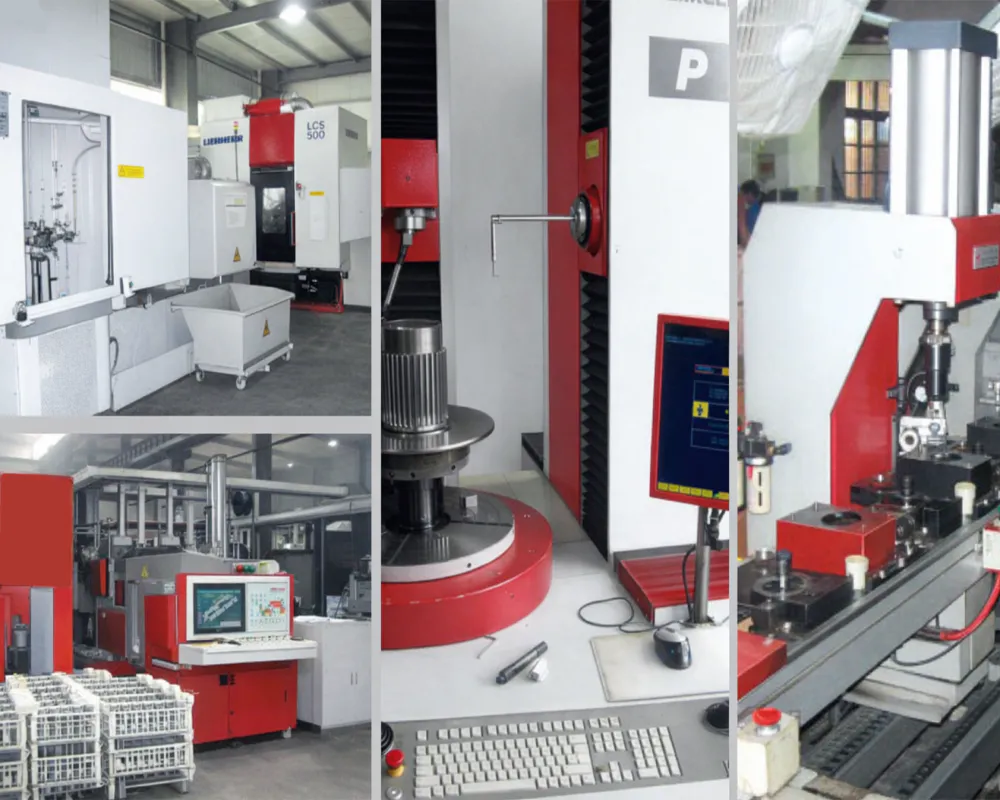
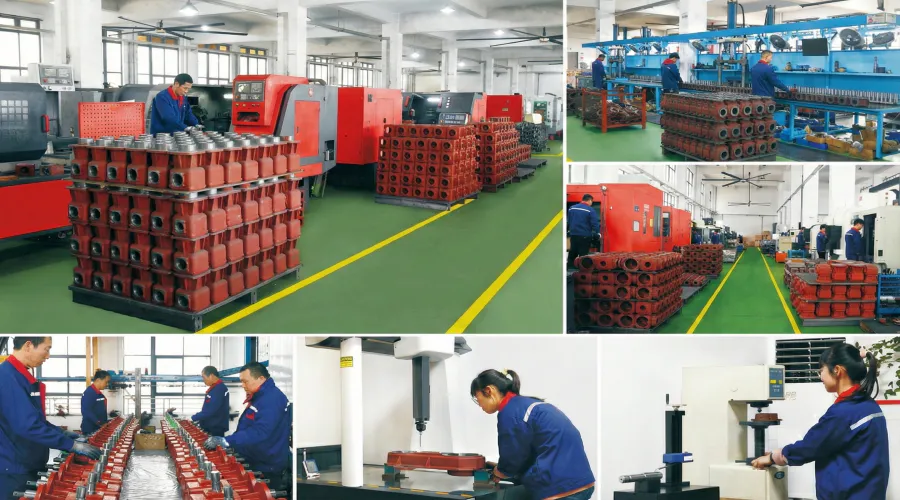
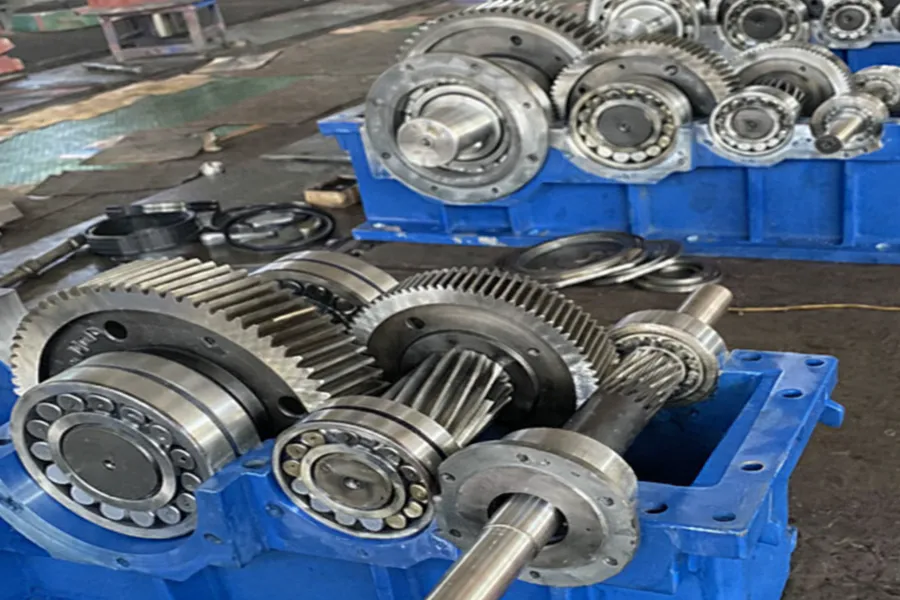
We are a dedicated manufacturer specialising in agricultural power transmission components, with a product range covering the full spectrum of fertilizer spreader gearbox designs, bevel gearboxes, helical gearboxes, and PTO-driven agricultural implements. Our production capacity is built around modern CNC machining centres, gear-grinding equipment, and multi-stage quality inspection processes that ensure consistent dimensional accuracy and mechanical performance across every unit leaving our facility.
Our engineering team has accumulated extensive experience in fertilizer spreader gearbox design, working directly with agricultural equipment OEMs and independent farm equipment dealers across South America, Europe, and Africa. We understand that the reliability of a single gearbox component can determine the success or failure of an entire fertilization campaign during a narrow seasonal window — and we engineer our products accordingly. Our quality management system is certified to ISO 9001:2015, and our products undergo dimensional verification, gear mesh testing, and oil-seal integrity checks before dispatch.
WorkShop
10. Related Products & System Compatibility
A complete and reliable fertilizer spreader drivetrain consists of more than the gearbox alone. We supply a full range of agricultural power transmission components that are engineered to work together as a matched system, eliminating the compatibility guesswork that often arises when sourcing components from multiple vendors. Our one-stop supply capability means you can procure the complete drivetrain — gearbox, PTO shaft, and associated hardware — from a single source, simplifying procurement, spare parts logistics, and warranty management.
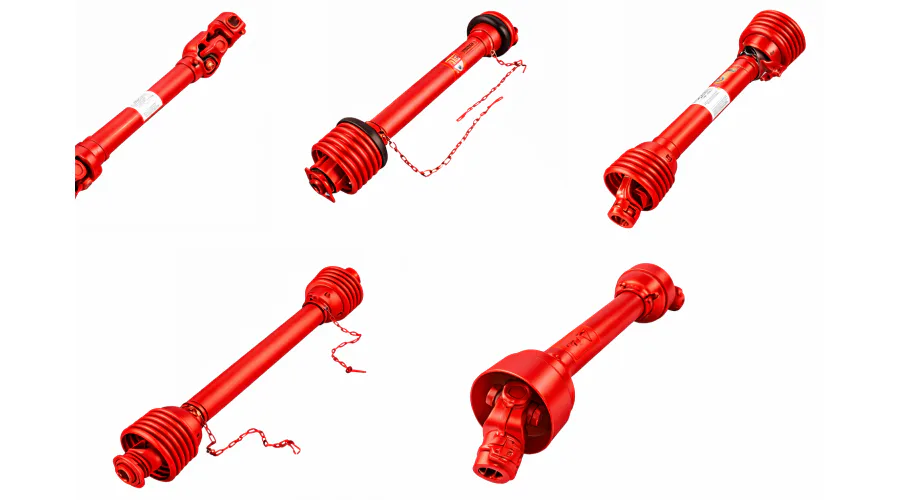
PTO Shaft – Compatible Drive Line for Fertilizer Spreaders
A correctly specified PTO shaft is as important as the gearbox itself in determining the longevity and safety of the full spreading system. We manufacture and supply a comprehensive range of PTO shafts designed for compatibility with the EP-L25A and other bevel gearbox configurations. Our shafts are available in 6-spline and 21-spline profiles, telescoping lengths to suit different tractor-implement distances, and with a choice of overrunning clutch, shear bolt, or friction clutch safety options to match the drivetrain protection requirements of your spreader system. Using a matched PTO shaft from the same manufacturer as your gearbox ensures dimensional interchangeability and simplifies ordering for field replacements.
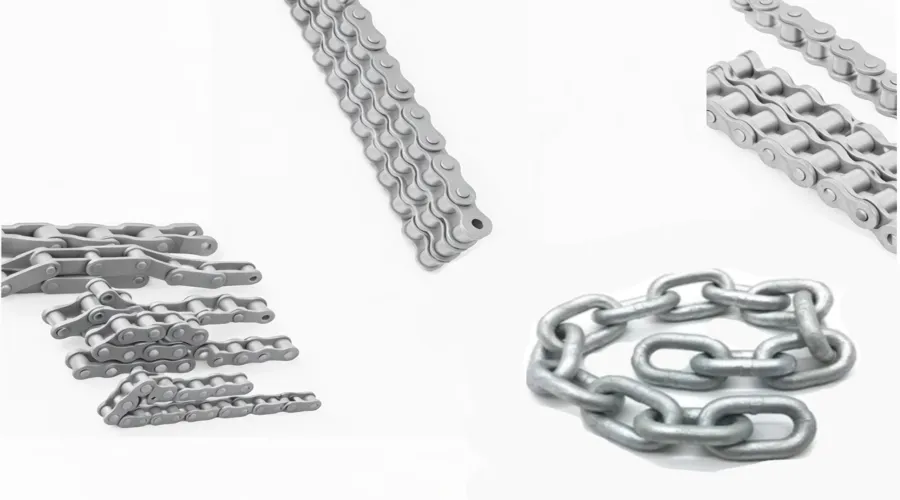
Chains & Sprockets – Full Agricultural Drivetrain Range
Beyond the primary PTO shaft connection, many fertilizer spreader designs incorporate roller chain drives between the gearbox output and the spreader disc shaft, agitator, or secondary distribution mechanisms. We supply agricultural-grade roller chains and sprockets in standard pitches (ANSI 40, 50, 60) and DIN/ISO equivalents, manufactured to dimensional standards that ensure reliable meshing and extended fatigue life under the cyclic loads of repetitive field application. Our full-series agricultural gearbox range — covering mower gearboxes, rotary tiller gearboxes, hay rake gearboxes, and fertilizer spreader gearbox configurations — is supported by a matching range of mechanical drive components for complete system supply.

Frequently Asked Questions
Q1. What is the best fertilizer spreader gearbox for large-scale soybean farming in Brazil, and how does the EP-L25A compare to the original Comer unit?
For large-scale soybean operations in the Brazilian Cerrado and Mato Grosso, the EP-L25A is a well-regarded option among growers who need a direct replacement for Comer-compatible spreader equipment. It matches the bolt pattern, shaft dimensions (Ø25 mm h6), and housing geometry of the Comer L-25A, so no mechanical adaptation is required. In terms of performance, the EP-L25A meets or exceeds the original power rating — 5 kW / 6.8 HP in increasing mode — with the added benefit of an aluminium housing that reduces component weight and runs cooler under sustained tropical field temperatures.
Q2. How does the fertilizer spreader gearbox quality affect the overall precision of nutrient application in a GPS-guided variable rate fertilization program in Brazil?
In a variable rate application (VRA) program, the spreader controller modulates the fertilizer flow rate in real time based on prescription map data. However, the accuracy of the output disc speed — and therefore the spread width and distribution uniformity — depends on the consistency of the gearbox’s mechanical transmission ratio under varying input torque. A gearbox with excessive backlash or worn gear teeth will introduce a speed error at the disc that is independent of the prescription map signal, effectively degrading the spatial accuracy of the application. A precision-manufactured unit like the EP-L25A, with controlled gear tooth tolerances and a consistent mesh engagement, maintains a stable transmission ratio throughout its service life, ensuring that the mechanical side of the drivetrain does not undermine the precision of the control system.
Q3. What should I check when a fertilizer spreader gearbox is working but the spread pattern is noticeably uneven on one side of the disc in my Colombian corn operation?
Asymmetric spread patterns with the gearbox operating normally typically indicate a mechanical issue downstream of the gearbox output shaft. Common causes include: a bent or out-of-balance spreader disc; a missing or damaged vane on one side of the disc; an incorrect vane angle setting (often caused by impact damage from field debris); or a worn output shaft bearing allowing disc wobble. Before inspecting these components, also check that the gearbox is mounted level — a tilted gearbox will produce an angular disc position that inherently biases the throw pattern. If all mechanical components appear intact and the spread pattern remains asymmetric, check whether the disc rotation direction is correct for the fertilizer type being used — some disc spreaders are designed for specific rotation directions to achieve the intended vane trajectory.
Q4. What gearbox for fertilizer spreader replacement parts do I need to stock for a fleet of 10 spreaders running a full Brazilian harvest season?
For a fleet of 10 spreaders running a full campaign (typically 500–700 operating hours per machine over the season), a practical minimum spare parts inventory would include: two complete EP-L25A gearbox assemblies as swap-out units; a set of input and output shaft seals; a supply of 80W-90 gear oil sufficient for the first oil change on all units (approximately 4 litres total); and two or three PTO shaft assemblies matched to your tractor-implement spacing. Stocking complete gearbox swap-out units is often more cost-effective than stocking individual internal components, as it minimises workshop downtime during the narrow fertilization window.
Q5. Which fertilizer spreader gearbox design is most suitable for applying granular urea in a no-till soybean system in Brazil’s Paraná state?
In a no-till system where surface application of granular urea is the standard practice, a twin-disc spreader driven by a bevel fertilizer spreader gearbox in the 1:3 increasing ratio is the most common and practical configuration. The higher disc RPM achieved through the increasing ratio gives the granules sufficient velocity for consistent spread widths of 16–24 metres, which aligns well with the row spacing and GPS-guided track spacing used in Paraná no-till operations. The EP-L25A’s 2.9 daNm output torque in increasing mode is appropriate for the disc-loading requirements of standard granular urea at typical application rates of 100–200 kg/ha.
Q6. What is the installation procedure for a fertilizer spreader gearbox replacement on a Comer-frame disc spreader, and do I need any special tools?
Replacing the gearbox on a standard Comer-frame disc spreader with the EP-L25A requires a basic workshop tool set: combination spanners, a torque wrench, and a soft-face mallet. The procedure involves: disconnecting the PTO shaft, unbolting the old gearbox from the spreader frame, noting the orientation of the existing seals and any shim spacers, fitting the EP-L25A into the same position (verifying bolt torque to the spreader manufacturer’s specification), reconnecting and checking PTO shaft alignment, and filling with 80W-90 gear oil before returning to service. No specialist tooling is required for the installation itself. The Ø25 mm h6 shaft tolerance of the EP-L25A is matched to the standard Comer L-25A coupling bore, so shaft fit is confirmed without measuring tools in most cases.
Editor: PXY