Description
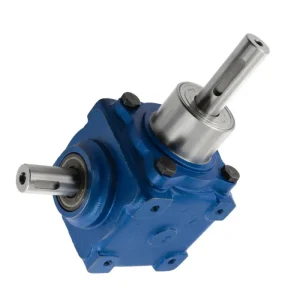
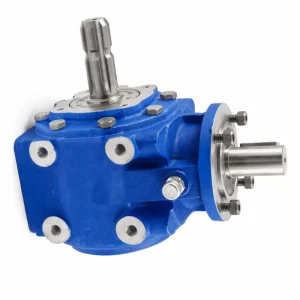
EP-LL5L — Flail Mower Gearbox
Replacement for Comer Code LL-5L | Precision-Engineered for Agricultural and Vegetation Management Operations
1. Technical Specifications of EP-LL5L Flail Mower Gearbox
The table below covers the key technical and performance parameters for the EP-LL5L Flail Mower Gearbox. Use these specifications when evaluating compatibility with your mowing application or when submitting a procurement enquiry. All values represent verified production-standard data; consult the technical datasheet for complete dimensional drawings.
| Parameter | Specification |
|---|---|
| Gear Ratio (i) | 1.9 : 1 |
| Input Speed (N1) | 540 rpm (PTO Standard) |
| Input Power (P1) | 11 kW (≈ 14.8 HP) |
| Output Torque (M2) | 99 Nm |
| Input Shaft (X) | 1⅜″ Z6 — 6-Spline, Comer LL-5L Compatible |
| Output Shaft (Z) | L60, Φ25 mm |
| Operating Temperature Range | −20°C to +80° |
| Lubrication Oil Capacity | 0.8 L |
| Recommended Oil Grade | SAE 80W-90, API GL-4 |
| Housing Material | GGG40 Ductile Cast Iron |
| Gear Material | 20CrMnTi Alloy Steel (Carburized & Hardened) |
| Surface Hardness (Gear Tooth) | 58 – 62 HRC |
| Bearing Type | Tapered Roller Bearings |
| Seal Type | Double-Lip Rotary Oil Seal |
| Surface Treatment | Phosphate Coating + Epoxy Primer |
| Mounting Configuration | 4-Bolt Flange Mount |
| Net Weight | 5.8 kg |
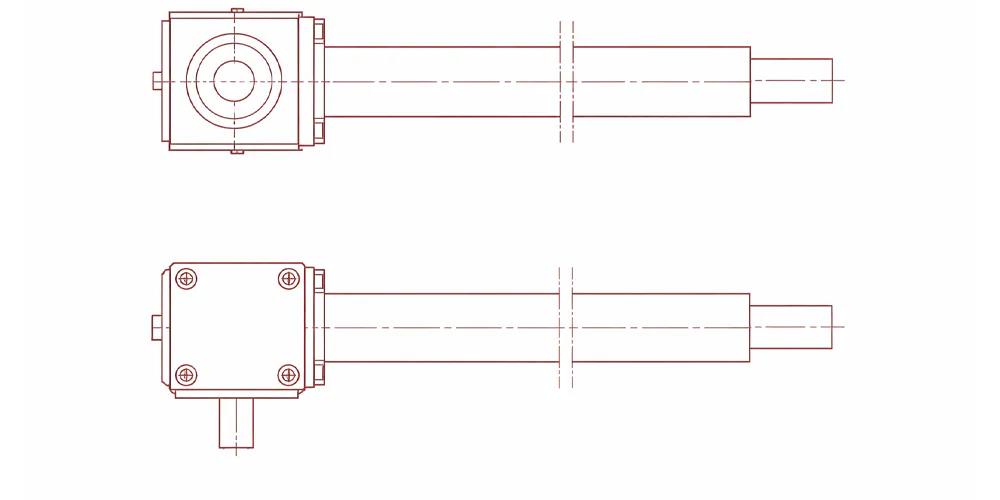
| Overall Dimensions (L × W × H) | 220 × 180 × 160 mm |
| Protection Rating | IP54 |
| Rated Service Life | ≥ 3,000 Operating Hours |
2. Five
Key Product Advantages
1. Direct-Fit Comer LL-5L Replacement
Every critical interface on the EP-LL5L — the 1⅜″ Z6 input shaft, the L60 Φ25 mm output shaft, and the 4-bolt flange mounting pattern — is machined to match the original Comer Code LL-5L specification. No shimming, no adapter plates, and no custom machining are required. The gearbox bolts straight onto the mower frame and couples to the PTO driveshaft and rotor in the same afternoon it arrives. For farm operations in Mato Grosso and Goiás where machine downtime carries a real production cost, this plug-in compatibility is a decisive procurement advantage when sourcing a flail mower gearbox replacement.
2. Case-Hardened Alloy Steel Gear Set
The internal gears are manufactured from 20CrMnTi chromium-manganese-titanium alloy steel and subjected to pack carburization followed by controlled oil quench hardening, achieving a surface hardness of 58–62 HRC at the tooth contact zones while retaining a tough, ductile core beneath. This dual-property microstructure resists the three primary gear failure modes — surface pitting, scuffing, and tooth bending fatigue — that limit the service life of lower-grade materials in pto flail mower gearbox applications where impact loads occur regularly during blade contact with embedded obstacles.
3. Tapered Roller Bearing Support at Both Shafts
Many budget-grade replacement gearboxes substitute deep-groove ball bearings in a cost-cutting measure. The EP-LL5L uses tapered roller bearings at both the input and output shaft positions. Tapered rollers carry combined radial and thrust loads simultaneously — a capability that matters significantly in 3 point flail mower gearbox assemblies where the rotor generates substantial axial forces during engagement with dense vegetation and during directional changes. Over-sized bearing selection extends service life well beyond the 3,000-hour rating under normal agricultural operating cycles.
4. IP54-Rated Ingress Protection
Double-lip rotary oil seals on both shaft exits, combined with a precision-machined housing parting face and oil-resistant gasket seal, achieve IP54 ingress protection — confirmed resistance to dust ingress and water splashing from any direction. This matters particularly in Brazil’s coastal agricultural zones and humid tropical plantation settings, where daily dew cycles, high rainfall, and crop juice accelerate internal corrosion in inadequately sealed units. The sealed design also prevents the lubricant contamination that rapidly destroys internal components and leads to premature failure of flail mower gearbox assemblies in open-seal configurations.
5. Two-Stage Corrosion-Resistant Exterior Finish
Each housing is treated with a phosphate conversion coating before receiving an epoxy primer topcoat. This two-stage surface treatment system provides measurably better long-term corrosion resistance than a standard single-coat paint application, particularly under the tropical field conditions common across Brazil’s agricultural states — where daily temperature cycling, soil acidity, and moisture accelerate surface oxidation on inadequately treated agricultural machinery components. The finish also provides a stable base for field touchup repainting after installation damage, prolonging the protective integrity of the external coating throughout the gearbox service life.
3. How the Flail Mower Gearbox Works
The Flail Mower Gearbox is the mechanical heart of any PTO-driven flail mower. Its role is to convert the rotary output of the tractor’s power take-off shaft into the rotor speed and torque needed to drive individual flail blades through dense vegetation — reliably and continuously, across seasons and weather cycles, with minimal maintenance intervention. Understanding the internal operating principle helps operators establish appropriate service intervals and diagnose developing faults before they become catastrophic failures.
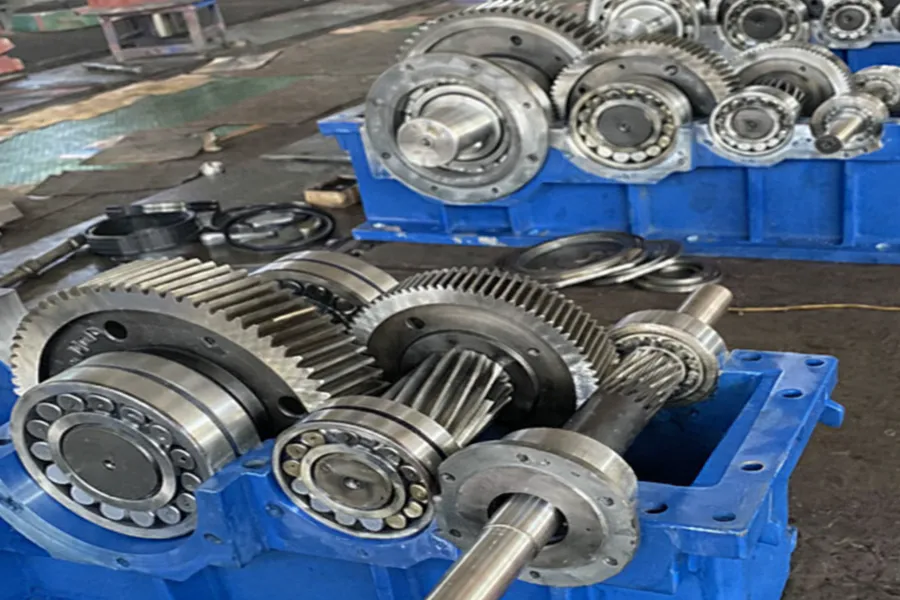
Power entry begins at the input shaft — a 1⅜″ six-spline (Z6) profile that engages with the intermediate PTO driveshaft connecting the tractor to the mower implement. At 540 rpm input speed, the internal helical gear pair reduces rotational speed by a factor of 1.9, delivering the resulting elevated torque (99 Nm) to the L60 Φ25 mm output shaft. That output shaft is keyed to the flail rotor drum, which carries the individual flail blades arranged around its circumference in a helical or staggered pattern designed to maintain continuous cutting contact across the full working width.
Inside the housing, tapered roller bearings support both shafts against the combined radial and axial load vectors generated during operation. The flail rotor is not a balanced mass under working conditions — as individual blades contact grass stems, crop stalks, or woody brush, they generate sudden impact torque spikes and lateral impulses that the bearing assemblies must absorb without allowing detectable shaft deflection. Over-sized tapered roller bearings, as specified for the EP-LL5L, handle these transient overloads within their elastic operating range, preventing the fretting wear and micro-pitting that degrade smaller, under-rated bearings after intensive service in demanding parts flail mower gearbox applications.
Lubrication is handled by an internal oil bath system. With 0.8 liters of SAE 80W-90 GL-4 gear oil at the correct fill level, the lower portions of the input gear continuously dip into the oil sump with each revolution, splashing lubricant to the gear mesh contact zone and distributing a film to the upper bearing positions. Double-lip oil seals at both shaft exits prevent lubricant loss and block fine crop material, abrasive soil particles, and moisture from entering the housing — factors that rapidly contaminate and degrade the lubricant in poorly sealed units operating in Brazilian sugarcane or tropical pasture environments. This is also why the correct answer to the common operator question — what kind of oil goes in a flail mower gearbox? — matters so much: using an incorrect viscosity grade or insufficient oil level is among the most preventable causes of premature bearing and gear failure across the service life of any flail mower gearbox replacement in agricultural use.
4. Materials & Construction Quality
The long-term reliability of a heavy duty flail mower gearbox is inseparable from the quality of its constituent materials. Every key component in the EP-LL5L has been specified for its mechanical performance characteristics under agricultural operating conditions — not for cost minimization in a commoditized market.
The housing is cast from GGG40 spheroidal graphite (ductile) iron. Unlike conventional grey cast iron, GGG40 forms spherical graphite nodules during controlled solidification, which interrupt crack propagation pathways and give the material tensile ductility alongside compressive strength. This matters significantly in a flail mower application because the gearbox housing periodically absorbs impact shock when blades contact embedded stones, hardwood stumps, or compacted soil formations in the mowing path — the kind of shock loading that cracks a grey iron housing of equivalent wall thickness under the same blow that a GGG40 structure absorbs elastically and recovers from without permanent deformation.
Gear manufacture begins with bar stock cut from 20CrMnTi alloy steel — a chromium-manganese-titanium case-hardening grade specified in Chinese national standard GB/T 3077, which is recognized internationally as a reliable specification for agricultural and industrial power transmission gearing. Gear blanks are precision hobbed to the design tooth profile, then pack-carburized to produce a carbon-enriched surface layer approximately 0.8–1.2 mm deep. After carburization, each gear is oil-quenched and low-temperature tempered to achieve the target surface hardness of 58–62 HRC, while retaining a core hardness of 35–40 HRC that resists tooth root bending fatigue under cyclic torque loading.
Each shaft is turned from medium-carbon alloy steel and induction-hardened at the bearing seat and spline engagement zones to resist fretting wear. Shaft straightness is verified post-heat-treatment using a precision V-block and indicator measurement; units showing runout beyond 0.02 mm at the bearing seat are rejected. Bearing seats are finish-ground to H7 tolerance to ensure correct interference fits with the tapered roller bearing inner rings — a detail that governs both initial bearing pre-load and the progressive stiffness retention across the gearbox service life. This level of dimensional control, applied consistently across production batches, is what separates a true agricultural flail mower gearbox designed for professional use from a lower-specification unit that passes initial assembly inspection but degrades rapidly under field loading conditions in Brazil, Argentina, or any other high-intensity agricultural environment.
5. Application Scenarios
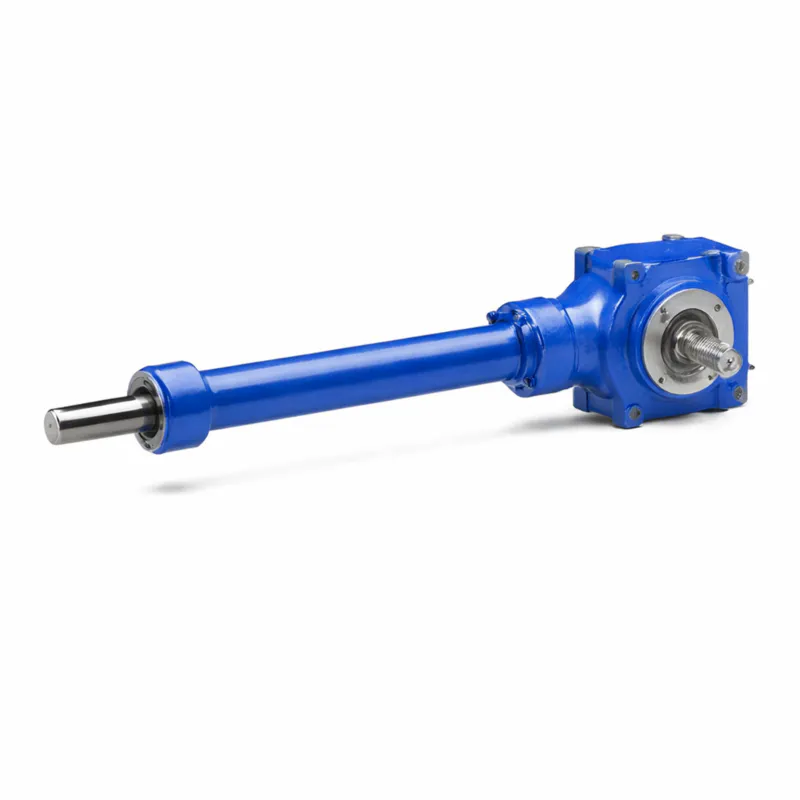
The EP-LL5L Flail Mower Gearbox supports a broad range of vegetation management applications. Its 11 kW continuous power rating and 99 Nm output torque cover cutting operations from light grass maintenance through heavy crop residue incorporation, making it a versatile choice for mixed-fleet operators who need one reliable gearbox solution across several machine configurations. Below are the principal settings where this unit delivers consistent field performance.
Pasture & Grassland Renovation
In Brazil’s Cerrado and southern Pampa biomes, pasture quality is directly linked to cattle productivity and land value. Flail mowers equipped with the EP-LL5L are used to renovate degraded paddocks — chopping woody invader species, termite mound remnants, and compacted old thatch — before overseeding with improved grass varieties such as Brachiaria brizantha or Panicum maximum. The gearbox’s shock-absorption capability handles intermittent contact with embedded laterite rock formations common in Cerrado red-yellow oxisols without housing damage.
Sugarcane Field Maintenance
Brazil is the world’s largest sugarcane producer, and flail mowers play an active role in plantation management: pre-harvest green leaf removal, inter-row weed control between ratoon cycles, and post-harvest residue management. The flail mower gearbox in these applications must withstand the abrasive, high-moisture conditions of tropical cane fields for extended daily running cycles. The EP-LL5L’s IP54 sealing and 80°C rated oil operating temperature are appropriately matched to this demanding context.
Roadside & Highway Vegetation Control
State and municipal highway maintenance authorities across South America deploy tractor-mounted flail mowers — including 3 point flail mower gearbox configurations — for scheduled roadside cutting programs. These operations often require multi-hour continuous running cycles, placing significant thermal load on the gearbox. The EP-LL5L’s oil capacity and rated temperature range support sustained operation without oil overheating, and its durable housing construction resists the repeated sub-canopy stone impacts typical of highway verge cutting.
Orchard Floor Management
In citrus, mango, and tropical fruit orchards throughout São Paulo, Bahia, and Minas Gerais states, ground cover management between tree rows controls weeds, reduces pest habitat, and maintains soil trafficability for tractor access. Flail mowers produce finer mulch than rotary disc slashers, returning organic matter to the soil surface more effectively. This application typically involves lighter vegetation but high pass frequency across the season, placing emphasis on sustained gearbox longevity and low-maintenance operation between harvest cycles.
Construction Site Pre-Clearing
Before earthmoving equipment commences grading operations on new infrastructure or agricultural expansion projects, flail mowers handle initial site clearing of shrubs, tall grass, invasive palms, and light brush. In this context, the gearbox encounters intermittent heavy impacts that expose any weakness in the housing or gear material selection. The EP-LL5L’s ductile iron housing and hardened gear set provide the mechanical resilience that mixed-use contractors need when deploying one versatile flail mower gearbox replacement solution across multiple machine platforms and job site environments.
6. Regulatory Compliance & Industry Standards
Agricultural machinery components — including the Flail Mower Gearbox — are subject to specific safety and conformity requirements in multiple international markets. Operators, equipment importers, and machinery dealers should verify applicable compliance documentation before placing equipment into commercial service. The following is a regional summary of the most relevant standards and regulations for this product category.
Brazil
In Brazil, agricultural machinery and implements must comply with ABNT NBR 14998, which establishes safety requirements for equipment used in agricultural operations. The Ministério da Agricultura, Pecuária e Abastecimento (MAPA) oversees the registration and type-approval of agricultural implements for commercial use on Brazilian farms. INMETRO (Instituto Nacional de Metrologia, Qualidade e Tecnologia) conformity assessment requirements may additionally apply to specific mechanical components depending on product classification and end-use context. When procuring a flail mower gearbox for sale into the Brazilian market, requesting a complete technical dossier from your supplier — including material test certificates, dimensional inspection records, and third-party load test data — is a standard due-diligence step that supports smooth customs clearance and regulatory compliance.
European Union
Flail mowers and their drive components entering EU markets must satisfy the requirements of the Machinery Directive 2006/42/EC, which mandates CE marking for machinery placed on the EU market. The harmonized standard EN ISO 4254-7 (Agricultural Machinery — Safety — Part 7: Rotary Mowers and Flail Mowers) provides detailed technical requirements for guarding, PTO shaft protection, blade retention, and emergency disengagement provisions. Replacement gearboxes installed in CE-marked mowers must maintain the machine’s original safety characteristics and must not reduce the protective function of any guarding system.
United States
OSHA regulation 29 CFR 1928 (Occupational Safety and Health Standards for Agriculture) governs worker safety around powered agricultural machinery. The American Society of Agricultural and Biological Engineers standard ASABE S318 establishes PTO shaft dimensional specifications and coupling requirements, ensuring interoperability between tractor PTO outputs and implement input shafts. The EP-LL5L’s 1⅜″ Z6 spline input shaft conforms to the ASABE S318 specification for 540 rpm PTO connections used across the North American tractor fleet.
Argentina
In Argentina, SENASA (Servicio Nacional de Sanidad y Calidad Agroalimentaria) Resolution 302/2012 establishes safety requirements for agricultural machinery sold and operated in the country. IRAM (Instituto Argentino de Normalización y Certificación) standards for mechanical component performance are relevant to equipment dealers and importers operating in the Argentine market, particularly for agricultural flail mower gearbox supply into the Pampas region, where large-scale grain and livestock farming drives consistent aftermarket demand.
Australia & New Zealand
In Australia, the Work Health and Safety (WHS) Regulations 2011 and Australian Standard AS 1418 apply to machinery safety in commercial operations. The AS/NZS framework requires that importers of agricultural machinery components maintain documentation demonstrating conformance to applicable safety performance standards. Safe Work Australia guidance on plant and structure safety is the primary reference for imported flail mower gearbox components entering the Australian and New Zealand markets.
7. About the Manufacturer
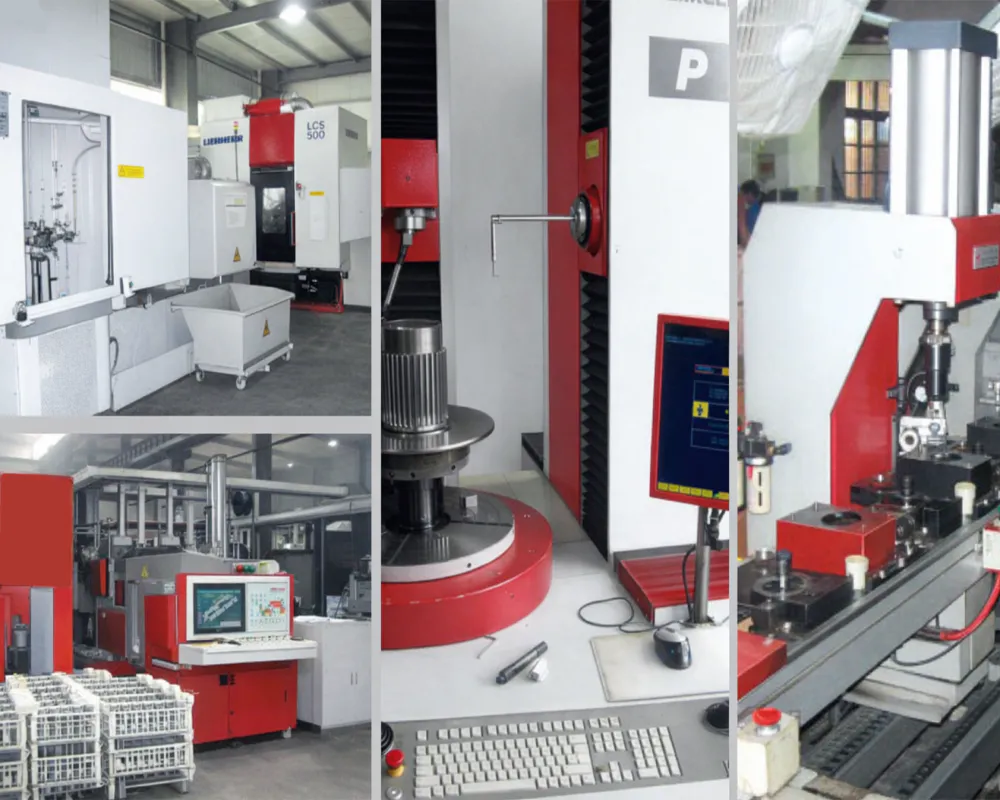
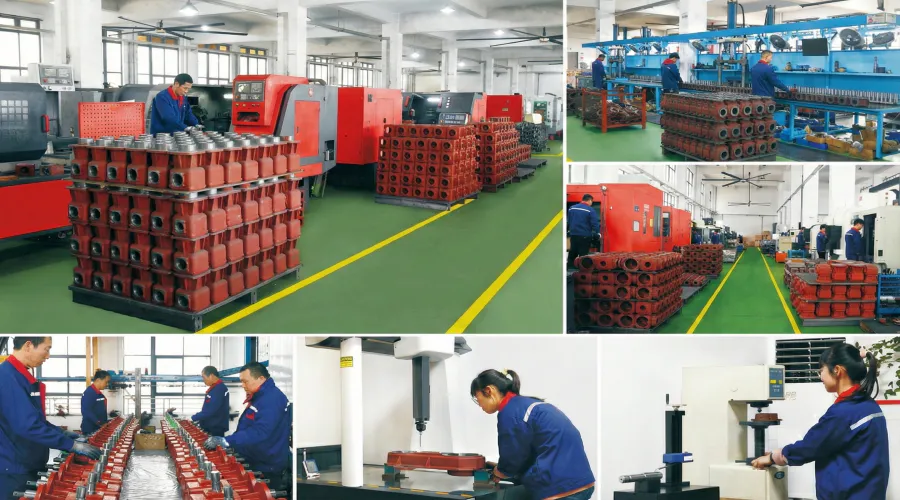
Our production facility has been manufacturing precision agricultural power transmission components for decades, supplying OEM and aftermarket gearboxes, PTO shafts, and related mechanical assemblies to customers across South America, Europe, Southeast Asia, and North America. The facility spans more than 8,000 square meters of enclosed production area and is equipped with CNC gear hobbing machines, turning centers, milling stations, heat treatment furnaces, coordinate measuring machines (CMMs), and automated final-assembly lines that operate to consistent documented quality procedures.
Our engineering team includes mechanical design specialists with deep experience in gear geometry calculation, material science for power transmission applications, and field-performance validation testing of agricultural implements.
Quality management is certified to ISO 9001:2015. Production processes are governed by statistical process control checkpoints at critical manufacturing stages: gear tooth profile measurement after hobbing, case depth verification after heat treatment, bearing seat diameter after finish grinding, and 100% assembly leak testing before packaging. Every EP-LL5L unit is individually inspected and cleared by the quality department before dispatch.
Workshop
8. Related Products & System Compatibility
A complete, high-performance flail mowing driveline requires more than the gearbox alone. We manufacture a full range of compatible agricultural power transmission components, giving customers the option to source the gearbox, PTO shaft, and secondary drive accessories from a single supplier. This one-stop supply arrangement eliminates dimensional compatibility uncertainties across the driveline, simplifies spare parts management, and reduces the number of vendor relationships required for equipment fleet maintenance.
PTO Shafts for Flail Mower Applications
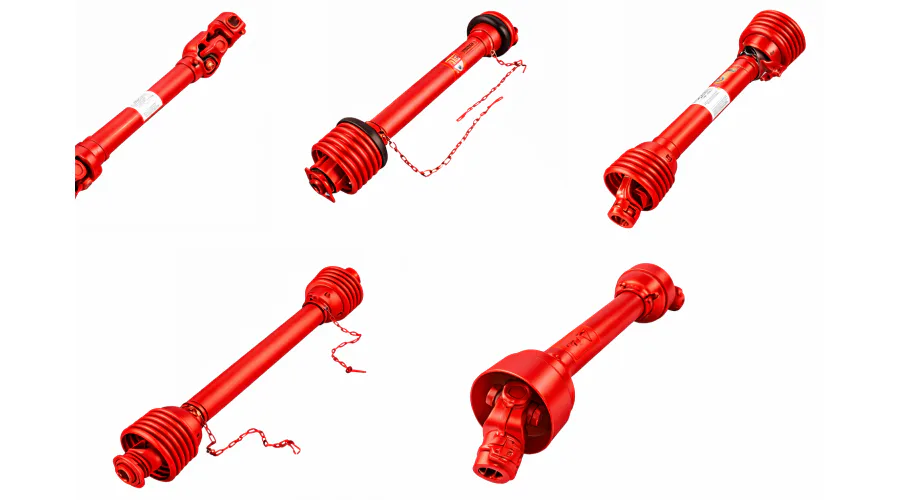
Our PTO shaft product range covers standard and telescoping driveshaft configurations for tractor-to-implement power transfer in the 11–75 kW range. Each shaft is supplied with overrun clutch or shear bolt protection appropriate to the application torque and inertia characteristics. For flail mower gearbox installations, correct PTO shaft selection — including compressed and extended length, angular operating capacity, and protection type — is as important as gearbox quality in determining driveline longevity. Visit our PTO Shaft product range for complete technical specifications.
Drive Chains & Sprockets
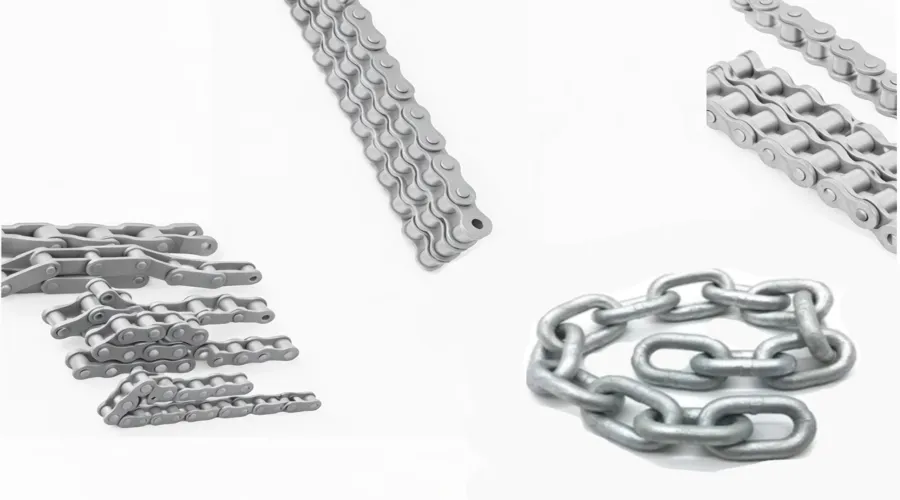
For flail mower designs that incorporate chain-and-sprocket secondary drives downstream of the gearbox output shaft — used in certain rotor speed reduction and blade engagement configurations — we supply roller chains and matching hardened sprockets in standard ANSI and ISO pitch series. All sprockets are manufactured from medium-carbon steel and induction-hardened to case hardness for extended wear life under continuous agricultural use. Sourcing our EP-LL5L gearbox together with compatible chain drive components provides a fully engineered, dimensionally consistent power transmission system from tractor PTO to flail rotor blades.
Frequently Asked Questions
Q1. What are the main disadvantages of a flail mower compared to a rotary disc mower for soybean farms in the Brazilian Cerrado?
A flail mower generally demands more tractor horsepower per unit of cutting width and operates at lower forward travel speeds than a comparable rotary disc mower. For Brazilian soybean operations in the Cerrado, however, the finer material shredding produced by flail mowers accelerates crop residue decomposition — which improves soil moisture retention heading into the next planting cycle — and reduces the fire risk from un-shredded stubble during the prolonged dry season. The primary maintenance consideration is the Flail Mower Gearbox itself: it handles higher torque loads than an equivalent disc mower gearbox and should be inspected for oil condition and bearing play at regular operating hour intervals.
Q2. How much HP does it take to run a flail mower properly using the EP-LL5L pto flail mower gearbox on a 3-point hitch tractor?
The EP-LL5L is rated for 11 kW (approximately 14.8 HP) of continuous PTO input at 540 rpm. For practical field operation with a standard-width cutting deck, a tractor producing at least 25–35 HP at the PTO shaft provides an appropriate safety margin. Wider cutting decks, heavy crop residue volumes, or dense brush applications will require proportionally higher tractor PTO output to maintain cutting efficiency without exceeding the 99 Nm rated output torque of the gearbox.
Q3. What is the difference between a skid steer flail mower gearbox and a 3-point hitch PTO gearbox for clearing dense Cerrado vegetation in Brazil?
A skid steer flail mower gearbox receives its input from a hydraulic motor connected to the skid steer’s hydraulic system — there is no mechanical PTO shaft connection. A 3 point flail mower gearbox like the EP-LL5L connects mechanically to the tractor’s PTO and is mounted on the standard three-point linkage. For open Cerrado terrain covering large areas, PTO-driven flail mowers offer lower operating cost per hectare because they draw power from the tractor’s mechanical drivetrain at high efficiency. For confined areas, slopes, or dense scrub where maneuverability matters more than throughput, hydraulically driven skid steer units are more practical.
Q4. Which tractor brands commonly used on Brazilian farms are compatible with the EP-LL5L pto flail mower gearbox input shaft?
The 1⅜″ Z6 PTO input shaft is compatible with the full range of tractor brands common in Brazilian agriculture: John Deere (5E and 5M series), New Holland (TL, TS, and T5 series), Massey Ferguson (MF 4700 and 5700 series), Valtra (A-series, BM-series), Deutz-Fahr (Agrotron L and M series), and AGCO ST-series models. Verify that the tractor’s PTO output is configured for 540 rpm — not 1,000 rpm — before connecting the driveshaft. The 1,000 rpm PTO coupling uses a different shaft diameter (1⅜″ 21-spline or 1¾″) and is not compatible with the EP-LL5L input.
Q5. How do I decide when a flail mower gearbox needs complete replacement rather than an internal component repair?
Replacement is the more practical option when: the housing has sustained impact cracking that compromises structural integrity; bearing seat wear exceeds 0.05 mm, allowing measurable shaft wobble; gear tooth pitting or spalling extends across more than 15–20% of the tooth face width; or oil leaks persist through multiple seal replacements, indicating housing bore distortion. In many cases, the total cost of sourcing a new flail mower gearbox and the labor for a standard swap is comparable to or less than a comprehensive internal rebuild — particularly where the housing itself has absorbed impact damage that cannot be corrected by component replacement alone.
Editor: PXY