Description
Agricultural Gearbox Series
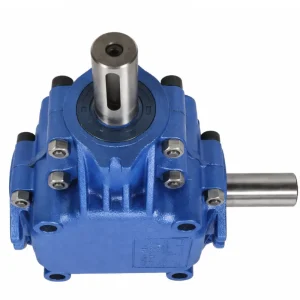
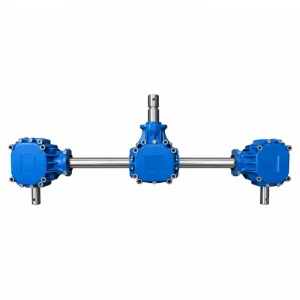
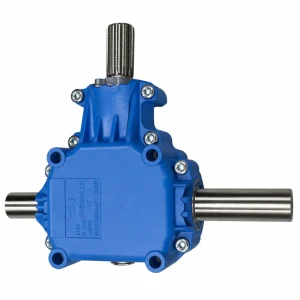
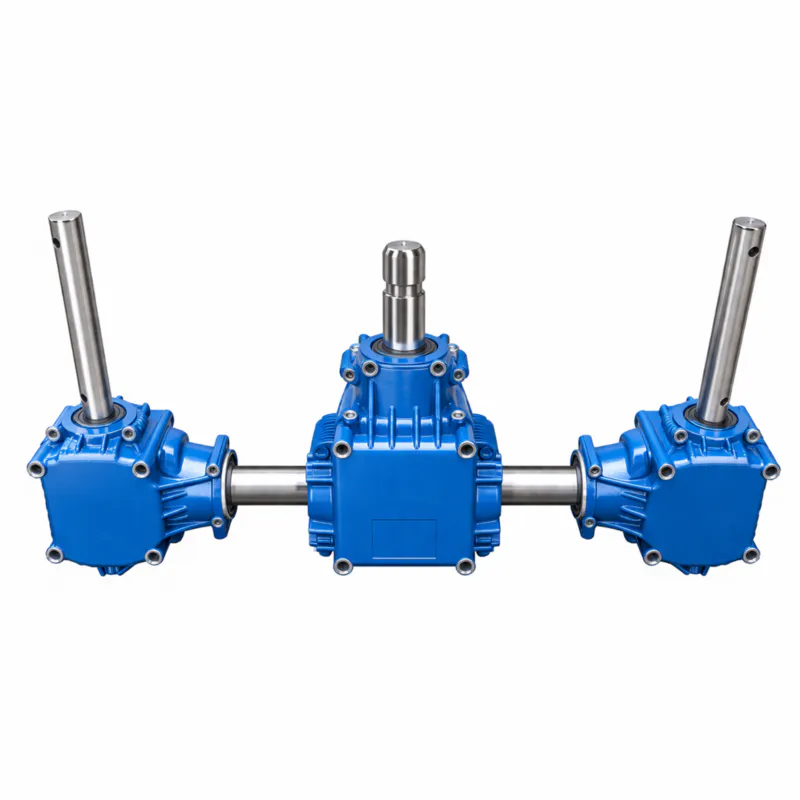
EP-L150C Fertilizer Spreader Gearbox – Replacement of Comer Code
A precision-engineered fertilizer spreader gearbox built as a direct drop-in replacement for the Comer Code L-150C, delivering reliable power transmission in the most demanding field conditions across Brazil and global agricultural markets.
Input Speed: 540 rpm
Power P1: 9.9 kW
Output Torque M2: 126 Nm
Replaces: Comer L-150C
Quick Summary
- The EP-L150C is a fertilizer spreader gearbox engineered as a direct replacement for Comer Code L-150C, matching all original mounting dimensions and PTO spline interfaces.
- Key technical data: gear ratio 1.35, input speed 540 rpm, input power 9.9 kW, output torque 126 Nm — suitable for centrifugal disc spreaders used in soybean, corn, sugarcane, and grain farming.
- Manufactured to ISO 9001:2015 quality standards and CE compliance, with documented compatibility with ABNT agricultural machinery guidelines active in the Brazilian market.
1. What Is a Fertilizer Spreader Gearbox?
A fertilizer spreader gearbox is the mechanical heart of any centrifugal or pendulum-type spreader. Its primary function is to accept rotational power from a tractor’s PTO shaft — typically running at 540 rpm — and transmit that power efficiently to the spreading disc or agitator assembly. In the EP-L150C model, this transmission happens through a precisely cut internal helical or bevel gear train that achieves a nominal gear ratio of 1.35, yielding an output speed well-matched to the rotational demands of standard twin-disc fertilizer equipment across a wide range of crop types.
Designed as a direct fertilizer spreader gearbox replacement for the widely used Comer Code L-150C, the EP-L150C maintains fully interchangeable bolt patterns, input shaft dimensions, and output shaft configurations. This allows farmers and equipment operators in Brazil, Argentina, South Africa, Australia, and across the European Union to swap out a worn or damaged original unit without modifying the spreader frame — a significant advantage in the middle of a planting or fertilization campaign when every day of downtime matters.
The gearbox housing is constructed from high-strength cast iron, balancing weight economy with the structural rigidity required to absorb the torsional shocks typical in field operation. The internal gear train is produced from case-hardened alloy steel, ground to DIN 8 accuracy grade and heat-treated to achieve surface hardness in the HRC 58–62 range. This combination ensures that the EP-L150C can sustain continuous duty cycles at 9.9 kW input power while delivering a rated output torque of 126 Nm — sufficient for spreading granular fertilizers including urea, MAP, NPK blends, and lime at application widths from 12 to 28 metres depending on spreader configuration.
2. Five Key Product Advantages
① Direct Drop-In Compatibility
The EP-L150C matches every critical dimension of the Comer Code L-150C — mounting face, input/output shaft diameter, and bolt circle — allowing a tool-free fit into existing spreader frames. No drilling, no adapter plates. This is the defining advantage for dealers and service technicians who stock a single fertilizer spreader gearbox replacement part to cover a broad installed base of equipment.
② Case-Hardened Gear Train Durability
Internal gears are manufactured from 20CrMnTi case-hardened alloy steel, carburized and quenched to HRC 58–62 at the tooth flanks while maintaining a tough, ductile core. This dual-zone metallurgy gives the gear train exceptional resistance to surface pitting and subsurface fatigue — the two most common failure modes in fertilizer spreader gearbox parts exposed to abrupt load cycles during field operation.
③ Sealed for Dust and Moisture
The EP-L150C carries an IP54 ingress protection rating, with labyrinth seals on both input and output shaft exits reinforced by double-lip contact seals. Field dust, granular fertilizer residue, and wash-down water are all blocked from the internal oil chamber. In tropical conditions typical of Brazilian cerrado and Argentine pampas farming, this seal integrity is central to achieving the rated L10 bearing life of 5,000+ operating hours.
④ Low-Maintenance Oil-Bath Lubrication
The integrated oil-bath system holds 0.35 litres of 80W-90 GL-5 gear oil, ensuring that every rotating component receives continuous lubrication without external pump systems. The oil charge interval is set at 500 operating hours under normal conditions — far longer than grease-packed alternatives. A magnetic drain plug captures ferrous wear particles before they circulate, extending the service life of both gears and bearings.
⑤ Verified ISO 9001:2015 Manufacturing Quality
Every EP-L150C unit passes a documented inspection protocol covering dimensional tolerances, gear contact pattern analysis, oil-tightness pressure testing, and pre-shipment run-in testing at rated speed. The manufacturing process is governed under ISO 9001:2015 quality management, and the product carries CE marking, confirming conformity with EU Machinery Directive 2006/42/EC — a requirement for importers and distributors operating across European, South American, and Australian regulatory jurisdictions.
3. Working Principle of the EP-L150C Fertilizer Spreader Gearbox
Power enters the EP-L150C through the 1-3/8″ Z6 spline input shaft, which connects directly to the tractor’s PTO or to a telescoping PTO driveline. At standard 540 rpm PTO speed, the input shaft rotates the primary drive gear. This gear meshes with the driven gear at a ratio of 1.35:1, stepping the speed up to approximately 400 rpm at the output shaft. This moderate speed increase is specifically calibrated to keep centrifugal disc RPM within the window that produces optimal fertilizer spread pattern uniformity — typically 350–420 rpm for most commercial twin-disc spreader heads.
Inside the cast-iron housing, the gear engagement occurs in a fully enclosed oil bath. Splash lubrication carries gear oil from the sump to the tooth flanks, bearings, and shaft seals during every revolution. The helical gear tooth profile minimizes impact noise and distributes the contact load across a wider face width than straight-cut gears, reducing peak Hertzian contact stress. This gear geometry also contributes to the smooth torque delivery required for precise, even fertilizer distribution — sudden torque spikes from a rougher gear mesh would translate directly into spreading pattern irregularities and over- or under-application zones.
Output torque of 126 Nm exits through the keyed output shaft and drives the spreader disc assembly. When the tractor operator engages or disengages the PTO, the unit handles these load transition events without issues thanks to the generous service factor of 1.4 built into the gear sizing calculations. Understanding this fertilizer spreader gearbox working cycle helps operators optimize PTO engagement speed, avoid cold-start damage, and plan preventive maintenance intervals correctly — all critical for the multi-season operational demands of large-scale grain and oilseed farming.
4. Material Composition & Metallurgical Specifications
The choice of materials in the EP-L150C reflects a deliberate engineering philosophy: each component is matched to its specific stress environment, rather than using a single generic alloy throughout. The housing casting uses HT250 gray cast iron, selected for its excellent vibration-damping characteristics, machinability to tight tolerances, and corrosion resistance in the presence of fertilizer dust and agricultural chemicals. The casting wall thickness is maintained at a minimum of 8 mm across all load-bearing faces, ensuring that neither bending loads during field transport nor sustained torsional operating loads cause housing deformation.
Gear blanks are rough-machined from 20CrMnTi alloy steel bar stock, then hobbed or shaped to precise tooth profiles before undergoing carburizing and case-hardening heat treatment. The carburized case depth reaches 0.8–1.2 mm, providing the hard surface needed to resist pitting and abrasion while the unaffected core retains its toughness against shock loads. Output and input shafts are produced from 42CrMo4 alloy steel, quenched and tempered to a core hardness of HB 260–300, then induction-hardened at the journal surfaces to extend bearing seat wear life. Seals are double-lip NBR (acrylonitrile-butadiene rubber) with a PTFE dust lip, chemically resistant to GL-5 gear oils and common liquid fertilizers used in modern precision farming.
5. Application Scenarios
The EP-L150C fertilizer spreader gearbox is engineered for a wide range of agricultural and large-scale land-management applications. Its compact size and compatibility with 540 rpm PTO tractors from 18 kW upward means it integrates into spreader platforms used across crop types, farm sizes, and geographic markets — from the broad soybean belts of Mato Grosso and Paraná in Brazil to grain farms across Eastern Europe and Australia.
Granular Fertilizer Spreading
The most common use case. The gearbox drives twin or single spreading discs that broadcast urea, NPK blends, diammonium phosphate (DAP), and potassium chloride (KCl) across row crops and pastures. The 1.35 gear ratio and smooth torque delivery produce consistent disc speed, which is directly linked to spread width uniformity and application-rate accuracy.
Agricultural Lime Application (Calcário)
In Brazilian cerrado farming, lime application — known locally as calagem — is an essential soil-correction practice before soybean and corn planting. Granular lime is denser and more abrasive than standard fertilizers. The EP-L150C’s case-hardened gear train and sealed housing are specifically well-suited to the more demanding duty cycles and particle impacts associated with lime spreading.
Sugarcane Nutrition Programs
Brazil’s sugarcane belt in São Paulo and Paraná states requires repeated fertilizer applications during the growing season. Spreader-mounted gearboxes operating in high-humidity, high-temperature conditions typical of tropical agriculture must resist corrosion and maintain lubricant integrity across multi-season use. The EP-L150C’s NBR seals and GL-5 oil bath meet these operational demands.
Turf, Sports Field & Landscaping
Beyond row crops, the compact dimensions and low operating noise of the EP-L150C make it suitable for turf management on golf courses, sports stadiums, and municipal parks. Contractors managing high-value turf require precisely metered fertilizer applications with zero overlap or gap zones — conditions that demand gearbox precision equivalent to that validated in demanding field agriculture.
Pasture Rehabilitation & Reseeding
Livestock operations in Brazil’s Cerrado and in Argentine pampas regularly use fertilizer spreaders to broadcast both fertilizer and grass seed simultaneously. The gearbox drives spreading mechanisms for both materials, with consistent disc RPM being critical to achieving target seed and fertilizer placement densities across wide swaths in a single pass.
6. Regulatory Compliance & Legal Requirements by Region
Agricultural machinery gearboxes are subject to safety, environmental, and quality regulations that vary by country. Buyers, importers, and distributors of fertilizer spreader gearbox equipment should verify applicable regional standards before placing orders or installing replacement parts on commercial equipment.
Brazil (Primary Market)
In Brazil, agricultural machinery is governed by ABNT NBR standards. ABNT NBR 16929 and related standards establish safety requirements for PTO-driven implements, including minimum shielding requirements for driveline components. Brazil’s MAPA (Ministério da Agricultura, Pecuária e Abastecimento) regulates the registration and technical specifications of agricultural inputs and equipment. Additionally, NR-31 (Norma Regulamentadora 31) issued by the Ministry of Labour sets occupational safety rules for farm machinery, including PTO guards and operator risk assessments. Importers of agricultural gearboxes into Brazil are advised to maintain technical documentation demonstrating compliance with these standards, particularly when the equipment is used by rural workers under formal employment.
European Union
The EU Machinery Directive 2006/42/EC governs the design and manufacture of agricultural machinery components, including gearboxes. CE marking is mandatory for PTO-driven implements placed on the EU market. ISO 11684 specifies safety sign requirements for agricultural machinery. EN 15811 addresses safety of agricultural machinery and PTO-driven equipment specifically. The EP-L150C carries CE marking, confirming it meets applicable Essential Health and Safety Requirements of the Machinery Directive.
United States & Canada
ASABE (American Society of Agricultural and Biological Engineers) standards S203 and S318 define PTO driveline dimensions and safety shield requirements applicable to fertilizer spreader equipment. The OSHA 29 CFR 1928 Subpart C standard sets agricultural machinery safety rules, including requirements for PTO guards, that affect how replacement gearboxes must be integrated into existing equipment. In Canada, provincial occupational health and safety regulations parallel federal OSHA requirements, with specific attention to PTO driveline safety in grain farming provinces.
Australia
AS 2671 and the National Code of Practice for the Design, Manufacture, Supply and Installation of Agricultural Machinery (Safe Work Australia) govern PTO-driven equipment. The EP-L150C’s compliance with ISO 500 for PTO shaft dimensions ensures dimensional compatibility with Australian tractor fleets and regulatory acceptance.
Argentina & Other Mercosur Nations
SENASA (Servicio Nacional de Sanidad y Calidad Agroalimentaria) in Argentina oversees agricultural inputs and equipment standards. Mercosur technical regulations follow a framework broadly harmonized with international ISO standards, making CE-marked and ISO-certified products generally acceptable across the bloc with appropriate technical documentation.
7. Fertilizer Spreader Gearbox Installation Guide
Proper fertilizer spreader gearbox installation is essential for both equipment longevity and operator safety. The following steps apply to installing the EP-L150C as a direct replacement in Comer L-150C-compatible spreader frames. Always perform installation with the PTO disconnected and the tractor engine off, with the parking brake engaged.
- Remove the old unit. Drain the lubricant from the original gearbox, then disconnect the PTO driveline and the output disc shaft. Remove the four mounting bolts (typically M12 × 1.75) securing the gearbox to the spreader frame. Retain all hardware for reuse unless corrosion warrants replacement.
- Inspect the mounting face. Clean the spreader frame mounting surface with a wire brush and confirm flatness. A warped or debris-laden mounting face will impose bending loads on the new gearbox housing, potentially causing premature seal failure.
- Fill oil before mounting. Fill the EP-L150C with the specified 0.35 L of 80W-90 GL-5 gear oil through the fill plug before installation. Confirm the oil level via the level plug or sight glass once the unit is in its operating position.
- Mount the gearbox. Align the EP-L150C with the mounting holes and torque all four bolts to 45–50 Nm using a calibrated torque wrench. Apply medium-strength thread-locking compound to bolt threads if vibration exposure is expected to be high.
- Reconnect the PTO driveline. Ensure the driveline telescopes freely throughout the full range of tractor–implement articulation, with a minimum 50 mm overlap on the inner tube at maximum extension. Confirm all PTO guard components are in place and undamaged before operation.
- Run-in period. For the first 10 operating hours, limit input speed to 400 rpm and inspect for oil leaks, abnormal noise, or excessive heat after each session. Full-rated-speed operation from hour 10 onward.
8. About Us
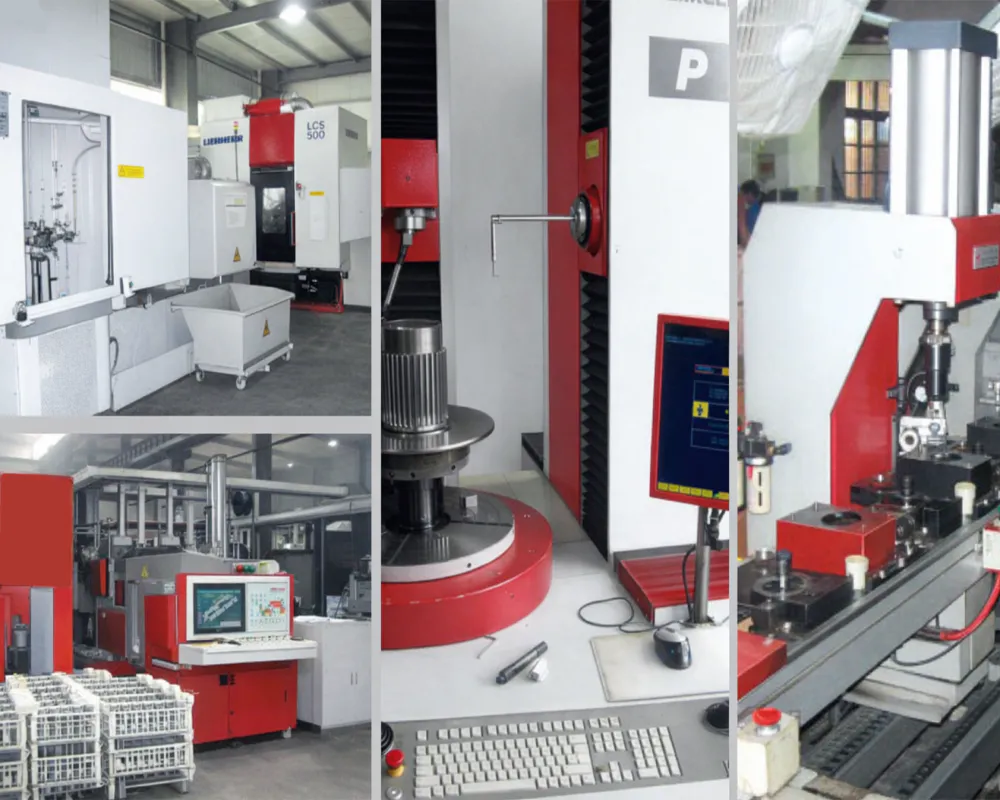
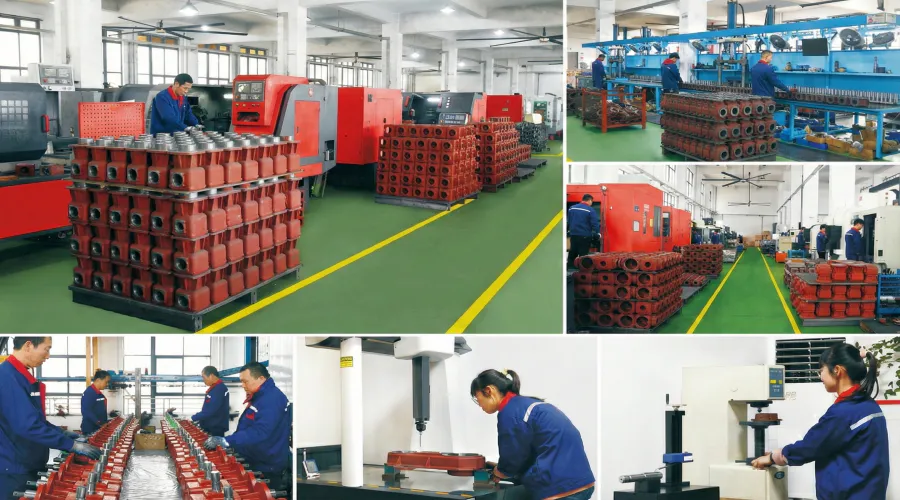
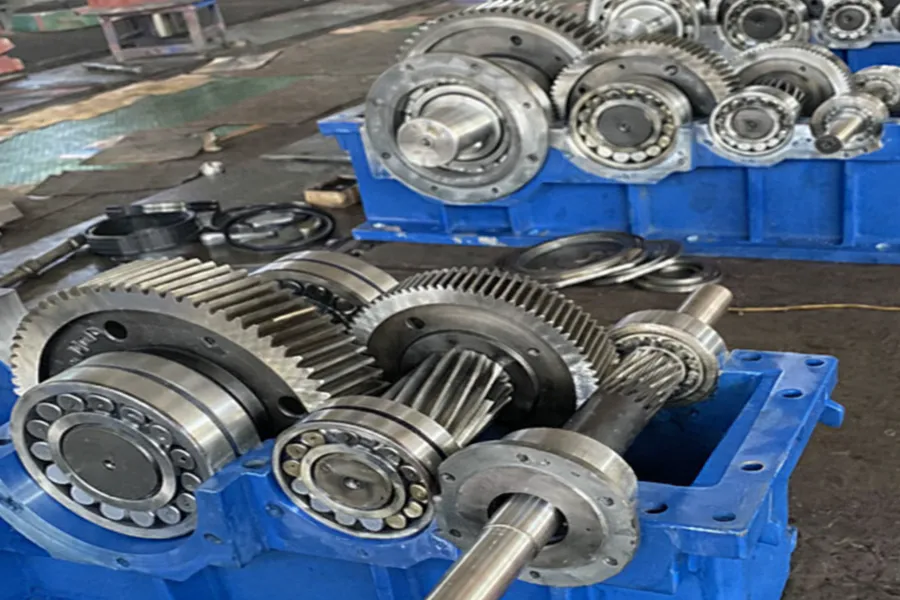
We are a specialist manufacturer of agricultural power transmission components, with a production focus on gearboxes, driveline assemblies, and related mechanical parts for the global farming equipment market. Our engineering and manufacturing operations are certified to ISO 9001:2015, reflecting a quality management system built around traceable raw material sourcing, controlled heat treatment processes, in-process dimensional inspection, and final acceptance testing for every unit before shipment.
Our product range spans the full spectrum of agricultural gearbox types: fertilizer spreader gearboxes, rotary cutter gearboxes, hay baler gearboxes, flail mower gearboxes, and special-purpose units for OEM customers. We serve dealers, distributors, and large-scale farming operations across Brazil, Argentina, the European Union, South Africa, Australia, and North America. Our in-house engineering team maintains an active product development programme, regularly introducing new replacement models for discontinued or legacy OEM gearboxes — addressing a persistent market need in the agricultural aftermarket.
WorkShop
9. Related Products & System Components
A complete, reliable fertilizer spreading system goes beyond the gearbox itself. We offer a fully integrated range of power transmission and driveline components designed to work together, giving customers the advantage of single-source procurement and confirmed system compatibility.
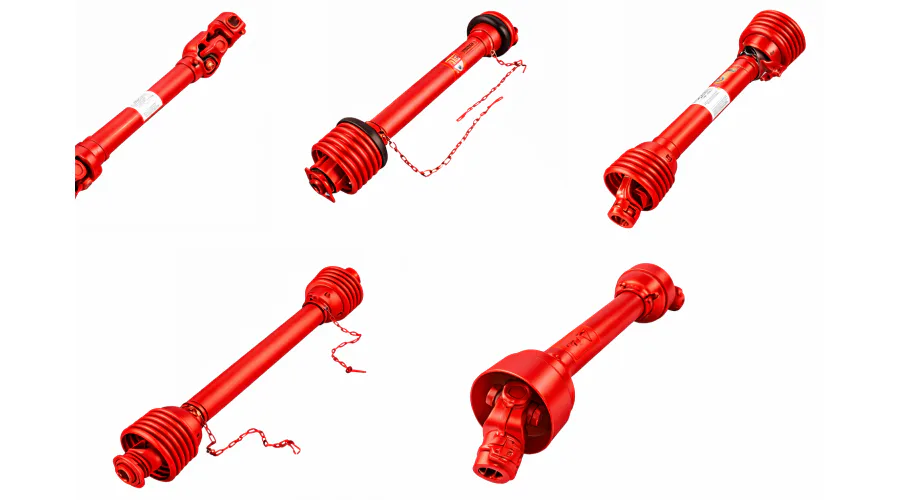
PTO Shafts for Fertilizer Spreaders
The power connection between your tractor and the EP-L150C gearbox depends entirely on a correctly specified PTO shaft — matching cross-section, telescoping range, and overrunning clutch specification to the tractor-spreader geometry. Our range of telescoping PTO drive shafts covers all standard 540 rpm and 1,000 rpm configurations, with wide-angle CV joints for high-articulation installations. Ordering the gearbox and driveshaft together ensures confirmed interface compatibility. Browse our full range at pto-shaft
Roller Chains, Sprockets & Drive Components
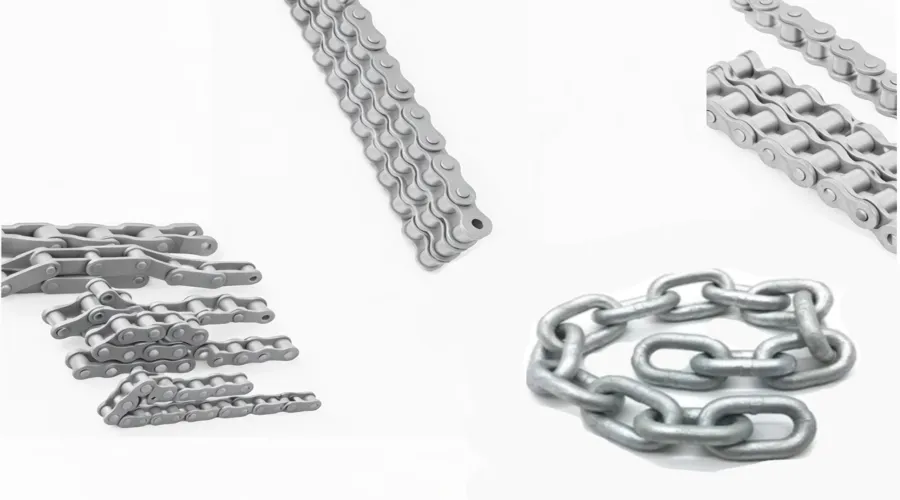
Where the output of the fertilizer spreader gearbox drives a chain-and-sprocket assembly to the spreading mechanism, the choice of chain pitch, sprocket material, and lubrication system matters for long-term reliability. We supply matched roller chain sets and hardened-tooth sprockets that pair seamlessly with our gearbox output shafts. Full-system supply from a single source means no mismatched component standards and simplified spare parts management for dealers and farmers alike.
Frequently Asked Questions
Q1. How does fertilizer spreader gearbox design affect nutrient distribution efficiency and crop yield outcomes in precision agriculture operations?
Fertilizer spreader gearbox design directly influences three measurable precision agriculture outcomes: (1) spread width consistency — a well-balanced gear ratio ensures constant disc RPM, producing symmetric, predictable spread patterns that allow accurate GPS section control integration; (2) application rate accuracy — consistent torque delivery to the spreading mechanism keeps granule velocity uniform, maintaining intended target application rates (kg/ha) within acceptable variance across field topographies; (3) system uptime — a gearbox built for reliable multi-season operation reduces the number of unplanned interruptions during critical application windows, which in variable-rate and variable-timing precision programmes translates directly into avoided yield penalties and fertilizer efficiency gains.
Q2. How do I correctly install a fertilizer spreader gearbox on a twin-disc spreader without voiding the warranty?
Correct installation involves: (1) disconnecting the PTO and stopping the tractor engine completely, (2) draining the old gearbox oil and cleaning the mounting face, (3) pre-filling the new EP-L150C with 0.35 L of 80W-90 GL-5 gear oil before mounting, (4) torquing mounting bolts to 45–50 Nm, (5) verifying the PTO driveline telescoping clearance, and (6) running a low-speed break-in for the first 10 operating hours. Following these steps precisely maintains the manufacturer’s warranty coverage and ensures safe PTO-driven operation compliant with NR-31 requirements in Brazil.
Q3. Which fertilizer spreader gearbox parts are most commonly replaced during routine maintenance in Argentine and Brazilian farming operations?
The most frequently replaced fertilizer spreader gearbox parts are: input and output shaft oil seals (double-lip NBR type), deep groove ball bearings at both shaft exits, and the magnetic drain plug (which captures wear debris and should be replaced at each oil change). In units operating in very high-dust environments — such as during lime spreading on large Brazilian cerrado farms — the shaft seal lip may require more frequent inspection. Gear sets themselves are rarely replaced unless the unit has suffered a mechanical overload event.
Q4. How does a fertilizer spreader gearbox work, and why does gear ratio matter for application accuracy in large-scale crop production?
A fertilizer spreader gearbox accepts rotational input from the tractor PTO at 540 rpm and steps the speed up through an internal gear train — in the EP-L150C at a ratio of 1.35:1 — to drive the spreading discs at approximately 400 rpm. This specific disc speed determines the centrifugal energy imparted to each fertilizer granule and directly controls spread width and distribution uniformity. If the gear ratio is incorrect or inconsistent (due to gear wear or a mismatched replacement), the disc speed changes and the resulting spread pattern shifts — leading to over-application in some zones and under-application in others, measurably impacting crop yield and nutrient use efficiency.
Q5. Which PTO shaft specifications are compatible with the EP-L150C fertilizer spreader gearbox input for use with modern Brazilian and European tractors?
The EP-L150C input shaft accepts the standard 1-3/8″ Z6 (6-spline) profile per ISO 500, which is the most common 540 rpm PTO interface on agricultural tractors worldwide — including John Deere, AGCO Fendt, Massey Ferguson, Valtra, and all major Brazilian-market tractor brands such as New Holland in the 60–120 hp range. For tractor models equipped with 1-3/4″ Z20 (20-spline) 1,000 rpm PTO as the primary output, a reducer adapter shaft or a 1,000/540 rpm reduction coupling is required before connecting to the EP-L150C.
Editor: PXY