Description
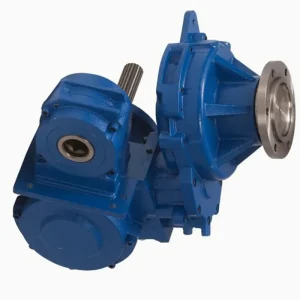
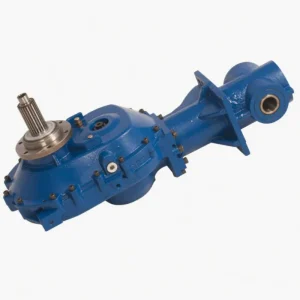
EP-QZ115 Double Disc Silage Machine Gearbox
A purpose-built silage machine gearbox engineered for double-disc forage harvesters — delivering 580 N·m output torque, synchronized disc rotation, and Gleason helical tooth geometry for precise, high-throughput chopping in demanding field conditions.
1. Technical Parameters — EP-QZ115 Silage Machine Gearbox
The table below lists the primary engineering parameters for the EP-QZ115. For OEM configurations, custom shaft diameters, housing flanges, or special duty ratings, contact the technical team directly.
| Parameter | Value |
|---|---|
| Model Number | EP-QZ115 silage machine gearbox |
| Application | Double-disc silage machines, forage harvesters |
| Gear Ratio (i) | 1:1 (speed-maintaining) |
| Input Speed (rpm) | 1000 r/min |
| Output Speed (rpm) | 1000 r/min |
| Rated Output Torque | 580 N·m |
| Peak / Overload Torque | 870 N·m (×1.5 service factor) |
| Tooth Type | Gleason Helical Teeth |
| Input Shaft Diameter | Φ45 / Φ40 / Φ35 mm (selectable) |
| Keyway Width | 14 mm (Φ45) / 12 mm (Φ40) / 10 mm (Φ35) |
| Keyway Depth | 39.5 mm (Φ45) / 35 mm (Φ40) / 30 mm (Φ35) |
| Bolt Thread | M14 (Φ45) / M12 (Φ40, Φ35) |
| Unit Weight | 35 kg |
| Gear Material | 20CrMnTi carburized & case-hardened alloy steel |
| Housing Material | QT450 ductile cast iron |
| Bearing Type | Tapered roller bearings (GCr15 steel) |
| Gear Surface Hardness | 58–62 HRC (case-hardened) |
| Lubrication | ISO VG 220 industrial gear oil, splash lubrication |
| Seal Type | Double-lipped oil seals, NBR compound |
| Surface Treatment | Phosphating + two-coat agricultural enamel |
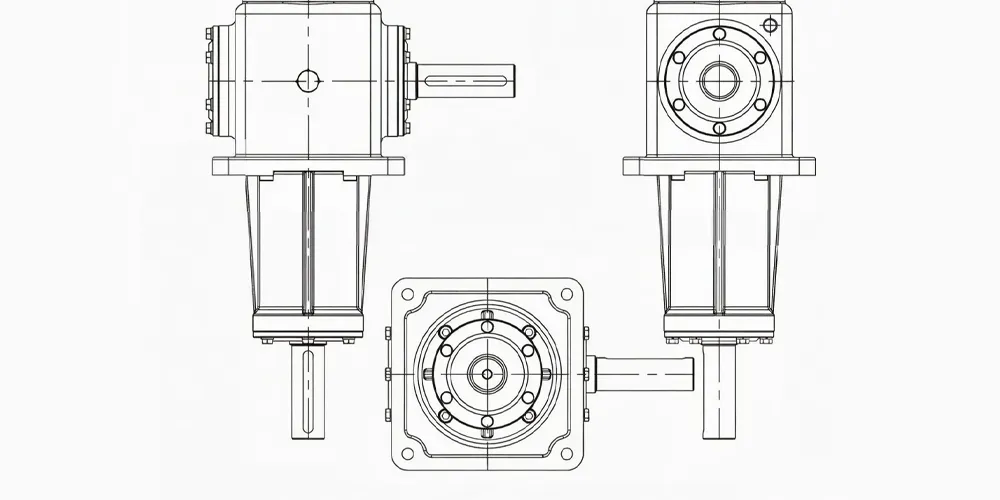
Shaft Dimension Options
Three input shaft configurations are available to match common tractor PTO coupling standards used in Brazil, Europe (DIN 9611), and North America (ASAE S6.1).
| A (Shaft Dia.) | B (Keyway Width) | C (Keyway Depth) | D (Bolt Thread) |
|---|---|---|---|
| Φ45 | 14 | 39.5 | M14 |
| Φ40 | 12 | 35 | M12 |
| Φ35 | 10 | 30 | M12 |
2. What Is the EP-QZ115 Silage Machine Gearbox?
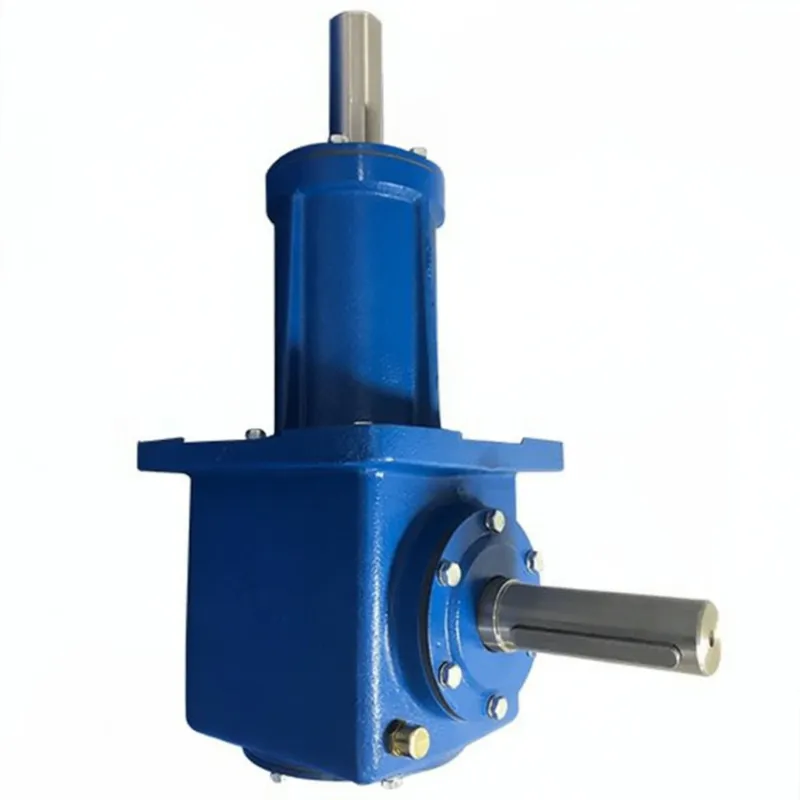
The EP-QZ115 silage machine gearbox is a purpose-designed silage machine gearbox specifically engineered for double-disc forage harvesters used in commercial and farm-scale silage production. At its core, this is a power transmission unit that bridges the tractor’s PTO output and the twin cutting discs of the harvesting head — handling the precise torque loads, rotational synchronization, and shock absorption demands that define real-world field operation. It is classified under the broader family of forage harvester gearbox systems, sharing the same design philosophy as industrial agricultural transmission units but optimized for the dimensional and load constraints of double-disc machines.
Unlike single-disc alternatives, the double-disc layout requires both output shafts to spin at exactly the same speed and in phase — otherwise, the cutting knives generate uneven chop lengths and increased vibration. The EP-QZ115 silage machine gearbox achieves this synchronization through its balanced Gleason helical tooth geometry, which reduces backlash to a minimum while also lowering operational noise. The housing is manufactured from cast alloy steel, pressure-tested to ensure zero oil leakage at rated loads, and designed to accept standard agricultural flange bolt patterns for drop-in installation on most commercially available silage harvesting platforms.
Producers in Brazil, Argentina, and across Latin America have increasingly adopted corn silage harvester gearbox solutions at this specification level, driven by the shift toward total mixed ration (TMR) feeding systems that demand consistent forage quality. The EP-QZ115 silage machine gearbox addresses that need directly — providing a reliable, field-serviceable replacement gearbox for silage harvester platforms without requiring machine modifications.
3. How the Silage Machine Gearbox Works
The power flow begins at the tractor PTO shaft, which delivers rotational energy at 540 or 1000 rpm into the gearbox input flange. Inside the EP-QZ115 silage machine gearbox , this input torque passes through the Gleason helical gear set — a tooth geometry chosen for its high contact ratio and gradual load engagement, which significantly reduces impact shock compared to spur gears when the cutting discs encounter dense crop material like standing maize or thick-stemmed grass swards. The helical arrangement also operates with less noise, an important consideration when operators spend long hours adjacent to the machine.
From the central gear set, power is split symmetrically to two output shafts — each driving one cutting disc. The 1:1 speed ratio means both discs rotate at precisely the same speed as the input, which is intentional: in a double-disc forage harvester gearbox application, maintaining input speed at the disc level (rather than reducing it) allows the knives to achieve the cutting velocity needed for clean, low-compression cuts through the crop stem. Compression-cut forage bruises cell walls and accelerates aerobic spoilage during fermentation, while knife-speed-optimized cutting like that enabled by the EP-QZ115 silage machine gearbox produces a dry, clean chop face that seals more reliably in the clamp or bag.
Bearing selection inside the EP-QZ115 silage machine gearbox follows heavy-duty agricultural standards — tapered roller bearings handle the combined radial and axial loads generated when the discs contact the crop, while shaft seals are double-lipped to prevent field contamination from crop dust, moisture, and abrasive soil particles from entering the lubricant. This self-contained design means the pto driven silage harvester gearbox requires no external hydraulic lines, cooling circuits, or electronic controls — it is purely mechanical and field-repairable with basic workshop tooling.
4. Materials & Metallurgical Specification
Material selection for a heavy duty forage harvester gearbox like the EP-QZ115 silage machine gearbox is not arbitrary — it directly determines how the unit responds to the cyclical impact loading that occurs every time the cutting discs strike a dense crop row. The gear teeth are cut from 20CrMnTi alloy steel (chromium-manganese-titanium steel per GB/T 3077), which undergoes carburizing followed by case hardening to achieve a surface hardness of 58–62 HRC while maintaining a tough, impact-resistant core hardness of 30–38 HRC. This dual-zone hardness profile prevents the surface wear associated with soft gears while avoiding the brittle fracture failure mode of through-hardened steels.
The housing is cast from QT450 ductile iron (nodular cast iron per ISO 1083), selected for its excellent combination of strength, machinability, and vibration damping. Ductile iron absorbs operational vibration at a higher rate than welded steel fabrications, which matters significantly when the machine is working through uneven terrain or heavily lodged crop. All bearing seats are finish-bored and ground to H7 tolerance to ensure correct interference fit with the GCr15 tapered roller bearings. Shaft seals are manufactured from NBR (nitrile butadiene rubber) compound, providing resistance to petroleum-based gear oils as well as the moisture and crop juice environment of forage harvesting. Surface finishing consists of a phosphating conversion coating followed by two coats of agricultural-grade enamel — a combination that has proven effective in the high-humidity, UV-intensive conditions common across Brazil’s Cerrado and Sul regions.
5. Five Key Advantages of the EP-QZ115 silage machine gearbox
Both output shafts are driven from a single Gleason helical gear set, maintaining phase-perfect synchronization regardless of load variation. This eliminates differential disc speed — the primary cause of uneven chop length and increased knife wear in double-disc silage machines.
At 580 N·m rated torque with a 1.5× service factor, the EP-QZ115 handles dense crop entry and hard-stalk crops like mature maize without tooth skip or overload failure. Helical tooth geometry distributes contact stress across a wider face, reducing peak Hertzian contact pressure compared to spur gear designs.
QT450 ductile iron housing, 20CrMnTi case-hardened gears, and GCr15 tapered roller bearings deliver a design life well beyond a single season of intensive silage harvesting. Units are pressure-tested for oil integrity before dispatch, and the double-lipped NBR seals prevent field contamination in dusty, humid conditions.
Three input shaft diameter options (Φ35, Φ40, Φ45 mm) allow the EP-QZ115 silage machine gearbox to integrate directly with the PTO coupling standards used by major tractor brands across Brazil (New Holland, John Deere, Massey Ferguson, Valtra). No adapter sleeves or custom machining required for standard platform installations.
Clean, knife-speed-optimized cuts minimize forage cell wall compression, preserving water-soluble carbohydrates available to lactic acid bacteria during fermentation. Consistent particle length (achievable when disc speed is stable) supports rapid silo face consolidation — a critical factor in reducing dry matter losses in tropical climates.
6. Application Scenarios
The EP-QZ115 silage machine gearbox is deployed across a wide range of agricultural production systems where reliable forage harvesting directly impacts livestock performance and operational profitability.
Corn Silage Harvesting
Mature maize is the most demanding crop in terms of stalk diameter and disc torque requirements. The EP-QZ115 silage machine gearbox’s 580 N·m rating handles whole-plant corn harvesting at commercial speeds without stalling or generating excessive knife deflection. This makes it a primary choice for the corn silage harvester gearbox replacement market in Mato Grosso, Goiás, and Paraná states of Brazil, where large-scale dairy and feedlot operations rely on corn silage as their base ration ingredient.
Grass & Tropical Forage Crops
Brachiaria, Napier grass (capim-elefante), and Tifton 85 are the dominant silage crops across tropical Brazil. These high-biomass grasses present a different challenge than corn — they are lighter per stem but accumulate in the cutting head at high bulk density. The synchronized disc drive of the EP-QZ115 silage machine gearbox prevents crop wrapping and feeding irregularities that are common failure modes when discs run at even fractionally different speeds.
Alfalfa & Legume Silage
Alfalfa’s fine-stemmed, multi-cut nature means the silage machine is operated more frequently per season than in corn production. The EP-QZ115’s maintenance schedule — oil changes every 200 hours and periodic seal inspection — keeps downtime low in high-utilization alfalfa operations. As a forage harvester spare parts gearbox option, it fits existing double-disc platforms without frame modification.
Dairy Farm Feed Preparation
On integrated dairy farms, the silage machine is operated 40–120 days per year during the main harvest window. Consistent particle size from the EP-QZ115 silage machine gearbox ‘s synchronized cutting system directly affects silo packing density and fermentation quality — two variables that nutritionists consider critical to NDF digestibility and peak milk production.
Custom & Contractor Services
Agricultural contractors who operate silage machines commercially — harvesting for multiple farms across a season — place very high reliability demands on gearbox components. The EP-QZ115 silage machine gearbox is frequently specified as the silage harvester machine gearbox replacement of choice by contracting fleets because its standard shaft dimensions allow interchangeability across mixed equipment inventories.
7. Maintenance Guidelines
Extending the service life of a silage machine gearbox is straightforward when a structured maintenance protocol is followed. The EP-QZ115 is designed for field serviceability — all service points are accessible with standard agricultural workshop tools.
Check oil level using the dipstick or sight glass. Use ISO VG 220 gear oil. Replace oil if it appears milky (indicating water ingress) or black and gritty (indicating oxidation or metal particle contamination).
Inspect all shaft seals and housing gaskets for seepage. Replace double-lipped NBR seals showing cracking, hardening, or lip wear. Seal failure is the most common preventable cause of gear oil contamination in field conditions.
After any impact event (rock strike, lodged crop jam), verify that the gearbox mounting flanges are still square to the machine frame. Misalignment of more than 0.5 mm across the flange face accelerates bearing wear and shortens gear life significantly.
Clean the breather/vent cap after every harvesting session. Blocked ventilation causes pressure buildup inside the housing, forcing oil past seals even when seals are undamaged. This is a frequently overlooked but straightforward preventive measure.
Verify all mounting bolts to the machine frame against the manufacturer torque specification (M14: 130 N·m; M12: 90 N·m) after the first 10 hours of a new installation and then annually. Vibration-induced bolt loosening is a primary cause of housing crack damage.
8. Regulatory Compliance & Standards
Agricultural machinery transmission components are subject to a variety of national and international standards depending on the market of operation. Buyers specifying a forage harvester gearbox supplier should verify that components meet the regulatory framework applicable to their country of operation.
| Region | Standard / Regulation | Relevance to Gearbox |
|---|---|---|
| Brazil | ABNT NBR 15985 / NR-31 (Agricultural Safety) | PTO shaft guarding, operator protection during maintenance of agricultural machinery transmissions |
| EU | Machinery Directive 2006/42/EC + EN ISO 4254-7 | Safety requirements for forage harvester design; CE marking required for free market circulation |
| USA | ASAE S318 / ASAE S206 (PTO Shaft Standards) | Dimensional and performance standards for PTO-driven agricultural gearbox shafts; relevant to Φ35–Φ45 input coupling |
| International | ISO 9001:2015 Quality Management | Manufacturing quality system standard; confirms production process traceability and product consistency |
| International | ISO 6336 (Gear Strength Calculation) | Standard methodology for calculating bending and pitting resistance of gears; validates torque rating methodology |
| Argentina | IRAM 20543 / Resolution 235/1996 (SENASA) | Import and use of agricultural machinery components; relevant for buyers sourcing replacement gearboxes for certified harvesters |
9. About Us
We are an ISO 9001:2015-certified manufacturer specializing in agricultural power transmission equipment — including the full range of silage machine gearboxes, forage harvester transmission units, PTO-driven gearboxes, and associated drivetrain components. Our engineering team has over decades of focused experience in designing agricultural gearboxes that meet the specific demands of field-level operation: high torque, shock resistance, sealed housings, and field-serviceable designs that keep downtime short during the harvest window.
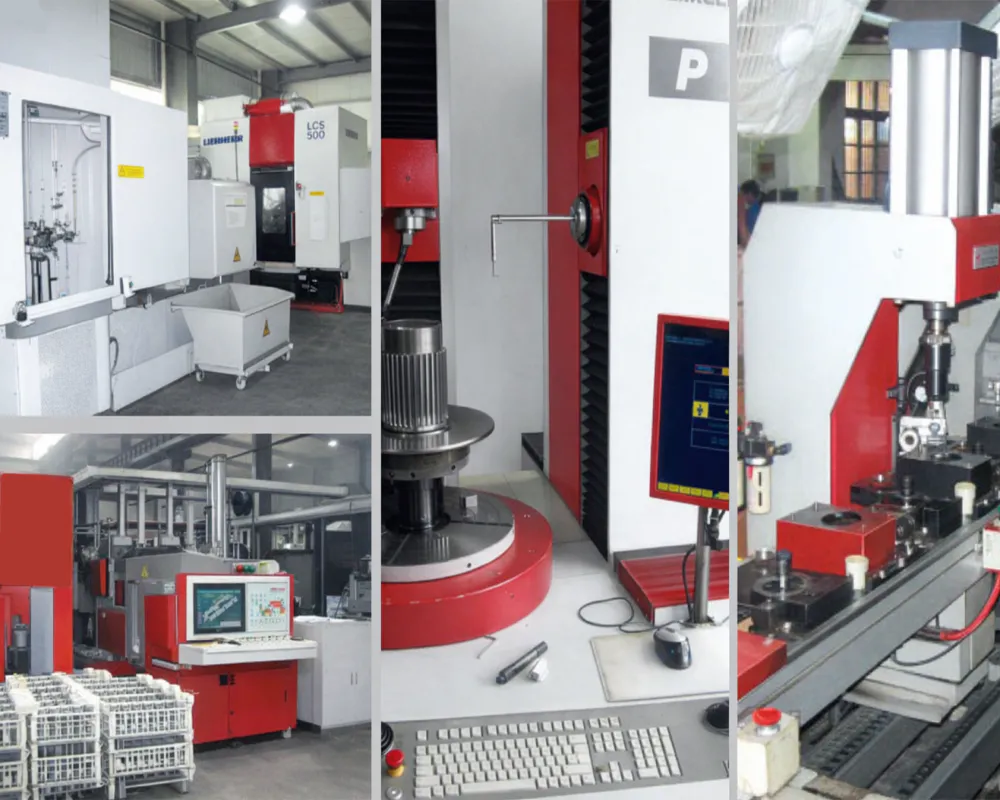
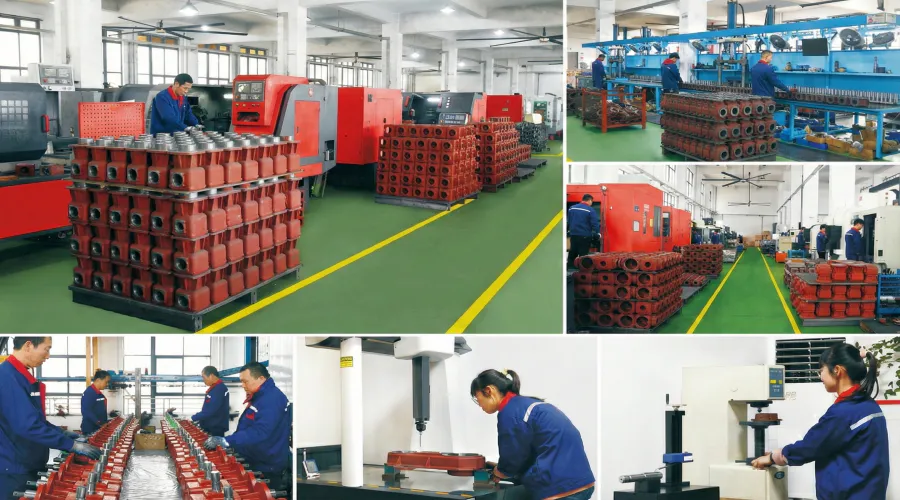
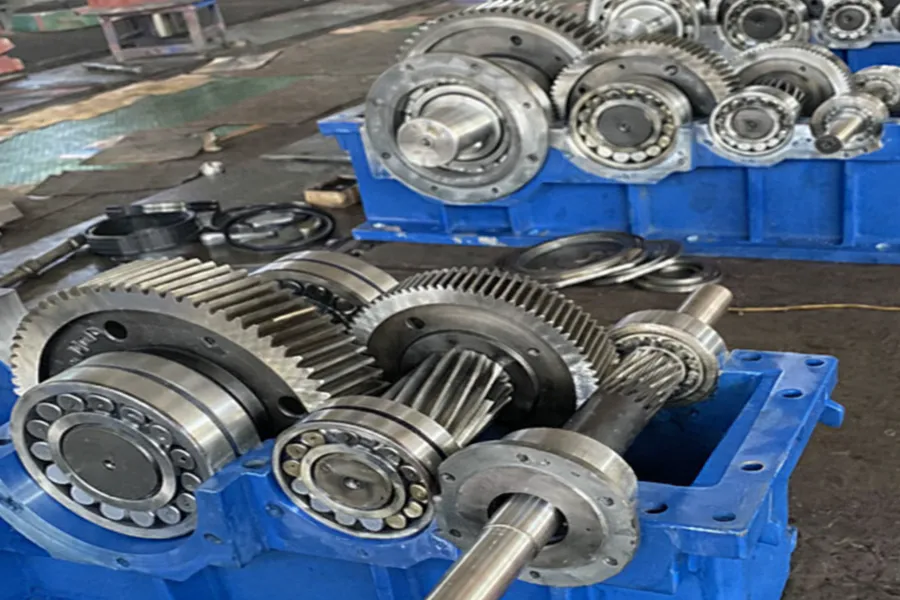
Our production facility employs CNC gear hobbing, grinding, and case-hardening processes traceable to batch-level quality records. All outgoing gearboxes undergo oil pressure testing, gear mesh backlash verification, and dimensional inspection before packaging. We supply both OEM customers integrating our gearboxes into new silage machine builds and aftermarket buyers sourcing a reliable silage harvester gearbox manufacturer for fleet maintenance. Custom shaft configurations, special gear ratios, and rebranded OEM supply arrangements are available on request.
WorkShop
10. Related Products — Complete System Solutions
A high-performing silage machine gearbox works best when the entire drivetrain is matched in specification. We manufacture the full range of components that connect tractor to cutting head — ensuring system-level compatibility, single-source accountability, and simplified spare parts management.
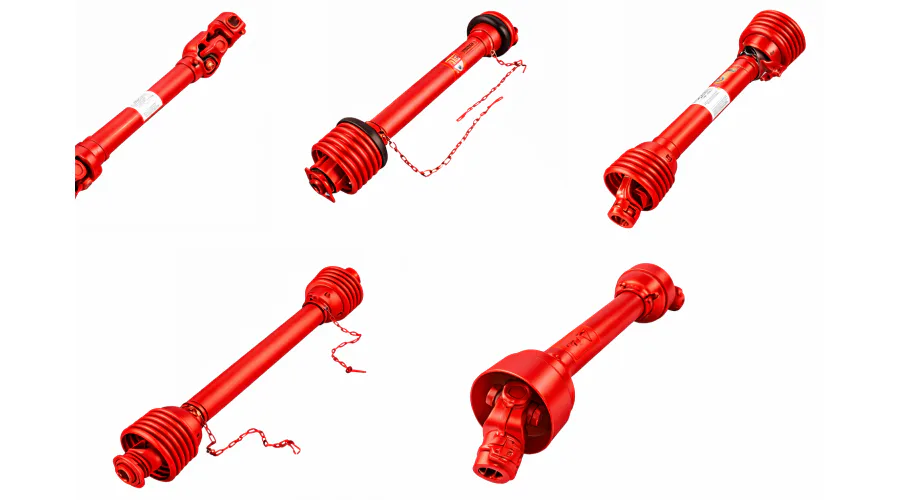
PTO Shafts for Forage Harvesters
Properly specified PTO shafts are the link between tractor output and the EP-QZ115 silage machine gearbox input flange. We supply agricultural PTO shafts in multiple cross joint sizes (22×54 mm to 35×106 mm), with friction clutch, overrunning clutch, and torque limiter options — all compatible with the Φ35, Φ40, and Φ45 input shaft configurations of the EP-QZ115.
Roller Chains & Sprockets
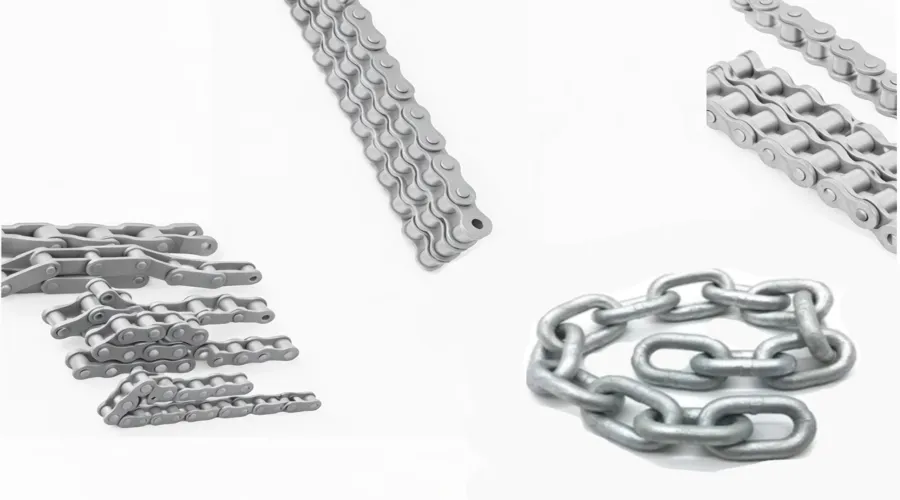
Many silage machine platforms use chain and sprocket secondary drives downstream of the main gearbox — for header feed rollers, crop accelerators, and spout positioning mechanisms. Our agricultural roller chains and matching sprockets are manufactured to ISO 606 / DIN 8187 standards, pre-stretched and pre-lubricated for immediate installation. Using matched-set chain and sprockets reduces initial wear and elongation, extending the service interval between replacements.
Frequently Asked Questions
Editor: PXY