Description
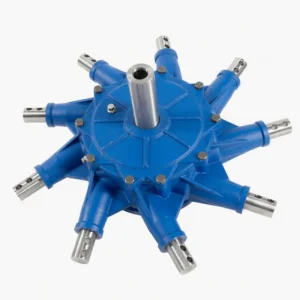
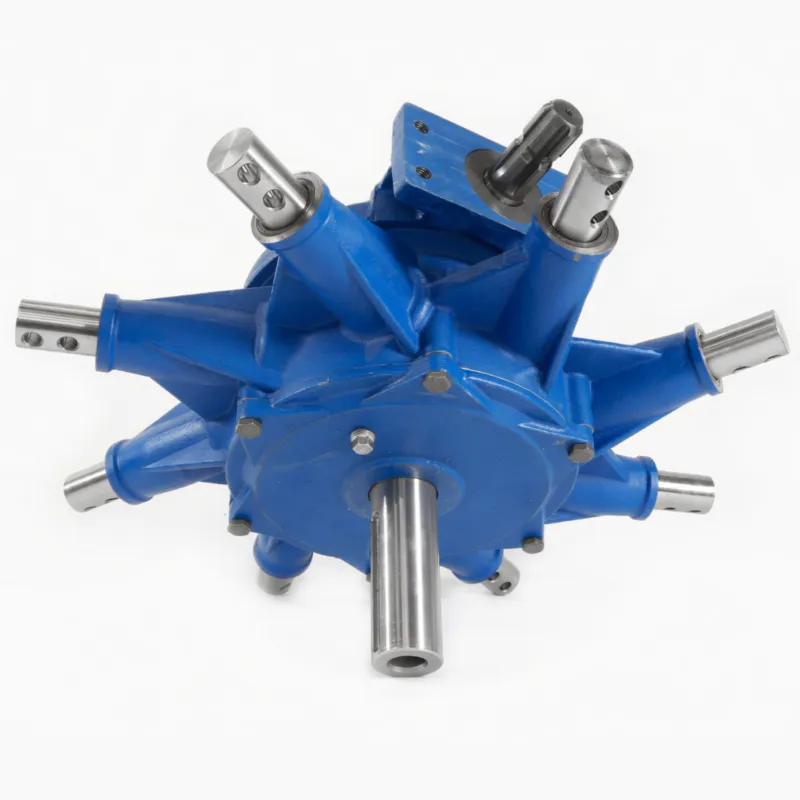
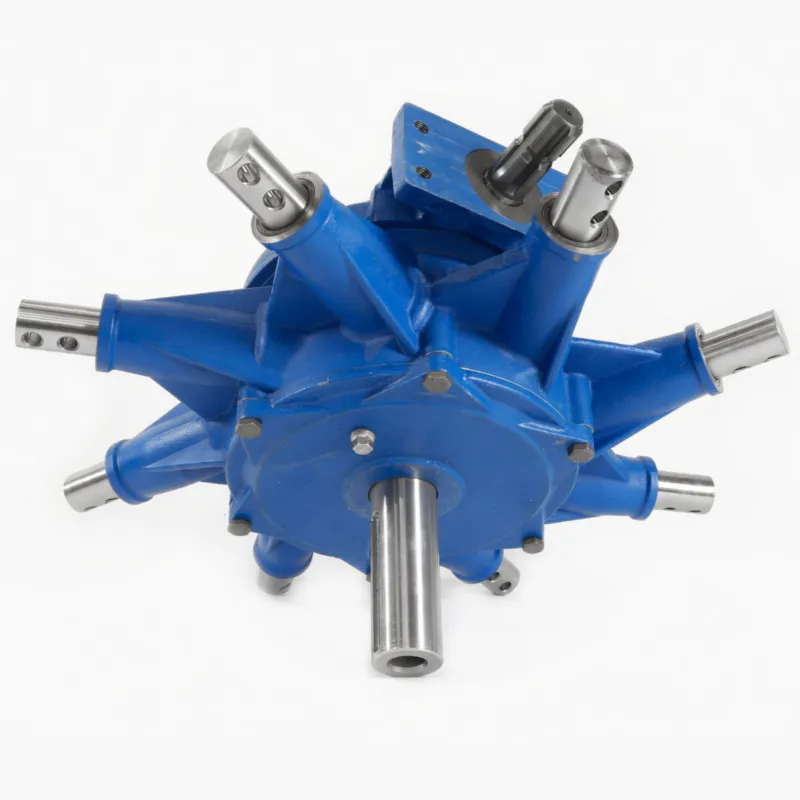
EPK-789C Rotary Rake Gearbox – Replacement of Comer Code
Heavy-Duty Power Transmission Engineered for Tractor PTO Driven Rotary Rake Applications
1. Technical Specifications of the EPK-789C Rotary Rake Gearbox
| Parameter | Specification |
|---|---|
| Model | EPK-789C |
| Reference Code | Replacement of Comer K-789C |
| Max Output Torque | 190 Nm |
| Rated Horsepower | Up to 60 HP |
| Gear Ratio | 7.2:1 |
| Max Input Speed | 540 RPM |
| Input Shaft | 1 3/8 inch Z6 spline |
| Shaft Type | 1 x 1.3/8 (Z6) |
| Number of Arms Supported | 8 |
| Clutch Type | Friction Disc Slip Clutch |
| Housing Material | HT250 Cast Iron |
| Gear Material | 20CrMnTi Case-Hardened Alloy Steel |
| Gear Tooth Hardness | 58-62 HRC |
| Bearing Type | Tapered Roller Bearings |
| Seal Configuration | Dual-Lip Nitrile with Slinger |
| Lubrication | Oil Bath, 90EP Gear Oil |
| Oil Supplied | No (Fill Before Use) |
| Operating Temperature | -20°C to +90°C |
| Net Weight | Approximately 14.5 kg |
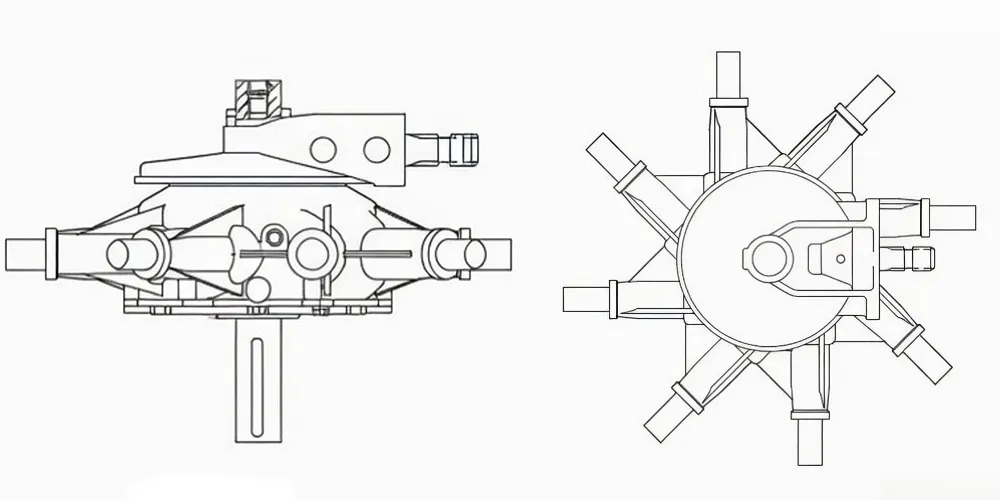
| Overall Dimensions (L × W × H) | 215 × 175 × 240 mm |
| Surface Finish | Powder-Coated Red (RAL 3020) |
| Compatible Brands | Pronar, SaMASZ, Euro-Masz |
2. Five Key Advantages of the EPK-789C Rotary Rake Gearbox
1. Friction Disc Slip Clutch Protection
An integrated friction disc slip clutch sits between the input shaft and the bevel gear set, absorbing sudden torque spikes that happen when rake tines catch a hidden stone or a dense wet clump. This prevents gear teeth shearing and shaft twisting, which are the two most expensive failure modes for any rotary rake gearbox operating under variable field loads across rough Brazilian pasture terrain.
2. Hardened Alloy Steel Gear Set
Every gear is forged from 20CrMnTi case-hardened alloy steel and precision-ground after carburizing, delivering surface hardness of 58-62 HRC while keeping the core tough. This is one of the core rotary rake gearbox quality markers that separates a long-life unit from a cheap imitation and directly extends the service interval between repairs.
3. Direct Drop-In Comer Code Compatibility
Bolt pattern, shaft splines, and mounting flange dimensions mirror the Comer K-789C reference, so workshops performing a Rotary Rake Gearbox Replacement of Comer Code can swap the old housing for a new EPK-789C without any welding, drilling, or adapter brackets. Downtime drops from half a day to under an hour in a properly equipped workshop.
4. Sealed Housing with Dual Lip Seals
Dual-lip nitrile rubber seals combined with a slinger ring keep dust, chaff, and moisture out of the internal bearings while retaining 90EP gear oil under pressure. In humid regions such as the Mato Grosso wet season, this sealing package protects against water ingress that would otherwise turn gear oil into an emulsion.
5. Low-Maintenance Design
First oil change happens after 50-70 operating hours, then every 500-700 hours or once per season, whichever comes first. This widely spaced interval reduces total cost of ownership and matches the maintenance rhythm most Latin American hay contractors already follow, making the EPK-789C a practical rotary rake gearbox for sale in markets where downtime between cuts is unacceptable.
3. Working Principle – How Does a Rotary Rake Gearbox Work
Understanding the rotary rake gearbox working principle helps operators recognize early warning signs before a full failure occurs. Power enters through the 1 3/8 inch Z6 spline input shaft, delivered by the tractor PTO through a telescoping driveshaft. Inside the cast iron housing, a pair of spiral bevel gears redirect rotation through a 90-degree angle and simultaneously apply a 7.2:1 speed reduction. The input side turns at the standard 540 RPM, while the output shaft rotates at approximately 75 RPM — exactly the tine speed required to lift and sweep hay into a clean windrow without scattering dry leaves.
The rotary rake gearbox operation is supported by tapered roller bearings positioned on both sides of each gear, pre-loaded during factory assembly to eliminate axial play. An oil bath lubrication system slings 90EP gear oil across every meshing surface as the gears rotate, coating bearings and gear teeth continuously. The friction disc slip clutch on the input side acts as a torque-limiting safety device: when the reaction torque on the output shaft exceeds the factory-set threshold, the clutch plates slip momentarily, releasing the overload and protecting the downstream tines and arms. This is a key rotary rake gearbox function that mechanical designers consider non-negotiable for modern hay equipment.
4. Materials Used in the EPK-789C Rotary Rake Gearbox
Material selection drives nearly every long-term performance outcome of a rotary rake gearbox, and each internal component of the EPK-789C is chosen with decades of field feedback in mind. The housing is sand-cast from HT250 grey cast iron, offering excellent vibration damping and natural lubricity that smaller aluminum units cannot match. The spiral bevel gears are forged from 20CrMnTi chromium-manganese-titanium alloy steel, then carburized, quenched, and tempered to achieve a hardened surface layer approximately 0.8-1.2 mm deep. This heat treatment protocol is the same one used in automotive differential gears, giving the rotary rake gearbox parts the ability to handle millions of load cycles without pitting or spalling.
Shafts are manufactured from 42CrMo chromium-molybdenum alloy steel, induction-hardened at the bearing journals and spline zones. Tapered roller bearings come from reputable industrial suppliers and are matched pairs, preventing the axial drift that causes premature wear. Seals are nitrile butadiene rubber (NBR) rated for continuous contact with agricultural gear oil, and all fasteners are grade 8.8 zinc-plated to resist the salty air common along the Brazilian Atlantic coastline. Together, these material choices explain the long service life expected from a professionally specified rotary rake gearbox manufacturer.
5. Application Scenarios for the Rotary Rake Gearbox
Farmers and contractors deploy the rotary rake gearbox across many different work environments. Here are the four most common usage contexts where the EPK-789C delivers measurable value.
Hay Windrowing on Commercial Farms
The primary purpose of any rotary rake gearbox is gathering cut grass, alfalfa, or clover into neat windrows that dry evenly and feed into a round or square baler cleanly. On commercial farms across Rio Grande do Sul producing round bales for the dairy industry, the EPK-789C handles 8-10 hectare daily outputs without overheating, allowing contractors to complete a paddock in a single afternoon pass.
Silage Forage Raking
When the same rotary rake attaches behind a medium compact tractor for silage forage operations, the rotary rake gearbox benefits become clear — the 7.2:1 reduction keeps the tines turning slowly enough to avoid chopping the wet grass, preserving nutritional density before the chopper picks up the windrow. This is particularly valuable for confined dairy operations in Minas Gerais.
Pasture Maintenance and Residue Management
Pasture rejuvenation involves raking dead plant material away from new growth zones so sunlight reaches seedlings and air circulates through the sod. A properly sized rotary rake gearbox lets smaller tractors handle this chore efficiently, which explains why sugarcane farms in São Paulo state use them between cane cycles to prepare fields for cover crops.
Light Construction and Municipal Use
Beyond agriculture, the same gearbox assembly drives lightweight grading rakes used on rural gravel roads and construction site preparation. The friction clutch becomes especially useful here, slipping whenever a buried root or rock catches the tines and preventing the sort of catastrophic failure that ends a rental job abruptly.
6. Regulatory Compliance and International Standards
Agricultural gearboxes supplied to Brazil and the wider Mercosur bloc must respect several overlapping regulatory frameworks that govern machinery safety, worker protection, and environmental impact. The EPK-789C is engineered with these requirements in mind, drawing on the same quality-management discipline required for exports to Europe, North America, and Oceania.
Brazil: Machinery operating on Brazilian farms falls under NR-12 (Regulatory Norm 12) issued by the Ministry of Labor and Employment, which governs safety of machines and equipment, including guards, emergency stops, and PTO shielding. NR-31 further addresses health and safety on rural work, requiring that all power transmission components be properly guarded. ABNT NBR standards, issued by the Brazilian Association of Technical Standards, provide specific technical rulings relevant to tractor-implement interfaces, and INMETRO certification is sometimes required for implement-level compliance. Importers registered with SISCOMEX must also confirm product conformity during customs clearance.
European Union: CE marking under Machinery Directive 2006/42/EC is required for agricultural implements entering any EU member state, covering mechanical hazards, noise limits, and documentation. ISO 500 governs PTO shaft dimensions worldwide, ensuring the 1 3/8 inch Z6 input shaft interfaces correctly with any compliant tractor.
United States: ASABE/ANSI S205.3 covers PTO shaft standards in North America, while OSHA 29 CFR 1928.57 requires appropriate guarding on agricultural machinery. ROPS (Roll-Over Protective Structure) and slow-moving vehicle standards apply to the wider rake rather than the gearbox itself.
Global: ISO 9001:2015 quality management certification is held by responsible rotary rake gearbox manufacturer facilities, and ISO 14001:2015 environmental certification confirms that metal swarf, used gear oil, and quenching residues are handled according to international practice.
7. Rotary Rake Gearbox Advantages and Disadvantages
A balanced view of the rotary rake gearbox advantages and disadvantages helps procurement managers make informed choices. On the advantage side, a rotary rake gearbox delivers clean 90-degree power redirection within a small footprint, offers simple oil-bath lubrication that requires almost no attention between seasonal service intervals, and provides consistent reduction ratios engineered specifically for tine speed requirements. The EPK-789C specifically adds friction slip clutch protection, hardened alloy gears, and direct Comer code compatibility.
On the disadvantage side, traditional rotary rake gearbox types cannot tolerate oil contamination from water or foreign material, require specific oil viscosity grades (90EP) that may be harder to source in remote regions, and must be kept level to prevent oil migration. Additionally, since the rotary rake gearbox effects the performance of the entire implement, a single failure typically stops the machine completely, which makes preventive maintenance more important than for simpler mechanical assemblies.
8. About Us
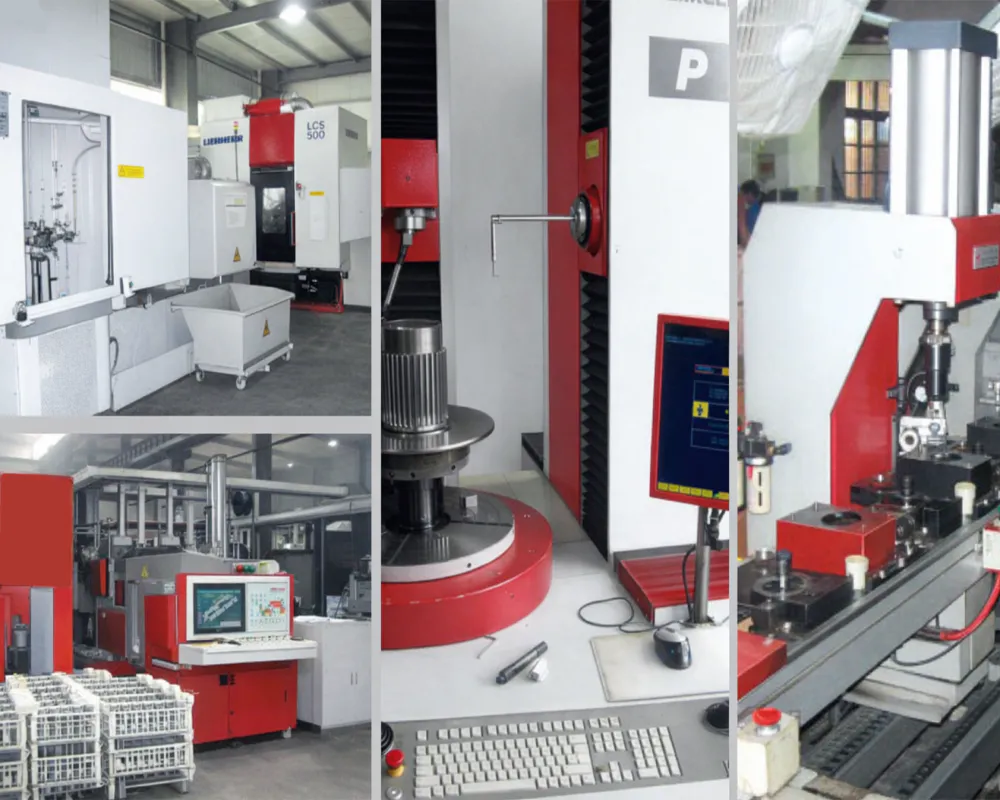
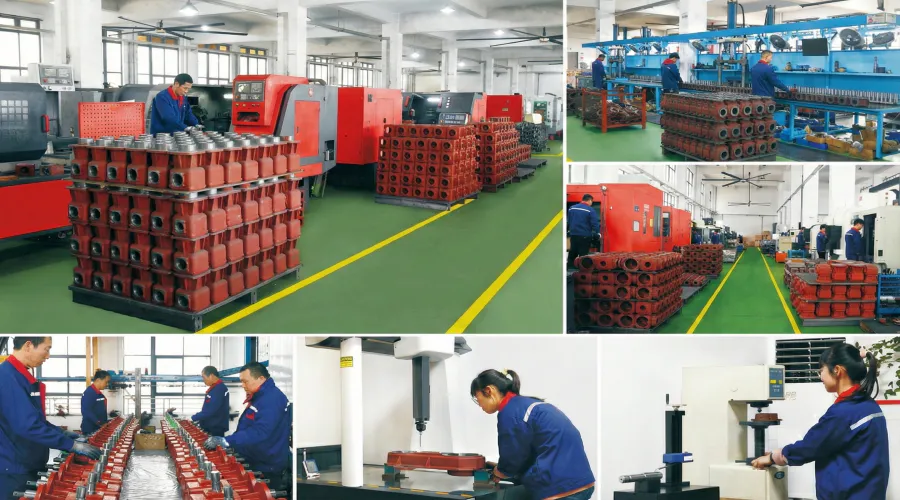
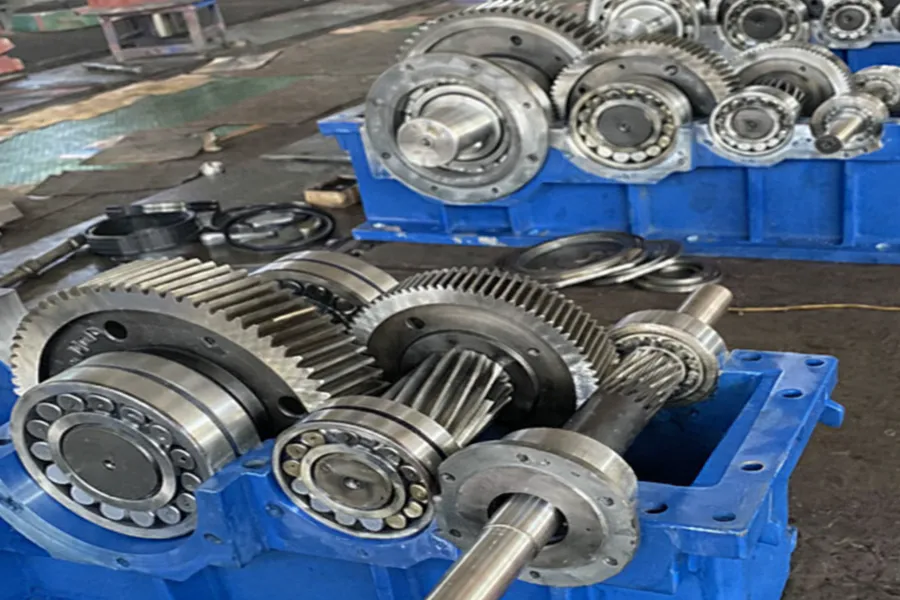
Our expertise spans the complete lifecycle of a rotary rake gearbox — from raw steel bar arriving at our forging partners, through CNC gear hobbing, heat treatment, precision grinding, and final assembly in our dedicated clean-area workshop.
Our commitment extends beyond manufacturing. A technical support desk responds to engineering enquiries within one business day in Portuguese, Spanish, and English. For larger volume buyers, we arrange factory audits, share process flow documentation, and provide sample units for destructive validation testing.
Workshop
9. Related Products – One-Stop Agricultural Transmission Solutions
Beyond the rotary rake gearbox line, we manufacture the complete family of matched power transmission components designed to work together as a coordinated system. Purchasing PTO shafts and electric auxiliary motors alongside your gearbox order simplifies inventory management, guarantees shaft-to-gearbox compatibility, and reduces the total landed cost for your warehouse. This system-level compatibility is one reason contractors prefer a single-source supplier over assembling components from three or four different vendors.
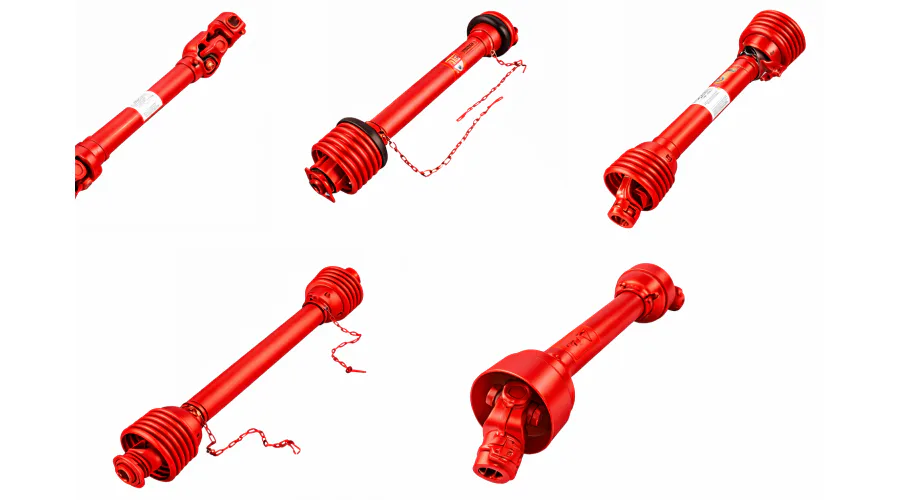
PTO Shaft for Rotary Rake
A matched PTO shaft is the critical link between the tractor and the gearbox input. We supply telescoping driveshafts in various working lengths with wide-angle joints suitable for sharp turning at the headlands.
Sprockets and Drive Components
Secondary drive sprockets, tine plates, and retaining hardware complete the power transmission path from the gearbox output shaft to the rake tines themselves. A correctly specified sprocket prevents premature chain wear and unplanned tine drift during high-speed windrowing operations on mixed terrain.
Frequently Asked Questions
Q1. How does a tractor pto driven rotary rake gearbox work during hay raking on large Brazilian dairy farms?
A1. Power enters through the 1 3/8 inch Z6 splined input shaft at 540 RPM from the tractor PTO, flows through the friction clutch into a pair of hardened spiral bevel gears that redirect rotation 90 degrees and reduce speed at a 7.2:1 ratio. The output shaft then drives the rake arms at roughly 75 RPM, which sweeps cut grass gently into clean windrows ready for baling.
Q2. What makes the EPK-789C a reliable rotary rake gearbox replacement for Comer K-789C units on Latin American farms?
A2. The bolt pattern, mounting flange, input spline, and overall external dimensions match the original Comer reference exactly, so any workshop can perform the swap using standard hand tools within one hour. Internally, the hardened alloy gearset and friction slip clutch deliver equivalent or better performance under typical Latin American forage harvesting conditions.
Q3. Which rotary rake gearbox types are most suitable for medium-size farms operating in Brazil and Paraguay?
A3. Medium-size farms generally benefit from 8-arm single-rotor rotary rake gearboxes matched to tractors in the 40-60 HP range. The EPK-789C falls squarely into this operating window and suits rakes with a working width of 2.5 to 3.8 meters, which is the typical size used for family-scale hay operations across the southern cone.
Q4. What rotary rake gearbox benefits will small dairy operations in Minas Gerais gain from switching to friction clutch units?
A4. Friction clutch units protect the gear train from catastrophic shock loads caused by hidden rocks, fence post fragments, or dense wet clumps. This translates to fewer unplanned stoppages during time-critical forage windows, lower annual repair bills, and longer overall service life from the same capital investment — all meaningful benefits for smallholder dairy operations.
Q5. How does correct rotary rake gearbox operation extend service life when working on rough pasture terrain in Argentina?
A5. Correct operation means engaging the PTO at idle, matching ground speed to crop density, avoiding sharp headland turns while the PTO is engaged, and respecting the clutch whenever it slips — investigating the cause rather than tightening the clutch. These practices double or triple the effective service life on rough Argentine and Uruguayan pastures.
Q6. How much gear oil does a rotary rake gearbox typically need during its first maintenance cycle in the field?
A6. The EPK-789C housing holds approximately 0.8 litres of 90EP gear oil (or equivalent SAE 80W-90 GL-4 grade). The first oil change should occur after 50-70 operating hours to flush out any break-in material, and subsequent changes follow every 500-700 operating hours or at least once per raking season.
Q7. What are the most important rotary rake gearbox advantages and disadvantages for farms running tractors up to 60 HP?
A7. Advantages include compact 90-degree redirection of power, simple oil-bath lubrication, factory-set clutch protection, and well-proven bevel gear geometry. Disadvantages include sensitivity to oil contamination, the need for level operation, and the fact that any single internal failure typically stops the whole implement until repaired, so preventive maintenance matters.
Editor: PXY