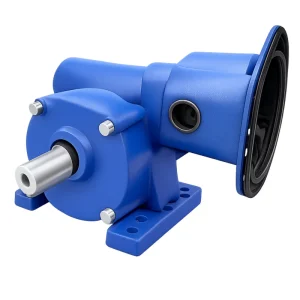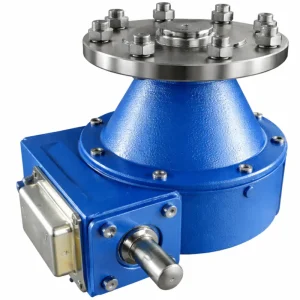
Descrição
1. Technical Specifications — SYF-2M Series Irrigation Center Drive Gearbox
| Parameter | Specification / Value |
|---|---|
| Available Gear Ratios | 20:1 / 30:1 / 40:1 / 50:1 / 58:1 / 60:1 (custom ratios available on request) |
| Output Speed at 1,740 RPM Input | 87 RPM (20:1) / 58 RPM (30:1) / 43 RPM (40:1) / 35 RPM (50:1) / 30 RPM (58:1) / 29 RPM (60:1) |
| Standard Input Speed | 1,740 RPM at 60 Hz; approx. 1,450 RPM at 50 Hz |
| Motor Power — 20:1 & 30:1 Ratio Models | 1-1/2 HP (1,118 W) |
| Motor Power — 40:1, 50:1, 58:1, 60:1 Ratio Models | 1 HP (746 W) |
| Motor Voltage / Phase / Frequency | 460/380V, 3-phase, 60/50 Hz (dual voltage) |
| Full-Load Current (FLA) at Rated Voltage | 2.3 Amps |
| Worm Wheel Material | High-strength aluminum bronze alloy |
| Material de Construção | Precision die-cast tempered aluminum |
| Motor Insulation Class | Class F (155°C maximum winding temperature) |
| Proteção térmica | Thermally protected with automatic reset |
| Motor Cooling | Internal fin cooled |
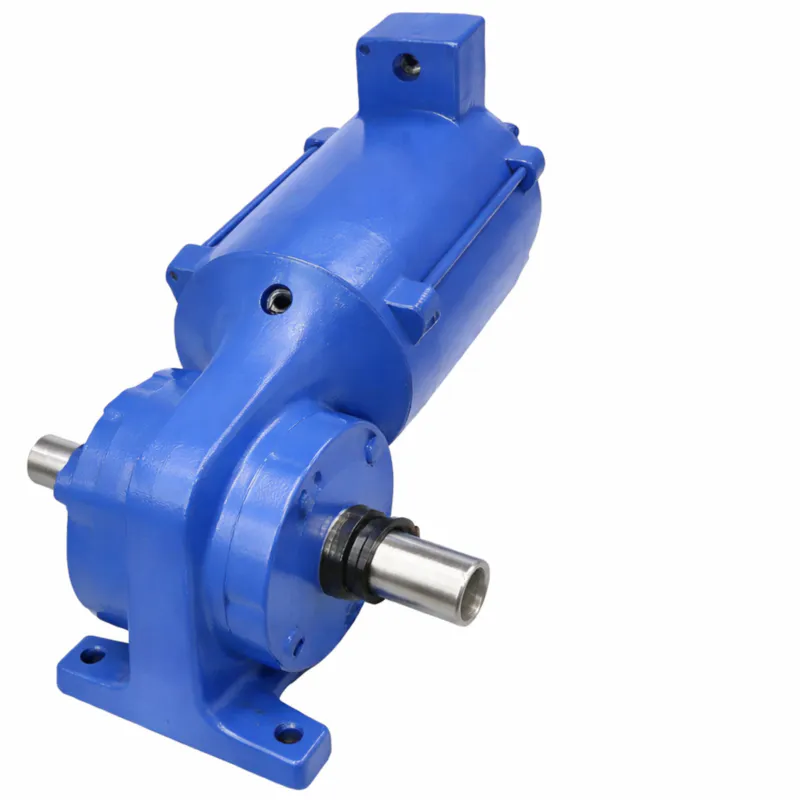
| Shaft Connection Type | Self-locking taper shaft (motor to worm shaft) |
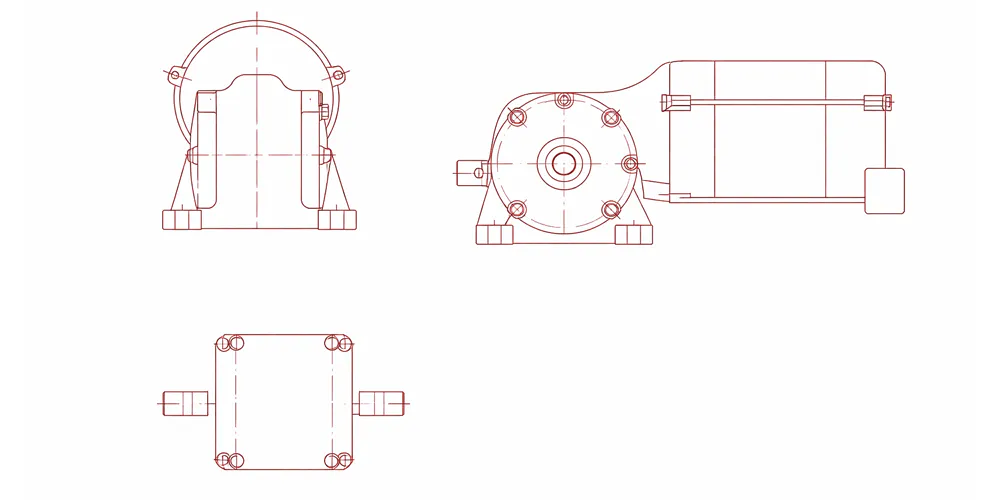
| Mounting Bolt Pattern | 5 inch × 6 inch standard pivot mounting circle |
| Sealing System | Special external crop guard seals; all critical electrical connections fully encapsulated |
| Oil Capacity | 0.21 gal (0.8 L) — unit shipped pre-filled with oil |
| Unit Weight | 43.2 lbs (19.6 kg) |
| Junction Box | Totally enclosed, lightweight, top-mounted for field-accessible wiring |
| Ambient Operating Temperature Range | -10°C to +40°C (recommended field operating range) |
| Back-Drive Resistance | Self-locking — load cannot back-drive worm shaft under power-off conditions |
2. Five Key Facts of Irrigation Center Drive Gearbox
Six Gear Ratios
20:1, 30:1, 40:1, 50:1, 58:1, 60:1 — matching virtually every commercial pivot rotation speed specification without custom engineering.
Self-Locking Taper Shaft
Motor can be replaced on-site without removing the worm shaft or disconnecting the load side — critical during peak irrigation season.
Dual-Voltage Motor
460/380V three-phase at 60/50 Hz — compatible with Brazilian 380V agricultural grids and North American 460V systems without rewiring.
Lightweight Design
Total assembly weight 43.2 lbs (19.6 kg) in precision die-cast tempered aluminum — easy field handling across all tower positions.
Class F Insulation
Internal fin cooling and thermal overload protection with automatic reset keep the motor running safely through extended duty cycles in tropical climates.
3. EP-Irrigation Center Drive Gearbox SYF-2M Series
The SYF-2M Series is a specialized irrigation center drive gearbox designed from the ground up for the demanding mechanical environment of large-scale center pivot irrigation systems. Reliable water distribution is one of the most important inputs in commercial agriculture, and the gearbox sitting at each tower assembly is the mechanical element that determines whether a pivot moves at the correct speed, maintains alignment across the span, and survives years of continuous seasonal operation without unplanned failure. This product takes that responsibility seriously.
At the heart of the design is a high-strength aluminum bronze worm gear paired with a precisely machined steel worm shaft. Bronze worm wheels are the established material choice for this application because they run quietly under the start-stop duty cycles typical of pivot drive use, offer excellent resistance to the sliding wear inherent in worm gear geometry, and protect the worm shaft through controlled sacrificial wear rather than abrupt failure. The die-cast tempered aluminum housing complements the gear assembly with a combination of light weight, good thermal conductivity, and corrosion resistance — all relevant properties in the chemically active environment of irrigated agricultural fields where fertilizer residues and soil moisture interact with exposed metal surfaces daily.
The motor portion of this irrigation center drive gearbox includes design details that address the realities of remote field service. All critical electrical connections are encapsulated, not simply sealed with gaskets, to prevent the moisture ingress that has historically been one of the primary failure mechanisms in pivot drive electronics. The junction box is mounted at the top of the unit, fully enclosed but lightweight and quick to open for wiring checks without specialized tools. Special external crop guard seals protect the shaft entry points from corn husk, cotton lint, soybean chaff, and sugarcane fiber — debris that accumulates heavily around pivot towers during and after harvest. The motor ships pre-filled with oil and ready to mount, which reduces commissioning time significantly on new pivot builds where multiple drive units must be installed in sequence.
The SYF-2M fits the standard 5 inch by 6 inch bolt pattern used widely across the center pivot gearboxes market, making it a practical choice both for new center pivot irrigation system installations and for irrigation center drive gearbox replacement projects on existing structures. Its compatibility with a broad range of pivot frames means procurement managers do not need to source structural adapters or custom mounting brackets when specifying this unit as a drop-in replacement for legacy drive assemblies.
4. Five Key Product Advantages of Irrigation Center Drive Gearbox
1. Configurable Output Speed Range
Six factory-set gear ratios let agronomists and irrigation engineers match pivot travel speed precisely to field-specific soil infiltration rates and crop water demand. In Brazil’s Cerrado region — where sandy latosol soils are common — selecting a slower ratio like 50:1 or 60:1 reduces surface runoff and improves water penetration depth. In heavier clay soils, faster ratios limit the time the soil surface remains saturated between passes. This level of speed configuration, available without custom engineering, makes the SYF-2M Irrigation Center Drive Gearbox a versatile irrigation center drive gearbox for diverse agricultural environments from Brazilian grain production to US pivot-irrigated corn.
2. Field-Serviceable Taper Motor Connection
The self-locking taper shaft connection allows a failed motor to be exchanged at the tower location without disturbing the worm shaft assembly or detaching the load-side connection. In a real field service scenario — a motor failure discovered early on an irrigation day during peak crop water stress — this design reduces the repair window from several hours to under one hour per tower. Precision alignment is maintained by the taper geometry, eliminating the fretting corrosion at contact surfaces that gradually degrades flanged motor connections under the vibration loads present in pivot tower environments.
3. Dual-Voltage Grid Compatibility
Agricultural electrical infrastructure varies sharply between countries and even between regions within a country. Brazil’s rural three-phase grid commonly operates at 380V/50 Hz; the US standard for agricultural motor drives is 460V/60 Hz. The SYF-2M motor supports both voltages in a single unit, which simplifies inventory management for distributors serving both the USA Irrigation Center drive gearbox market and Brazilian agribusiness customers. It also supports operations in countries with transitional or mixed-standard grid infrastructure — common across sub-Saharan Africa, South Asia, and parts of Latin America where irrigation investment is growing fastest.
4. Fully Encapsulated Electrical Protection
Irrigation environments combine overhead water exposure with the chemical film that accumulates on equipment surfaces near fertilizer application — a combination that is particularly aggressive toward exposed electrical terminations. Encapsulating all critical connections eliminates the vulnerability to capillary moisture ingress over multiple seasons that gasketed enclosures cannot fully prevent. Paired with thermally protected motor windings and automatic reset capability, this makes the SYF-2M suitable for remote unattended operation across full irrigation cycles — reducing the supervision burden on operators managing multiple large pivot systems simultaneously.
5. Low Full-Load Current for Operating Economy
At just 2.3 amps full-load current at rated voltage, the SYF-2M Irrigation Center Drive Gearbox places minimal demand on the distribution transformer supplying the pivot field. A 20-tower center pivot running SYF-2M units draws approximately 46 amps total from the three-phase supply at full travel load — a figure that leaves capacity for the pivot pump motor and other farm electrical loads on the same circuit. In Brazil, where rural electricity costs under ANEEL tariff structures have risen steadily and sustainability reporting now touches agricultural operations of significant scale, specifying an energy-efficient drive unit contributes to both the operating budget and ESG performance metrics.
5. Irrigation Center Drive Gearbox ‘s Working Principle
The SYF-2M irrigation center drive gearbox operates on a worm-and-wheel reduction mechanism. The motor drives the worm shaft at the motor’s rated speed — typically 1,740 RPM at 60 Hz or approximately 1,450 RPM at 50 Hz — via the self-locking taper connection. The rotating worm engages the aluminum bronze worm wheel, which turns at a fraction of input speed determined by the tooth count ratio. At the 40:1 ratio, for example, 1,740 RPM input produces approximately 43 RPM at the output shaft — a reduction that simultaneously increases available torque by a factor proportional to the ratio, minus transmission losses.
Worm gear geometry creates an inherent back-drive resistance: the helix angle of the worm is shallow enough that load-side torque cannot reverse-drive the worm shaft. This is operationally important in center pivot irrigation wheel gearbox applications on sloped terrain. When power is interrupted — by a circuit breaker trip, grid outage, or thermal shutdown — the gearbox holds the pivot lateral in position without the need for a separate mechanical brake, reducing the risk of uncontrolled drift that could damage structural spans or cause wheel rutting on wet soils.
Each drive tower in a center pivot system carries its own independent SYF-2M unit, with tower synchronization managed by the pivot’s alignment control electronics. The output shaft connects through a chain and sprocket assembly (or direct coupling, depending on tower design) to the drive wheel axle. Because the outermost towers must cover the greatest arc distance per revolution, they run at higher duty cycles or proportionally greater speed relative to inner towers — but each individual center pivot irrigation gearbox unit operates within the same rated parameters regardless of its tower position.
Lubrication is provided by an oil bath at the base of the housing. As the worm shaft rotates, it carries oil up through the mesh area by drag, distributing lubricant across both worm and wheel tooth surfaces. The 0.8-liter oil capacity supports continuous lubrication across the expected maintenance interval between oil changes. Internal fin cooling on the motor portion dissipates thermal energy from the windings, and the Class F insulation system allows winding temperatures up to 155°C — providing substantial thermal margin above the operating temperatures realistically encountered in the field conditions of Brazil’s Centro-Oeste, which can reach 38–42°C ambient in the summer growing season.
6. Materials and Construction of Irrigation Center Drive Gearbox
The structural foundation of the SYF-2M Irrigation Center Drive Gearbox is precision die-cast tempered aluminum. The tempering process relieves internal stress from casting, improving dimensional stability across the temperature range the housing will experience in field service. Aluminum’s thermal conductivity — roughly four times higher than cast iron — assists in dissipating heat generated by the worm gear mesh and the motor windings, which contributes to the stable long-term operating temperatures that protect Class F insulation life. In corrosion terms, aluminum forms a passive oxide layer that resists the dilute acids and alkalis present in irrigated agricultural soils, reducing the surface degradation that would eventually compromise seal contact surfaces on a ferrous housing.
The worm wheel is manufactured from aluminum bronze — a copper-aluminum alloy that contains additions of tin, iron, and manganese to increase strength and wear resistance above standard tin bronze grades. Aluminum bronze worm wheels are significantly harder than softer bearing bronzes and carry higher contact pressures, making them appropriate for the torque-dense application of center pivot irrigation wheel gearbox drives. The material’s ductility means that tooth surfaces deform slightly rather than fracturing under shock loads, protecting both the gear and the worm shaft during the occasional impact events that occur when pivot towers cross field tracks, irrigation ditches, or buried drainage tiles.
Electrical encapsulation compounds are selected for UV photostability, flexibility over a wide temperature range, and resistance to the common agricultural chemicals present in pivot-irrigated field environments. Herbicide and fungicide residues accumulate on all surfaces under pivots that apply crop protection chemicals through the irrigation water — a practice common in Brazilian soybean and corn production under no-till management systems. The crop guard seals use a multi-lip geometry that traps fibrous debris at the outer lip before it can reach the inner sealing surfaces, extending shaft seal life and maintaining the internal oil bath integrity that governs worm gear longevity.
7. Application Scenarios
Center-Pivot Irrigation Systems
The primary and most common application for the SYF-2M Irrigation Center Drive Gearbox is the center pivot irrigation system, where it functions as the drive unit at each tower assembly. In Brazil’s Cerrado agricultural region — which includes major grain-producing states such as Mato Grosso, Goiás, and Mato Grosso do Sul — center pivot irrigation gearboxes are used across millions of hectares of soybean, corn, and cotton cultivation. The standard 5×6 inch bolt pattern allows this unit to install directly onto the tower frame without modification on most major pivot designs in production since the mid-1990s, making it a viable new irrigation center drive gearbox or replacement across a wide installed base.
Linear-Move Irrigation Systems
Linear-move irrigation systems travel in a straight line across a rectangular field, requiring synchronized multi-tower drives that maintain consistent forward speed and lateral alignment. The SYF-2M Irrigation Center Drive Gearbox ‘s tight output speed tolerance — a consequence of the precision die-cast housing maintaining accurate gear center distances — supports the speed coordination that linear-move alignment control systems depend on. Linear-move applications are common in high-value vegetable, potato, and specialty grain production where row geometry and uniform application depth are critical to yield quality and crop uniformity.
Lateral Move and Traveler Systems
Lateral move systems use a series of wheeled frames carrying distribution pipes that advance across the field. These systems impose combined forward and lateral force on each drive tower as terrain irregularities and varying soil resistance continuously alter the load profile. The SYF-2M Irrigation Center Drive Gearbox’s aluminum bronze worm wheel provides the torque reserve to handle soft-soil traction resistance, and its low-amperage motor reduces the risk of tripping overcurrent protection when towers traverse wet zones — a common field condition in Brazilian tropical rainfall regions between irrigation passes.
Boom and Rotating Sprinkler Systems
Fixed-boom irrigation systems and rotating sprinkler arms use drive gearboxes to control rotation speed and maintain consistent arc coverage. In these applications, the SYF-2M Irrigation Center Drive Gearbox’s self-locking back-drive resistance provides a passive holding function when power is removed — preventing boom drift under wind loading without a separate mechanical lock. Center Pivot Irrigation Sprinkler Gearbox applications in nursery and horticultural environments also benefit from the unit’s low noise output, which is a comfort factor where operations are near residential or commercial zones.
Automated and Precision Irrigation Platforms
Advanced center pivot irrigation system parts increasingly include variable-rate application control, GPS positioning feedback, and remote monitoring via IoT platforms. In these precision systems, the drive gearbox must deliver stable, predictable output speed that the control system can model accurately when calculating as-applied water volumes. The SYF-2M Irrigation Center Drive Gearbox’s consistent gear mesh under variable torque demand — supported by its properly sized worm bronze geometry — makes it a reliable foundation for precision irrigation programs that use travel speed as a primary variable-rate control input across field zones with different crop water coefficients.
8. Regulatory and Standards Compliance Overview
Brazil — Primary Target Market
Brazil is the world’s largest producer of soybeans and one of the most rapidly growing markets for new center pivot irrigation systems, driven by agricultural expansion across the Cerrado and MATOPIBA frontier regions. Irrigation equipment operated in Brazil must comply with applicable ABNT NBR standards for mechanical and electrical products. The Agência Nacional de Águas e Saneamento Básico (ANA) administers water use rights (outorga de direito de uso de recursos hídricos) — a regulatory requirement that irrigation operators must satisfy before commissioning new pivot systems. Motor-driven equipment sold in Brazil may be subject to PROCEL/INMETRO energy labeling and efficiency minimum requirements under Brazil’s Programa Brasileiro de Etiquetagem (PBE). The SYF-2M Irrigation Center Drive Gearbox ‘s low full-load amperage and Class F insulation system are consistent with the energy performance standards applicable to this product class under Brazilian regulatory frameworks.
United States
In the United States, irrigation drive motors must comply with NEMA MG 1 standards for motor design and performance, and electrical installations must follow NEC (National Electrical Code) requirements. The USDA Natural Resources Conservation Service (NRCS) publishes Practice Standard 442 for irrigation system design guidance. Equipment sold into the US market through standard distribution channels is expected to carry UL or ETL electrical safety listing. The SYF-2M Irrigation Center Drive Gearbox’s 460V three-phase rating aligns with the standard US agricultural motor voltage specification, supporting installation under NEC Article 430 motor installation requirements. USA Irrigation Center drive gearbox procurement managers should confirm local AHJ (Authority Having Jurisdiction) requirements for irrigation installations in their state.
European Union
EU-market irrigation equipment must bear CE marking demonstrating conformity with the Machinery Directive (2006/42/EC) and Low Voltage Directive (2014/35/EU). The Ecodesign Regulation (EU) 2019/1781 imposes minimum energy efficiency requirements on electric motors placed on the EU market. Motors with rated output between 0.12 kW and 1,000 kW must meet IE3 (Premium Efficiency) or IE2 with variable-speed drive requirements. Buyers specifying this unit for EU-registered irrigation installations should confirm motor efficiency class compliance and CE documentation availability with their distributor.
Argentina and Mercosur Region
Argentina follows IRAM electrical standards, and the Secretaría de Energía issues energy efficiency regulations that affect motor procurement for new agricultural installations. Within Mercosur, harmonization with Brazilian ABNT standards for electrical and mechanical equipment generally supports regional trade. Argentine agricultural operations in the Pampas region — one of the world’s most intensive soybean and corn production zones — represent a significant market for center pivot gearboxes compatible with the same 380V infrastructure common in Brazil.
Australia and New Zealand
Australian irrigation installations must comply with AS/NZS 3000 (Wiring Rules) and motor energy efficiency under the Equipment Energy Efficiency (E3) Program, which administers MEPS (Minimum Energy Performance Standards) for motors. Farm water use efficiency is regulated by state water authorities under the National Water Initiative, and large irrigators are required to hold water access entitlements. New Zealand follows similar standards under AS/NZS harmonized frameworks.
Additional Export Markets
Irrigation equipment exported to South Africa, Kenya, Ethiopia, Nigeria, and other sub-Saharan African markets should comply with local national standards bodies (SABS, KEBS, ENAS, SON) and the relevant IEC standards for motors and industrial equipment. In Middle Eastern markets including Saudi Arabia, UAE, and Iraq — where center pivot irrigation is used extensively for desert agriculture — conformity with IEC 60034 motor standards and Gulf Cooperation Council (GCC) technical regulation requirements applies. South Asian markets including India (BIS standards), Pakistan, and Bangladesh follow national adaptations of IEC standards for electrical motor equipment.
9. About Our Manufacturing Operations
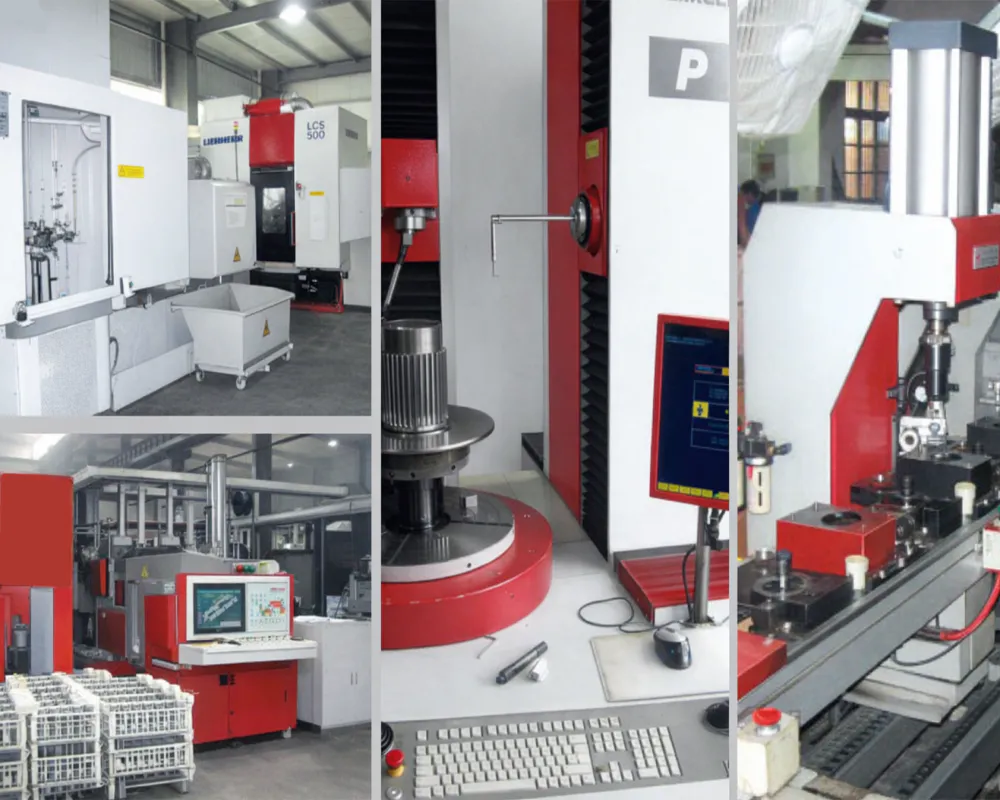
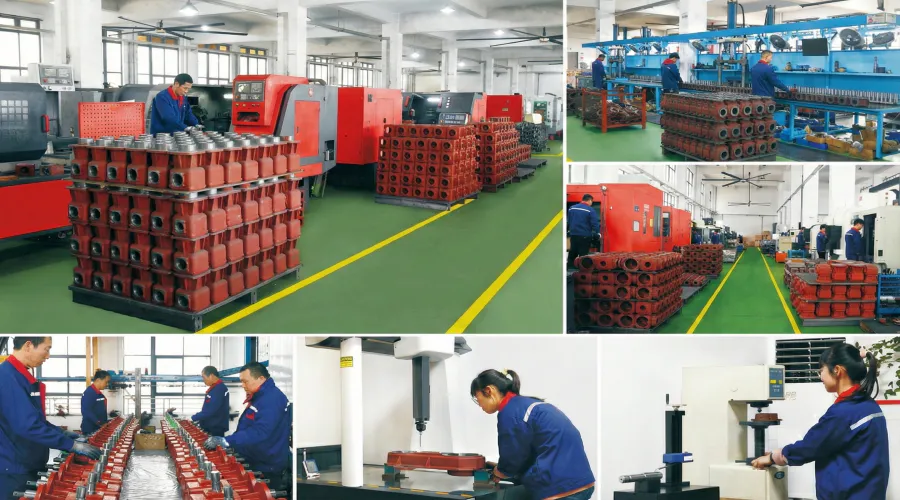
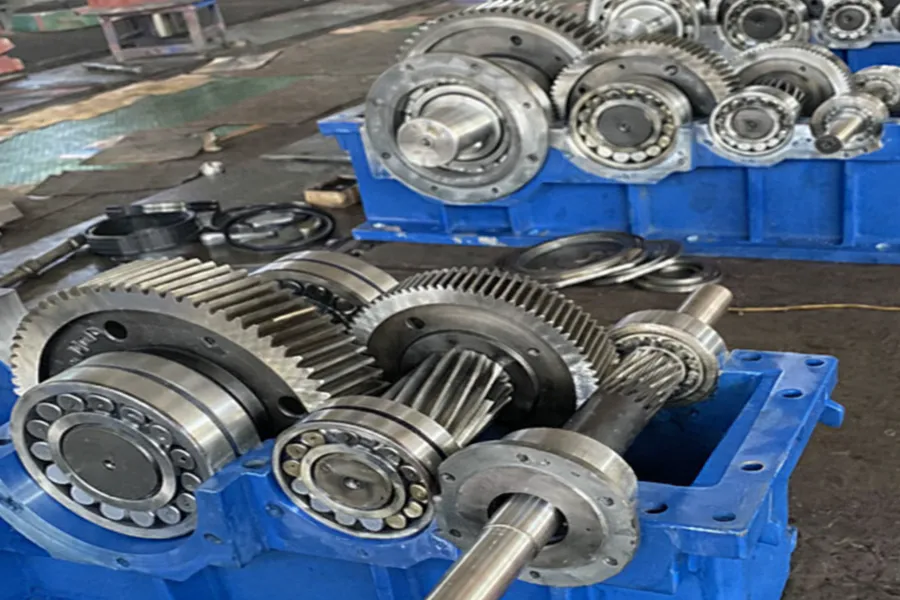
We are a dedicated manufacturer of agricultural and Irrigation Center Drive Gearbox with decades of accumulated production experience in worm gear reduction technology. Our manufacturing facilities are equipped with CNC gear hobbing machines, precision die-casting equipment, coordinate measuring machines (CMM) for dimensional verification, and computerized test benches for motor-gearbox assembly validation before shipment. The SYF-2M Series is produced under ISO 9001:2015 quality management system requirements, with documented inspection records covering incoming material chemistry verification, in-process gear geometry checks, and final assembly functional testing.
WorkShop
10. Compatible Drive System Components
We manufacture and supply the complete mechanical and drive system component range that integrators and operators need when building or maintaining center pivot irrigation systems — from the gearbox itself through to the transmission elements that connect it to the drive wheel. Sourcing these components together from a single supplier eliminates cross-sourcing compatibility risks and simplifies procurement, logistics, and technical support for large projects.
PTO Shaft Drive Components
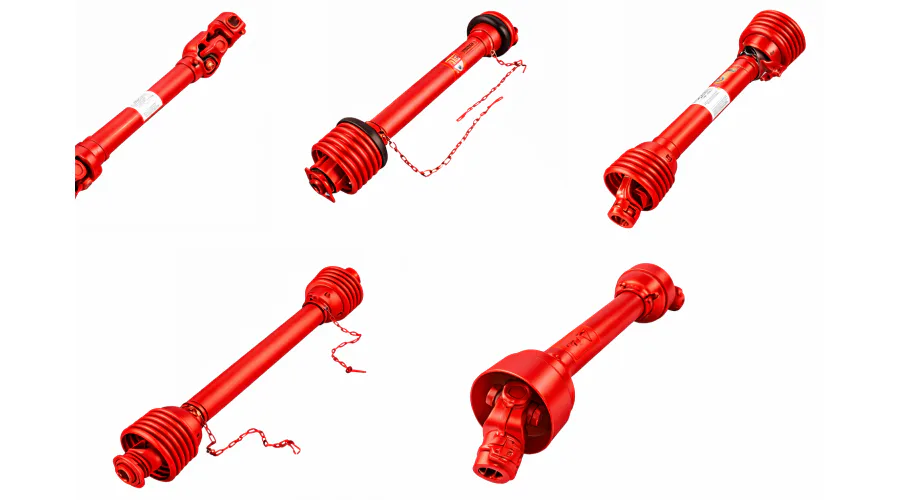
For irrigation systems integrated into multi-use agricultural drive arrangements or pump setups powered from tractor PTO outputs, a correctly specified PTO shaft assembly is an essential companion component to the irrigation center drive gearbox. Our PTO shaft range covers the standard IEC and ANSI spline profiles and operating angle ranges required for agricultural pump drive installations. Specifying the gearbox and the PTO shaft together ensures that shaft length, spline profile, and rated torque capacity are matched — reducing the risk of compatibility issues discovered during commissioning.
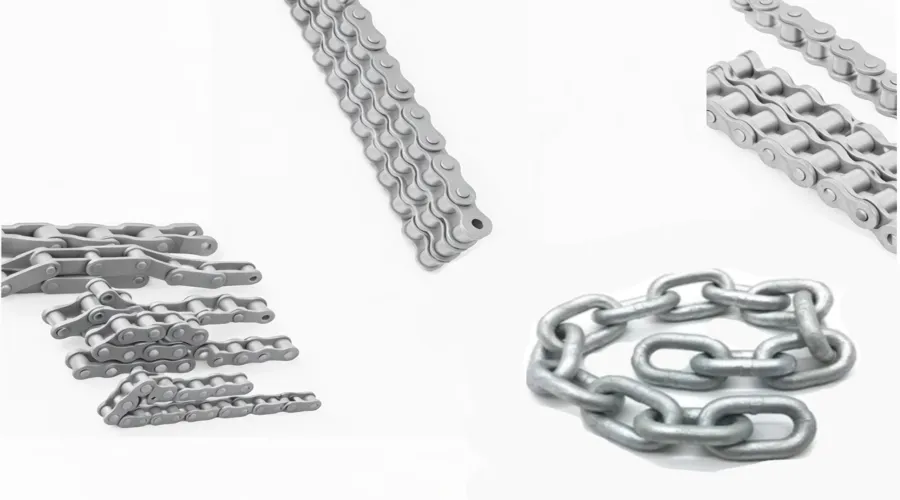
Drive Chains and Sprockets
Most center pivot tower assemblies transmit gearbox output torque to the drive wheel axle through a roller chain and sprocket set. Proper chain pitch, sprocket tooth count, and material grade must match both the torque output of the irrigation gearbox and the expected chain speed at the drive wheel. We supply ANSI and ISO standard agricultural roller chains and precision-cut steel and cast iron sprockets to complete the tower drivetrain as a matched assembly. Sourcing chain, sprockets, and gearbox together from the same supplier ensures matched wear life and simplifies future maintenance spare parts inventory.

Frequently Asked Questions
Q1. What is the biggest disadvantage of center pivot irrigation, and how does a quality gearbox help reduce it?
The most commonly cited disadvantage is that circular coverage leaves field corners unirrigated, which reduces effective field utilization on square land parcels — typically 20–22% of field area is uncovered on a standard quarter-section pivot. A secondary practical concern is the cost of unplanned mechanical downtime during peak water demand periods. Specifying a robust irrigation center drive gearbox with field-serviceable motor connections and moisture-resistant construction directly reduces the frequency and duration of drive-related outages, improving the overall economic case for center pivot investment over the system’s 20–25 year expected service life.
Q2. What are the most common problems with pivot irrigation systems, and how does the SYF-2M address them?
Recurring issues in center pivot operation include tower misalignment caused by soft-soil wheel slippage, electrical failures from moisture infiltration into junction boxes, and premature gearbox wear from inadequate lubrication or misapplied torque. The SYF-2M addresses moisture ingress through full encapsulation of electrical connections rather than relying on gasket sealing alone. The pre-filled oil delivery ensures correct lubrication from day one. The self-locking back-drive worm geometry prevents tower drift on sloped terrain when power is cut, reducing one of the most common structural alignment failure scenarios in hilly pivot fields.
Q3. Which maintenance steps are most important for extending the service life of a center pivot gearbox in tropical climates?
In tropical climates — including the high-humidity conditions of Brazilian agricultural regions during the wet season — the most impactful maintenance actions are: annual inspection and replacement of crop guard seals if wear is visible; oil change every 2–3 seasons or per the operating hour interval recommended in the service manual; visual inspection of the junction box gasket and wiring condition at season start; and torque verification on all mounting bolts after the first 50 operating hours following installation. Maintaining correct oil level is the single most important long-term factor for worm gear longevity, as the worm mesh runs with minimal lubrication film thickness relative to rolling-element gear contacts.
Q4. How does a center pivot irrigation system move, and what role does each gearbox play in maintaining travel speed?
Each tower in the pivot system drives itself forward by powering its own gearbox and wheel assembly. The outermost tower covers the greatest arc length per revolution and must maintain the highest continuous speed, while inner towers run proportionally slower or cycle on-and-off to maintain alignment with the outer tower. The center pivot irrigation gearbox at each tower translates motor RPM to wheel RPM via its gear reduction ratio. The alignment control system monitors the angular position of each tower relative to adjacent spans and adjusts individual tower duty cycles to keep the lateral arm straight as it rotates around the central pivot point.
Q5. What electrical standards apply when installing an irrigation center drive gearbox in a Brazilian agricultural setting?
Brazilian agricultural electrical installations are governed by ABNT NBR 5410 (low-voltage electrical installations) and NBR 5419 (lightning protection systems), which are particularly relevant for exposed pivot structures in open-field settings. The Rural Property Electrical Network standard (NBR 14039) covers medium-voltage distribution to farm substations. Motor installations must comply with NR-10 (electrical safety at work) regulations under the Ministry of Labor (MTE). Installers should verify that the three-phase supply feeding the pivot matches the motor’s rated voltage and confirm overcurrent protection sizing per the 2.3-amp FLA of the SYF-2M motor units.
Q6. How do I choose the right gear ratio when selecting a new irrigation center drive gearbox for my pivot system?
Ratio selection is based on the required output RPM at the drive wheel, which is determined by the specified pivot rotation speed (typically expressed as hours per 360-degree revolution), the wheel circumference, and the number of towers. Your pivot manufacturer’s specification document or a qualified irrigation system designer can provide the exact required RPM. Match this to the SYF-2M model that most closely delivers the target output speed at your motor’s rated RPM. The 40:1 ratio (43 RPM output at 1,740 RPM input) covers the most common commercial grain pivot rotation speeds in both Brazilian and North American applications.
Technical Disclaimer: Specifications and performance values listed on this page are based on published product data and representative engineering values for the SYF-2M Series product class. Exact dimensional tolerances, rated torque values under specific duty conditions, and site-specific compliance requirements should be confirmed from current technical drawings and applicable national standards documentation. Consult a qualified irrigation systems engineer for system design and final component selection decisions.
Editor: PXY