Descrição
EP-500 Series Agricultural Machinery Gearbox — Engineered for Brazilian Fields
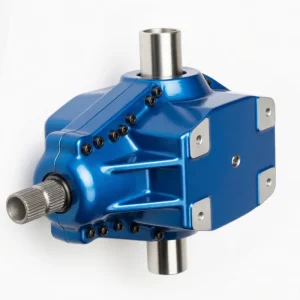
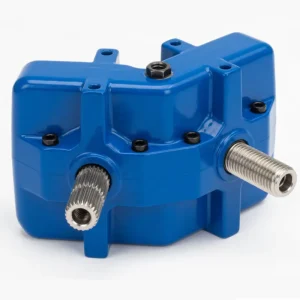
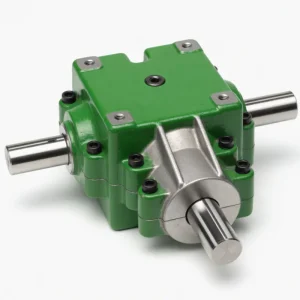
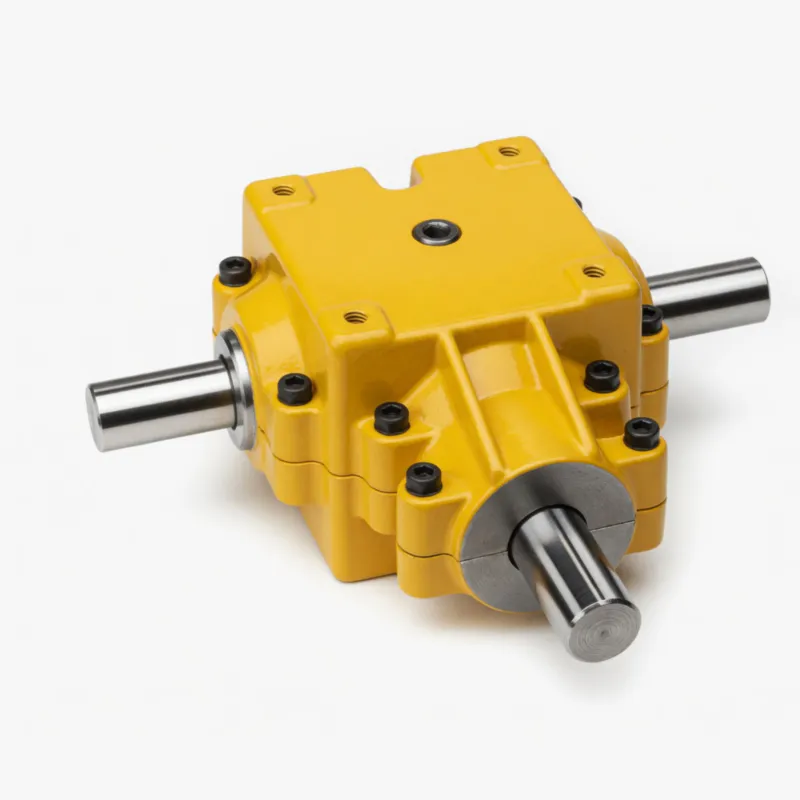
A two-piece aluminum-housed bevel agricultural machinery gearbox built for the demanding reality of Brazilian rotary cutters, tillers, mowers, sprayers, and silage equipment. The EP-500 is offered in four ratios (1:1, 1.35:1, 1.5:1, 2:1) with precision forged straight bevel gears and an optional cut spiral bevel in 1:1, paired to a standard 1.375-inch hardened input shaft and tapered roller bearings. This is the workhorse gearbox for agricultural machinery operators across Mato Grosso, Goiás, Bahia, and the wider Cerrado, who expect when uptime is non-negotiable during the safra.
1. Technical Specifications — EP-500 Series Agricultural Machinery Gearbox
Twenty reference data points covering the EP-500 family. Buyers evaluating an agricultural machinery gearbox for sale should match these figures against their tractor PTO class and implement rotor requirements before issuing a purchase order.
| Parameter | EP-500 Series Value |
| Series Designation | EP-500 |
| Available Ratios | 1:1, 1.35:1, 1.5:1, 2:1 (plus inverse step-down) |
| Gear Design (Standard) | Forged Straight Bevel |
| Gear Design (Optional) | Cut Spiral Bevel (1:1 only) |
| Material de Construção | Two-piece die-cast aluminum alloy |
| Material da Engrenagem | 20CrMnTi forged alloy steel |
| Gear Heat Treatment | Carburized, oil quenched, tempered |
| Gear Surface Hardness | HRC 58–62 |
| Diâmetro do Eixo de Entrada | 1.375 inch (34.9 mm) |
| Material do Eixo | 42CrMo high-strength steel |
| Tipo de Rolamento | Tapered roller bearings (both shafts) |
| Sealing System | Double-lip NBR oil seals, O-ring joint face |
| Factory Lubricant | SAE 80W-90 API GL-5 |
| Rated Input Speed Range | 100 / 540 / 1000 rpm |
| Max Input Power (2:1 at 540 rpm) | 17.68 kW / 23.71 HP |
| Max Input Power (1:1 at 540 rpm) | 53.47 kW / 71.70 HP |
| Peak Output Torque | 1299 Nm (1.35:1, 100 rpm input) |
| Overall Dimensions (L x W x H) | 220 mm x 175 mm x 165 mm |
| Net Weight (with oil fill) | approx. 11–14 kg (25–30 lbs) |
| Rotation Direction | Bi-directional |
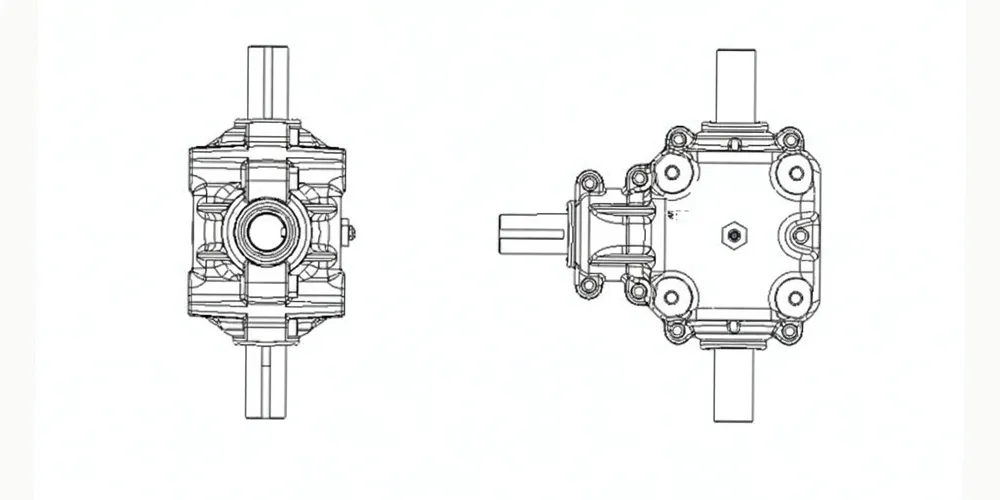
2. What Is an Agricultural Machinery Gearbox?
If you have ever wondered exactly what is an agricultural machinery gearbox and why it matters on every modern farm implement, the simplest answer is this: it is the sealed right-angle transmission that reshapes the rotary energy coming from a tractor’s PTO into the exact speed and torque that a specific implement needs. The EP-500 is a mid-frame unit in that family, sitting between light-duty 400-series boxes and the heavy 600/700 series used on larger machines. It weighs roughly 25 to 30 pounds with the oil fill included, which keeps the implement balanced without the chassis fatigue that heavier cast-iron gearboxes cause. For Brazilian farms that rotate a single tractor across multiple implements through the year — a rotary cutter in one month, a stalk chopper the next, a sprayer the month after — the EP-500 is the versatile gearbox for agricultural machinery that lets a single replacement part cover many machines. That versatility, combined with the corrosion-resistant aluminum shell, is why this family of agricultural machinery gearbox units is so widely stocked by implement manufacturers serving the Cerrado and the Mata Atlântica agricultural zones.
3. Five Key Advantages of the EP-500 Agricultural Machinery Gearbox
1. Two-Piece Aluminum Housing Cuts Weight Without Giving Up Strength
The split aluminum shell is pressure die-cast and CNC-finished on every critical mating surface. Aluminum dissipates internal heat roughly three times faster than grey iron, which means the gearbox for agricultural machinery stays cooler during long operating hours under the Brazilian sun. It also resists the acidic condensation common near sugarcane residues, giving a service life edge that farmers in São Paulo and the northeast canavial regions consistently report.
2. Four Precision-Forged Ratios for Multiple Implement Types
With forged straight bevel sets in 1:1, 1.35:1, 1.5:1, and 2:1, plus an optional cut spiral bevel in 1:1, the EP-500 agricultural machinery gearbox covers the full spread of rotary cutter, tiller, mower, and seed drill requirements. You can rerate one base housing to drive vastly different implement heads simply by swapping the internal gear set — a clean example of smart agricultural machinery gearbox design.
3. Tapered Roller Bearings for Higher Load Capacity
Tapered roller bearings at each shaft position carry both radial and axial loads without compromising one for the other. Preload is set during assembly using calibrated shims, so the internal geometry holds steady even when the implement hits a root ball or a stone. This detail is why a well-specified agricultural machinery gearbox outlasts cheaper imitations that rely on ordinary deep-groove ball bearings.
4. Factory-Filled, Leak-Tested, Ready to Bolt On
Every unit leaves the assembly line already filled with 80W-90 gear lubricant and pressure-tested for leaks. The installer in the field does not have to source oil, fill to a sight glass, or troubleshoot a seep from a missed gasket. For Brazilian dealers supporting far-flung rural clients, this drop-in readiness is a direct reduction of warranty calls and return trips.
5. Standard 1.375-Inch High-Strength Steel Input Shaft
The 1.375-inch shaft fits the universally specified six-spline or twenty-one-spline PTO yokes used on almost every tractor sold in Brazil. Made from quenched and tempered alloy steel, the shaft resists torsional fatigue and the cyclic shock that tedders, sprayers, and stalk cutters generate. This dimensional standardization is exactly what integrators and agricultural machinery gearbox manufacturers look for when they specify volume production runs.
4. Agricultural Machinery Gearbox Working Principle
The agricultural machinery gearbox working principle is easier to understand once you picture the energy flow step by step. Tractor engine torque is transferred through the PTO stub at either 540 rpm or 1000 rpm, depending on the tractor class, into the 1.375-inch splined input shaft of the EP-500. That shaft carries the pinion gear of a bevel pair held in place by two tapered roller bearings. The pinion engages its mating ring gear, which is mounted at ninety degrees on the output shaft. Depending on the tooth count combination — 21T/21T for 1:1, 20T/27T for 1.35:1, 20T/30T for 1.5:1, or 17T/34T for 2:1 — the direction of rotation is redirected and the speed is either held steady, stepped down, or stepped up. Because the gears are forged before cutting rather than simply machined from bar stock, the grain flow inside each tooth follows the profile of the tooth itself, giving measurably better bending fatigue strength. The sealed aluminum cavity holds 80W-90 oil that is flung into the mesh zone and the bearings by the gear rotation itself, a splash lubrication system that works without any pump. This is the same agricultural machinery gearbox operation principle used on the majority of Brazilian rotary cutters and mid-size rotary tillers today.
5. Materials and Build Quality
Material selection is where an agricultural machinery gearbox quietly earns its reputation. The EP-500 housing is cast from a proprietary aluminum alloy with silicon and magnesium additions that improve both castability and tensile strength above 250 MPa. All bearing bores are line-bored in a single operation to guarantee co-axial alignment within 0.02 mm. The pinion and ring gear are forged from 20CrMnTi alloy billets, then cut and gas carburized to a case depth of 0.9 to 1.2 mm before being oil quenched and tempered; the result is a tooth surface hardness of HRC 58 to 62 over a tougher core that resists crack propagation. Input and output shafts are machined from 42CrMo quenched and tempered steel with HB 241 to 286 core hardness. Sealing is handled by high-saturation nitrile rubber lip seals rated for continuous oil contact at 80 degrees Celsius, backed by a groove-seated O-ring at the housing joint. Fasteners are Grade 8.8 zinc-plated to survive humid storage. These are the foundational agricultural machinery gearbox parts that determine whether the unit lasts three seasons or fifteen.
6. Agricultural Machinery Gearbox Application Scenarios
The EP-500 serves as the core transmission for a wide family of implements. Below are the most common agricultural machinery gearbox application contexts we see across Brazilian and Mercosur agriculture.
Rotary Cutters and Bush Hogs
On rotary cutters — known locally as roçadeiras — the EP-500 drives the horizontal blade carrier that keeps pasture and sugarcane residue under control. The 1:1 and 1.35:1 ratios are most common here, matched to the high input speeds typical of 540 rpm PTO output. In the canavial regions of São Paulo and Alagoas, this agricultural machinery gearbox application accounts for a significant share of annual replacement volume.
Rotary Tillers and Seedbed Preparation Implements
For rotary tillers preparing seedbeds in soy and corn operations across Mato Grosso and Goiás, the 1.5:1 or 2:1 step-down ratio is preferred. It trades off some rotational speed in exchange for the higher torque needed to break compacted Latossolo soils. The EP-500 agricultural machinery gearbox holds this torque cleanly thanks to its tapered roller bearing arrangement.
Boom Sprayers and Fertilizer Spreaders
Self-propelled and trailed boom sprayers use the inverse ratios — 1:1.35 or 1:1.5 — to drive centrifugal pump units at speeds above PTO input. Broadcast fertilizer spreaders use similar gearing to accelerate the spinning disc that throws granules across a 12 to 18 meter pattern. This is a high-duty agricultural machinery gearbox application where the aluminum housing’s heat dissipation matters.
Disc Mowers and Hay Mowers
On disc mower-conditioners, the EP-500 transmits PTO energy to the cutter bar driveline, then onward to the conditioner rolls. The cut spiral bevel option in 1:1 is popular here because it runs noticeably quieter than straight bevel at the high rotational speeds these machines demand, benefiting operators on smaller dairy fazendas in Minas Gerais.
Stalk Choppers, Flail Mowers, and Orchard Implements
Stalk choppers used after corn harvest, flail mowers for vineyard lanes in Rio Grande do Sul, and orchard implements used in citrus groves all rely on a robust agricultural machinery gearbox to move energy through ninety degrees and onto horizontal rotors. The EP-500’s modest footprint makes it easy to integrate under low-profile deck designs.
7. Agricultural Machinery Gearbox Installation and Operation Guide
Correct agricultural machinery gearbox installation starts before the implement ever reaches the field. Begin by placing the unit on its mounting flange and aligning the input shaft colinearly with the tractor PTO line at the implement’s rest height — misalignment of more than three degrees shortens the life of the U-joints on the PTO driveshaft. Torque the four M12 housing bolts in a cross pattern to 78 Nm. Confirm that the breather plug is oriented upward so the internal cavity can vent without drawing moisture. Connect the PTO shaft guard, lock the safety chain, and verify that the guard spins independently of the shaft. On first use, start the tractor at low idle, engage the PTO briefly at 300 to 400 rpm for thirty seconds, and inspect for any leaks or abnormal noise. After a 100-hour break-in, drain the factory oil and refill with fresh 80W-90 to the sight line. From that point on, the standard agricultural machinery gearbox operation routine calls for a visual check every 50 hours and an oil change every 500 hours or at season end. This is also the most common set of questions we see from new owners, and the single biggest contributor to long service life.
8. Regulatory Compliance in Brazil and Internationally
Any agricultural machinery gearbox in Brazil or abroad operates within a framework of safety and quality standards that integrators must respect.
Brazil: NR-12 (Segurança no Trabalho em Máquinas e Equipamentos) defines the guarding, emergency stop, and operator safety obligations for any PTO-driven equipment. The ABNT NBR ISO 4254-1 standard mirrors international general safety practice for agricultural equipment. MAPA (Ministério da Agricultura, Pecuária e Abastecimento) oversees implement registration where applicable, and INMETRO handles metrological conformity for measurement-sensitive components.
European Union: CE marking under Machinery Directive 2006/42/EC is mandatory, with detailed conformity to EN ISO 4254-1 for general agricultural machinery and EN ISO 4254-5 for soil-working implements. Noise emission complies with 2000/14/EC.
United States: ASABE/ANSI standards S203.15 and S604 cover PTO guarding and driveline safety, while OSHA 29 CFR 1928 governs farmworker protection from moving parts.
Mercosur region: Argentina’s IRAM, Uruguay’s UNIT, and Paraguay’s INTN all track closely with Brazilian ABNT norms, simplifying the cross-border deployment of the same EP-500 agricultural machinery gearbox across the southern cone.
9. About Us
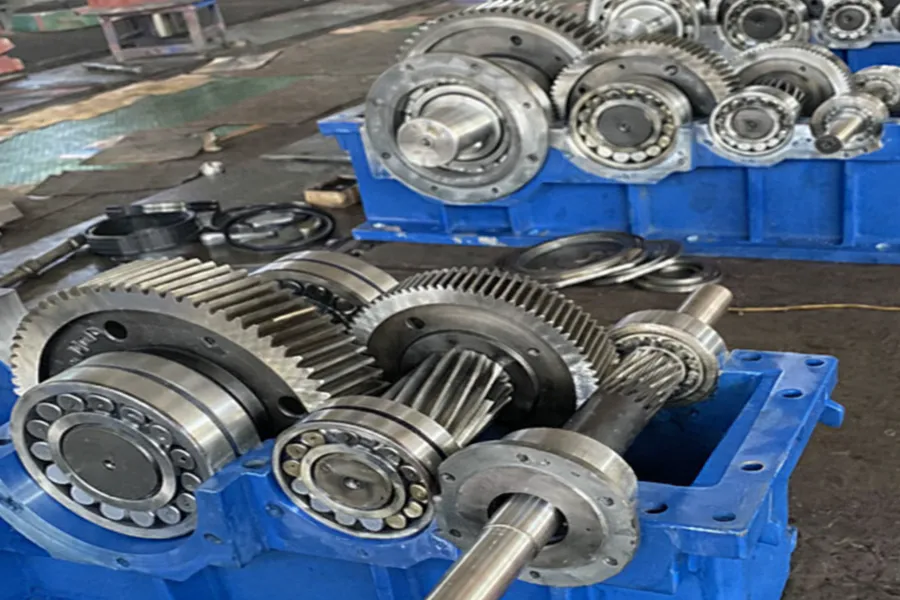
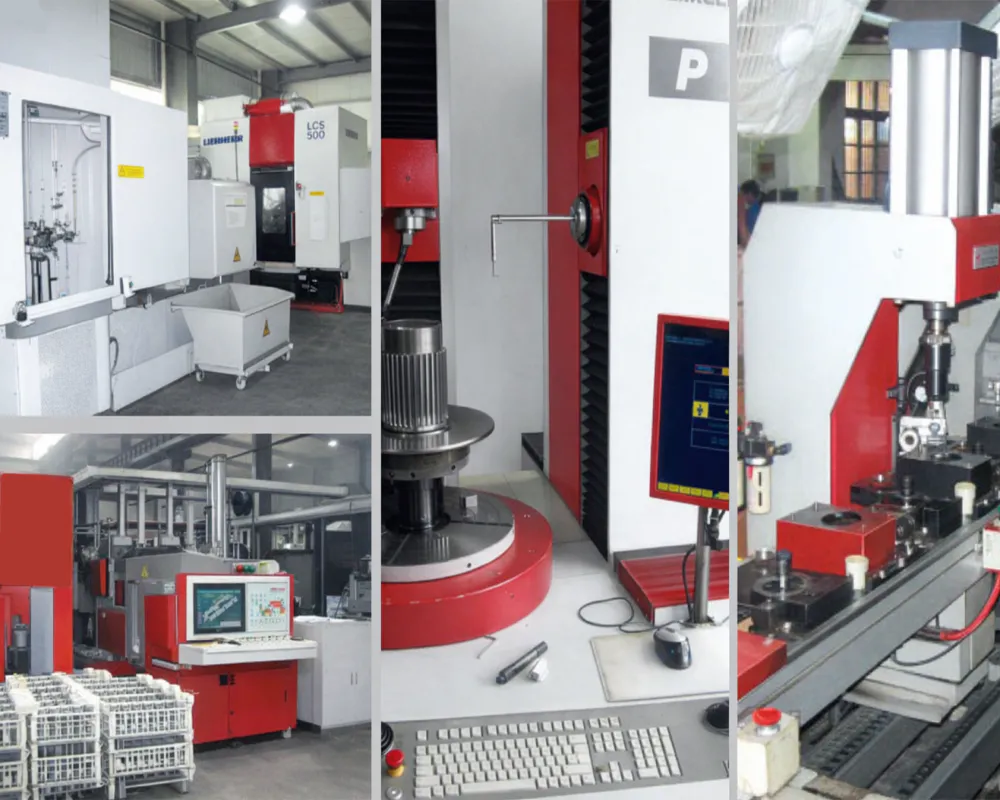
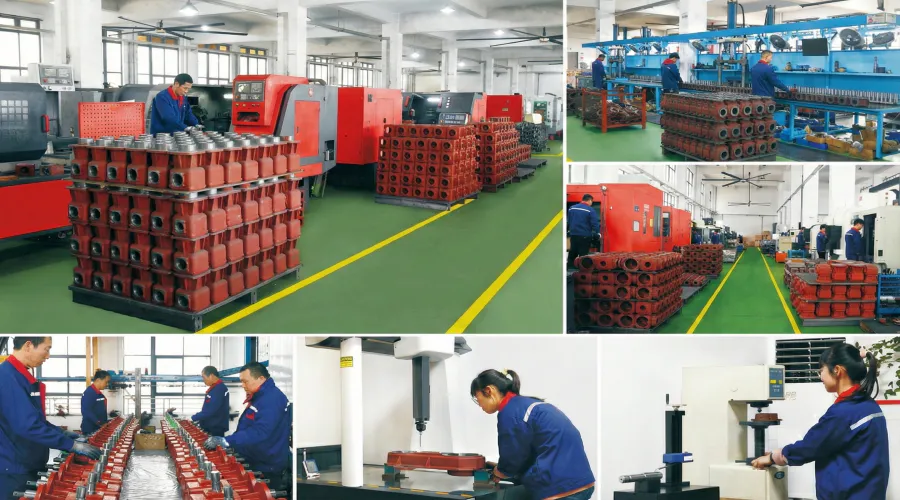
We are a specialized producer of agricultural transmission equipment with decades of shop-floor experience building gearboxes for rotary tillers, rotary cutters, hay tedders, disc mowers, post hole diggers, manure spreaders, and a long list of adjacent implements. Our engineering team supports OEM integrators with shaft profile matching, mounting pattern adaptation, and dimensional drawings for custom ratios.
WorkShop
10. Related Products — One-Stop Drivetrain Supply
An agricultural machinery gearbox works best when the driveline feeding it and the chain-and-sprocket hardware carrying its output are matched components. We produce the full complementary range — PTO shafts, transmission chains, sprockets, and compact drive motors — so Brazilian integrators can order a complete, compatible system from a single source and skip the mismatch problems that hybrid procurement creates.
PTO Shafts Sized for the EP-500 Input
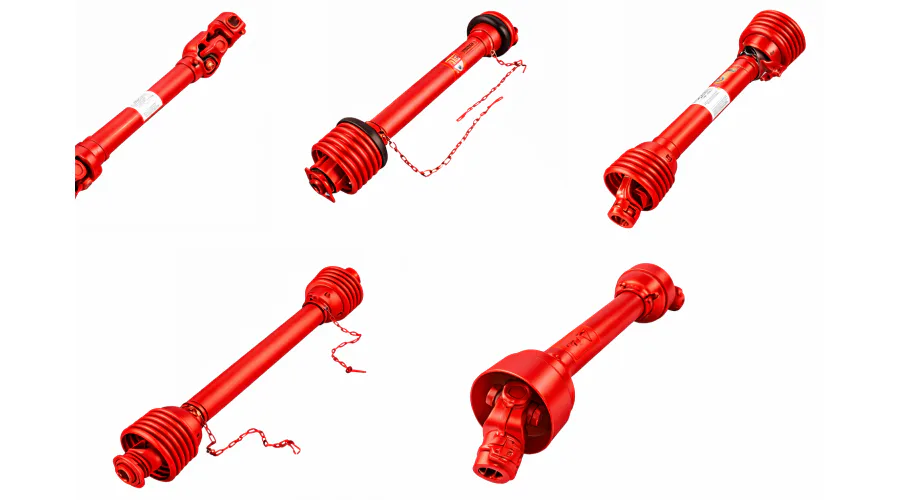
Our PTO Shaft range is engineered with the 1.375-inch splined yoke that mates directly to the EP-500 input, with shear-bolt and friction-clutch torque limiters available to protect the gearbox from shock loads. Cross-journals are lubricated through integrated grease fittings, and shielding is compliant with NR-12 and EN ISO 5674.
Transmission Chains and Drive Components
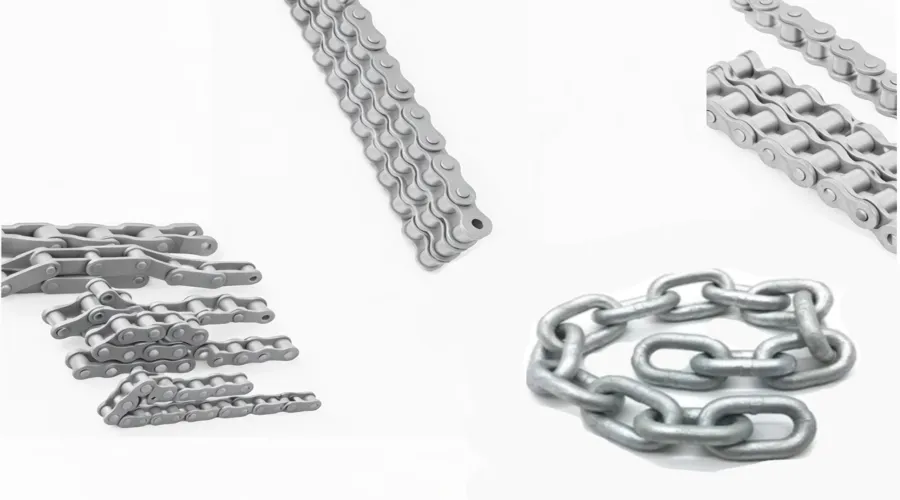
For implements that combine a primary bevel reducer with a secondary chain drive to distribute power across multiple rotors, we offer matched transmission chains in standard agricultural pitches. Pairing these chains with the EP-500 delivers a clean, documented torque path from tractor PTO all the way to implement rotor, simplifying troubleshooting and parts ordering for dealers across the region.
Frequently Asked Questions
Q1. Which agricultural machinery gearbox parts are commonly stocked as consumables by Brazilian dealers?
A1. The most frequently consumed agricultural machinery gearbox parts include input and output shaft oil seals, the housing joint O-ring, vent plug, oil drain plug, and — for high-hour fleets — the complete bevel gear set. Stocking these items avoids extended downtime during the haymaking or harvest window.
Q2. How should OEM integrators request a customized agricultural machinery gearbox design for a new implement?
A2. Share the implement’s intended torque output, input PTO speed, preferred rotation direction, mounting bolt pattern, and shaft profile. Our engineering team returns an adapted drawing within a few working days, followed by a validation sample before the serial production run begins.
Q3. Which ratio of gearbox for agricultural machinery is best for a 3-meter rotary tiller in Mato Grosso soils?
A3. For a 3-meter rotary tiller preparing typical Latossolo soils at 540 rpm PTO input, the 1.5:1 ratio offers the best compromise between rotor tip speed and torque reserve. If your tiller encounters frequent clay crusts, the 2:1 ratio gives additional torque headroom at the cost of slightly lower rotor speed.
Q4. What is an agricultural machinery gearbox and why does it matter to a farm operator?
A4. It is the sealed right-angle bevel transmission that converts tractor PTO rotation into the speed and torque a specific implement head requires. It matters because without a correctly specified agricultural machinery gearbox, tillers under-till, cutters bog down, and sprayers deliver inconsistent coverage.
Q5. How often should an agricultural machinery gearbox operating in the Brazilian Cerrado be serviced?
A5. Visual inspection every 50 operating hours, a first oil change at 100 hours to flush break-in wear particles, and thereafter a full oil change every 500 hours or at the end of each safra — whichever comes first. Cerrado dust and humidity make seal inspection especially important.
Q6. What oil specification should I use for the EP-500 agricultural machinery gearbox in tropical conditions?
A6. Use SAE 80W-90 API GL-5 gear oil, which maintains film strength in tropical heat while flowing cleanly on cooler morning starts. Never substitute multi-purpose hydraulic oils — they lack the extreme-pressure additives that bevel gear mesh needs.
Q7. When is the right time to replace a worn-out agricultural machinery gearbox on a rotary cutter?
A7. Replace when you notice increased operating noise, any visible oil weep at the shaft seals, detectable backlash at the output hub, or when cumulative hours approach 5,000. Scheduling replacement during the off-season keeps the implement ready for the first week of safra work.
Editor: PXY