Descrição
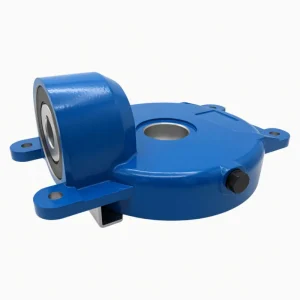
EP04 Agriculture Gearbox For Hay Tedder — Engineered for Brazilian Forage Operations
A compact, high-torque Hay Tedder Gearbox purpose-built for rotary tedders, wheel rakes, and combined hay turning equipment. The EP04 is a 2:1 ratio unit with an X-shaped input shaft, rated for 305 rpm input and up to 367 Nm output torque, delivering the dependable transmission that Brazilian haymaking crews and Mercosur forage producers expect during the busy cutting window.
1. Hay Tedder Gearbox Technical Specifications
Below is the full technical data sheet for the EP04 Agricultural Hay Tedder Gearbox. Buyers evaluating a hay tedder gearbox for sale should match these figures against the tractor PTO output and the tedder rotor count before confirming a purchase.
| Parameter | EP04 Value |
| Modelo | EP04 |
| Relação de Engrenagem | 2:1 (step-up) |
| Rated Input Speed | 305 rpm |
| Input Power (kW) | 6 kW |
| Input Power (HP) | 8.1 HP |
| Torque de saída | 367 Nm |
| Input Shaft Type | X-profile (splined) |
| Tipo de Engrenagem | Spiral bevel |
| Material de Construção | HT250 grey cast iron |
| Material da Engrenagem | 20CrMnTi carburized alloy steel |
| Gear Surface Hardness | HRC 58–62 |
| Bearings | Tapered roller (SKF / NSK grade) |
| Sealing System | Double-lip NBR oil seals |
| Tipo de Lubrificação | Oil bath splash lubrication |
| Recommended Oil | SAE 85W-140 GL-5 |
| Oil Capacity | 0.5 L |
| Temperatura operacional | -20 °C to +80 °C |
| Protection Rating | IP65 equivalent |
| Overall Dimensions (L x W x H) | 180 mm x 150 mm x 120 mm |
| Net Weight | approx. 6.5 kg |
| Rotation Direction | Bi-directional |
| Nível de ruído | < 75 dB at rated load |
| Expected Service Life | 5,000+ operating hours |
2. What Is a Hay Tedder Gearbox and Why It Matters on the Field
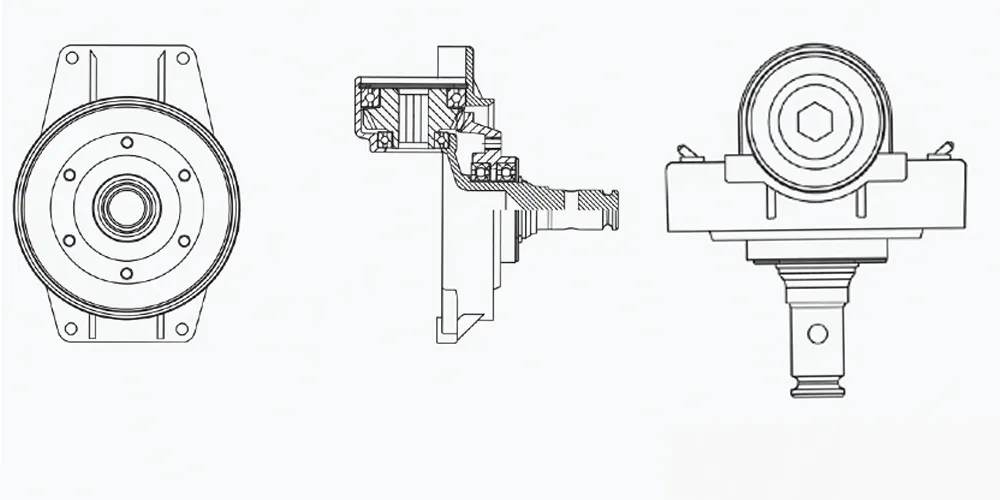
A Hay Tedder Gearbox is the compact right-angle or parallel-shaft transmission that converts tractor PTO rotation into the controlled output speed and torque that drives the tedder’s spinning rotors. For every operator asking what is Hay Tedder gearbox performance really measured by, the answer lies in three places: the ratio accuracy, the bearing arrangement, and the seal integrity under dust, heat, and vibration. The EP04 Hay Tedder Gearbox is the unit that sits at the heart of mid-size hay tedders commonly used on fazendas across São Paulo, Minas Gerais, Rio Grande do Sul, and Paraná, where dairy and beef operations depend on fast, even drying of cut forage. Unlike generic industrial reducers, an Agricultural Hay Tedder Gearbox must survive the unique cocktail of red clay dust, high humidity during the safra, and the sudden torque spikes that occur when rotors snag dense windrows. The EP04 is designed around that reality, with an oil-bath lubricated cavity, hardened alloy gears, and a robust housing that stays dimensionally stable even after hundreds of operating hours.
3. Five Key Advantages of the EP04 Hay Tedder Gearbox
1. Torque-Dense 2:1 Step-Up Ratio
The 2:1 configuration lets the rotor head spin faster than PTO input while holding 367 Nm at the output, meaning the tines can fluff heavy, wet-cut grass without the gearbox becoming the weak link. This ratio is a proven choice for Brazilian tedder manufacturers building 4-rotor and 6-rotor machines.
2. Sealed Against Tropical Dust and Moisture
Double-lip nitrile oil seals, an O-ring sealed joint face, and a breather-protected housing keep humidity, fine silt, and crop residue out of the gear cavity. This is a decisive quality edge during the Brazilian rainy season and for operations near irrigated pastures.
3. Case-Hardened Alloy Gears
Gears are forged from 20CrMnTi alloy steel, carburized and quenched to 58–62 HRC, then precision ground. The result is a hay tedder gearbox that resists pitting, shock loading, and progressive wear far better than through-hardened or untreated units often found in low-cost replacements.
4. Standardized Mounting for Easy Replacement
The EP04 follows the dimensional and bolt-pattern conventions used across mainstream European and South American tedder brands, making it a drop-in hay tedder gearbox replacement for worn OEM units. This shortens downtime during the narrow Brazilian haymaking window.
5. Low Noise and Low Vibration Operation
Precision-ground teeth and matched bearing preload keep operating noise below 75 dB at nominal load. This matters for operator comfort over 10–14 hour shifts, and for meeting Brazilian labor safety expectations under NR-12 and adjacent ergonomics guidance.
4. Hay Tedder Gearbox Working Principle
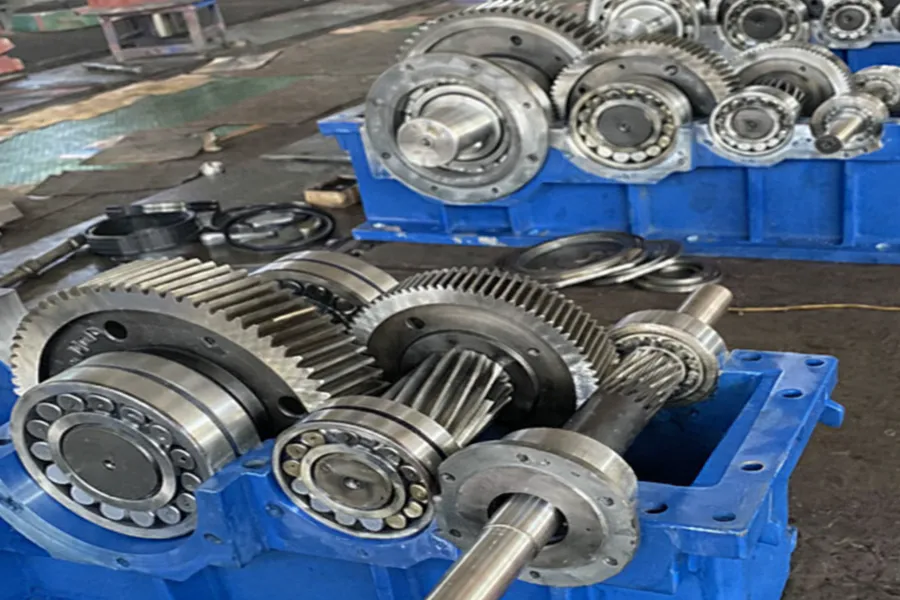
Understanding the Hay Tedder gearbox working principle helps operators diagnose issues before they become breakdowns. Rotational energy arrives from the tractor’s PTO shaft into the EP04’s X-profile input shaft at 305 rpm and roughly 6 kW. Inside the sealed cast-iron housing, a spiral bevel pinion meshes with a larger bevel gear mounted on a shaft set at 90 degrees to the input. Because this is a 2:1 step-up configuration, the output shaft rotates at approximately 610 rpm while delivering 367 Nm of torque to the rotor hub above it. The spiral tooth geometry engages gradually rather than abruptly, which reduces shock loading and noise; this is why a well-built Hay Tedder Gearbox runs quietly even when the rotor arms snag a dense mat of cut alfalfa. Splash lubrication, driven by the rotating gears themselves, constantly coats the bearings and mesh zone with SAE 85W-140 oil. Pressurized seals at both shaft exits keep that oil inside and keep field debris outside. On a multi-rotor tedder, several EP04 units are connected by driveshafts so that all rotors turn in synchronized opposing pairs, flipping and aerating the hay evenly.
5. Materials and Build Quality
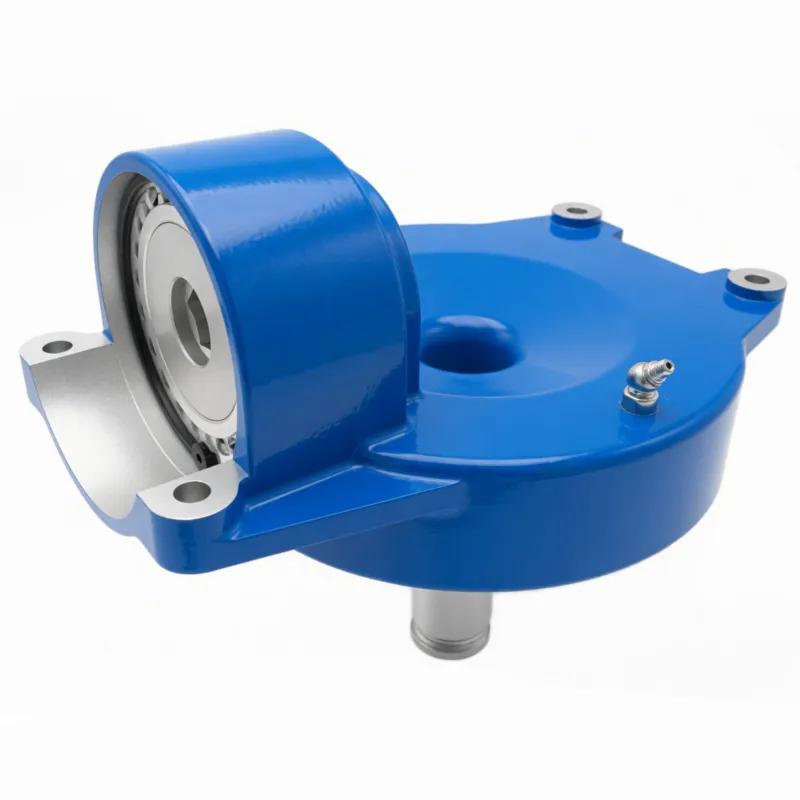
Hay Tedder Gearbox quality starts with metallurgy. The EP04 housing is cast from HT250 grey iron — a grade that combines good vibration damping with tensile strength above 250 MPa, ideal for absorbing the pulsing loads generated by rotary tedder tines. Machined faces are milled to Ra 3.2 or better to ensure a reliable seal against the cover plate and end caps. The input and output shafts are forged from 40Cr medium-carbon alloy steel, heat-treated to HB 241–286 and precision-ground on the bearing seats. Both the pinion and the driven bevel gear are cut from 20CrMnTi, then gas carburized, oil quenched, and tempered, achieving a case depth of 0.9–1.2 mm and a surface hardness of HRC 58–62 with a tougher core. Fasteners are zinc-plated Grade 8.8 to resist corrosion in humid Brazilian storage conditions. Seals are high-saturation nitrile rubber rated for continuous oil contact at 80 °C. Together, these Hay Tedder Gearbox parts form a transmission that comfortably outlives the cheap cast-zinc imitations sometimes sold as budget hay tedder gearbox replacement units.
6. Application Scenarios
The EP04 Hay Tedder Gearbox is versatile enough to serve several roles across forage, pasture, and light tillage equipment. Below are the most common deployments our engineers see across Brazilian and Mercosur farms.
Rotary Hay Tedders (4 to 8 Rotors)
The core application. Each rotor on a rotary tedder needs its own Hay Tedder Gearbox to translate PTO input into the fast rotor speed that lifts, spreads, and flips the cut swath. The EP04’s 2:1 ratio and 367 Nm output match the rotor diameters most common on 4-rotor to 8-rotor machines used across Brazilian dairy belt operations.
Wheel Rakes and Combination Rake-Tedders
On dual-function wheel rakes that can switch between raking and tedding, the same Agricultural Hay Tedder Gearbox handles both modes. The bi-directional capability of the EP04 makes it especially suitable for these hybrids, since the operator can reverse rotation direction when switching functions.
Light Forage Spreaders and Green Fodder Equipment
Smaller silage spreaders and green fodder handling machines use the same transmission architecture. The EP04 Hay Tedder Gearbox is sized right for these light-duty spreaders used on family-run sítios and smaller beef operations in the Cerrado and Pampa regions.
OEM Replacement for Aging European-Brand Tedders
Many Brazilian farms still operate imported tedders whose original gearboxes are now costly or slow to source. The EP04 serves as a precise hay tedder gearbox replacement with matching bolt patterns and shaft dimensions, letting mechanics restore machines without waiting months for OEM parts.
7. How to Install and How to Use the Hay Tedder Gearbox
Knowing how to install Hay Tedder gearbox units correctly protects the investment and the warranty. Start by draining the factory-fill oil and replacing it with fresh SAE 85W-140 GL-5 to the sight glass mid-line. Mount the EP04 to the rotor head using all four housing bolts torqued to 45 Nm in a cross pattern. Confirm that the X-profile input shaft is cleanly splined to the PTO driveline and that the driveline guard is locked in place — an essential safety requirement under Brazilian NR-12 machinery rules. For multi-rotor tedders, verify that the synchronizing driveshafts between gearboxes are phased correctly so that adjacent rotors counter-rotate. Once commissioned, operators learning how to use Hay Tedder gearbox equipment properly should run the first 30 minutes at reduced PTO speed as a break-in, then check for leaks and abnormal temperature rise. Routine inspection every 50 hours, and an oil change every 500 hours or at the end of each safra, keeps the transmission in peak condition. These basics also cover the main hay tedder gearbox maintenance questions that new owners raise.
8. Compliance with Brazilian and International Regulations
Agricultural machinery sold and operated in Brazil must meet a specific safety and quality framework. The EP04 Hay Tedder Gearbox is designed with these requirements in mind so integrators and end users can confidently deploy it on regulated farms.
Brazil: Machinery driven by PTO must comply with Norma Regulamentadora NR-12 (Segurança no Trabalho em Máquinas e Equipamentos), which governs guarding, emergency stops, and operator safety around rotating shafts. Agricultural equipment is also subject to MAPA (Ministério da Agricultura, Pecuária e Abastecimento) guidance, and many components follow ABNT NBR technical standards, with INMETRO and CONMETRO oversight for metrology and conformity assessment.
European Union: CE marking under Machinery Directive 2006/42/EC is required, along with conformity to EN ISO 4254-1 (general safety of agricultural machinery) and EN ISO 4254-10 (rotary tedders and rakes). The Hay Tedder Gearbox design respects the shaft guarding and noise-emission limits these directives impose.
United States: ASABE/ANSI standards S203, S318, and S604 cover PTO-driven equipment, while OSHA 29 CFR 1928 governs farmworker safety on rolling and rotating machinery.
Mercosur neighbors: Argentina’s IRAM standards and Uruguay’s UNIT norms mirror much of the Brazilian ABNT framework, simplifying cross-border use of the same Agricultural Hay Tedder Gearbox model across the region.
9. About Us
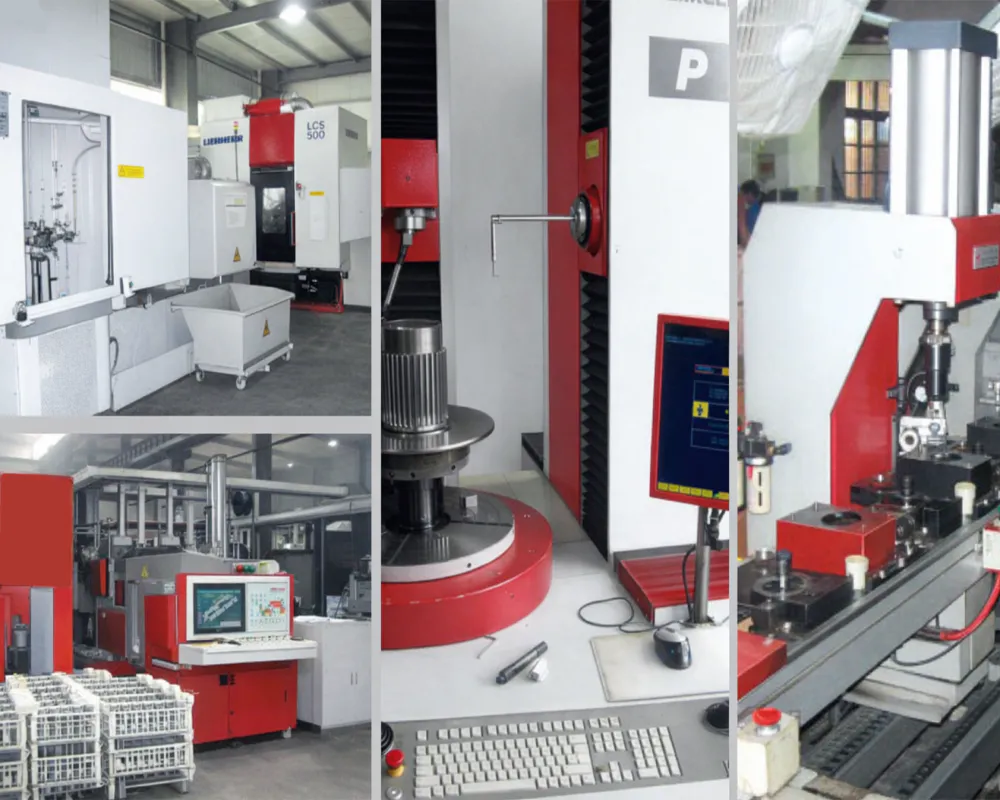
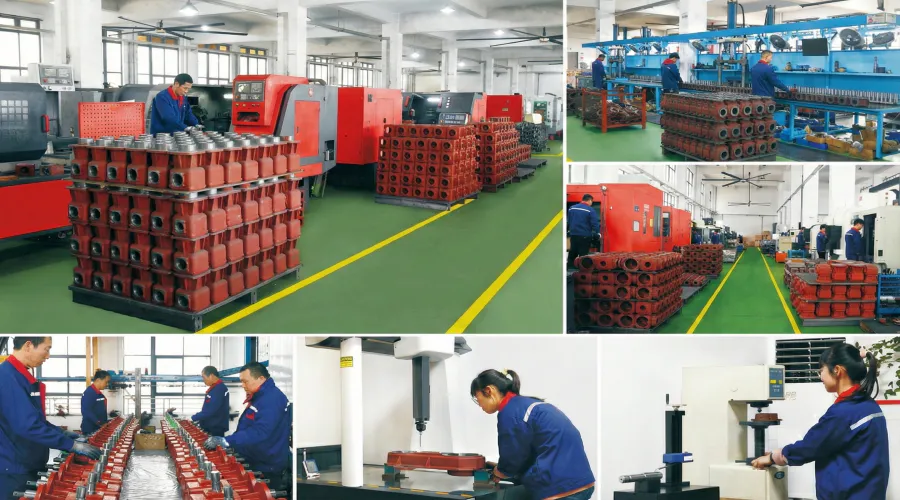
We are a specialized manufacturer focused on agricultural transmissions, with decades of accumulated production experience in gearboxes for hay tedders, rotary tillers, flail mowers, disc mowers, post hole diggers, and related PTO-driven implements. Our workshop covers more than 12,000 square meters and runs a full in-house value chain: heat-treated alloy gear machining, CNC housing milling, bearing preload assembly, oil-fill commissioning, and a 100% run-in test before packing. Beyond manufacturing, our engineering team supports integrators with shaft geometry matching, mounting pattern drawings, and on-the-ground troubleshooting advice — the same depth of service that long-term OEM customers from Europe, North America, and South America have relied on for years. That experience is what earns a Hay Tedder Gearbox its place on a commercial hay rig.
WorkShop
10. Related Products — Full System Compatibility
A hay tedder runs best when every part of the drivetrain is matched. Beyond the Hay Tedder Gearbox itself, we produce the companion PTO shafts, motors, sprockets, and chain drives needed to complete the rig. This one-stop sourcing approach shortens lead times for Brazilian integrators and keeps the torque path dimensionally consistent from tractor to rotor.
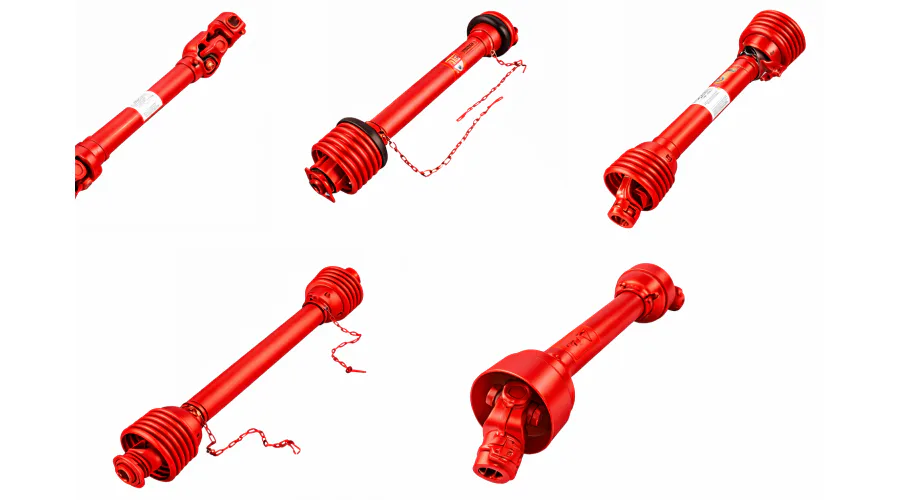
PTO Shafts Matched to the EP04 Hay Tedder Gearbox
Our PTO Shaft series is engineered with the X-profile splined yoke that mates directly to the EP04 input, including standard 1-3/8″ 6-spline and 1-3/8″ 21-spline tractor ends. Integrated over-running clutches and shear-bolt torque limiters protect the Hay Tedder Gearbox from shock loads when the rotor encounters obstacles, extending service life on rough Brazilian pasture terrain.
Sprockets and Drive Motors
For machines that use auxiliary chain drives or hydraulic motor assist, our sprocket sets and compact hydraulic motors offer a compatible path to pair with the Agricultural Hay Tedder Gearbox. Material grades and pitch standards are consistent with the EP04’s torque output, so installers avoid the mismatch problems that cause early failures in mixed-origin drivetrains.

Frequently Asked Questions
Q1. Which Hay Tedder Gearbox model fits best on a 6-rotor tedder used for commercial alfalfa in Brazil?
A1. For most 6-rotor alfalfa tedders operating at 540 rpm PTO, the EP04 with its 2:1 ratio and 367 Nm output is well matched. It pairs the rotor tip speed needed to fluff dense alfalfa with enough torque reserve to handle the thicker Brazilian second-cut windrows.
Q2. What are the main Hay Tedder gearbox advantages and disadvantages compared to direct chain drives?
A2. Advantages: sealed oil bath lubrication, higher torque density, lower noise, and far better dust resistance. Disadvantages: slightly higher initial investment and the need for periodic oil changes. Across a commercial haymaking season, the reliability advantage of a dedicated Hay Tedder Gearbox easily offsets the small added cost compared with exposed chain drives.
Q3. How often should I service an Agricultural Hay Tedder Gearbox operating in the humid Cerrado climate?
A3. We recommend a visual inspection every 50 operating hours, a first oil change after the initial 100 hours of break-in, and thereafter a full oil change every 500 hours or at the end of the safra — whichever comes first. Humidity in the Cerrado makes seal inspection especially important each season.
Q4. When should a farmer in Rio Grande do Sul plan a proactive hay tedder gearbox replacement?
A4. Plan replacement when you observe increased noise, any visible oil weep at the shaft seals, detectable backlash in the rotor shaft, or service hours approaching 5,000. Changing the unit during the winter off-season avoids downtime during the tight Brazilian haymaking window.
Q5. Why choose Hay Tedder gearbox units with spiral bevel gears instead of straight bevel designs?
A5. Spiral bevel gears engage gradually, reducing shock and noise, and they carry more load per unit face width than straight bevel gears. For an agricultural tedder that faces unpredictable load spikes, a spiral bevel Hay Tedder Gearbox delivers a measurably longer service life.
Q6. What Hay Tedder Gearbox effects on rotor speed should operators check during commissioning?
A6. With the EP04’s 2:1 step-up, a 305 rpm input produces approximately 610 rpm at the rotor hub. During commissioning, verify the rotor speed with a handheld tachometer and confirm even spread pattern across the swath — these are the two fastest real-world checks of correct installation.
Editor: PXY