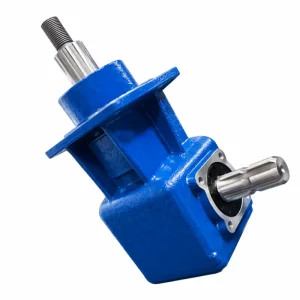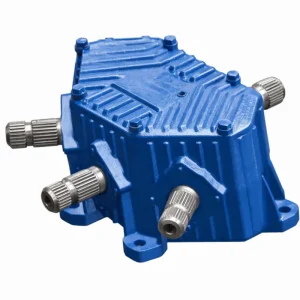
Descripción
1. Technical Specifications & Performance Parameters
The table below presents 20 key technical parameters for the EP-Rotary Mower Gearbox TF-285B replacement. These values are verified against production drawings and align with AGMA and ISO gearbox standards applicable to agricultural power take-off applications. Operators are advised to confirm compatibility with their host machine before installation.
| # | Parameter | Especificación / Valor |
|---|---|---|
| 1 | Gear Ratio (i) | 1.86 : 1 |
| 2 | Rated Input Speed (N1) | 1,000 rpm |
| 3 | Rated Input Power (P1) | 91.9 kW (approx. 123 HP) |
| 4 | Rated Output Torque (M2) | 709 Nm |
| 5 | Input Shaft Specification | 1‑3/8″ (34.9 mm) 21-Spline (Z21) |
| 6 | Output Shaft Specification | 1‑3/4″ (44.5 mm) 20-Spline (Z20) |
| 7 | Output Connection Type | Hub Connection (Flanged) |
| 8 | Shaft Configuration | Y-Type (Output Vertical-Upward) |
| 9 | Material de vivienda | Ductile Iron GJS-400-18 (ISO 1083) |
| 10 | Gear Material | 20CrMnTi Case-Hardened (58–62 HRC surface) |
| 11 | Shaft Material | 42CrMo Alloy Steel, Tempered (28–32 HRC) |
| 12 | Tipo de rodamiento | Angular Contact Ball Bearings (ISO P5 Class) |
| 13 | Lubrication Method | Oil Bath (EP 80W-90 Gear Oil) |
| 14 | Oil Fill Capacity | Approx. 0.5 L (fill to sight glass center) |
| 15 | Seal Type | Labyrinth + Nitrile Rubber Lip Seal (dual stage) |
| 16 | Operating Temperature Range | ‑25 °C to +80 °C (‑13 °F to +176 °F) |
| 17 | Ingress Protection Class | IP54 |
| 18 | Overall Dimensions (L × W × H) | 285 mm × 220 mm × 195 mm |
| 19 | Approximate Net Weight | 18.5 kg (40.8 lb) |
| 20 | Applicable Tractor HP Range | 75 HP – 100 HP (compatible with 40 HP–100 HP variants available) |
Rotary Mower Gearbox Parts
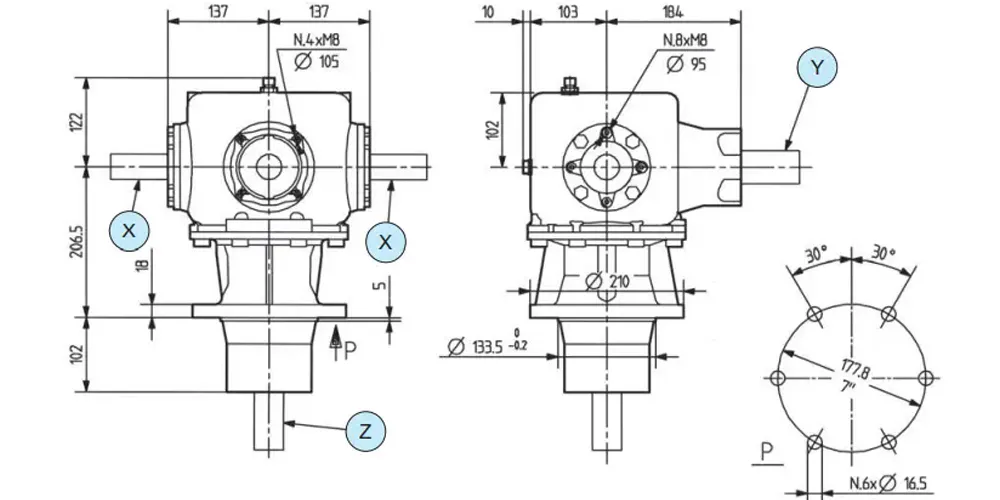
2. How the Rotary Mower Gearbox Works
The fundamental job of a rotary mower gearbox is deceptively simple: take horizontal rotational energy from the tractor’s PTO shaft and redirect it into vertical rotation that spins the blade assembly at cutting speed. In this EP TF-285B Rotary Mower Gearbox replacement unit, that task is accomplished through a precision bevel gear drive contained in a sealed, self-lubricating iron housing.
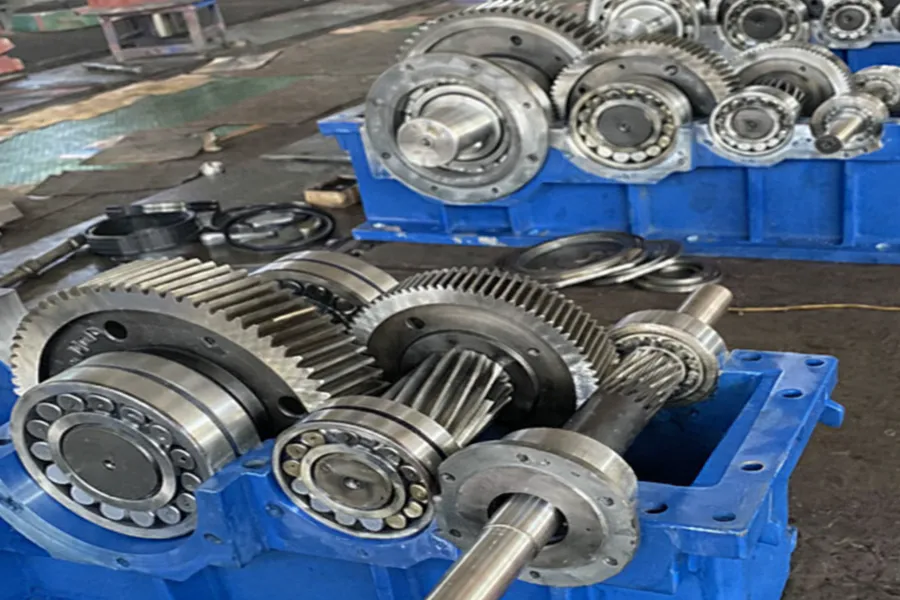
When the operator engages the tractor PTO, drive torque enters the gearbox through the 1‑3/8″ 21-spline input shaft at nominally 1,000 rpm. The input shaft is keyed to a bevel pinion gear — a cone-shaped gear whose teeth are ground to a precise involute profile and hardened through the carburizing process to achieve a surface hardness of 58–62 HRC. This bevel pinion meshes at a 90-degree angle with the larger ring bevel gear, which is mounted on the output shaft. The difference in tooth counts between the pinion and the ring gear produces the 1.86:1 speed increase, meaning the output shaft turns at approximately 1,860 rpm for every 1,000 rpm of PTO input — reaching the blade tip velocities needed for a clean, efficient cut through pasture grass, roadside vegetation, and light brush.
Both shafts run in matched pairs of angular contact ball bearings, which are designed to carry combined radial and axial loads simultaneously. This is critical in a rotary mower gearbox because blade strikes on rocks or hidden debris generate sudden spike loads that would damage radial-only bearings very quickly. The bearings are pre-loaded during assembly to remove any axial play, maintaining consistent gear mesh geometry under load. The entire gear set runs submerged in an EP 80W-90 gear oil bath — approximately 0.5 liters — which is contained by dual-stage labyrinth-and-lip-seal combinations at both shaft exits. This sealed lubrication design is what allows the unit to operate in all orientations and on hillsides without oil starvation at the gear mesh surfaces.
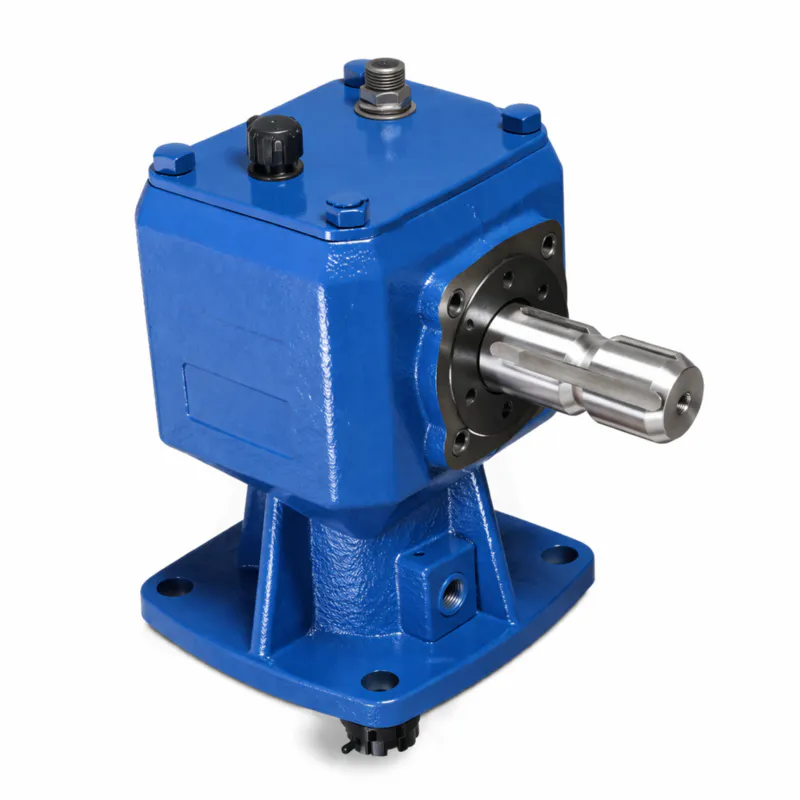
3. Five Key Product Advantages
① Confirmed Direct-Fit Replacement
Mounting bolt pattern, shaft spline specifications, and external envelope dimensions are fully verified against Comer TF-285B drawings. No drilling, grinding, or adapter plates required. Bolt it on, fill the oil, and go.
② Heat-Treated Alloy Steel Gears
20CrMnTi gears are carburized, hardened, and precision-ground after heat treatment. This process produces a tough, ductile core beneath the hard surface — the combination that resists both surface fatigue and sudden shock loads from field debris strikes.
③ Sealed, Low-Maintenance Design
Dual-stage labyrinth seals combined with nitrile rubber lip seals keep oil in and field contamination out. The sealed oil bath system is designed to go a full season between oil changes under normal operating conditions, reducing downtime dramatically.
④ Rated for 75–100 HP Tractors
With a 91.9 kW (123 HP) power rating, this unit is well-suited to everything from a mid-range utility tractor running a 75 HP rotary cutter gearbox application right up to a 100 HP rotary cutter gearbox demand. Engineered with a service factor that handles intermittent overloads common in rough terrain mowing.
⑤ ISO 9001-Aligned Manufacturing
Every production stage — from material incoming inspection through in-process gear measurement, bearing preload setting, and final no-load run test — follows documented quality procedures. Third-party audits and CE marking certification confirm that our quality systems meet international standards your customers and fleet managers expect.
4. Materials & Construction
Material selection in a rotary mower gearbox is not a background detail — it directly determines whether the unit survives a season of hard field use or fails at the worst possible moment. Every material choice in the EP TF-285B Rotary Mower Gearbox replacement is made with the abuse profile of real agricultural use in mind.
The housing is cast from Grade GJS-400-18 ductile iron per ISO 1083. This alloy is specified for its Charpy impact value — roughly three times that of equivalent gray cast iron — which means the housing can absorb impact energy from debris strikes and frame shock loads without cracking. The ductile iron is dimensionally stable after machining, which is critical for maintaining the bearing bore alignment and gear mesh geometry over years of thermal cycling in the field.
Internal gears are manufactured from 20CrMnTi, a chromium-manganese-titanium case-hardening steel widely used in high-stress gear applications across the agricultural and automotive sectors. After hobbing or shaping to final profile, each gear is gas-carburized to produce a 0.8–1.2 mm case depth, then quenched and tempered to achieve a surface hardness of 58–62 HRC over a core with a tensile strength in the range of 1,000–1,200 MPa. This core toughness is what separates professionally manufactured gears from lower-cost alternatives that may be through-hardened and brittle.
Input and output shafts are machined from 42CrMo alloy steel in the normalized and tempered condition (28–32 HRC), providing the combination of hardness at the spline flanks and toughness in the shaft body that prevents both fretting wear and fatigue cracking under cyclically varying bending loads. Bearing seats are finish-ground after heat treatment to H7 tolerance to ensure correct bearing interference fits throughout the service life of the unit.
Sealing is handled by a multi-element system: a cast labyrinth groove machined into the housing at each shaft opening works together with a nitrile rubber radial lip seal. The dual-stage approach means the labyrinth deflects the majority of ingress contamination before it can contact the lip seal, extending seal service life and reducing the probability of oil contamination from field soil, grass juice, and moisture — conditions routinely encountered in US and Australian mowing environments.
5. Application Scenarios
The EP TF-285B replacement rotary mower gearbox is engineered for demanding use across a broad range of commercial and agricultural cutting applications. Below are the primary contexts where this unit delivers reliable, cost-effective performance.
Pasture & Ranch Mowing — Great Plains & Southwest USA
On large cattle and horse operations from Kansas to central Texas, rotary mowers make multiple passes per season across rough pasture ground. The combination of high hectarage and rough conditions — rocks, hardwood stumps, fence-post debris — demands a gearbox with both high sustained torque capacity and the shock resistance to survive accidental debris strikes. This unit’s ductile iron housing and case-hardened gear set are specifically suited to this environment.
Highway Right-of-Way Maintenance
State DOT fleets and county road departments across the United States log enormous annual operating hours mowing grass alongside highways, interstates, and rural county roads. Equipment uptime is directly tied to cost per mile mowed. A gearbox that holds up through a full mowing season without seal failures or bearing replacements is worth considerably more than its purchase price in labor savings alone.
Orchard & Vineyard Floor Management
Mid-row mowing in California almonds and walnuts, Washington apples, and Pacific Northwest wine vineyards demands a compact, reliable drive unit that clears cover crops cleanly without plugging or scalping tree roots. The sealed housing design prevents grass sap and organic debris from working into the gear oil, which is a chronic failure mode with poorly sealed units in high-organic-matter mowing conditions.
Commercial Turf & Golf Course Rough
Golf courses and large sports complexes managing rough and out-of-play areas run their rough mowers at high annual hours. Consistent gear mesh contact and low vibration are important here — both for turf quality and for operator comfort over long duty cycles. The pre-loaded bearing assembly in this gearbox minimizes the gear mesh backlash that contributes to vibration and noise.
Municipal Parks & Utility Right-of-Way
City parks departments, utility companies managing powerline corridors, and pipeline right-of-way contractors all depend on fleet-level rotary mower reliability. Procurement teams for these buyers value standardized replacement part numbers that simplify inventory management — and a rotary mower gearbox replacement that fits multiple host machine models without adaptation reduces the number of SKUs needed on the shelf.
6. Regulatory & Compliance Standards
Agricultural power transmission equipment sold into regulated markets must conform to a range of national and international safety, quality, and environmental standards. Buyers in the United States, European Union, Canada, and Australia are increasingly required to document compliance as part of their equipment procurement and fleet management processes. The EP TF-285B Rotary Mower Gearbox replacement rotary gearbox is designed and manufactured with the following frameworks in mind.
United States: OSHA 29 CFR Part 1928 (Agricultural Operations) establishes minimum safety requirements for agricultural field equipment, including requirements for guarding of rotating components — a standard directly applicable to PTO-driven rotary mower systems. ASABE Standard S318.16 (Safety for Agricultural Field Equipment) and ASABE S279 (Hydraulic, Mechanical and Electrical Remote Control) provide further technical guidance for implement manufacturers. The American National Standards Institute (ANSI) B11 series covers general machinery safety, while AGMA gear quality standards (AGMA 2101-D04 and AGMA 2001-D04) govern gear geometry and material specifications used in the design of this unit.
European Union: Equipment sold for use in EU member states must carry CE marking under the Machinery Directive 2006/42/EC, which mandates risk assessment, technical documentation, and Declaration of Conformity. EN ISO 4254 (Agricultural Machinery — Safety) provides specific requirements for soil tillage and mowing machinery. The RoHS Directive (2011/65/EU) restricts the use of hazardous substances in electrical and electronic equipment, applicable to any control components integrated with the gearbox system. The EN ISO 11684 series covers safety signs and hazard pictorials, which are required on the finished implement.
Canada: Agriculture and Agri-Food Canada and provincial farm safety agencies reference CSA/CGSB standards alongside adopted ASABE and ISO standards. Provincial farm safety legislation in Ontario, Saskatchewan, and Alberta addresses PTO shaft guarding and rotating component safety in detail.
Australia & New Zealand: AS 4024 (Safety of Machinery) and AS/NZS 3000 (Wiring Rules) govern machinery safety and electrical integration. Safe Work Australia’s agricultural equipment safety guidance references ISO 11684 for hazard labeling.
ISO Quality Systems: The manufacturing quality system operating under ISO 9001:2015 protocols ensures consistent product quality through documented procedures for incoming material inspection, in-process measurement, and final acceptance testing. CE certification for the European agricultural machinery market confirms conformance with applicable directives.
7. About Our Manufacturing Facility
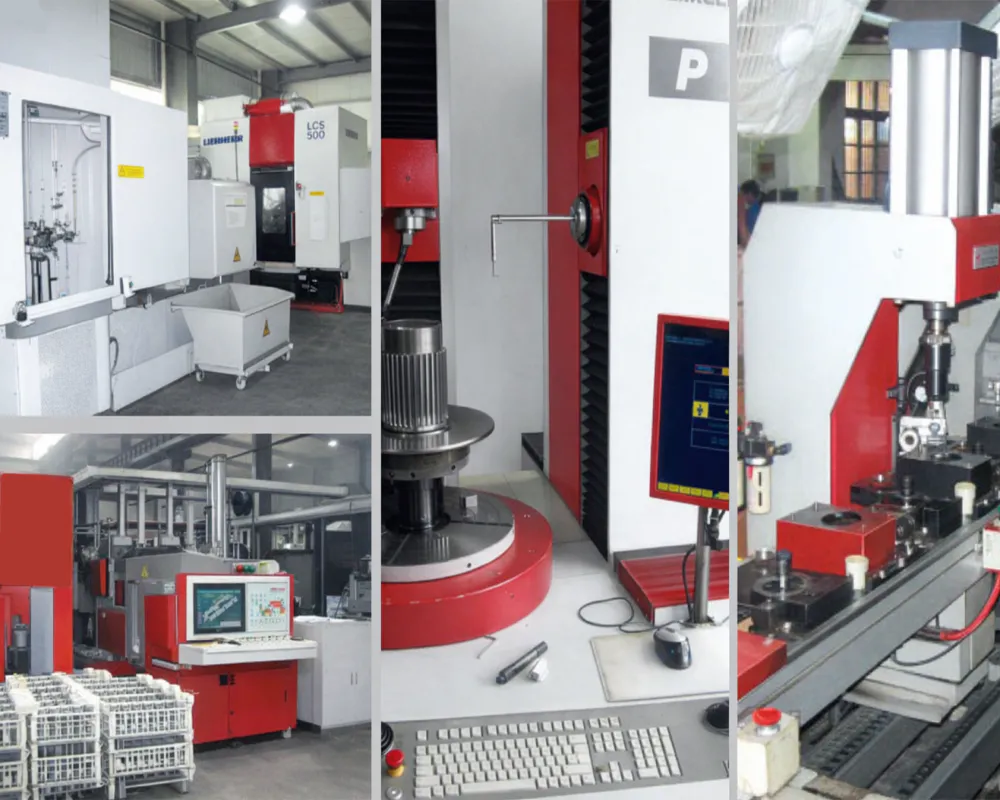
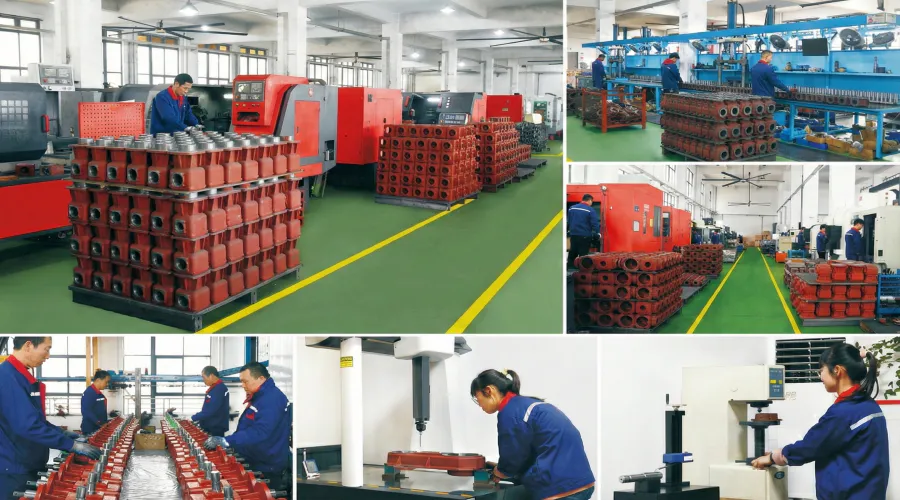
Our production facility is a specialized manufacturer of agricultural power transmission components, operating a dedicated gearbox production line that serves both OEM equipment builders and the global aftermarket. The engineering team holds formal qualifications in mechanical and agricultural machinery design, with accumulated production experience spanning multiple gearbox families, including brush cutter gearbox, rotary mower gearbox, and bevel gear drive systems for a wide range of implement types.
Quality control begins well before a single component enters the machining line. Incoming steel stock undergoes chemical composition verification by optical emission spectrometry and hardness testing against material certificates. During production, gear tooth geometry is measured using dedicated involute and lead testing equipment, housing bore dimensions are confirmed by CMM (Coordinate Measuring Machine) against drawing tolerances, and bearing preload settings are measured by torque gauge during assembly. Completed gearbox assemblies go through a no-load run-in test at rated speed before painting and packaging.
WorkShop
8. Related Products & System Accessories
A high-quality rotary mower gearbox is the centerpiece of the rotary cutter driveline — but the full system depends on every connected component performing reliably. We supply the complete driveline, enabling one-source procurement for farmers, OEM builders, and distributors who value a single-vendor relationship for all their agricultural power transmission needs.
PTO Drive Shafts
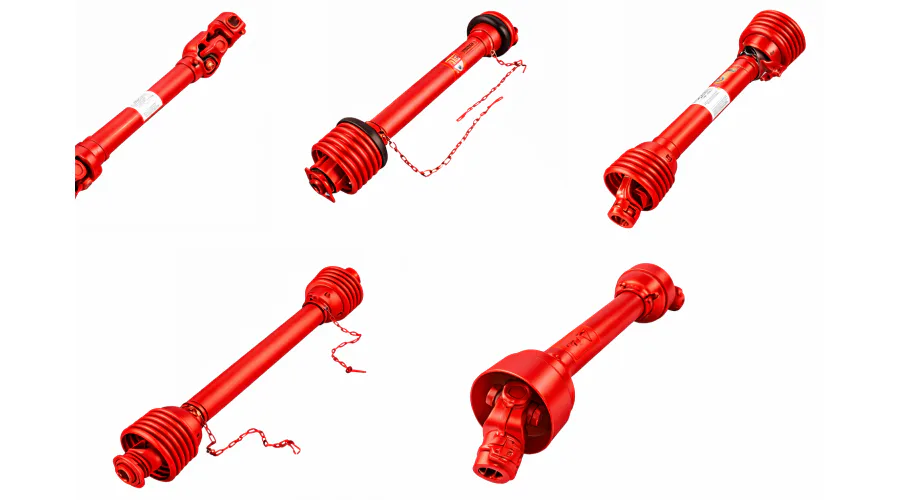
The PTO Shaft connects the tractor output to the gearbox input and is the first component in the driveline to absorb shock loads. Our agricultural PTO shafts are manufactured to match the 1‑3/8″ Z21 spline specification of this gearbox, with safety shielding at both ends compliant with ASABE S331 and CE requirements. Available in standard cross-and-bearing universal joint configurations and friction or shear bolt overload protection versions.
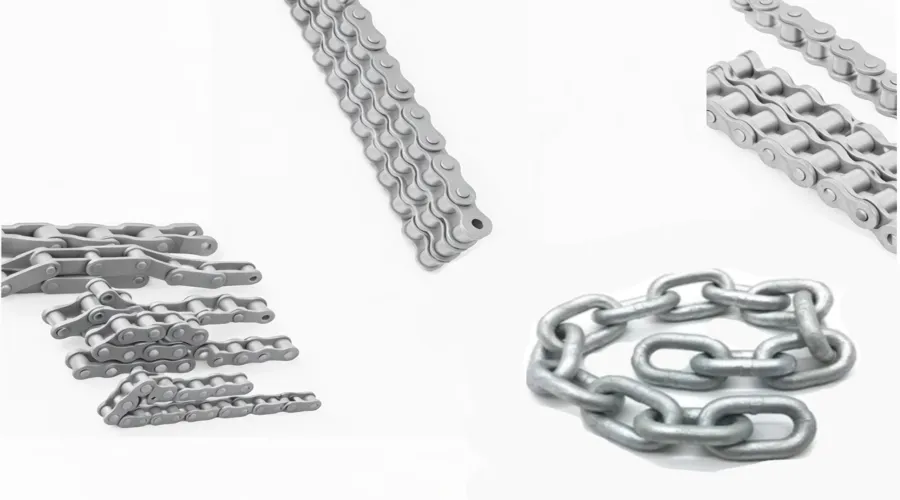
Drive Chain & Sprockets
Many rotary mowing systems use roller chain and sprocket secondary drives for blade deck distribution. Our agricultural roller chain and sprocket sets are manufactured to ANSI B29.1 and ISO 606 standards in hardened alloy steel, designed to handle the torque loads generated downstream of the main gearbox in multi-blade deck configurations. Stocking standard pitch sizes from 40 to 80, with custom bore and keyway options available.

Frequently Asked Questions
Editor: PXY