Descripción
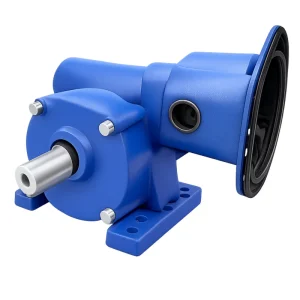
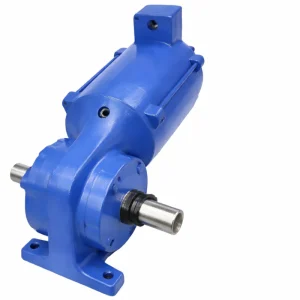
EP Center Pivot Irrigation Gearbox
Direct Replacement for Valley · UMC · Zimmatic · DURST Pivot Gearboxes
Ultimate-Duty Worm Gearbox | 50:1 Ratio | 2.25″ Output Shaft | Universal Mounting Pattern
1. Technical Specifications — EP Center Pivot Irrigation Gearbox
All parameters below reflect the validated specification of the EP series in standard center pivot and lateral move irrigation applications. Dimensional values apply to the standard production unit; application-specific configurations may be available on request.
| Parameter | Value / Description |
|---|---|
| Gear Type | Worm gear (right-angle drive) |
| Gear Ratio | 50 : 1 |
| Maximum Input Speed | ≤ 1,500 rpm |
| Rated Output Torque | 450 N·m |
| Input Shaft Diameter | 1.375 in (34.9 mm) — dual-ended |
| Output Shaft Diameter | 2.25 in (57.15 mm) |
| Shaft Orientation | 90° (perpendicular axes) |
| Material de vivienda | Ductile cast iron (GGG-50 equivalent) |
| Input Style | Solid shaft, dual-ended, with shaft guard |
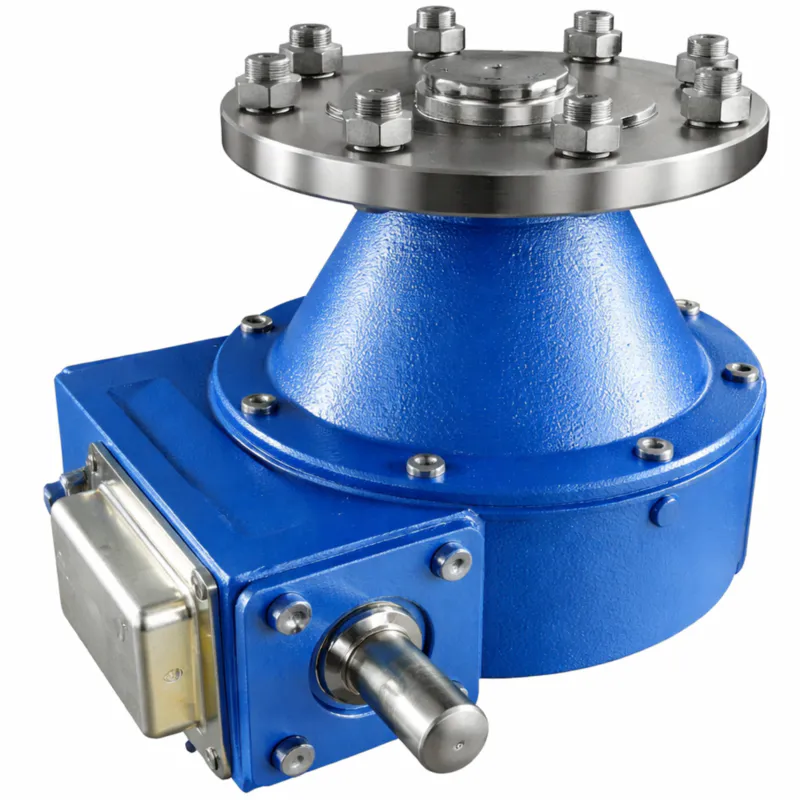
| Output Style | Hub connecting flange, 4-bolt universal pattern |
| Tipo de rodamiento | Tapered roller bearings (input & output) |
| Seal Type | Cartridge seals with external seal protectors |
| Lubrication Oil Grade | ISO VG 460 extreme-pressure worm gear oil |
| Oil Capacity | 0.95 L |
| Operating Temperature Range | -20 °C to +60 °C |
| Ingress Protection Rating | IP65 (dust-tight; water-jet resistant) |
| Thermal Management | Full-cycle expansion chamber, stainless steel cover |
| Approximate Weight | 14.5 kg |
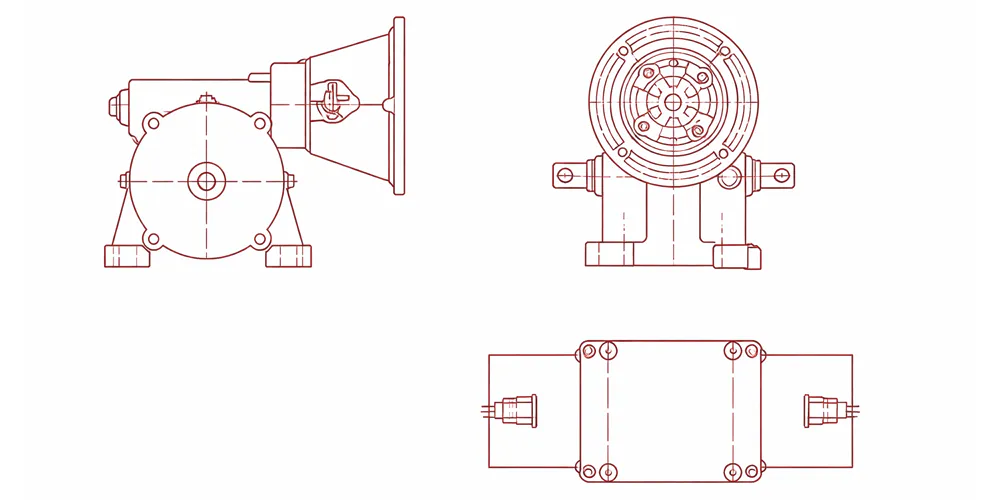
| Overall Dimensions (L × W × H) | 280 × 220 × 185 mm |
| Replacement Compatibility | Valley, UMC, Zimmatic, DURST pivot gearboxes |
2. Five Core Advantages of the EP Series center pivot irrigation gearbox
01 · Universal Drop-In Replacement
Replacing a failed Valley, Zimmatic, UMC, or DURST pivot gearbox has historically meant sourcing OEM parts at premium cost with extended lead times. The EP center pivot irrigation gearbox eliminates that dependency. Its universal four-bolt mounting flange and matching output shaft diameter allow installation onto existing tower frames in the field using standard hand tools — no drilling, no adapter plates, no engineering modifications. For Brazilian irrigation operators managing fleets of 20 or more pivots, this compatibility translates directly into reduced repair downtime and lower maintenance costs across the entire system portfolio. Our ability to supply replacement center pivot irrigation gearboxes with short delivery timelines to major Brazilian agricultural ports makes restocking straightforward.
02 · Ultimate-Duty Worm Gear Engineering
The EP center pivot irrigation gearbox is built around a precision-cut worm gear set rated for continuous heavy-duty operation at up to 1,500 rpm input speed with a consistent 50:1 reduction ratio and minimal backlash. The hardened steel worm screw and phosphor-bronze worm wheel are matched to deliver stable torque output under the load variations characteristic of real field operation — directional reversals, slope changes, and the periodic shock loads generated when a tower wheel drops into a rut. The ductile cast-iron housing damps vibration and provides structural robustness that aluminum housings cannot match in heavy agricultural applications. This is what distinguishes an ultimate-duty center pivot gearbox from a standard-duty unit in multi-season commercial irrigation service.
03 · Multi-Layer Sealing System (IP65)
Seal failure is the most common root cause of premature center pivot irrigation gearbox failure in dusty, abrasive field environments. The EP series uses cartridge-type seals — as opposed to lip seals pressed into open housings — at both the input and output shaft positions. These cartridge units are precision-machined, self-contained sealing systems that maintain consistent contact force on the shaft throughout the operating life, even as the seal lip wears. External seal protectors provide a first line of defense against the coarse airborne particles generated during field operations in sugarcane, cotton, and grain growing regions. The complete system carries an IP65 rating, meaning it is dust-tight and protected against water jets from any direction — conditions routinely encountered during irrigation operation and field washing of equipment.
04 · Oversized Shaft & Bearing Package
The 2.25-inch output shaft and large-capacity tapered roller bearings at both the input and output positions are designed to handle the combined radial, axial, and moment loads generated by heavier towers and longer spans — dimensions that are increasingly standard on modern center pivot irrigation systems designed for maximum field coverage efficiency. Tapered roller bearings are specified (over deep-groove ball bearings) because they can simultaneously carry the radial loads from gear mesh forces and the axial (thrust) loads from the worm gear geometry, plus the additional bending loads transmitted from the drive wheel assembly during uneven ground traversal. This bearing selection provides substantially longer fatigue life under the complex loading patterns that define real irrigation operation, compared to simpler bearing configurations found in lower-tier pivot gearboxes.
05 · Thermal Management & Long-Life Lubrication
Worm gear meshes generate more heat per unit of transmitted power than parallel-axis gear sets, because worm gear tooth contact involves a significant sliding component. In Brazilian summer conditions — where ambient temperatures routinely exceed 35 °C during peak irrigation season — controlling internal oil temperature is essential for long seal and gear life. The EP center pivot irrigation gearbox’s full-cycle expansion chamber allows internal oil volume to expand and contract with temperature without building pressure that would force lubricant past the shaft seals. Combined with the top oil fill plug that enables straightforward field oil changes and the pre-filled ISO VG 460 EP worm gear oil, this system delivers multi-season service between major maintenance interventions — critical for irrigation operations where technician availability at remote field locations is limited.
3. Working Principle of the Center Pivot Irrigation Gearbox
A center pivot irrigation gearbox performs a specific and demanding mechanical function: it converts the relatively high-speed, low-torque rotation of an electric motor into the very-low-speed, high-torque rotation needed to push a large steel drive wheel — and the tower structure attached to it — across a field. The core mechanism is a right-angle worm gear pair housed inside a sealed cast-iron body. The motor connects to the input shaft, which carries a precision-machined hardened steel worm screw. This worm screw meshes with a phosphor-bronze worm wheel mounted on the output shaft. For every 50 input shaft revolutions, the output shaft completes a single full turn — the 50:1 gear reduction. This speed reduction multiplies the available torque by approximately 50 (minus efficiency losses), providing the force needed to move substantial tower weight across soft or uneven soil.
The output shaft connects through the hub flange to the tower’s drive wheel assembly. Each tower in a center pivot irrigation system has its own gearbox and dedicated drive motor, and a central control panel synchronizes all motors so that every tower maintains its correct angular position relative to the others throughout the rotation. Without this coordination, the lateral spans would bow, creating dangerous structural stress. The gearbox must handle not only the steady-state torque of normal travel, but also the dynamic shock loads that occur when a wheel drops into a rut, climbs a soil ridge, or encounters a change in surface firmness — transitions that are constant in real field conditions, particularly in the heavy clay soils of Brazil’s Paraná basin or the compacted laterite paths of the Cerrado plateau.
An important inherent characteristic of the worm gear design used in center pivot gearboxes is self-locking: the high lead angle of the worm screw means that the gear set cannot be back-driven by the output shaft. This acts as a passive mechanical brake, preventing towers from rolling downhill under gravity when the system is stopped on sloped terrain — a significant safety feature. During reverse operation, the motor actively drives the input shaft in reverse, allowing the pivot to back-track without any additional braking hardware. Thermal management during long operating cycles is handled by the expansion chamber, which equalizes the pressure differential that would otherwise build as oil temperature rises during multi-hour irrigation runs, protecting the cartridge seals from pressure-induced extrusion and leakage.
4. Material Selection & Construction Quality
Every material decision in the EP center pivot irrigation gearbox reflects a focus on extended service life and field-proven reliability rather than the lowest achievable unit cost. The main housing is cast from ductile iron equivalent to GGG-50 grade, a material that combines the compressive strength and vibration-damping characteristics of grey cast iron with substantially better impact resistance. This distinction matters in agricultural field environments where tower impacts from buried rocks, concrete irrigation channels, and unexpected terrain features are not uncommon. Ductile iron will deform visibly before fracturing, providing a warning signal rather than sudden, catastrophic housing failure. The machined surfaces on the housing are held to tight tolerances for bearing seat fit, seal bore finish, and mounting flange flatness — dimensions that directly affect sealing performance and bearing life.
Both the input and output shafts are manufactured from hardened alloy steel, precision-ground to bearing fit and seal contact specifications. The worm gear set pairs a hardened steel worm screw with a phosphor-bronze worm wheel. This material combination is the industry standard for agricultural pivot gearboxes because phosphor bronze provides excellent wear resistance in the sliding-contact gear mesh and retains a lubricant film on tooth surfaces during the brief periods of mixed-film lubrication that occur at startup. Bronze also tends to wear evenly and predictably, generating a polished worm thread surface over time rather than the abrasive scoring patterns that can occur in poorly matched gear material pairings. Cartridge seals are manufactured from nitrile rubber (NBR), which offers broad chemical compatibility with petroleum-based gear oils, agricultural chemicals, and fertilizers, and maintains elasticity across the full operating temperature range of Brazilian field conditions. The stainless steel expansion chamber cover resists surface corrosion in high-humidity environments near irrigation water sources, canal banks, and flooded field conditions common during Brazil’s wet season.
5. Application Scenarios
Soybean & Corn Pivots — Brazilian Cerrado
Brazil’s Cerrado is one of the most productive grain farming regions in the world, with center pivot irrigation systems responsible for a significant share of soybean and corn output in Mato Grosso, Goiás, and Minas Gerais. Pivot systems here typically operate on flat to moderately sloped oxisol terrain that develops deep wheel ruts after rain events. The EP center pivot irrigation gearbox’s tolerance for uneven soil contact, its high-capacity output shaft, and its proven performance in long daily operating cycles make it a practical choice for large-scale grain operations where irrigation scheduling compliance is critical to meeting export contract volumes.
Sugarcane Irrigation — São Paulo & Northeast Brazil
Sugarcane fields impose some of the harshest operating conditions for center pivot irrigation system parts. Harvest residue generates abrasive airborne particles, soil compaction along wheel tracks is extreme, and Brazil’s hot, humid summer overlaps precisely with peak irrigation demand. The EP center pivot irrigation gearbox’s IP65 sealing system and cartridge seal design maintain internal cleanliness and lubricant integrity through these demanding multi-season cycles, resisting the seal degradation that typically forces gearbox replacement in the third or fourth year on lower-specification units used in São Paulo’s sugarcane belt.
Cotton & Specialty Crops — MATOPIBA Region
Cotton farming in Brazil’s western agricultural frontier (Maranhão, Tocantins, Piauí, and Bahia states) relies heavily on center pivot irrigation, with systems routinely running 20+ hours per day during dry-season planting windows. Missing a planting window due to gearbox failure has direct economic consequences measured in yield loss and contract penalties. Buyers in this region seeking a reliable center pivot irrigation sprinkler gearbox replacement specify the EP series specifically because of its ultimate-duty classification, its proven compatibility with Valley and Zimmatic platforms common in MATOPIBA, and the availability of local technical support through our Brazilian distribution network.
Lateral Move & Linear Irrigation Systems
Beyond circular pivot configurations, the EP center pivot irrigation gearbox is rated for lateral move (linear) irrigation systems that travel in a straight line across rectangular fields — a configuration commonly used along river floodplains and in the irrigated valleys of southern Brazil. The universal mounting pattern and dual-ended input shaft make the EP unit a direct fit for most commercial lateral move platforms currently operating across South America. When replacing a center pivot irrigation wheel gearbox in a lateral system, the same installation procedure applies as for circular pivot applications, and replacement parts availability is the same.
Retrofit & Fleet Replacement Programs
The large installed base of aging Valley, UMC, and Zimmatic systems across Latin America, the United States, Australia, and Sub-Saharan Africa represents a significant market for quality replacement center pivot gearboxes. Farm managers and irrigation service contractors who want a new center pivot irrigation sprinkler gearbox that delivers improved sealing capacity, a stronger output shaft, and better bearing specification — without requiring frame modification — consistently select the EP center pivot irrigation gearbox series. Our ability to supply on short lead times to Brazilian agricultural ports supports both planned fleet replacement programs and emergency repair scenarios.
6. How to Replace the Center Pivot Gearbox — Step by Step
Replacing a center pivot irrigation wheel gearbox is a field-serviceable mechanical task that requires proper preparation more than specialized expertise. Before starting, gather the replacement EP center pivot irrigation gearbox, all required hardware (supplied), a calibrated torque wrench, and a safe means to support the tower leg while the wheel is dismounted. Never perform this work alone on a sloped field or on a system with power not properly isolated.
- System shutdown: Isolate all electrical power at the main panel and close the water supply valve. Activate the pivot emergency stop and wait at least two minutes for any residual drive current to dissipate. Apply lockout/tagout (LOTO) hardware per applicable safety regulations before proceeding.
- Wheel and shaft removal: Remove the drive wheel, all retaining hardware, and connected shafts. Support the tower leg securely with a floor jack or solid blocking to prevent movement during the work. Label and bag all small hardware for reference.
- Old gearbox removal: Unbolt the existing gearbox from the tower mounting flange. Retain all carriage bolts, nuts, and washers for condition inspection — usable hardware can be reused if threads are undamaged.
- EP center pivot irrigation gearbox installation: Position the replacement EP center pivot irrigation gearbox onto the mounting flange. Thread carriage bolts by hand first, verify correct shaft alignment, then torque all fasteners to specification in a cross-pattern. Reinstall the drive wheel and all shafts, confirming that seals seat correctly and no components are under misalignment stress.
- Calibration and test run: Restore power and operate the pivot through at least one complete slow-speed cycle using the remote control panel. Monitor for unusual noise, abnormal vibration, or heat build-up at the gearbox housing. Check oil level through the top fill plug after the first cycle.
- Final inspection: Inspect all water pipelines and fittings in the vicinity of the serviced tower for leaks before resuming normal irrigation scheduling. Record the replacement date, gearbox serial number, and technician name in the system maintenance log.
Safety Note for Brazilian Operations: All agricultural machinery maintenance in Brazil must comply with NR-31 (Segurança e Saúde no Trabalho na Agricultura) and NR-12 (Segurança no Trabalho em Máquinas e Equipamentos). LOTO procedures are mandatory before any gearbox servicing. Ensure that all personnel performing gearbox replacement have received appropriate NR-12 training before beginning work.
7. Regulatory & Compliance Standards
Agricultural gearbox products are subject to a range of national and international standards depending on the market and application. The following is a reference summary of the key regulatory frameworks that apply to center pivot irrigation gearboxes and associated agricultural machinery components.
Brazil — ABNT, INMETRO & NR Standards
In Brazil, agricultural machinery is governed by ABNT (Associação Brasileira de Normas Técnicas) standards and product regulations issued by INMETRO. ABNT NBR ISO 11684 covers safety signs and hazard identification for agricultural machinery. NR-31 establishes occupational safety requirements for agricultural equipment use in field operations, and NR-12 mandates machine guarding and LOTO compliance for all maintenance activities on powered machinery. Import documentation for gearbox products should include correct NCM tariff classification (typically 8483.40.00 for gear boxes) and, where required, a declaration of conformity with applicable ABNT standards.
European Union — Machinery Directive & CE
Products destined for EU member states are subject to Directive 2006/42/EC (Machinery Directive), requiring CE marking for power-transmission components used in agricultural machinery. ISO 11684 and the EN ISO 4254 series apply to tractor and self-propelled agricultural machinery safety. The updated EU Machinery Regulation (EU 2023/1230), taking effect in 2027, will introduce additional digital documentation requirements. Gearbox products supplied into European agricultural markets must be accompanied by a Declaration of Conformity and relevant technical file documentation.
United States — ASABE & OSHA Requirements
The American Society of Agricultural and Biological Engineers (ASABE) publishes standards governing gearboxes and drive-line components used in irrigation systems, including ASABE EP419 and ASABE S203. OSHA 29 CFR 1928 covers agricultural operations safety, including guarding requirements for power-transmission equipment. ASABE S318 provides the standard definitions and specifications for center pivot and lateral move irrigation systems, forming the technical basis for product specifications and cross-brand replacement compatibility claims in the US market.
Australia & New Zealand — AS/NZS Standards
Australia, which operates a large installed base of center pivot irrigation systems in the Murray–Darling Basin and the Ord River Irrigation Area, follows AS/NZS 4024 (Safety of Machinery) for agricultural equipment. Water efficiency requirements under the National Water Initiative increasingly influence equipment specifications, as irrigation system efficiency is directly linked to water license conditions in over-allocated catchments. Gearbox suppliers serving the Australian and New Zealand markets should ensure product documentation, material certifications, and performance data align with these frameworks before distribution.
8. About Us
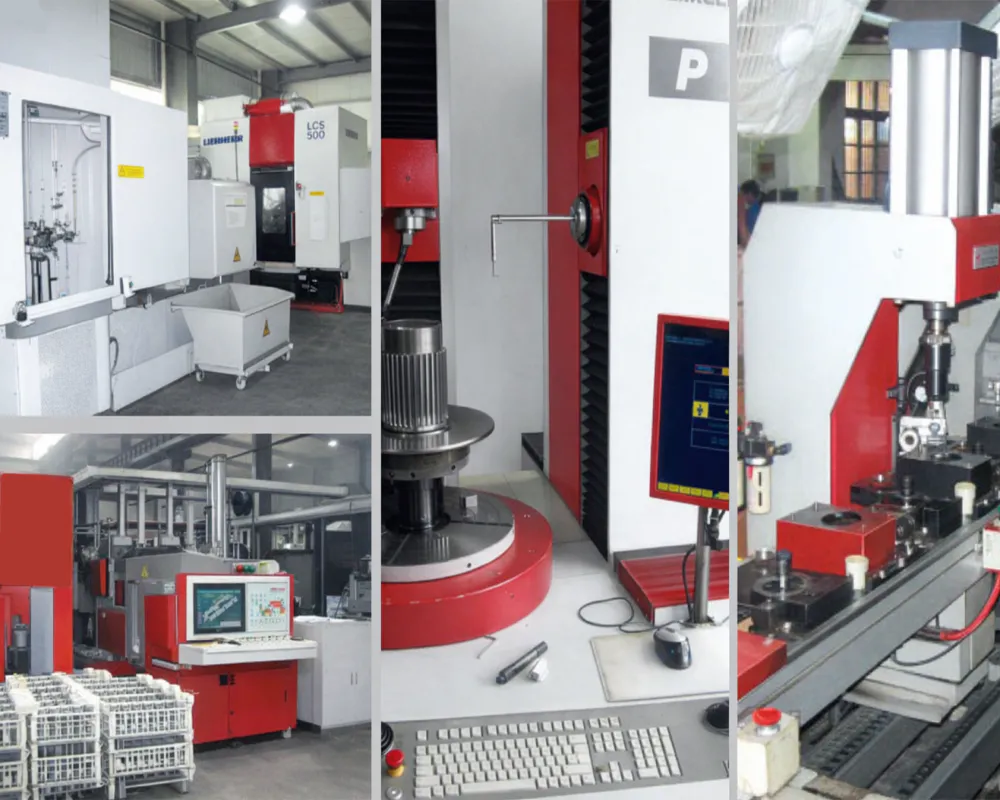
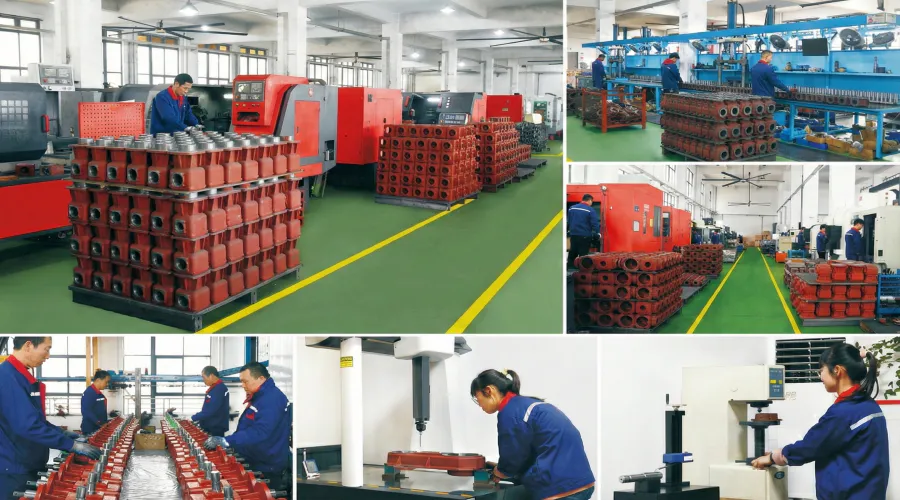
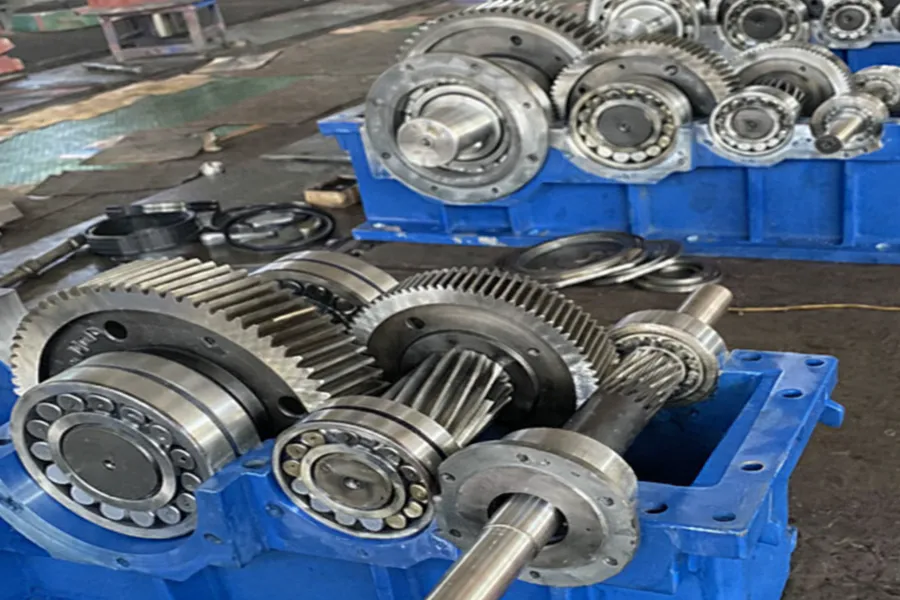
We are a specialized manufacturer and global exporter of agricultural gearboxes and power-transmission components, with deep engineering expertise across the full range of rotary cutter gearboxes, center pivot gearboxes, and associated irrigation drive components used in commercial farming. Our production operations run under an ISO 9001 quality management system, with in-house machining, heat treatment, precision assembly, and comprehensive quality inspection functions that maintain tight tolerances from incoming raw material through to finished gearbox dispatch. Every EP series gearbox leaves our facility pre-tested and pre-filled, ready for immediate field installation.
WorkShop
9. Related Products & System Components
PTO Shafts for Pivot Drive Systems
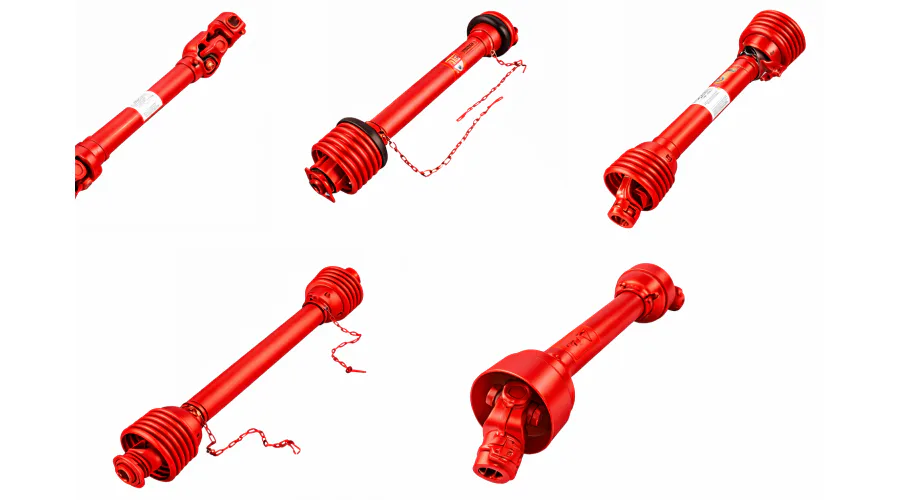
Power take-off shafts connect the drive motor or engine to the center pivot irrigation gearbox input shaft, transmitting rotational power without direct coupling while accommodating angular misalignment between connected components. Selecting the correct PTO shaft means matching the shaft length to provide the required clearance, the torque rating to the gearbox input specification, and the yoke configuration to the motor output and gearbox input shaft diameters. An incorrectly specified PTO shaft will either fail prematurely under torque or introduce excessive vibration into the gearbox input bearings, shortening their service life significantly.
We supply a complete range of PTO shafts compatible with the EP center pivot irrigation gearbox, available in standard and custom lengths, with quick-release yokes and overrun clutch options suited to irrigation drive applications. Sourcing the gearbox and PTO shaft from a single supplier ensures dimensional compatibility and simplifies the technical documentation required for warranty support — a practical advantage for Brazilian purchasers managing complex machinery inventories across multiple pivot systems.
Drive Chains & Sprockets
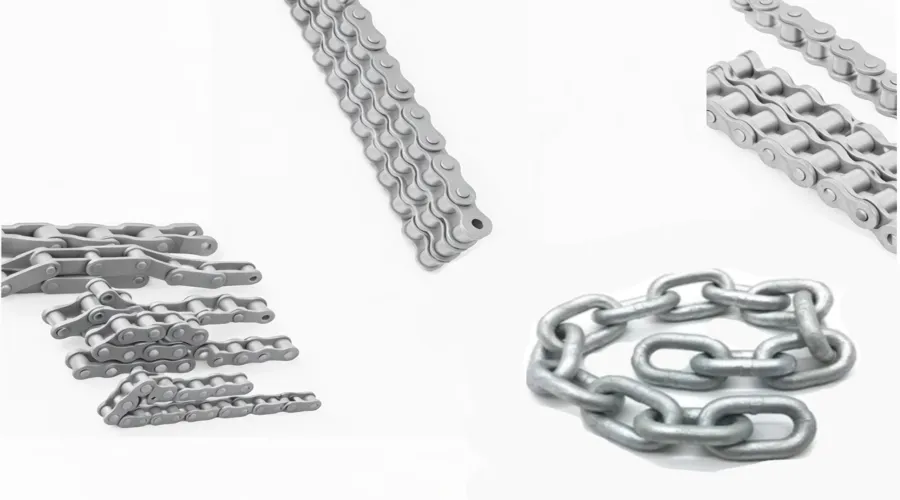
Many center pivot irrigation tower configurations use a chain-and-sprocket final drive in addition to the primary gearbox, particularly in older Valley and Zimmatic platform designs where the gearbox output drives a secondary chain reduction before reaching the wheel hub. Our agricultural drive chains and precision-manufactured sprockets are designed for full compatibility with these standard pivot tower configurations. Sprocket tooth profiles are CNC-generated and surface-hardened to deliver long wear life against the standard roller chain pitch sizes used across commercial pivot systems currently operating in Brazil and the wider Latin American market.
Specifying matched chain and sprocket sets from the same supplier as your center pivot gearbox ensures that wear rates are compatible, replacement intervals can be coordinated, and a new chain is never running against a worn-out sprocket — a combination that dramatically accelerates chain fatigue failure and creates unpredictable loads on the gearbox output shaft. Our one-stop supply offering for gearbox, PTO shaft, chain, and sprocket as an integrated system package simplifies procurement and reduces total cost of ownership across the full service life of a center pivot irrigation system.
Frequently Asked Questions
Editor: PXY