Descripción
Agricultural Power Transmission
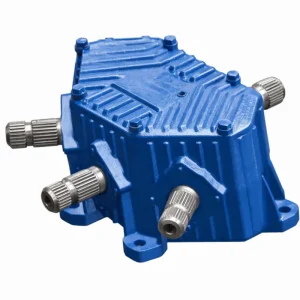
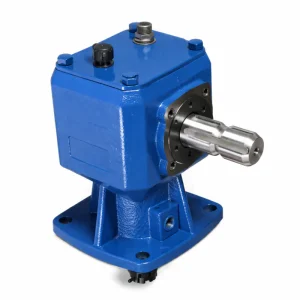
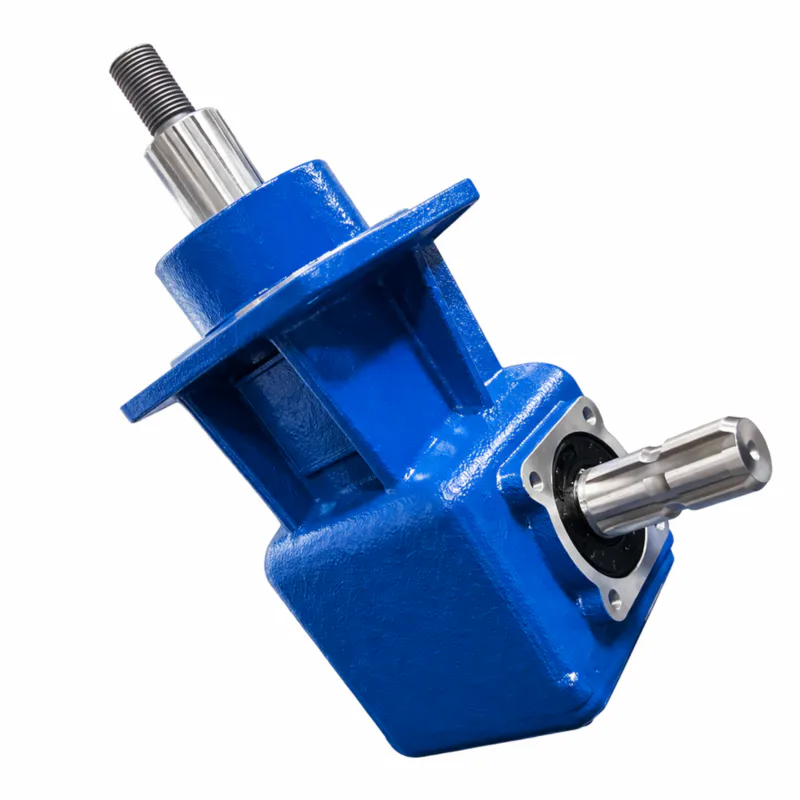
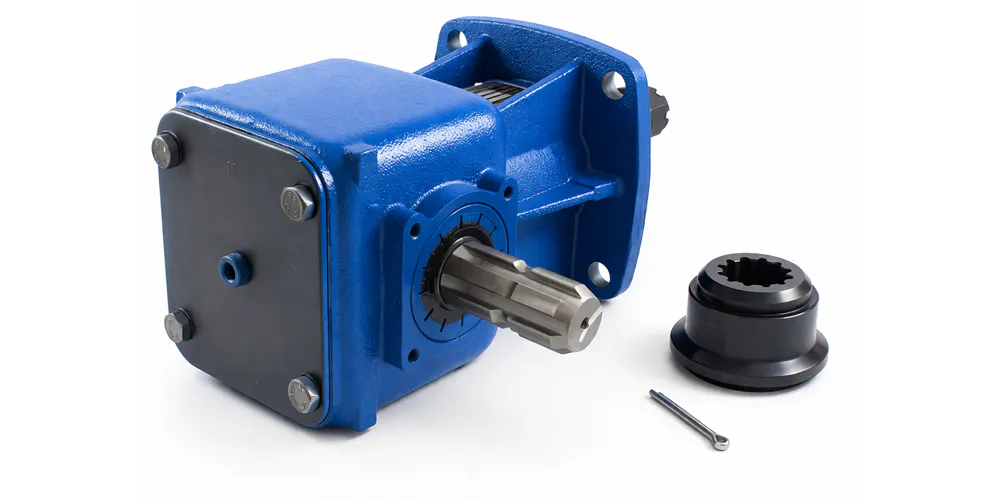
EP Rotary Mower Gearbox
Replacement of Comer Code LF-205J — Speed-Increasing, 22 kW / 30 HP
Built for heavy-duty agricultural performance in tropical and subtropical growing regions — from Brazil’s vast cerrado farms to sugarcane operations across the Northeast and South.
1. Technical Specifications — EP LF-205J Rotary Mower Gearbox
| Parameter | Value / Specification |
|---|---|
| Model Reference | EP-LF-205J (Replacement of Comer LF-205J) |
| Aplicación | Finishing mowers, rotary cutters, brush hog platforms |
| Gear Arrangement (Increasing) | 3-gear bevel set — speed increasing |
| Gear Ratio (Increasing Direction) | 1 : 1.92 |
| Gear Ratio (Reducing Direction) | 1.92 : 1 |
| Max. Input Power | 22 kW / 30 HP |
| Rated Input Speed | 540 RPM (standard agricultural PTO) |
| Output Torque (Max.) | 20 daNm |
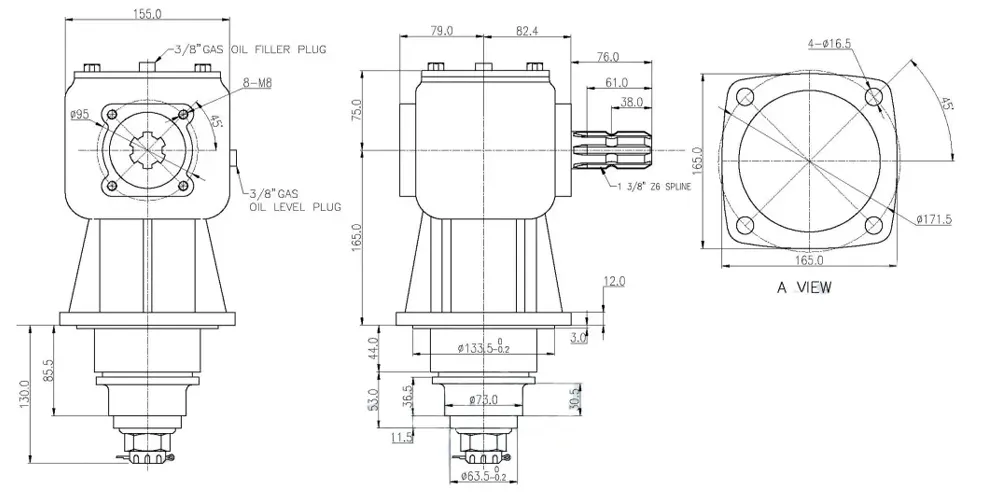
| Input Shaft — Shaft X | 1-3/8 in. diameter, 6 splines (standard PTO) |
| Output Shaft — Shaft Z | ASA Z12 D.P. 8/16 Ø40, 1-1/4 in. round, 1/4 in. keyway, CW rotation |
| Output Shaft Rotation Direction | Clockwise (CW) viewed from output side |
| Material de vivienda | Ductile Cast Iron GGG40 (EN-GJS-400-15) |
| Gear Material | Alloy steel — carburized and case-hardened, ground flanks |
| Tipo de rodamiento | Tapered roller bearings — both input and output shafts |
| Shaft Seal Type | NBR radial lip seals, dual-lip design |
| Oil Viscosity Grade | SAE 80W-90 (GL-4 or GL-5 mineral gear oil) |
| Maximum Oil Capacity | 0.8 L — shipped without oil |
| Initial Oil Change | After first 50 operating hours |
| Subsequent Oil Change Interval | Every 500 operating hours |
| Unit Weight (without oil) | 16 kg (35.3 lbs) |
| S.No. | Relación | R.M.P | Hp | KW | N•m TORQUE (INPUT) | N•m TORQUE (OUTPUT) | R.M.P (OUTPUT) |
|---|---|---|---|---|---|---|---|
| Speed Multiplier | 1:1.92 | 540 | 30 | 22 | 389 | 203 | 1037 |
| 1:1.47 | 540 | 40 | 29.4 | 520 | 354 | 794 | |
| LUBRICATING OIL: SAE.90EP | WEIGHT: 16KG | ||||||
2. Operating Principle of the Rotary Mower Gearbox
The fundamental task of any rotary mower gearbox is to accept rotational input from a tractor’s rear PTO shaft and redirect that power — at altered speed and torque — to the horizontal blade spindle of the mower attachment. In the EP LF-205J Rotary Mower Gearbox, this function is achieved through a three-gear bevel arrangement. When the tractor operator engages the PTO lever, the input shaft begins rotating at 540 RPM. Inside the GGG40 cast iron housing, a bevel pinion gear mounted on the input shaft drives a larger bevel ring gear. The geometry of the bevel mesh simultaneously accomplishes two things: it rotates the shaft axis by 90 degrees (from the tractor’s longitudinal PTO axis to the transverse blade spindle axis) and increases the rotational speed through the 1:1.92 ratio, bringing the output shaft to approximately 1,037 RPM.
The output shaft — a 1-1/4 inch round shaft with a 1/4 inch keyway — drives the mower blade spindle hub directly. Tapered roller bearings on both the input and output shafts absorb the combined radial and axial loading generated during cutting, including the periodic shock loads caused by blade contact with hidden obstacles in dense tropical grass. The oil sump, filled to 0.8 liters with SAE 80W-90 gear oil, keeps all gear contact surfaces and bearing races continuously lubricated via splash and gear-churning action. Dual-lip NBR radial seals at both shaft exit points prevent contamination ingress from the fine laterite dust and moisture common in Brazilian field conditions, and retain the gear oil under the centrifugal pressure generated at operating speed.
3. Five Key Product Advantages
Selecting the right rotary mower gearbox for Brazilian agricultural and landscaping operations requires more than matching a part number. The following five performance attributes distinguish this EP unit from commodity alternatives in the market.
1. Verified Dimensional Compatibility with Comer LF-205J OEM Specification
Brazilian equipment dealers and farm operators investing in a rotary mower gearbox replacement need certainty that the unit will mount and connect without additional machining or adapter hardware. This EP Rotary Mower Gearbox replicates the Comer LF-205J mounting bolt pattern, housing flange geometry, input shaft spline configuration (1-3/8 inch, 6 splines), and output shaft dimensions (1-1/4 inch round with 1/4 inch keyway) to the original manufacturer’s specification. For operations managing fleets of finishing mowers and rotary cutters — common on large soybean farms in Mato Grosso or cattle ranches in Goiás — this dimensional accuracy eliminates the labor and delay cost of custom-fit adjustments during equipment downtime, a significant operational advantage when replacement windows between growing season activities are narrow.
2. GGG40 Ductile Cast Iron Housing — Engineered for Tropical Field Conditions
Ductile cast iron GGG40, designated EN-GJS-400-15 in the ISO standard, is a nodular iron grade characterized by spheroidal graphite inclusions that prevent brittle fracture propagation under impact loading — the exact failure mode triggered by rock and debris strikes during rotary cutting in cleared cerrado land or former pasturelands. In laboratory testing, GGG40 delivers a minimum elongation at break of 15%, compared to under 1% for standard gray cast iron. In Brazilian field terms, this means the housing survives the stone-strike events common during first-season cultivation of newly cleared land in states like Pará and Tocantins, where sub-surface rock exposure is frequent. The material also provides excellent thermal mass for heat dissipation during the long continuous operating cycles typical of professional mowing operations in the harvest preparation windows common across São Paulo and Minas Gerais.
3. Dual-Lip NBR Seals Rated for High-Humidity and Chemical-Exposure Environments
The northern and northeastern regions of Brazil experience periods of extremely high atmospheric humidity combined with intense UV radiation — conditions that rapidly degrade single-lip seals made from standard elastomers. The NBR (Nitrile Butadiene Rubber) dual-lip radial seals used in this rotary mower gearbox maintain their sealing integrity across a service temperature range of -40°C to +121°C, far exceeding the ambient and operating temperatures encountered even in the hottest Brazilian growing regions. The secondary exclusion lip specifically targets the fine red laterite dust prevalent across the Brazilian agricultural interior, preventing abrasive particle ingestion that is the primary accelerator of premature bearing failure in gearboxes operated in tropical conditions. This seal specification is the same grade used in gearboxes deployed in sugarcane harvesting machinery — one of the most demanding agricultural equipment environments in the world.
4. Case-Hardened Alloy Steel Gears with Ground Tooth Profiles
The internal gear set is machined from alloy steel (20CrMnTi specification or equivalent) and subjected to a full carburizing and case-hardening heat treatment cycle, producing a tooth surface hardness of HRC 58–62 with a ductile core below the hardened case layer. After heat treatment, gear tooth flanks are finish-ground to DIN quality grade 7 or better, eliminating the surface irregularities that cause noise, vibration, and accelerated wear in cut-but-not-ground gears. The practical outcome for Brazilian rotary mower operators is a noticeably quieter running unit that generates less heat per hour of operation, slowing lubricant degradation and extending the already-generous 500-hour oil change interval even in high duty-cycle applications. Quiet operation is also a meaningful quality signal in the commercial landscaping market in urban periphery areas of cities like São Paulo, Curitiba, and Porto Alegre, where daytime noise restrictions may apply.
5. Minimal Maintenance Overhead — 500-Hour Oil Change Intervals in Field Conditions
Brazilian agricultural operations — particularly large-scale grain and cattle operations in the Center-West — face significant logistical challenges in accessing qualified maintenance support during peak growing and harvest periods. A rotary mower gearbox that demands frequent service calls adds operational complexity and cost at the worst possible time. With a 500-hour oil change interval (after a 50-hour initial run-in change), this unit requires only one scheduled oil service per typical Brazilian annual mowing cycle, which for most farming operations falls between planting preparation passes and post-harvest field cleanup. The 0.8-liter oil sump capacity, combined with the thermal efficiency of the GGG40 housing, maintains lubricant temperature within the safe operating range throughout extended daily working cycles even during the October–March high-heat period of the Brazilian growing season.
4. Component Materials & Construction Quality
Every material choice in this rotary mower gearbox reflects the demands of real-world agricultural operation rather than laboratory bench conditions. Starting with the housing: GGG40 ductile cast iron (EN-GJS-400-15) combines the compressive strength and vibration damping of cast iron with the impact toughness provided by its nodular graphite microstructure. Foundry control during casting maintains consistent wall thickness throughout the housing, which directly affects both structural integrity and heat dissipation performance during continuous use. The internal gear set is produced from alloy steel billets — typically 20CrMnTi or the DIN equivalent 20MnCr5 — selected for the combination of core toughness and surface hardenability that makes these steels the global standard for carburized gear applications in agricultural machinery.
The bearing housings are machined to H7 tolerance class, ensuring correct interference fit with the outer races of the tapered roller bearings and preventing the fretting and race spin that shortens gearbox life in units produced to looser tolerances. Shaft seals are NBR (Nitrile Butadiene Rubber) — a material with proven resistance to petroleum-based gear oils, herbicide splash, and the soil chemicals commonly encountered during mowing operations adjacent to spray-treated field margins. Housing fasteners are zinc-plated steel, providing adequate corrosion protection for equipment stored outdoors between seasons, which is standard practice on Brazilian farms. The gearbox ships without gear oil, packaged to protect machined surfaces during ocean freight transit from manufacturing facility to Brazilian port of entry at Santos, Paranaguá, or Itajaí — the main import gateways for agricultural machinery components reaching the South and Southeast Brazilian market.
5. Application Scenarios
The EP LF-205J rotary mower gearbox covers a wide spectrum of powered mowing and cutting applications encountered across Brazilian agricultural, municipal, and commercial sectors. Below are the primary use cases in which this unit delivers consistent performance.
Soybean & Grain Farm Pasture Management — Center-West Brazil
Large-scale grain operations in Mato Grosso, Mato Grosso do Sul, and Goiás maintain extensive areas of internal roads, drainage channels, and field margins that require regular rotary mowing to control invasive grasses and secondary vegetation that would otherwise compete with crops or impede machinery access. The finishing mower gearbox on these operations runs seasonally but intensively — often 6 to 8 hours per day during pre-planting field preparation periods. The EP LF-205J unit’s 30 HP input rating and 500-hour oil change interval are well-matched to these demands, providing a full season of operation with a single scheduled service. The cast iron housing also resists the thermal fatigue caused by daily heat cycling in the extreme daytime temperatures — regularly above 38°C — of the central Brazilian plateau during October and November.
Sugarcane Field Perimeter & Inter-Row Vegetation Control — São Paulo & Northeast
Sugarcane operations in São Paulo state and the northeastern growing regions of Alagoas, Pernambuco, and Bahia present some of the most demanding operating conditions for rotary mower gearboxes in Brazil. High annual rainfall, dense weed regrowth between ratoon crops, and the physical demands of cutting through volunteer cane stalks and dense grass cover mean that gearboxes in these applications accumulate operating hours rapidly and are exposed to high moisture levels that attack inadequate shaft seals. The dual-lip NBR seals and GGG40 housing of the EP LF-205J unit address these specific challenges directly, making it a practical rotary mower gearbox for sugarcane operations seeking to reduce the frequency of unplanned gearbox replacements during the growing season.
Cattle Ranch Pasture Maintenance — Minas Gerais, Paraná & Rio Grande do Sul
Brazilian cattle ranching, concentrated in Minas Gerais, Mato Grosso, and the southern states of Paraná and Rio Grande do Sul, involves continuous management of improved pasture grasses — primarily Brachiaria, Tifton, and Napier varieties — to maintain optimal grazing height and prevent dominant weed species from establishing. PTO-driven rotary mowers are the tool of choice for this work, and the quality of the rotary mower gearbox directly determines how much operator intervention is required throughout the dry season mowing cycle. The bolt-on compatibility of the EP LF-205J Rotary Mower Gearbox with Comer LF-205J-equipped mower decks means that ranches already using this platform can maintain their existing equipment investment while upgrading gearbox service life through proven-quality replacement components.
Municipal Roadside & Highway Verge Mowing — DNIT & State Programs
Brazil’s Departamento Nacional de Infraestrutura de Transportes (DNIT) and state highway departments (DER) operate extensive roadside vegetation management programs across the national and state highway network. Contractors serving these programs run fleets of tractor-mounted rotary cutters that accumulate substantial annual operating hours clearing roadside verge vegetation to maintain sight-line safety standards. In this context, gearbox procurement decisions favor units with established OEM-compatible fit, transparent technical specifications, and responsive supplier support — all characteristics of the EP LF-205J rotary mower gearbox. The unit’s GGG40 housing provides the debris-strike resistance necessary for roadside work in regions where highway litter is embedded in verge vegetation, and the 500-hour oil change schedule simplifies fleet maintenance planning for contractors managing multiple machines across large geographic coverage areas.
Commercial Landscaping & Urban Green Space Maintenance — São Paulo, Curitiba, Porto Alegre
Brazil’s major urban centers and their rapidly expanding peripheral areas have generated significant demand for professional commercial landscaping services operating tractor-mounted equipment on parks, sports facilities, industrial campuses, and condominium grounds. In these settings, equipment reliability is directly tied to revenue — a failed rotary mower gearbox during a contracted maintenance window creates both financial loss and client satisfaction risk. The low-vibration operating characteristic of the EP LF-205J Rotary Mower Gearbox’s ground-tooth gear set makes it particularly appropriate for urban landscape work where reducing noise and mechanical vibration is valued alongside cutting performance, and the quiet operation creates less disturbance during early-morning maintenance work common in high-density Brazilian urban environments.
6. Regulatory Compliance & Safety Standards
Agricultural machinery and power transmission components are subject to regulatory oversight in all major markets. Buyers in Brazil and other Latin American countries should be aware of the applicable national and international standards governing the import, sale, and operation of PTO-driven rotary mowing equipment.
Brazil (ABNT / INMETRO): The Associação Brasileira de Normas Técnicas (ABNT) establishes the technical standards framework for machinery safety in Brazil. ABNT NBR ISO 11684 covers safety signs and hazard pictograms for agricultural machinery. ABNT NBR 14957 and related standards address PTO-driven equipment safety. The Instituto Nacional de Metrologia, Qualidade e Tecnologia (INMETRO) administers product conformity programs; while agricultural power transmission gearboxes are not currently subject to INMETRO’s compulsory certification program (PBAC), equipment sold to institutional buyers (DNIT contractors, state agricultural agencies) may require supporting technical documentation. The Ministério da Agricultura, Pecuária e Abastecimento (MAPA) oversees agricultural machinery import classification under Brazil’s Nomenclatura Comum do Mercosul (NCM) tariff system; HS code 8483.40 covers transmission components including gearboxes.
Mercosul Regional Requirements: Brazil participates in the Mercosul/MERCOSUR common market alongside Argentina, Uruguay, and Paraguay. Agricultural machinery standards are progressively harmonized across Mercosul member states through joint technical resolutions. MERCOSUL/GMC/RES N° 15/94 and subsequent resolutions establish the framework for technical standards recognition within the bloc, which is relevant for buyers and distributors sourcing components for use across multiple South American markets.
Occupational Health and Safety — NR 12 (Brazil): Norma Regulamentadora 12 (NR 12), issued by the Ministério do Trabalho e Emprego, establishes safety and ergonomic requirements for machinery and equipment in Brazilian workplaces. Agricultural employers operating PTO-driven rotary mowers must ensure that all PTO shaft guards and mower deck shields are maintained in serviceable condition — a requirement that extends to the gearbox mounting interface and any guarding components associated with the input and output shafts of the rotary mower gearbox itself.
European Union (for export or EU-origin equipment operating in Brazil): Equipment originally CE-marked under Machinery Directive 2006/42/EC, to be superseded by EU Machinery Regulation 2023/1230 from January 2027, may be imported into Brazil under technical documentation review. The relevant harmonized standard EN ISO 4254-7 covers rotary mowers and flail mowers. Brazilian importers of EU-manufactured equipment should retain the Declaration of Conformity and technical file as part of the import documentation package.
Argentina (IRAM) and other Mercosul Markets: The Instituto Argentino de Normalización y Certificación (IRAM) administers Argentine national standards, many of which adopt ISO and ABNT references. Importers distributing rotary mower gearbox parts into the Argentine agricultural market should verify current NCM/tariff classification and any applicable SENASA (agricultural health authority) import clearance requirements for machinery components.
7. About Our Production Capabilities
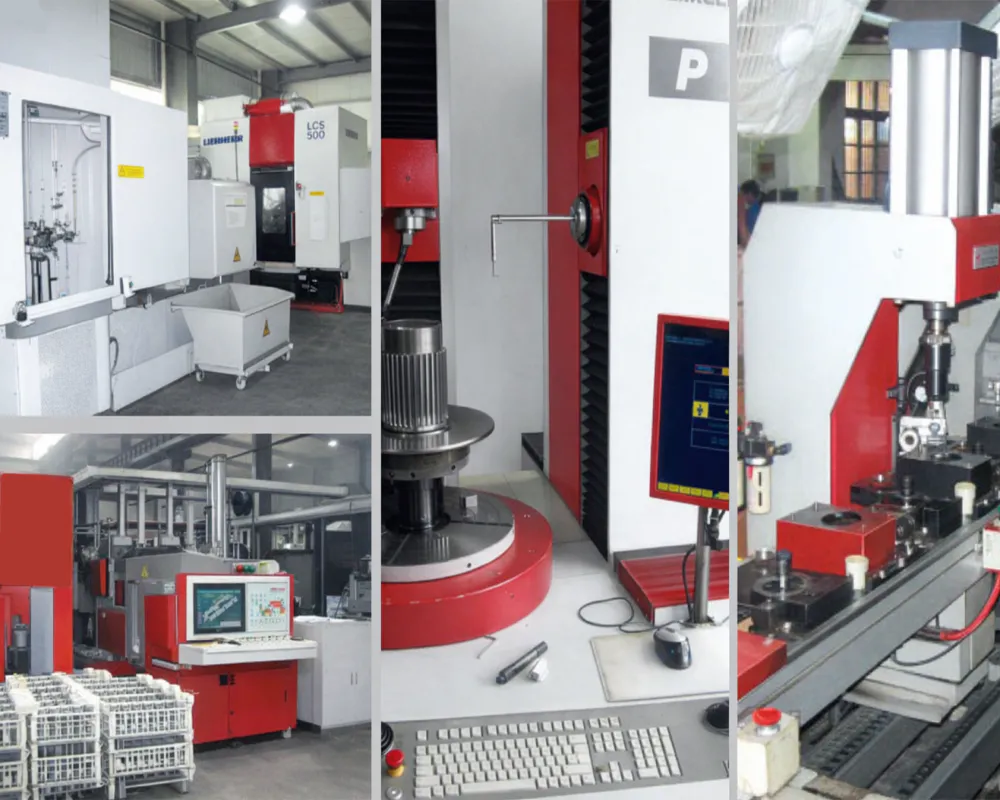
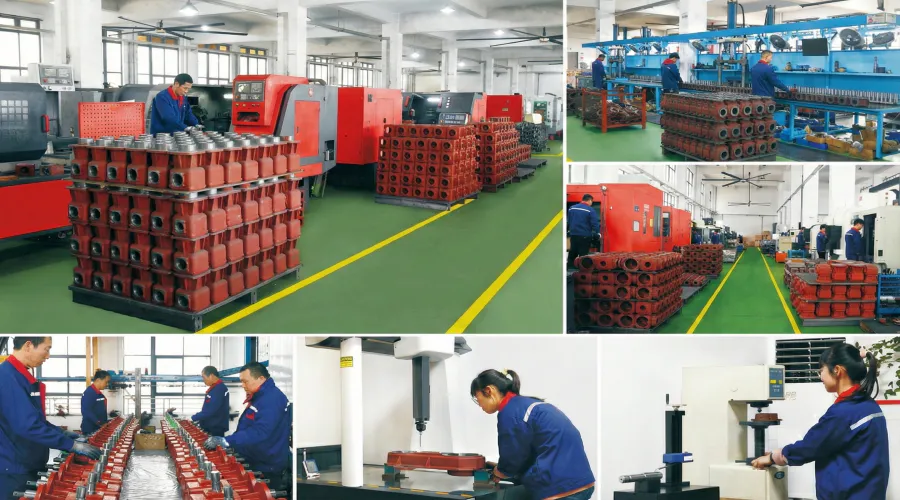
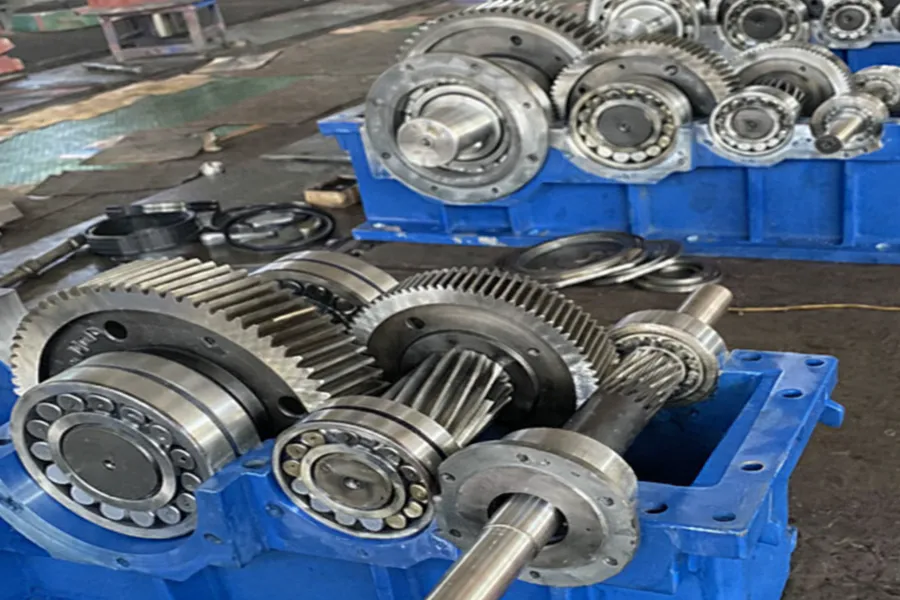
We operate a purpose-built manufacturing facility dedicated to agricultural power transmission components, with production capabilities spanning gear cutting, heat treatment, precision bearing fitting, and final assembly with quality inspection at each stage. Our engineering team brings together decades of specialized experience in designing gearboxes for the specific demands of agricultural PTO applications — a background that directly shapes every material selection and tolerance specification in products like the EP LF-205J rotary mower gearbox.
Our quality assurance process covers incoming material verification (including material certificates for housing castings and gear steel billets), dimensional inspection at gear machining and assembly stages, and a final operational check before packaging. We maintain calibrated measurement equipment throughout the production floor and operate under a quality management framework aligned with ISO 9001 principles.
Workshop
8. Related Products & Complete Drivetrain Supply
A complete and reliable rotary mowing drivetrain requires more than a quality gearbox alone. We manufacture and supply the full range of compatible agricultural power transmission components, offering Brazilian buyers and distributors a genuine one-stop supply option for their entire mowing system — from tractor PTO connection to blade spindle output.
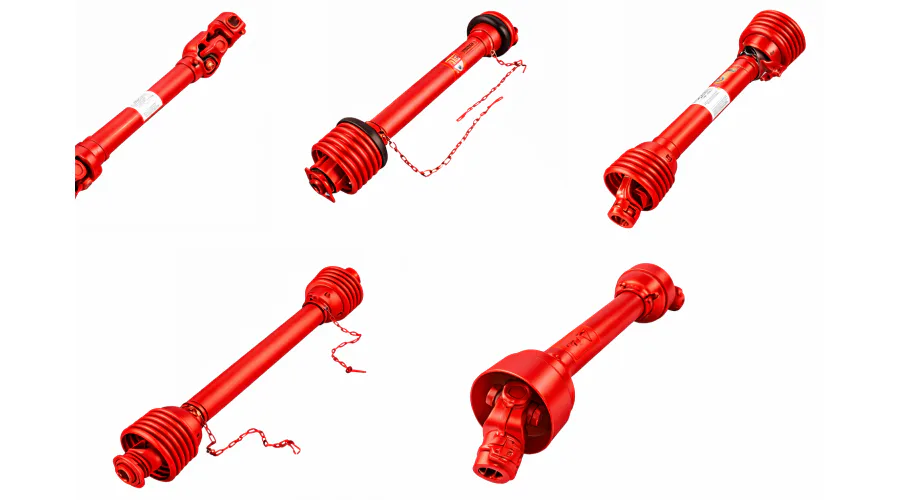
PTO Drive Shafts — Fully Matched to LF-205J Input Requirements
The connection between the tractor’s rear PTO stub shaft and the rotary mower gearbox input is only as reliable as the PTO shaft linking them. An incorrectly sized, too-short, or too-long PTO shaft introduces driveline angularity problems that accelerate universal joint wear and transmit damaging vibration into the gearbox input bearing assembly. Our range of PTO shafts covers the 1-3/8 inch six-spline profile required for the EP LF-205J Rotary Mower Gearbox connection, available in a range of collapsed and extended lengths to suit the three-point hitch geometry of Brazilian tractor models from New Holland, Massey Ferguson, Valtra, and Case IH. All shafts feature telescoping tube assemblies for length adjustment during hitching and include full-length CE-compliant guard assemblies. Sourcing both the rotary mower gearbox and its matched PTO shaft from the same supplier eliminates compatibility uncertainty and simplifies procurement logistics for Brazilian distributors managing multi-brand equipment fleets.
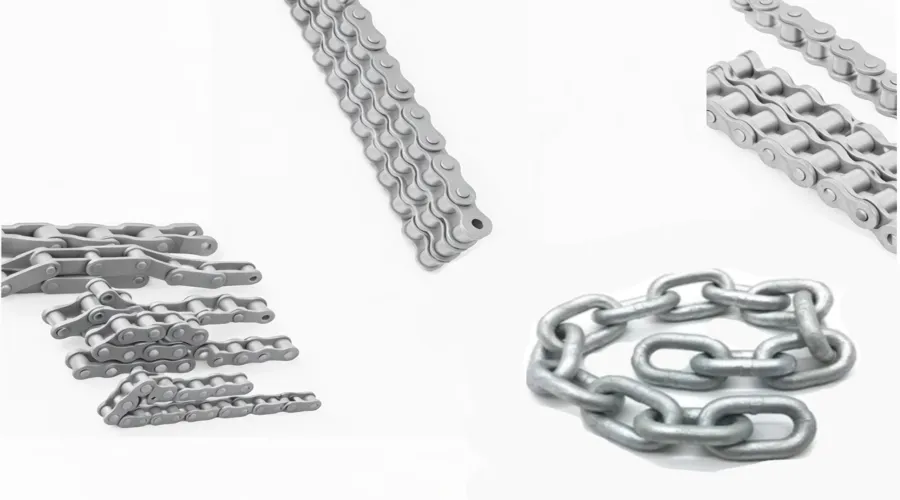
Agricultural Chains & Sprockets — Secondary Drive Components
Multi-spindle mower deck designs and some heavy-duty brush cutter platforms incorporate secondary roller chain drives distributing power from the primary gearbox output shaft to additional blade spindles across a wide cutting deck width. We produce a full range of agricultural roller chain and matching sprocket sets conforming to ASME B29.1 (inch series) and ISO 606 (metric series) dimensional standards. Our chain sets are manufactured from case-hardened carbon and alloy steels with precision-punched link plates and pre-loaded bushings for consistent pitch accuracy across the chain length — a factor that directly affects sprocket engagement noise and wear rate. Specifying your rotary mower gearbox, PTO shaft, roller chain, and sprockets from a single supplier simplifies the Bill of Materials process for equipment dealers and reduces the coordination overhead associated with multi-supplier procurement.

Frequently Asked Questions
Q1. How does the rotary gearbox on a finishing mower comply with NR 12 safety requirements in Brazil, and what does an employer need to verify during installation?
Under NR 12, the key requirements for PTO-driven machinery in Brazilian workplaces are that all rotating power transmission components — including the PTO shaft, the gearbox input and output shaft areas, and the mower blade assembly — must be guarded to prevent accidental contact during operation. Specific obligations include: the PTO shaft must have an intact, functional guard assembly covering the full rotating length; the gearbox housing must not have exposed rotating shaft sections accessible to the operator; and safety-warning decals must be present on the equipment in Portuguese. During installation of a replacement rotary mower gearbox, the employer’s equipment technician should verify that all original guarding components are reinstalled correctly and that no guard fasteners are missing or damaged before returning the machine to operation.
Q2. How do I confirm that a rotary mower gearbox replacement is the correct fit for my Comer LF-205J equipped finishing mower before placing an order from Brazil?
To confirm correct fit before ordering, verify five parameters on your existing gearbox: (1) the model number stamped on the housing; (2) input shaft spline count (6 splines) and diameter (1-3/8 inch); (3) output shaft diameter (1-1/4 inch), keyway width (1/4 inch), and rotation direction (clockwise); (4) housing mounting bolt pattern dimensions; and (5) the original HP/kW rating. If the stamped model number reads LF-205J or the dimensional measurements match those listed above, the EP replacement unit is a direct fit. Our technical team can review photos or drawings of your existing unit if you need confirmation before ordering.
Q3. What is the difference between a rotary mower gearbox and a brush cutter gearbox, and which is the right choice for clearing overgrown pasture margins in Goiás?
In most agricultural machinery contexts, a rotary mower gearbox and a brush cutter gearbox refer to the same category of power transmission unit — a bevel-gear assembly that drives a horizontally rotating blade from a vertical or near-vertical PTO input shaft. The distinction is generally in the application duty rather than the fundamental gearbox design: a rotary mower gearbox in a finishing mower context is typically rated for lighter vegetation, while a brush cutter gearbox in a heavy-duty rotary cutter or “roçadeira” context is specified for thicker stem diameters and higher impact loads. For clearing overgrown pasture margins with woody regrowth or invasive secondary species common in Goiás cerrado margins, you should confirm that the gearbox’s input power rating meets or exceeds the PTO output of your tractor — the EP LF-205J is rated for 30 HP at 540 RPM, which covers the majority of utility tractors in the 40–60 PTO HP class used for this type of work.
Q4. How does the rotary mower gearbox ratio of 1:1.92 affect cutting performance on a Brachiaria pasture in the Brazilian cerrado region?
With a 540 RPM PTO input and a 1:1.92 speed-increasing ratio, the output shaft drives the blade spindle at approximately 1,037 RPM. On Brachiaria brizantha or Brachiaria decumbens pasture stands — the dominant improved pasture grass types across the Brazilian cerrado — this blade speed produces a clean shear cut rather than a tearing action, which reduces the risk of crown damage to the pasture grass and promotes faster regrowth. It is also sufficient to handle the moderate stem thickness of mature Brachiaria without the gearbox loading up excessively. For denser vegetation types or secondary brush growth, operators should reduce forward travel speed to avoid overloading the gearbox beyond its 22 kW (30 HP) rated input.
Editor: PXY