
1. Technical Specifications: “Robo-Traction” Drive Series
Data calibrated for 24V/48V DC Autonomous Mobile Robots (AMR) in Tropical Agriculture.
| Parámetro técnico | Especificación / Valor | Unidad / Contexto |
|---|---|---|
| Nominal Voltage | 24V / 48V DC | Battery System |
| Output Torque (Nominal) | 70 – 280 | Nm (Per Wheel) |
| Peak Stall Torque | 480 | Nm (Obstacle Overcome) |
| Gear Ratio | 1:25 / 1:35 / 1:50 | Planetary Stages |
| Motor Integration | BLDC / PMDC Brushed | Integrated Unit |
| Wheel Speed | 35 – 90 | RPM (Variable) |
| Transmission Efficiency | ≥ 93% | High Efficiency |
| Protección de ingreso | IP67 / IP69K | Fully Sealed |
| Axial Load Rating | 3,800 | N (Robot Weight) |
| Radial Load Rating | 5,500 | N (Traction Force) |
| Tipo de lubricación | Synthetic Food Grade Grease | Maintenance Free |
| Acoustic Noise | < 52 | dB (Low Stress) |
| Material de vivienda | Hard Anodized Aluminum | Corrosion Proof |
| Ambient Temperature | -10°C to +55°C | Tropical Rated |
| Feedback Sensor | Hall Effect / Optical Encoder | Navigation Control |
| Backlash Precision | < 12 | Arcmin |
| Parking Brake | Electromagnetic (Fail-Safe) | Safety Holding |
| Output Interface | Keyed / Flange Mount | Wheel Hub |
| Design Life (L10) | 25,000+ | Hours |
| Protective Coating | Epoxy Powder Coat | Chemical Shield |
2. Engineering Autonomy: The Critical Role of Transmission in Robotic Hygiene
In the rapidly evolving landscape of Brazilian dairy farming, particularly within the high-yield “Bacia Leiteira” regions of Paraná and the intensive confinement systems of Goiás, the shift from manual cleaning to autonomous Manure Scraping Robots is transforming herd health. These mobile robots are not mere gadgets; they are critical bio-security assets that run continuously to reduce ammonia emissions and prevent hoof diseases like digital dermatitis. However, the heart of these machines—the caja de cambios agrícola driving the traction wheels—faces an operational environment that engineers classify as “Category C5-M Corrosive.” Unlike a standard tractor caja de cambios pto that sits high above the ground, the robotic drive unit operates mere centimeters from the floor, constantly submerged in a slurry of manure, urine, and increasingly, abrasive sand bedding (very common in Brazilian free-stalls for cow comfort). A standard industrial gear reducer, typically designed for factory conveyors, will suffer seal failure within weeks in these conditions, leading to electrolyte ingress, motor short-circuits, and expensive robot downtime. At Agrinulear Nucleo Agro (Agencia Ever-power Brasil), we understand that reliability is the currency of automation.
Our “Robo-Traction” series is engineered with three non-negotiable pillars: Battery Efficiency, Chemical Resistance, and Traction Control. Since these robots are battery-operated Autonomous Mobile Robots (AMRs), transmission efficiency is paramount. A low-quality worm gear might lose 40% of the battery’s energy to heat and friction, drastically shortening the cleaning cycles and requiring more frequent charging stops. Agrinulear utilizes high-precision Planetary Gear Systems or optimized Helical-Worm hybrids that achieve efficiencies above 92%, allowing the robot to clean larger barn areas on a single charge. Furthermore, to combat the corrosive nature of cattle urine (ammonium hydroxide), we have abandoned standard NBR seals in favor of double-lipped Viton (FKM) seals protected by a stainless steel labyrinth shield. This “Ammonia-Guard” technology ensures that the internal synthetic lubrication remains pure, protecting the precision gears even when the robot is driving through liquid pools in a humid, tropical barn in Minas Gerais.
3. Differential Drive Logic: How the Gearbox Navigates the Barn
Manure scraping robots operate on a “Differential Drive” principle, similar to a tracked tank, where steering is achieved by varying the speed and direction of two independent drive wheels. This requires two synchronized reductor agrícola units per robot, each receiving precise current commands from the navigation controller. The gearbox’s primary function is torque multiplication. The electric motors spin at high speeds (2000-4000 RPM) to maintain efficiency, but the robot wheels need to turn slowly (40-80 RPM) to push heavy loads of manure safely among the herd. A 1:50 ratio planetary gearbox transforms this high speed into the immense low-end torque required to bulldoze up to 200kg of slurry without stalling. Crucially, Agrinulear’s gearboxes incorporate a “Zero-Backlash” design philosophy. Excessive play (backlash) in the gears would cause the robot to drift off its mapped path during turns, potentially causing it to get stuck against cubicle beds or fall into manure channels. Our precision machining ensures that every encoder pulse translates into exact movement.
Safety is another critical mechanical function integrated into the drivetrain. Every “Robo-Traction” unit features a fail-safe electromagnetic brake coupled to the rear of the motor shaft. In the event of a battery failure, power outage, or an emergency stop triggered by obstacle sensors (like a cow refusing to move), the brake engages instantly, mechanically locking the gearbox. This prevents the robot from freewheeling down sloped alleyways, which are common in Brazilian barns designed with a 2-3% gradient for natural drainage. Furthermore, the gearbox housing is designed with a specific “Hydro-Flow” profile—smooth, rounded curves with no external cooling fins where manure can accumulate. This hygienic design allows farmers to pressure-wash the robot daily without debris getting trapped, preventing bacterial growth and ensuring the equipment meets the stringent sanitary standards of fabricante agrícola audits.
4. Tropicalizing Robotics: Solving the “Sand & Slope” Challenge
Brazil’s dairy industry is unique in its widespread adoption of “Compost Barns” and sand-bedded free-stalls to manage heat stress. While sand provides excellent cow comfort, it is the mortal enemy of mechanical parts. Sand particles, harder than steel, mix with manure to form a grinding paste that destroys standard aluminum gearbox housings through abrasion. Agrinulear addresses this with our “Sand-Shield” technology. We apply a specialized Hard Anodizing treatment to the aluminum housing, increasing surface hardness to near-diamond levels (60-70 HRC). Additionally, we utilize a double-sealing arrangement: an outer “Gamma Ring” that flings away heavy debris, protecting the inner Viton oil seal. This prevents the microscopic silica particles from migrating into the gearbox and destroying the bearings.
Another challenge in the Brazilian “Planalto” is the terrain. Many barns are built on slopes or have uneven concrete surfaces. Standard European robots often suffer from wheel slippage on wet, algae-covered concrete. Agrinulear gearboxes are tuned with a “High-Inertia” capability, smoothing out the torque delivery to prevent sudden wheel spin. We also use oversized output bearings capable of handling the high axial loads (side forces) generated when a robot is navigating across a slope, ensuring the wheels don’t wobble or degrade over time. This localization of engineering ensures that our caja de cambios agrícola solutions outlast imported components in the tropical reality.
5. Global Compatibility & Retrofit Solutions
Agrinulear Nucleo Agro provides aftermarket drivetrain solutions that are dimensionally compatible with the leading robotic manure scrapers found in Brazil. We offer robust upgrades that fit seamlessly into the chassis of major brands, often providing superior sealing and torque characteristics compared to the original parts. Our compatibility range includes replacements for:
- Lely™ Discovery Series: Enhanced planetary drives with reinforced output hubs.
- DeLaval™ RS/RS420: Sealed gear units optimized for slat floor navigation.
- GEA™ SROne: High-torque replacement motor-gearbox assemblies.
- JOZ™ Tech: Specialized low-profile angular drives for tight clearance.
Descargo de responsabilidad: All original equipment manufacturer (OEM) names, trademarks, and model numbers (e.g., Lely, DeLaval, GEA, JOZ) are for reference and identification purposes only. Agrinulear Nucleo Agro is an independent aftermarket manufacturer and is not affiliated with, endorsed by, or sponsored by these entities.
6. [Engineer’s Log] Robotic Performance Field Notes
Case 1: Brazil (Castro, PR) – Sand Abrasion
“The farm’s sand bedding was grinding OEM gearboxes down in 6 months. We installed Agrinulear ‘Sand-Shield’ units. After 14 months, the housings show minimal wear, and the seals are intact. ROI was achieved in the first year.”
– Tech Lead, Eduardo M.
Case 2: Brazil (Uberaba, MG) – Battery Efficiency
“Robots were dying mid-cycle due to heat and friction. Switching to Agrinulear high-efficiency planetary drives extended the battery runtime by 25%, allowing the robots to finish the long barn routes without a recharge stop.”
– Farm Manager, Lucas S.
Case 3: Argentina (Córdoba) – Ammonia Resistance
“High ammonia levels were swelling the rubber seals on our drive units, causing oil leaks. The Viton seals on the Agrinulear drives have solved this completely. No leaks in two years of continuous operation.”
– Maintenance Dir., Javier P.
Case 4: Uruguay (San José) – Sloped Traction
“Our barn has a 3% slope. Standard motors overheated pushing uphill. The high-torque winding of the Agrinulear replacement motors provides steady power without overheating, even with full scraper loads.”
– Owner, Martin R.
Case 5: Brazil (Goiás) – Water Ingress
“During the wet season, humidity killed our electronics. Agrinulear’s IP67 sealed drives withstand our daily high-pressure washdowns. The internal components remain bone dry.”
– Ops Manager, Ana C.
7. Comprehensive Agricultural Drivetrain Ecosystem
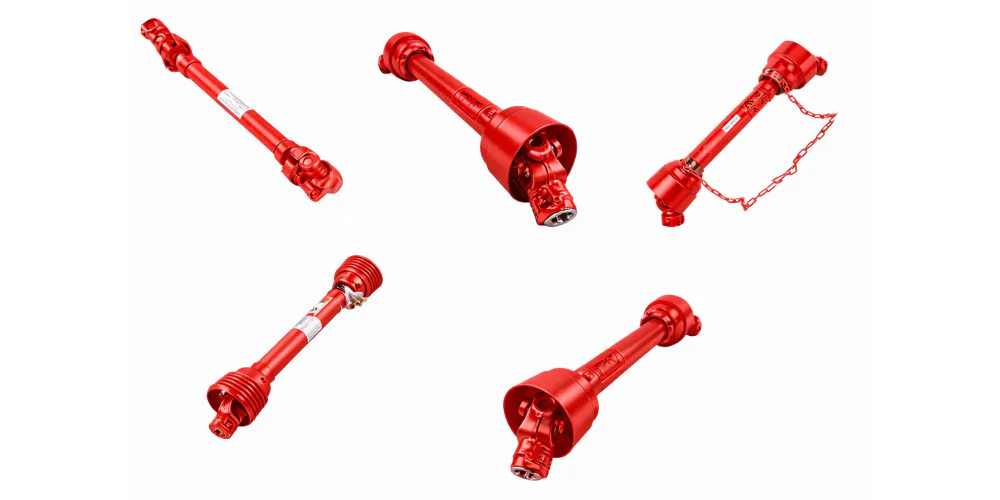
Agrinulear Nucleo Agro supports the entire automated farm ecosystem. Beyond robotic drives, we supply essential components for the machinery that works alongside your robots. We offer precision-engineered Sprockets for automatic feed pusher systems. For your tractor-driven manure pumps and agitators, our heavy-duty Ejes de Toma de Fuerza provide reliable power transmission. We also manufacture high-strength Chains for scraper systems and conveyors. Trust us as your one-stop fabricante agrícola partner.
8. Frequently Asked Questions (B2B FAQ)
Q1: How do I identify the correct replacement gearbox for my specific robot model in Brazil?
A1: Identification is key. You need to verify the voltage (24V vs 48V), the wheel hub bolt pattern, and the motor diameter. Send a photo of your current motor’s data plate to our São Paulo engineering team, and we will cross-reference it with our database to find the exact Agrinulear compatible match.
Q2: Will your gearboxes withstand the corrosive ammonia in a closed free-stall barn?
A2: Yes, absolutely. Our “Robo-Traction” units are built for this “Bio-Hazard” environment. We use C5-M marine-grade epoxy coatings and Viton seals instead of standard rubber. This ensures the gearbox resists constant exposure to ammonia and slurry without corroding or leaking.
Q3: Can a new gearbox improve my robot’s battery life?
A3: Definitely. A worn or inefficient gearbox creates excess friction, forcing the motor to draw more amps. By upgrading to our high-efficiency planetary drives, you reduce internal friction, which can extend your robot’s runtime per charge by up to 20%.
Q4: Do you have a solution for robots operating on abrasive sand bedding?
A4: Sand is tough on gears. We recommend our “Sand-Spec” units, which feature stainless steel labyrinth shields and hard-anodized housings. These features prevent sand particles from grinding away the casing or entering the seals, significantly extending lifespan.
Q5: What is the maintenance schedule for these robotic gearboxes?
A5: Our robotic drives are designed to be maintenance-free. They come sealed for life (IP67) with high-performance synthetic grease. However, we recommend a visual inspection of the wheel seals during your monthly robot check-up to ensure no physical damage has occurred.
Q6: How fast can you ship replacement motors to a farm in Minas Gerais?
A6: We know downtime hurts milk production. We keep stock of common motor-gearbox units in our Brazilian distribution center. Typically, we can dispatch orders to Minas Gerais within 24-48 hours via express courier service.
Q7: Can I upgrade to a higher torque motor for pushing heavier, dryer manure?
A7: Yes, in many cases. We offer “High-Torque” versions that fit the same mounting footprint but use a higher gear reduction ratio (e.g., 1:50). This gives the robot more pushing power for heavy loads, although it will reduce the top speed slightly.
Q8: Do these motors come with encoders for the navigation system?
A8: Yes, precise navigation requires feedback. Our motors can be supplied with integrated Hall Effect sensors or high-resolution optical encoders. This provides the exact speed and position data your robot’s computer needs to map the barn.
Q9: Is there a brake to stop the robot on sloped floors?
A9: Safety is priority #1. All our traction drives include an integrated electromagnetic fail-safe brake. If the battery dies or an E-stop occurs, the wheels lock instantly, preventing the robot from rolling uncontrolled down sloped alleyways.
Q10: How can I become a distributor for Agrinulear parts in Western Paraná?
A10: We are actively looking for partners in key dairy regions like Western Paraná. Contact us via the form below to ask about our “Dealer Partnership Program,” which offers competitive margins, marketing support, and technical training.