
Description du produit
Description du produit
Main Features:
1) Made of high quality aluminum alloy, light weight and non-rusting
2) Large output torque and high radiating efficiency
3) Smooth running and low noise, can work long time in dreadful condition
4) Good-looking appearance, durable service life and small volume
5) Suitable for omnibearing installation
Main Materials:
1)housing:aluminium alloy ADC12(size 571-090); die cast iron HT200(size 110-150);
2)Worm:20Cr, ZI Involute profile; carbonize&quencher heat treatment make gear surface hardness up to 56-62 HRC; After precision grinding, carburization layer’s thickness between 0.3-0.5mm.
3)Worm Wheel:wearable stannum alloy CuSn10-1
Combination Options:
Input:with input shaft, With square flange,With IEC standard input flange
Output:with torque arm, output flange, single output shaft, double output shaft, plastic cover
Worm reducers are available with diffferent combinations: NMRV+NMRV, NMRV+NRV, NMRV+PC, NMRV+UDL, NMRV+MOTORS
Detailed Photos
Product Parameters
| Old Model | New Model | Ratio | Center Distance | Power | Input Dia. | Output Dia. | Couple de sortie | Poids |
| RV571 | 7.5~100 | 25mm | 0.06KW~0.12KW | Φ9 | Φ11 | 21N.m | 0.7kgs | |
| RV030 | RW030 | 7.5~100 | 30mm | 0.06KW~0.25KW | Φ9(Φ11) | Φ14 | 45N.m | 1.2kgs |
| RV040 | RW040 | 7.5~100 | 40mm | 0.09KW~0.55KW | Φ9(Φ11,Φ14) | Φ18(Φ19) | 84N.m | 2.3kgs |
| RV050 | RW050 | 7.5~100 | 50mm | 0.12KW~1.5KW | Φ11(Φ14,Φ19) | Φ25(Φ24) | 160N.m | 3.5kgs |
| RV063 | RW063 | 7.5~100 | 63mm | 0.18KW~2.2KW | Φ14(Φ19,Φ24) | Φ25(Φ28) | 230N.m | 6.2kgs |
| RV075 | RW075 | 7.5~100 | 75mm | 0.25KW~4.0KW | Φ14(Φ19,Φ24,Φ28) | Φ28(Φ35) | 410N.m | 9.0kgs |
| RV090 | RW090 | 7.5~100 | 90mm | 0.37KW~4.0KW | Φ19(Φ24,Φ28) | Φ35(Φ38) | 725N.m | 13.0kgs |
| RV110 | RW110 | 7.5~100 | 110mm | 0.55KW~7.5KW | Φ19(Φ24,Φ28,Φ38) | Φ42 | 1050N.m | 35.0kgs |
| RV130 | RW130 | 7.5~100 | 130mm | 0.75KW~7.5KW | Φ24(Φ28,Φ38) | Φ45 | 1550N.m | 48.0kgs |
| RV150 | RW150 | 7.5~100 | 150mm | 2.2KW~15KW | Φ28(Φ38,Φ42) | Φ50 | 84.0kgs |
Exploded View:
GMRV Outline Dimension:
| GMRV | A | B | C | C1 | D(H8) | E(h8) | F | G | G1 | H | H1 | I | M | N | O | P | Q | R | S | T | BL | β | b | t | V |
| 030 | 80 | 97 | 54 | 44 | 14 | 55 | 32 | 56 | 63 | 65 | 29 | 55 | 40 | 57 | 30 | 75 | 44 | 6.5 | 21 | 5.5 | M6*10(n=4) | 0° | 5 | 16.3 | 27 |
| 040 | 100 | 121.5 | 70 | 60 | 18(19) | 60 | 43 | 71 | 78 | 75 | 36.5 | 70 | 50 | 71.5 | 40 | 87 | 55 | 6.5 | 26 | 6.5 | M6*10(n=4) | 45° | 6 | 20.8(21.8) | 35 |
| 050 | 120 | 144 | 80 | 70 | 25(24) | 70 | 49 | 85 | 92 | 85 | 43.5 | 80 | 60 | 84 | 50 | 100 | 64 | 8.5 | 30 | 7 | M8*12(n=4) | 45° | 8 | 28.3(27.3) | 40 |
| 063 | 144 | 174 | 100 | 85 | 25(28) | 80 | 67 | 103 | 112 | 95 | 53 | 95 | 72 | 102 | 63 | 110 | 80 | 8.5 | 36 | 8 | M8*12(n=8) | 45° | 8 | 28.3(31.3) | 50 |
| 075 | 172 | 205 | 120 | 90 | 28(35) | 95 | 72 | 112 | 120 | 115 | 57 | 112.5 | 86 | 119 | 75 | 140 | 93 | 11 | 40 | 10 | M8*14(n=8) | 45° | 8(10) | 31.3(38.3) | 60 |
| 090 | 206 | 238 | 140 | 100 | 35(38) | 110 | 74 | 130 | 140 | 130 | 67 | 129.5 | 103 | 135 | 90 | 160 | 102 | 13 | 45 | 11 | M10*16(n=8) | 45° | 10 | 38.3(41.3) | 70 |
| 110 | 255 | 295 | 170 | 115 | 42 | 130 | – | 144 | 155 | 165 | 74 | 160 | 127.5 | 167.5 | 110 | 200 | 125 | 14 | 50 | 14 | M10*18(n=8) | 45° | 12 | 45.3 | 85 |
| 130 | 293 | 335 | 200 | 120 | 45 | 180 | – | 155 | 170 | 215 | 81 | 179 | 146.5 | 187.5 | 130 | 250 | 140 | 16 | 60 | 15 | M12*20(n=8) | 45° | 14 | 48.8 | 100 |
| 150 | 340 | 400 | 240 | 145 | 50 | 180 | – | 185 | 200 | 215 | 96 | 210 | 170 | 230 | 150 | 250 | 180 | 18 | 72.5 | 18 | M12*22(n=8) | 45° | 14 | 53.8 | 120 |
Company Profile
About CHINAMFG Transmission:
We are a professional reducer manufacturer located in HangZhou, ZHangZhoug province.
Our leading products is full range of RV571-150 worm reducers , also supplied GKM hypoid helical gearbox, GRC inline helical gearbox, PC units, UDL Variators and AC Motors, G3 helical gear motor.
Products are widely used for applications such as: foodstuffs, ceramics, packing, chemicals, pharmacy, plastics, paper-making, construction machinery, metallurgic mine, environmental protection engineering, and all kinds of automatic lines, and assembly lines.
With fast delivery, superior after-sales service, advanced producing facility, our products sell well both at home and abroad. We have exported our reducers to Southeast Asia, Eastern Europe and the Middle East and so on.Our aim is to develop and innovate on the basis of high quality, and create a good reputation for reducers.
Workshop:
Exhibitions:
We participate Germany Hannver Exhibition-ZheJiang PTC Fair-Turkey Win Eurasia
Packaging & Shipping
Packing information:Plastic Bags+Cartons+Wooden Cases , or on request
Installation Instructions
To install the reducer, it is necessary to note the following issues:
1)Check the correct rotation direction of output shaft before fitting reducer to machines.
2)Before mounting, pls check shaft diameter, bore diameter, key and keyway, to be sure their dimension are not deviation; In order to keep good performance, also pls avoid assembling too tight or too loose.
3)Reducer must be mounted to machines stably to avoid vibration.
4)Whenever possible,protect the reducer against solar radiation and bad weather.
5)In the case of particularly lengthy period of storage(4-6 months), if the oil seal is not immersed in lubricant inside the unit, it is recommended to change it since the rubber could stick to the shaft or may even have lost the elasticity.
6)Painting must definitely not go over rubber parts and the holes on breather plug if any.
7)When connect with hollow or CHINAMFG shaft, pls grease the joint to avoid lock or oxidation.
8)Check the correct lubricant level through indicator if there is one.
9)Starting must take place gradually, without immediately applying the maximum load.
10)When using various of motors to match reducer directly, supporting unit is required if motor is too heavy.
11)Ensure good heat dissipation by keeping good ventilation near the motor fan.
12)In the case of ambient temperature40ºC, pls call the technical department.
After Sales Service
1.Maintenance Time and Warranty:Within 1 year after receiving goods.
2.Other Service: Including modeling selection guide, installation guide, and problem resolution guide, etc.
FAQ
1.Q:Can you make as per customer drawing?
A: Yes, we offer customized service for customers accordingly. We can use customer’s nameplate for gearboxes.
2.Q:What is your terms of payment ?
A: 30% deposit before production,balance T/T before delivery.
3.Q:Are you a trading company or manufacturer?
A:We are a manufacurer with advanced equipment and experienced workers.
4.Q:What’s your production capacity?
A:8000-9000 PCS/MONTH
5.Q:Free sample is available or not?
A:Yes, we can supply free sample if customer agree to pay for the courier cost
6.Q:Do you have any certificate?
A:Yes, we have CE certificate and SGS certificate report.
Contact information:
Ms Lingel Pan
For any questions just feel free ton contact me. Many thanks for your kind attention to our company!
| Application : | Motor, Machinery, Marine, Agricultural Machinery, Industry |
|---|---|
| Hardness: | Hardened Tooth Surface |
| Installation : | Type horizontal |
| Layout: | Right Angle |
| Gear Shape: | Worm Gear |
| Step: | Double-Step |
| Échantillons : |
US$ 22/Piece
1 Pièce (Commande minimale) | |
|---|
| Personnalisation : |
Disponible
| Demande personnalisée |
|---|
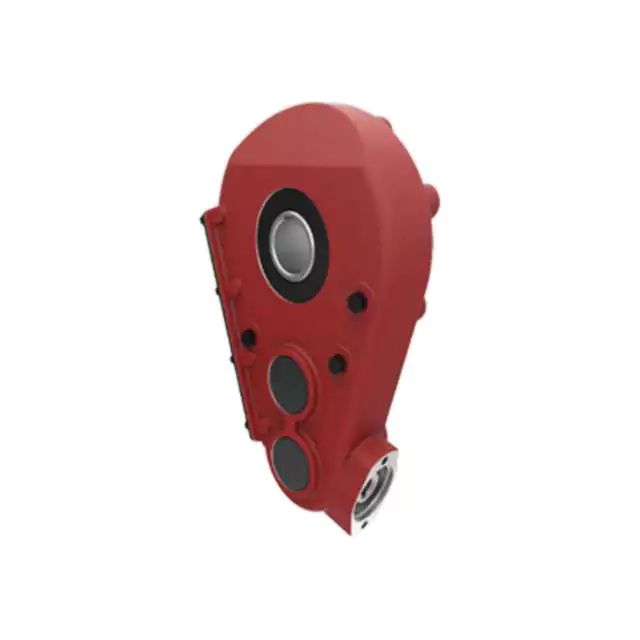
Technological Advancements in Agricultural Gearbox Design
Advancements in agricultural gearbox design have significantly improved the efficiency, durability, and performance of farming equipment. Here are some notable technological advancements:
- Materials and Manufacturing: The use of advanced materials, such as high-strength alloys and composite materials, has enhanced the durability and longevity of gearbox components. Precision manufacturing techniques, including computer-aided design (CAD) and computer numerical control (CNC) machining, ensure tight tolerances and reliable performance.
- Gear Tooth Design: Modern gear tooth profiles, such as optimized helical and spiral bevel gears, reduce noise, vibration, and wear. Advanced tooth design also improves power transmission efficiency and load distribution.
- Sealing and Lubrication: Improved sealing technologies, such as double-lip seals and labyrinth seals, help prevent contaminants from entering gearboxes while retaining lubricants. Advanced lubrication systems, including automatic lubrication and improved oil formulations, extend maintenance intervals and enhance efficiency.
- Electronic Controls: Agricultural gearboxes increasingly integrate with electronic control systems. Sensors and actuators provide real-time data on gearbox performance, allowing for condition monitoring, predictive maintenance, and adjustments to optimize machinery operation.
- Smart Gearboxes: Some agricultural gearboxes are equipped with smart features, such as load sensors, temperature monitors, and feedback systems. These features enhance precision, safety, and overall equipment performance.
- Hybrid Power Transmission: Integration of hybrid power transmission systems, combining internal combustion engines with electric motors, allows for more efficient power delivery and reduced fuel consumption. Gearboxes play a crucial role in managing power distribution in these systems.
- Reduced Environmental Impact: Advancements in gear design contribute to reducing environmental impact. Quieter and more efficient gearboxes minimize noise pollution and energy consumption while meeting emissions regulations.
- Customization and Modularity: Some modern agricultural gearboxes offer modular designs that allow farmers to customize gear ratios, output speeds, and other specifications to match specific tasks and conditions.
- Simulation and Testing: Computer simulations and advanced testing methods, such as finite element analysis (FEA) and computational fluid dynamics (CFD), help optimize gearbox design, reduce prototyping costs, and ensure reliability before production.
These advancements collectively contribute to the evolution of agricultural gearboxes, making farming machinery more efficient, environmentally friendly, and adaptable to the changing needs of modern agriculture.
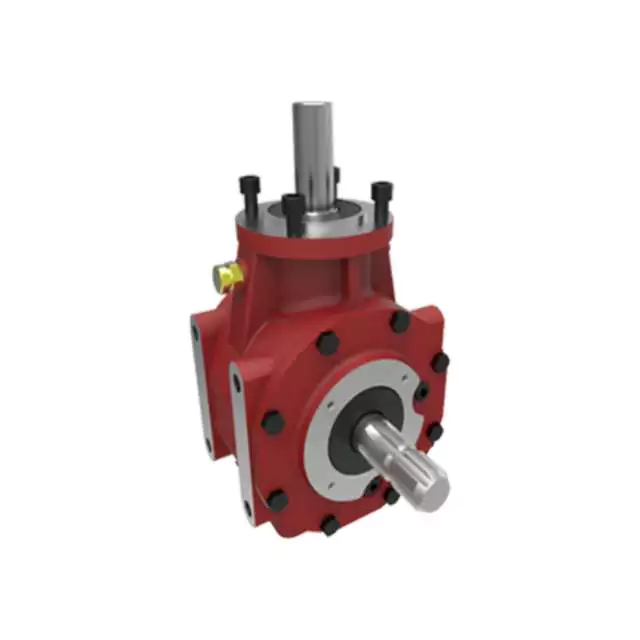
Handling Varying Torque Demands with Agricultural Gearboxes
Agricultural gearboxes are designed to handle the varying torque demands associated with different tasks in farming operations. The torque requirements can vary based on factors such as the type of task, the soil conditions, the terrain, and the machinery’s speed. Agricultural gearboxes are equipped with features that allow them to adapt to these varying torque demands:
- Gear Ratio Selection: Agricultural gearboxes often come with multiple gear ratios, allowing operators to select the appropriate ratio for the task at hand. Lower gear ratios provide higher torque for tasks that require more force, such as plowing or tilling, while higher gear ratios offer higher speeds for tasks like mowing or transporting.
- Torque Multiplier: Some agricultural gearboxes are designed with torque multipliers that enhance the torque output from the engine to the wheels or implement. These multipliers are engaged when higher torque is needed, helping the machinery handle heavy loads or challenging terrain.
- Adjustable Speeds: Many agricultural gearboxes allow operators to adjust the speed of the machinery to match the torque requirements of the task. This flexibility is essential for tasks that involve both high-torque, low-speed operations and high-speed operations with lower torque needs.
- Power Take-Off (PTO) Options: Agricultural gearboxes often feature power take-off mechanisms that enable the transfer of power from the engine to attached implements. These mechanisms can be designed to provide varying torque outputs to suit different implements, such as rotary tillers, balers, or pumps.
The ability of agricultural gearboxes to handle varying torque demands is crucial for ensuring efficient and effective farming operations. By offering adjustable gear ratios, torque multipliers, and adaptable speeds, these gearboxes empower farmers to optimize their machinery’s performance based on the specific requirements of each task.
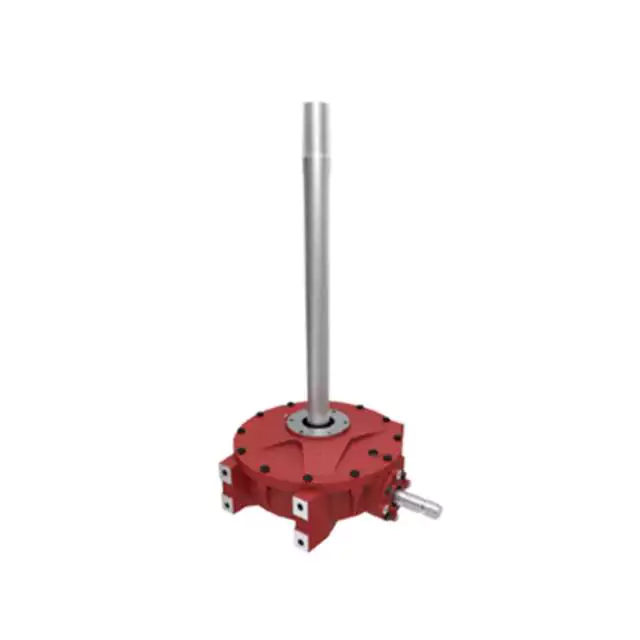
Types de réducteurs agricoles pour des tâches spécifiques
Différents types de réducteurs agricoles sont conçus pour répondre à des tâches et des applications spécifiques dans le domaine de l'agriculture. Ces boîtes de vitesses sont conçues pour répondre aux exigences uniques des différentes machines et opérations agricoles. Les types de boîtes de vitesses agricoles les plus courants sont les suivants :
- Boîtes de vitesses pour faucheuses rotatives : Ces boîtes de vitesses sont utilisées dans les faucheuses et les coupeuses rotatives. Ils transmettent la puissance de la prise de force du tracteur aux lames, ce qui permet de couper efficacement l'herbe, les cultures et la végétation.
- Boîtiers d'engrenages pour épandeurs de fumier : Les épandeurs de fumier utilisent des boîtes de vitesses spécialisées pour répartir le fumier uniformément sur les champs. Ces boîtes de vitesses assurent une épandage constant d'engrais tout en s'adaptant à des charges variables.
- Récolte des boîtes de vitesses : Les boîtes de vitesses utilisées dans les équipements de récolte, tels que les moissonneuses-batteuses et les moissonneuses, permettent une collecte, un battage et une séparation efficaces des cultures de leurs tiges. Ces boîtes de vitesses gèrent des charges élevées et des conditions d'exploitation variables.
- Boîtiers d'engrenages de semoirs Les semoirs nécessitent des boîtes de vitesses pour distribuer les semences avec précision et à intervalles réguliers. Ces boîtes de vitesses assurent un placement précis des semences pour une germination et une croissance optimales des cultures.
- Boîtes de vitesses pour faucheuses-andaineuses : Les râteaux à foin utilisent des boîtes de vitesses pour rassembler et disposer le foin en andains en vue de la mise en balles. Ces boîtes de vitesses permettent d'optimiser le processus de collecte du foin.
- Boîtiers d'engrenage pour systèmes d'irrigation : Les systèmes d'irrigation agricole peuvent utiliser des boîtes de vitesses pour contrôler le mouvement et le positionnement du matériel d'irrigation, assurant ainsi une distribution efficace de l'eau dans les champs.
- Boîtiers d'engrenages pour équipements de travail du sol : Gearboxes used in tillage equipment, such as plows and cultivators, help break up soil, prepare seedbeds, and promote seedling emergence.
- Boîtes de vitesses de tracteur : Les tracteurs peuvent intégrer diverses boîtes de vitesses pour des tâches telles que le changement de vitesse, l'entraînement de la prise de force et le fonctionnement des outils.
- Boîtiers d'engrenages pour vis sans fin à grains Les vis sans fin de grain utilisent des boîtes de vitesses pour faciliter le déplacement du grain récolté d'un endroit à un autre, par exemple d'une moissonneuse-batteuse à un silo de stockage.
Chaque type de boîte de vitesses agricole est conçu avec des caractéristiques spécifiques, des capacités de charge et une durabilité adaptées aux exigences de sa tâche prévue. Les fabricants conçoivent ces boîtes de vitesses pour résister aux conditions difficiles des opérations agricoles tout en garantissant une performance efficace et fiable.


editor by CX 2023-11-28