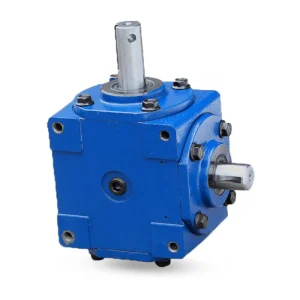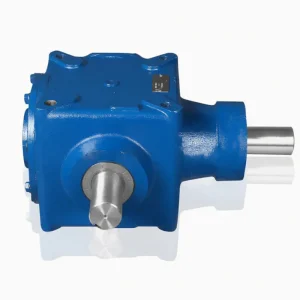
Description
1. Basic Product Specifications
| Attribute | Detail |
|---|---|
| Nom du produit | Grain Storage Gearbox for Agricultural Grain Storage |
| Modèle | EP-T4090 |
| Matériaux de construction | A380 Aluminum Alloy |
| Gear Shaft Material | 40CrMnTi (Carburized & Hardened) |
| Gear Ratio | 1:35:1 |
| Rated Power | 45 HP |
| Poids | 13.2 kg |
| Couleur | Personnalisable |
| Primary Application | Agricultural Grain Storage Systems |
2. What Is a Grain Storage Gearbox?
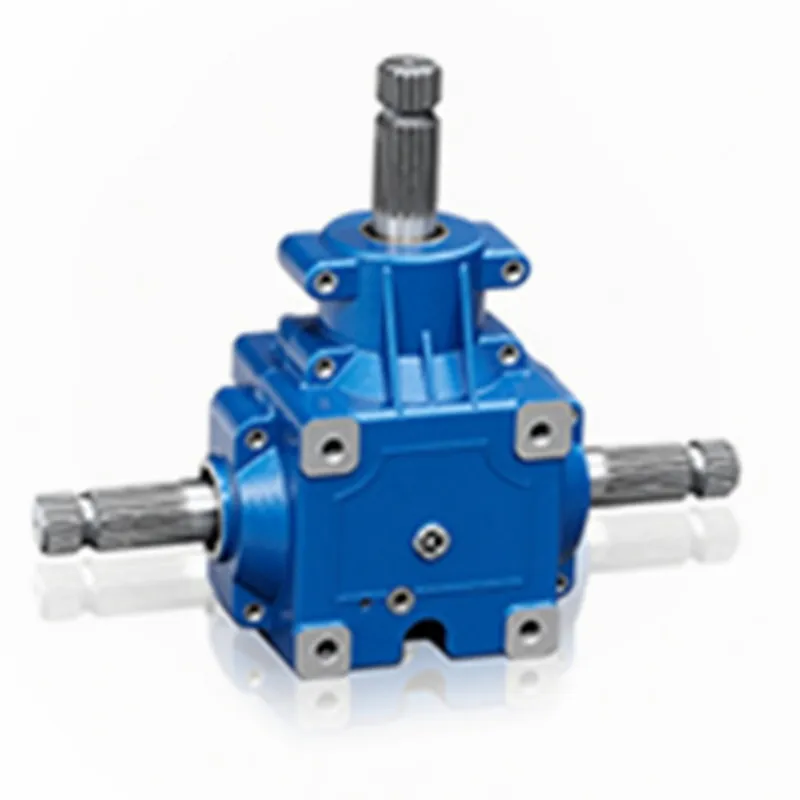
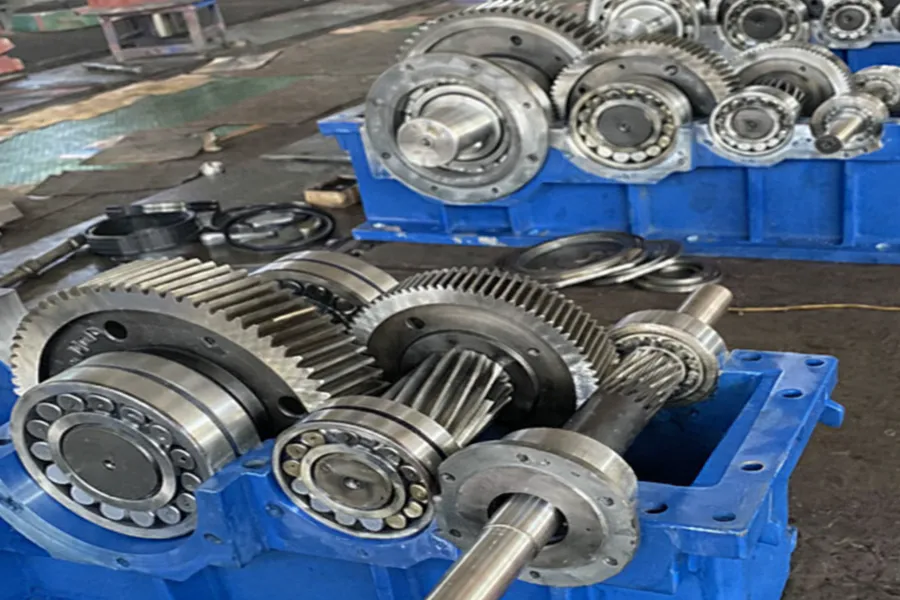
A common question from operations managers new to silo design is what is grain storage gearbox equipment actually doing inside a storage complex. In practical terms, a Grain Storage Gearbox is a sealed reduction unit that converts the high-speed rotational output of a motor or tractor PTO into the low-speed, high-torque drive needed by grain handling machinery. Without reliable Grain Storage Gearbox units, conveyors stall under load, augers clog in dense grain columns, and aeration fans struggle to maintain the uniform airflow that prevents hotspots and spoilage. The EP-T4090 Grain Storage Gearbox uses a two-stage helical-bevel gear arrangement housed in a pressure-die-cast A380 aluminum shell. Helical gears transfer power smoothly with less vibration than spur arrangements, while bevel elements allow the input and output shafts to sit at right angles — a critical geometry for vertical elevators and overhead conveyors in Brazilian silo complexes. Internal grain storage gearbox parts are sized for continuous-duty ratings, because grain handling rarely stops: intake during harvest, transfer during storage, and load-out for export can run in overlapping shifts for weeks at a time.
3. Five Key Advantages of This Grain Storage Gearbox
1. Continuous-Duty Torque for Full-Silo Conditions
Storage complexes in Sorriso or Rondonópolis routinely run auger systems into bins holding 20,000 tonnes of corn or soybeans. A Grain Storage Gearbox rated for 45 HP with a 35:1 reduction delivers the low-speed torque needed to break grain columns loose and keep material flowing without stalling. The EP-T4090 is dyno-tested to sustain nominal output across 18-hour shifts without heat soak, which matters enormously when you are moving thousands of tonnes per day through a terminal.
2. Dust and Humidity Resistance Built for Tropical Storage
Grain dust is abrasive and explosive. Brazilian humidity, especially during the wet season in the Cerrado, attacks seals and bearings. The A380 die-cast housing of this grain storage gearbox equipment combines with double-lip oil seals and corrosion-resistant fasteners to keep grain dust and moisture out of the gear chamber. That sealing integrity directly reduces the need for grain storage gearbox replacement parts over a multi-season service window.
3. Quiet Operation That Respects Workplace Standards
Brazilian labor regulation NR-15 sets occupational noise limits for continuous exposure. Helical gearing inside the EP-T4090 Grain Storage Gearbox keeps noise output below 75 dB(A) at one meter, which helps operators comply with workplace safety norms and reduces fatigue for silo attendants working long shifts in confined spaces.
4. Flexible Mounting for Retrofit and New Builds
Existing silo installations across Goiás and Paraná were built over four decades using different OEM standards. The EP-T4090 supports flange-mount, foot-mount, and shaft-mount configurations with multiple output-shaft options. That flexibility lets a farm workshop install this Grain Storage Gearbox on legacy equipment or on a new elevator leg without fabricating custom brackets.
5. Customizable Gear Ratios and Lubrication Systems
No two silo complexes are identical. Ratios can be specified from 1:10:1 through 1:50:1, lubrication can be splash or pressure-fed, and shaft diameters can be modified to match existing sprockets or couplings. This customization capability turns a standard grain storage gearbox design into a genuinely application-specific drive, which is exactly what cooperative managers request during procurement negotiations.
4. Working Principle of the Grain Storage Gearbox
Understanding the working principle of grain storage gearbox units matters for anyone specifying, installing, or maintaining silo machinery. Power enters the EP-T4090 Grain Storage Gearbox through the input shaft, typically driven by an electric motor via direct coupling or by a tractor PTO for mobile grain storage gearbox for tractor applications. Inside the housing, a first-stage bevel gear pair redirects rotational motion through 90 degrees while reducing speed; a second-stage helical gear set continues the reduction to reach the final 35:1 ratio. As rotational speed drops, torque rises proportionally — this torque amplification is what lets a relatively modest motor drive a loaded 30-meter elevator leg full of wheat. The output shaft transmits this low-speed, high-torque motion to the driven component: a drag conveyor, bucket elevator head pulley, screw auger flight, or aeration fan rotor. Lubricant circulates through the gear set by splash or pressure, pulling heat away from the tooth flanks and flooding the bearings with protective film. Directional control is fixed in most storage applications, but reversible configurations are available for bidirectional grain handling lines. The entire chain — input shaft, gear reduction, output shaft, driven machinery — runs as a single integrated drive whose efficiency typically exceeds 94%, minimizing energy waste during the continuous operation that defines a grain storage gearbox working cycle.
5. Materials and Manufacturing
Material choice defines how long a Grain Storage Gearbox actually lasts in the field. The housing of the EP-T4090 is pressure-die-cast from A380 aluminum alloy — a silicon-copper aluminum grade valued for its balance of strength, thermal conductivity, and machinability. A380 tolerates the thermal swings of Brazilian grain terminals without warping, and its thermal conductivity helps the housing shed heat generated during sustained operation. Internal gear shafts are machined from 40CrMnTi, a chromium-manganese-titanium alloy steel selected specifically for its response to carburizing heat treatment. After rough machining, shafts are carburized to a case depth of 0.8–1.2 mm, then quench-hardened to a surface hardness of 58–62 HRC while preserving a tough 30–38 HRC core. Gear teeth are ground post-heat-treatment to DIN 7 precision, which keeps meshing quiet and extends tooth life under the cyclic loading typical of grain handling. Bearings are sourced as tapered roller or deep-groove ball types depending on the thrust profile of the application, sized for L10 life above 15,000 hours under nominal load. Every unit is pressure-tested for seal integrity before lubrication fill, and every serial number is tied to material test certificates for full traceability. That documentation matters for buyers running grain storage gearbox replacement parts programs across large fleets.
6. Application Scenarios
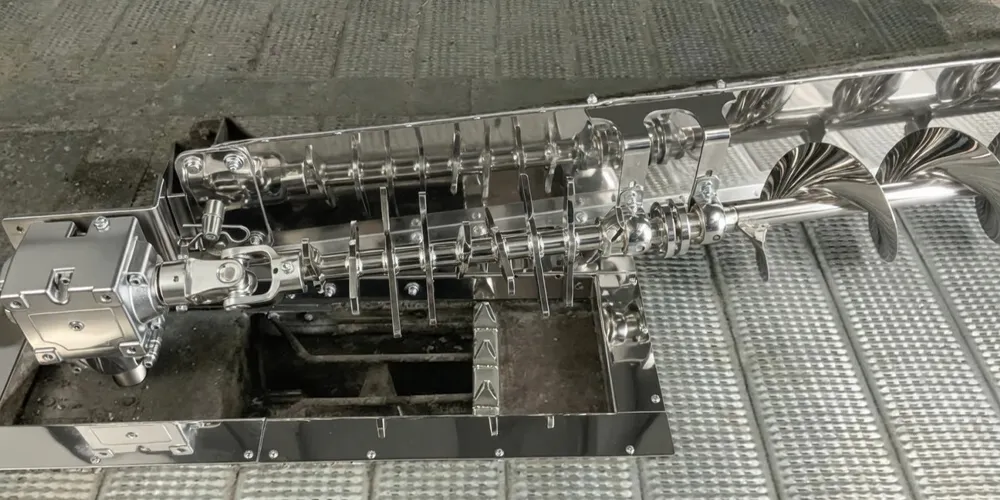
The EP-T4090 Grain Storage Gearbox earns its place across every stage of agricultural grain handling. Below are the most common installations where Brazilian and Latin American operators deploy this drive unit.
Bucket Elevators in Silo Complexes
Vertical grain lifting is the backbone of any silo installation. This Grain Storage Gearbox powers elevator head shafts up to 40 meters tall, moving corn and soybeans from intake pits into overhead distribution conveyors that feed storage bins at terminals across Mato Grosso and Goiás.
Drag and Belt Conveyors
Horizontal transfer between silos, cleaning equipment, and load-out bays relies on drag conveyors and rubber belts. A grain storage gearbox harvesting machine drive with 35:1 reduction produces the slow, steady torque that keeps conveyor chains under tension without shock-loading sprockets.
Screw Augers for Bin Fill and Unload
Screw augers move grain in tight spaces where belt conveyors cannot fit. The high-torque output of this grain storage gearbox for tractor-powered or electric-motor-driven auger systems keeps flights turning through compacted grain columns without stalling.
Aeration Fans and Blowers
Temperature and moisture control determines whether stored grain reaches market at full value. Aeration fan drives using this Grain Storage Gearbox run continuously during the wet Cerrado months, circulating air through bins to prevent hotspots, mold, and insect activity.
Grain Mixers and Treatment Applicators
Blending seed lots, applying grain protectants, or homogenizing moisture levels calls for heavy-duty mixer drives. The 45 HP rating of this grain storage gearbox equipment supports ribbon and paddle mixers handling batches up to 5 tonnes per cycle.
Load-Out Systems for Trucks and Rail
Final-stage loading into hopper trucks heading to Santos or rail wagons bound for Paranaguá demands reliable, high-throughput drives. This Grain Storage Gearbox powers swing-away augers and telescoping chutes during the narrow windows when trucks must clear the yard quickly.
7. Regulatory Compliance Across Key Markets
Importing and deploying a Grain Storage Gearbox into Brazil requires alignment with several regulatory frameworks. INMETRO (Instituto Nacional de Metrologia, Qualidade e Tecnologia) publishes conformity assessment rules governing industrial equipment sold in-country, while MAPA (Ministério da Agricultura, Pecuária e Abastecimento) issues technical guidance for agricultural and grain-handling machinery. Brazilian standard NR-12 mandates operator safety measures including guarding of rotating components, emergency stops, and clear access for maintenance — all relevant to gearboxes installed in silos. NR-15 governs workplace noise exposure, and the EP-T4090 Grain Storage Gearbox helps operators stay within its limits. For cross-border sales across Mercosur, Argentina’s INTA provides parallel testing frameworks used by silo operators in Buenos Aires and Santa Fe provinces. Units exported to the European Union must carry CE marking under Machinery Directive 2006/42/EC and comply with ISO 5007 and ISO 4254-1 for agricultural machinery safety; the RoHS directive additionally restricts hazardous substances. In the United States, OSHA 1910.272 addresses grain handling facility safety, and ASABE S318 covers rotating power transfer. Australia applies AS/NZS 4024 machinery safety standards. Buyers in Paraguay, Uruguay, Chile, and Colombia typically rely on the same ISO-aligned certification package to clear customs. The EP-T4090 is manufactured under an ISO 9001:2015 quality system with ISO 14001 environmental compliance, and material traceability documentation is issued for every production batch.
8. About Us
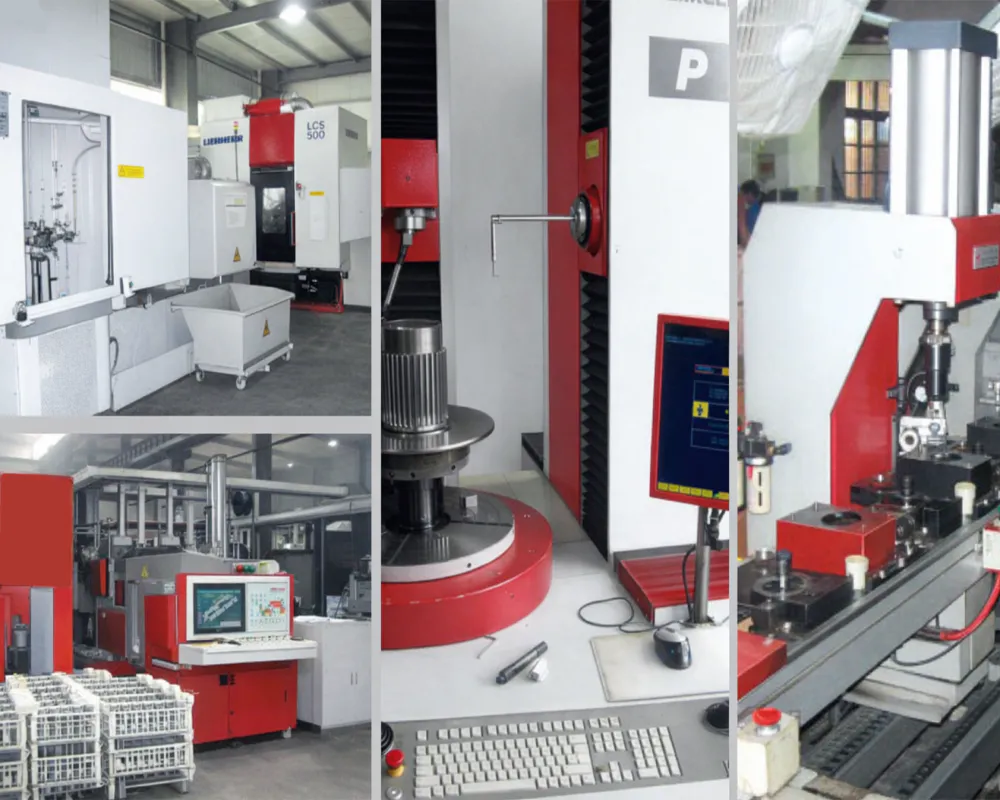
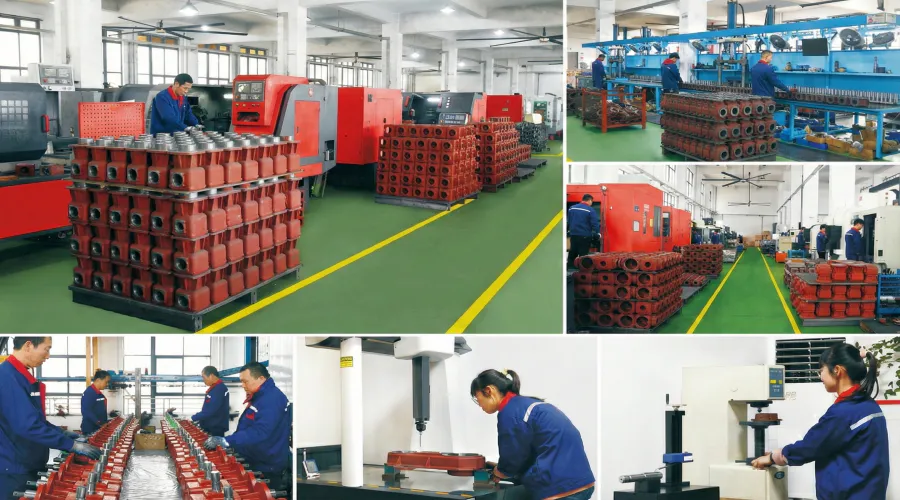
Houses CNC gear hobbing lines, continuous carburizing furnaces, precision grinding cells, and a dedicated quality laboratory running coordinate measuring machines, metallurgical microscopes, and spectrometers. Every Grain Storage Gearbox moves through a 100% no-load bench check plus a statistical loaded-dynamometer sample test before packing. For buyers looking for a reliable Grain Storage Gearbox Manufacturer, our record includes more than 40 OEM supply relationships and more than 300,000 agricultural gearboxes delivered to distributors, integrators, and end users. We hold ISO 9001:2015, ISO 14001, and offer CE-compliant variants for regulated export markets. Custom designs are welcome: send the application specification, torque profile, and mounting drawing, and our technical team returns a proposal within five working days.
WorkShop
9. Related Products — Full Agricultural Driveline
Beyond the core Grain Storage Gearbox, our production program covers the matched components that keep grain handling systems running season after season. Specifying the driveline as a system — gearbox, power input, and output coupling from a single source — eliminates compatibility issues and simplifies spare parts logistics. The full-series agricultural gearbox line and one-stop service model reduce procurement time and ensure every component carries the same quality traceability.
PTO Shaft
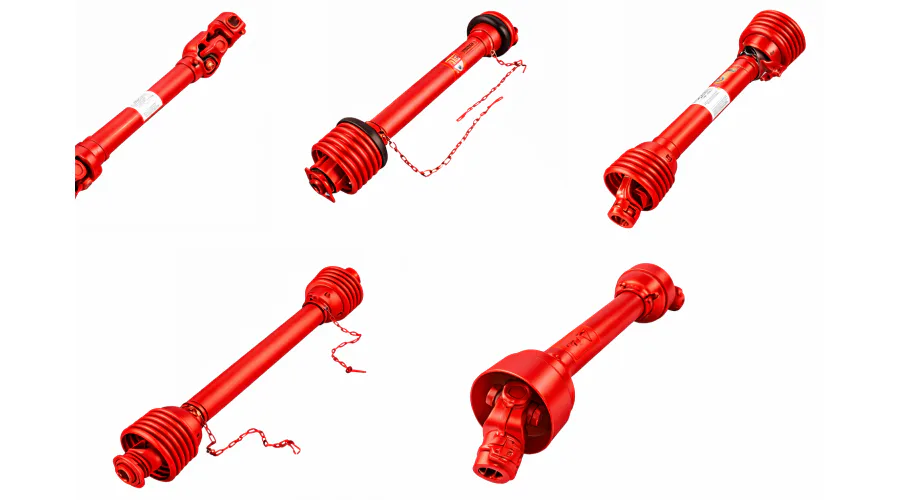
The power take-off shaft is the mechanical link between a tractor and any PTO-driven Grain Storage Gearbox. A correctly sized, dynamically balanced PTO Shaft ensures input torque reaches the gearbox at the correct angle and speed, with the right overload protection clutch to guard downstream gear teeth during startup shock loads. Matched PTO-gearbox sets reduce vibration, extend service life, and keep drivelines aligned across temperature cycles.
Drive Chains
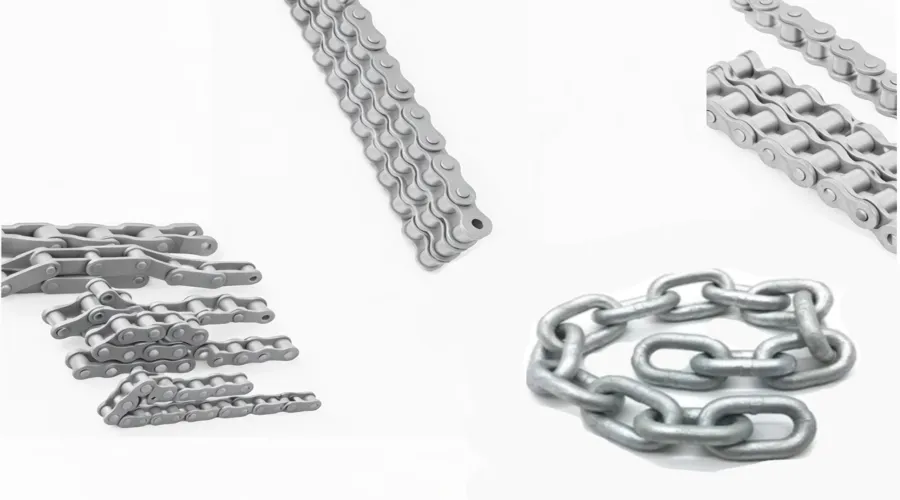
Heavy-duty roller chains connect the output of the Grain Storage Gearbox to conveyor head sprockets, elevator pulleys, and auger flights. Our chains are produced to ISO 606 dimensions in both standard and corrosion-resistant grades, hardened to match the gear tooth wear profile so that the complete drivetrain degrades at a consistent rate. Supplied alongside gearbox orders for guaranteed compatibility.
Foire aux questions
Q1. Which grain storage gearbox options are best suited for aeration fan drives versus load-out auger applications?
A1. Aeration fan drives benefit from quieter helical gearing and continuous-duty thermal ratings, because fans run for extended periods at steady load. Load-out augers need higher peak torque capacity and shock-load tolerance because the auger flight routinely encounters compacted grain columns that spike demand. The EP-T4090 handles both profiles with appropriate ratio selection.
Q2. What is grain storage gearbox equipment and why does every silo complex need one on its elevator legs?
A2. A grain storage gearbox is a reduction unit that converts high-speed motor rotation into the low-speed, high-torque drive needed by elevator legs, conveyors, and augers. Every elevator leg needs one because motors alone cannot generate enough torque to lift loaded buckets through 20 to 40 meters of vertical travel without gear reduction.
Q3. What are the most common grain storage gearbox parts that a Brazilian farm workshop should stock as spares?
A3. Prioritize input and output oil seals, bearing sets for each shaft, a full gasket kit, and lubricant for at least two oil changes per installed unit. For high-utilization sites, stock spare input and output shafts and a complete gear set. Having these items on hand cuts mean-time-to-repair from days to hours during critical harvest intake.
Q4. How to install grain storage gearbox units correctly during a new elevator leg commissioning at a soy terminal?
A4. Begin with a rigid foundation and precise shaft alignment between motor, gearbox, and driven equipment within 0.1 mm radial tolerance. Torque mounting bolts to the specified value in a star pattern, fill lubricant to the sight-glass mark, rotate by hand to confirm free motion, and run under no-load for 30 minutes before applying full duty to confirm seal seating and bearing run-in.
Q5. Which maintenance routines extend the service life of a Grain Storage Gearbox operating in humid Cerrado storage conditions?
A5. Change the ISO VG 220 lubricant every 2,000 operating hours or once per season. Inspect input and output seals quarterly for weeping oil. Monitor operating temperature and investigate any sustained reading above 85 °C. Keep housing exteriors clean of grain dust to support heat dissipation, and replace worn bearings before they damage adjacent gear teeth.
Q6. How does a grain storage gearbox for tractor applications differ from an electric-motor-driven unit at a stationary silo?
A6. Tractor-driven units are built around a 540 or 1000 rpm PTO input with a splined shaft and an overload safety clutch, suited to mobile augers and portable conveyors. Electric-motor versions use a direct-coupled or belt-driven input at 1450 or 1750 rpm, optimized for stationary continuous-duty applications like silo elevator legs and aeration fans.
Q7. How to use grain storage gearbox units across different silo equipment types without specification errors?
A7. Match the gearbox to the driven equipment based on required output torque, shaft orientation, and duty cycle. Elevator legs typically need higher torque and vertical output, conveyors need horizontal output at moderate torque, and aeration fans need moderate torque with extended continuous duty. Consult the grain storage gearbox design data sheet before specifying any installation.
Q8. When should a Brazilian grain terminal replace its Grain Storage Gearbox after years of continuous harvest-season duty?
A8. Plan full replacement or rebuild at 12,000 to 15,000 operating hours, or sooner if oil analysis shows rising iron particle counts or if noise levels climb. Immediate replacement is warranted when seals fail repeatedly, when gear whine becomes persistent, or when bearing play exceeds manufacturer-specified limits during inspection.
Éditeur : PXY