
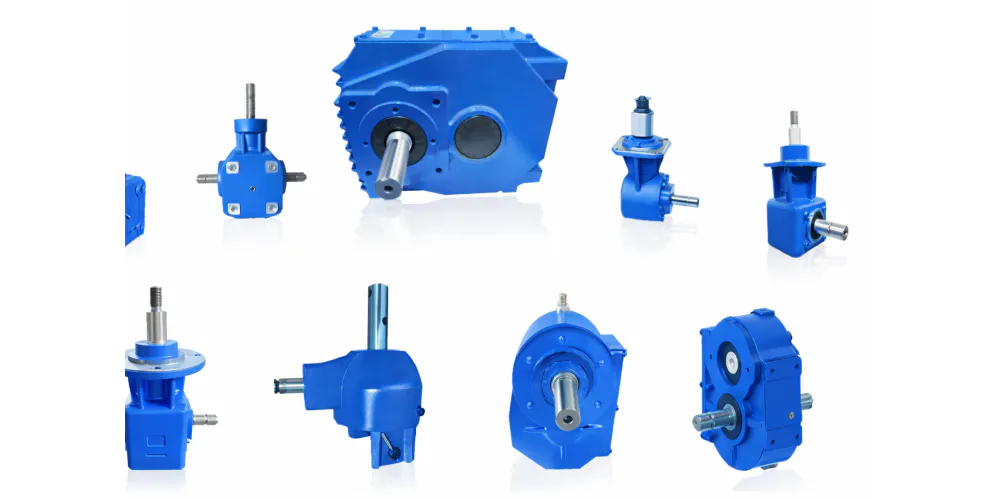
1. Technical Specification Matrix: Series PT-800 Hedge Management Gearbox
| Parameter Detail | Standard Value / Material | Parameter Detail | Standard Value / Material |
|---|---|---|---|
| Torque Capacity (Nm) | 1,250 Nm (Max Peak) | Gear Material | 20CrMnTi (Case Hardened) |
| Input Speed (RPM) | 540 / 1000 RPM (Dual Support) | Output Speed Ratio | 1:1.46 to 1:1.92 |
| Matériaux de construction | Fonte ductile (QT450-10) | Input Shaft Spec | 1-3/8″ Z6 Spline (Standard) |
| Lubrication Type | SAE 80W-90 EP Gear Oil | Protection Rating | IP67 (Sealed Unit) |
| Working Temperature | -25°C to +110°C | Backlash Range | 12 to 18 Arcmin |
| Dynamic Load Factor | 1.85 (Impact Resistance) | Fatigue Life (L10) | 5,000 Hours (Standard Ops) |
| Surface Coating | Electrostatic Epoxy Powder (UV Resistant) | Seuil de vibration | < 2.5 mm/s (Peak-to-Peak) |
| Bearing Type | Tapered Roller (High Thrust) | Matériau d'étanchéité | FKM / Viton (High Temp) |
| Dureté de l'arbre | HRC 58-62 | Mounting Pattern | 130mm x 130mm (Universal) |
| Noise Level | < 78 dB at 1m Distance | Capacité d'huile | 1.2 Liters |
| Axial Load Rating | 8.5 kN | Radial Load Rating | 12.2 kN |
| Manufacturing Cert | ISO 9001:2015 / CE / INMETRO | Internal Cleanliness | NAS 7 Class |
| Gear Accuracy | DIN 6 / AGMA 11 | Vent Valve Type | Anti-Clog High-Flow Breath Valve |
| Max Input Power | 65 HP (48 kW) | Safety Factor | 2.2x Nominal Load |
| Input Torque (Rated) | 640 Nm | Output Spline | 25mm Keyway or 1-3/8″ Spline |
2. Engineered for the Canopy: The Vital Role of Agricultural Gearboxes in Modern Pruning
In the vast citrus groves of Limeira and the intensive coffee plantations of Minas Gerais, the efficiency of a pruning machine (Podadeira) or hedge trimmer (Cerca Viva) hinges entirely on its gearbox. At ever-power, we recognize that the gearbox isn’t just a component; it is the critical nexus where tractor PTO power is converted into the high-velocity, high-torque cutting action required to slice through thick woody stems without tearing the plant tissue.
Our gearboxes are designed to handle the multi-axis movement common in hydraulic pruning arms. Whether it’s a vertical hedge trimmer or a horizontal canopy topper, the transmission must maintain constant speed under varying resistance. The specific application scenarios include citrus rejuvenation, maintenance of windbreaks in eucalyptus farms, and precision “skirting” of fruit trees to improve harvester access. In these environments, the gearbox faces relentless dust, high ambient temperatures, and the mechanical shock of blades hitting hidden obstacles.
Core Advantages of ever-power Systems
- Optimized Gear Geometry: Spiral bevel gears precision-ground to AGMA Class 11 standards for silent, cool operation.
- Extreme Sealing: Double-lip Viton seals with external dust shields to prevent ingress of fine Brazilian “Latossolo” (red clay) dust.
- High Heat Dissipation: High-pressure die-cast aluminum or ductile iron housings with specialized cooling fins for 40°C+ environments.
3. Brazil Extreme Operating Conditions Field Study: The Mato Grosso Challenge
During our 2024 field survey across the Mato Grosso et Mato Grosso do Sul agricultural belts, our engineering team identified a recurring failure mode in standard European-spec gearboxes used on hedge trimmers. The combination of high humidity and the ultra-fine “Latossolo” red dust creates a grinding paste that destroys standard NBR seals within 200 hours of operation.
Furthermore, the citrus pruning season in São Paulo often coincides with peak summer temperatures reaching 42°C. Standard gearboxes experience “thermal runaway,” where the internal oil loses viscosity, leading to micro-pitting of the gear teeth. Based on these localized findings, Agrinulear Nucleo Agro (ever-power Brazil Agency) has implemented the “Tropicalization Package” as standard. This includes Viton high-temperature seals and a specifically formulated high-pressure synthetic oil blend that maintains a stable film even at 115°C gear-mesh temperatures.
In the southern regions, like Rio Grande do Sul, the focus shifts to vineyard management. Here, the gearbox must be compact yet capable of high-frequency oscillation as the pruning arms track the vine trellis. Our R&D has optimized the housing for weight-to-power ratio, ensuring that the total arm weight doesn’t cause hydraulic instability during rapid movement.
4. Engineer’s Perspective: Design Logic Behind the Pruning Powerhouse
Designing a gearbox for a hedge trimmer is a study in “Shock Management.” Unlike a rotary tiller that has a relatively steady load, a pruning machine encounters “Intermittent Impulse Loads.” Every time a heavy branch is cut, the torque spikes instantly. If the gearbox is too rigid, the shaft shears. If it’s too soft, the gears de-mesh under pressure.
1. Structural Elasticity
We use 20CrMnTi steel for the gears, but the heat treatment is the secret. We employ a deep carbonitriding process followed by a specific quenching cycle that leaves the core of the tooth relatively ductile while the surface is HRC 60 hard. This allows the teeth to “flex” slightly under massive shock without shattering.
2. Thermal Equilibrium Design
Through Computational Fluid Dynamics (CFD), we redesigned the internal oil flow. We discovered that stagnant oil “pockets” were hot-spots. Our new internal casting redirects oil directly onto the input bearing, which is the primary source of heat, reducing overall operating temperature by 15%.
3. Modular Interface Standard
Recognizing the diversity of Brazilian implements, we developed a “universal adapter plate” system. This allows an ever-power gearbox to fit onto various mounting brackets without the need for custom welding or machining in the field.
5. Global Dialogue: Real-World Solutions from the Field
“In the coffee fields of Minas Gerais, Brazil, the client was losing 2 days a week to oil seal failure.”
Engineer’s Note: The client, Fazenda Ouro Verde, reported that fine clay was puncturing their NBR seals. We swapped their fleet to our Viton-Series gearboxes with integrated stainless steel dust caps. Result? Zero leaks for two consecutive harvest seasons. The owner told me, ‘It’s the first time I haven’t seen a puddle of oil under the pruner at lunch.'”
“The Australian ‘Mallee’ roots were snapping shafts in Western Australia.”
Engineer’s Note: Heavy-duty hedge clearing often hits hidden hardwood stumps. We redesigned the output shaft using a ‘Shear-Bolt’ secondary protection but increased the primary shaft diameter by 20%. The client in Perth now has a gearbox that outlasts the tractor itself.”
“Indian Sugar Cane boundaries in Maharashtra.”
Engineer’s Note: High dust and high humidity. We introduced a completely sealed, maintenance-free version for smaller B2B OEMs there. They loved the ‘install and forget’ reliability, which is crucial for small-hold farmers who don’t have access to advanced maintenance tools.”
6. Regulatory Framework & Crop-Specific Synchronization
National Standards & Safety (Brazil)
All ever-power gearboxes supplied to the Brazilian market are engineered to meet or exceed NR-12 (Safety in Machinery and Equipment) requirements. We ensure that our transmission units feature standardized shielding points and non-protruding bolt patterns to prevent operator entanglement.
In addition to Brazil’s INMETRO, our global production lines adhere to the EU CE Machinery Directive 2006/42/EC and the American ASABE standards for agricultural transmission systems, facilitating seamless export for Brazilian machine manufacturers (OEMs).
Crop Seasons and Duty Cycles
- Citrus (São Paulo): Intensive pruning from May to August. High duty cycle in cool mornings followed by intense midday heat.
- Coffee (Minas Gerais): Rejuvenation pruning after harvest (Sept/Oct). Requires high torque to handle thicker stems.
- Sugar Cane (Center-South): Year-round boundary management to prevent fire-spreading foliage. High dust impact.
7. When to Replace Your Pruning Gearbox: Warning Signs
Metallic Noise
High-pitched whining or grinding indicates gear teeth wear or bearing cage failure. Immediate inspection required.
Excessive Vibration
Often caused by a bent input shaft or eccentric gear mesh. This will quickly destroy the tractor’s PTO shaft.
Oil Discoloration
Grey or metallic-flecked oil means internal components are being “eaten” away. The gearbox is at 90% of its life.
Heat Spikes
If the housing is too hot to touch (>90°C) after 30 minutes, the lubrication is failing or pre-load is too high.
7. Pourquoi nous choisir ?
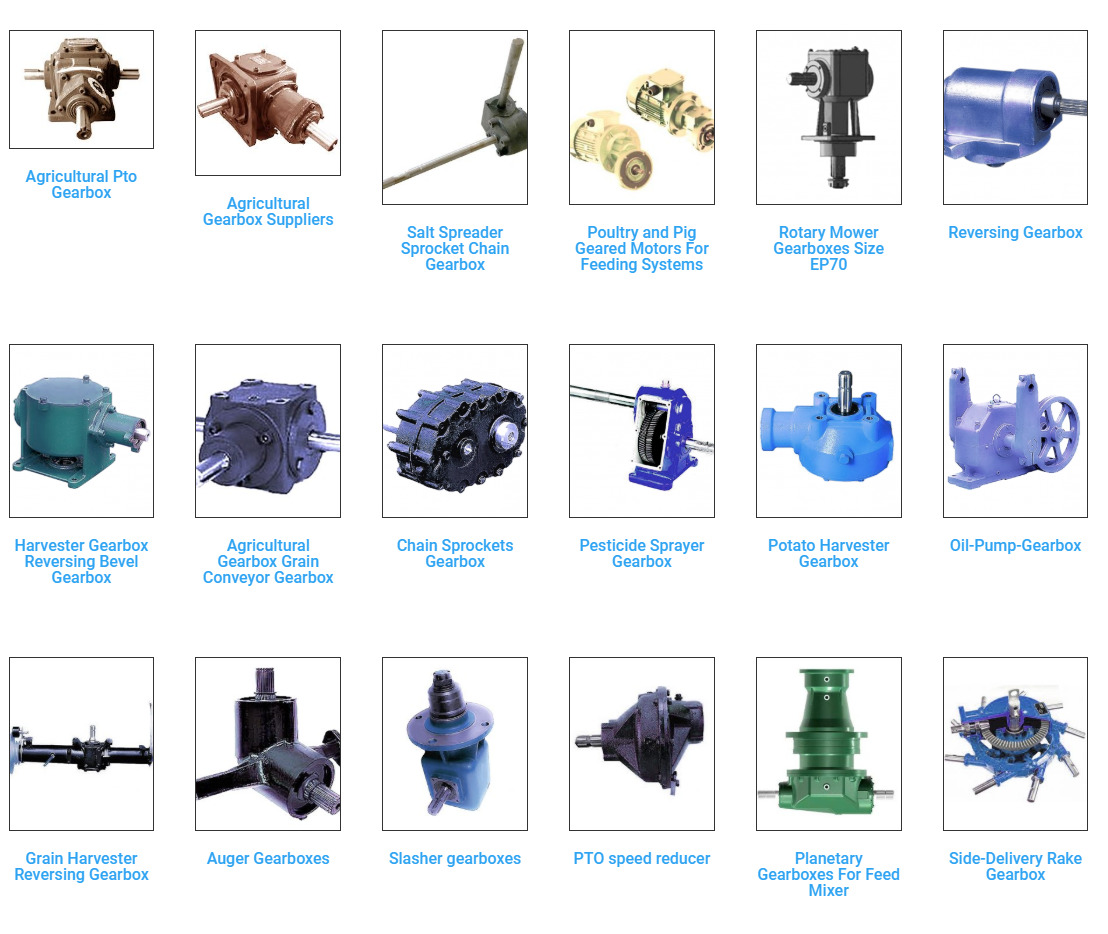
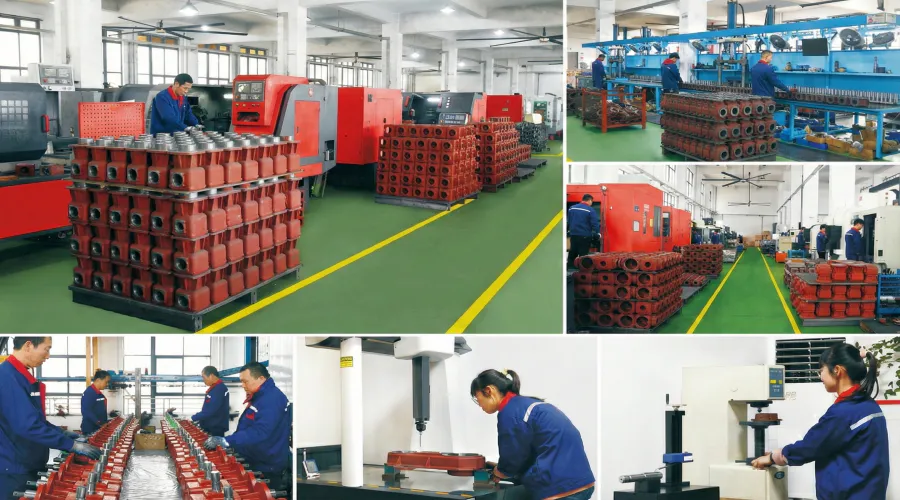
Solutions complètes: Nous comprenons l'importance de disposer de composants fiables et compatibles pour vos machines. En proposant à la fois des boîtiers de transmission agricoles et des arbres de prise de force, nous garantissons que chaque pièce fonctionne parfaitement ensemble, améliorant ainsi l'efficacité et réduisant les temps d'arrêt.
2. Conçu pour la durabilitéNos arbres de prise de force sont construits avec des matériaux de haute qualité pour résister aux conditions de travail les plus difficiles. Que vous alimentiez des équipements lourds ou que vous entreteniez des machines agricoles à petite échelle, nos arbres de prise de force vous offrent la robustesse et la fiabilité dont vous avez besoin.
3. Intégration transparente: Conçus pour compléter parfaitement nos boîtiers agricoles, nos arbres de prise de force assurent une transmission de puissance fluide, améliorant ainsi les performances globales de votre équipement. Cette intégration transparente vous permet de maximiser votre productivité et de réduire les défaillances mécaniques.
4. Options personnalisables: Nous proposons une large gamme d'arbres de prise de force, des configurations standard aux solutions personnalisées, afin de répondre à vos besoins spécifiques. Que vous travailliez dans l'agriculture, la construction ou tout autre domaine connexe, nous avons l'arbre de prise de force parfait pour vous.
5. RentableEn s'approvisionnant en boîtes de vitesses agricoles et en arbres de prise de force auprès d'un seul fournisseur, vous réalisez des économies et simplifiez votre processus d'achat. Nos produits sont conçus pour offrir une valeur durable, réduisant ainsi le besoin de remplacements fréquents.
6. Service et support fiablesNotre équipe d'experts est toujours disponible pour vous aider dans la sélection des produits, l'installation et les conseils d'entretien. Nous nous engageons à garantir le bon fonctionnement et l'efficacité de vos machines, afin que vous puissiez vous concentrer sur votre travail sans interruption.
8. Produits associés - Arbre de prise de force
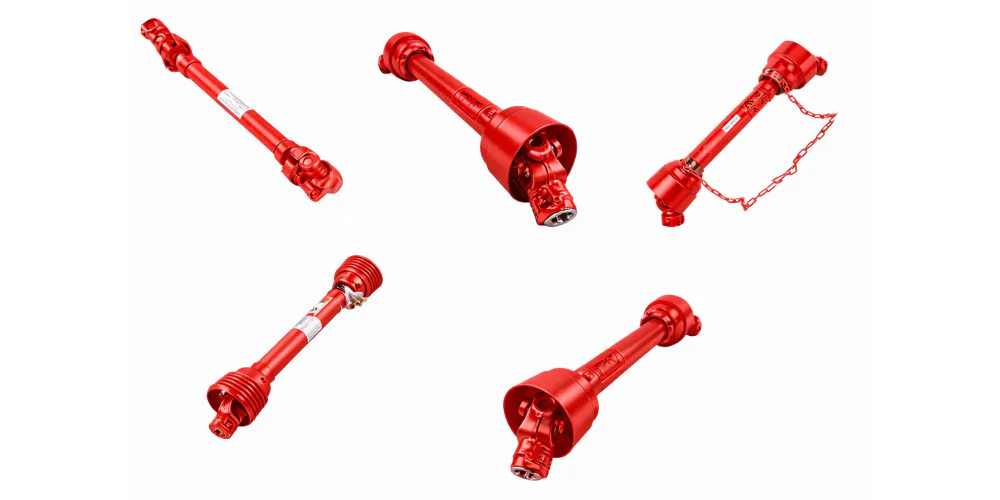
Chez EVER-POWER, nous ne nous concentrons pas uniquement sur la production de boîtes de vitesses agricoles de haute qualité, mais aussi sur la fabrication d'un composant essentiel qui alimente diverses applications agricoles et industrielles – l'arbre de prise de force (arbre de PDF). Nos arbres de PDF sont conçus pour répondre aux exigences rigoureuses des équipements agricoles modernes, offrant durabilité et efficacité pour un large éventail d'opérations. Compatible avec les industries locales brésiliennes.
Nos types de produits d'arbres de prise de force comprennent : Prise de force pour andaineurs à disques, Prise de force pour mélangeurs d'aliments, Arbre de prise de force pour broyeurs à fléaux, Prise de force pour presses rondes, et Prise de force pour presses carrées.
FAQ:
Q1: What is the typical lead time for a bulk order of pruning gearboxes to a supplier in Brazil?
A1: For standard PT-800 models, our Agrisous Nucléo Agro local agency maintains stock for immediate dispatch. For customized OEM configurations, we generally provide a 4-to-6 week production window followed by sea or air freight depending on the urgency of the harvest season.
Q2: How does the cost of ever-power gearboxes compare to Italian or German brands for the Brazilian market?
A2: We offer a highly competitive cost-to-performance ratio. By optimizing our manufacturing and leveraging our specialized agency in Brazil, we often provide a 25-30% saving on acquisition costs while offering a 12-month “Extreme Condition” warranty that European brands often exclude.
Q3: Can these gearboxes be used on hydraulic-drive pruning machines as well as PTO-driven ones?
A3: Yes, we offer specific versions with SAE-A or SAE-B hydraulic motor mounting flanges. This allows direct integration into modern high-reach hydraulic pruners without additional coupling housing.
Q4: Why is the choice of gear oil so critical for hedge trimmers operating in the Mato Grosso region?
A4: In 40°C heat, standard mineral oils thin out and lose their film strength. We recommend and supply high-load synthetic EP (Extreme Pressure) oils that maintain a protective barrier even under the shock-loads of branch impact.
Q5: Do your gearboxes come with integrated safety clutches or do we need external PTO shaft protection?
A5: While we recommend using a friction clutch or shear-bolt on the PTO shaft, our gearboxes can be ordered with an internal ‘weak-link’ shaft if requested by the OEM to prevent damage to more expensive hydraulic components.
Q6: Are the output shafts compatible with standard Brazilian hedge trimmer blade systems from Stara or Jacto?
A6: We offer multiple output shaft options, including 25mm, 30mm, and 35mm keyway shafts, as well as 6-spline configurations that are the standard interface for most domestic Brazilian manufacturers.
Q7: What is the benefit of the ‘Viton’ seal upgrade for our orchards in the Red Soil regions?
A7: ‘Latossolo’ soil is extremely abrasive. Viton is not only more heat resistant than NBR but also has a higher hardness level that resists the ‘cutting’ action of fine dust particles trapped against the shaft.
Q8: Where can we find a reliable agricultural gearbox supplier for replacement units in the São Paulo state?
A8: You are already in the right place. Agrinulear Nucleo Agro (ever-power Brazil Agency) is the dedicated partner for all regional support, providing engineering consulting and rapid spare parts supply.
Q9: Which maintenance schedule should a coffee farm follow to ensure a 5000-hour life for their trimmer gearbox?
A9: We recommend an initial oil change after the first 50 hours (the ‘break-in’ period), followed by inspections every 250 hours. In Brazil’s dusty conditions, the breather valve should be cleaned daily during the pruning cycle.
Q10: What are the current industry trends for automated pruning and how is ever-power adapting?
A10: The trend is moving toward high-speed, sensor-controlled robotic pruners. Our latest gearboxes feature lower backlash and integrated sensor ports for monitoring temperature and vibration in real-time as part of a Precision Agriculture 4.0 strategy.
Éditeur : PXY