
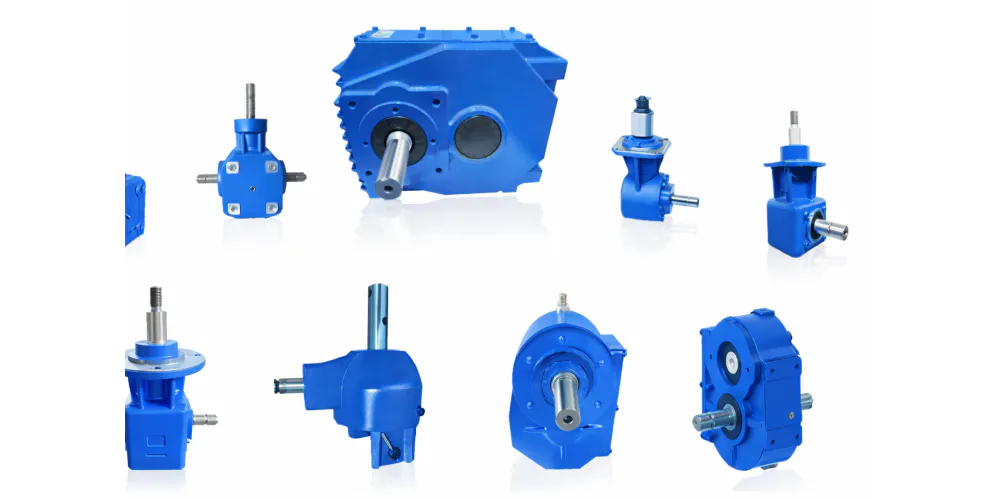
1. Technical Specifications: AG-BZ-Series (Brazil Heavy Duty)
| Catégorie de paramètre | Specification Details | Engineering Standard / Note |
|---|---|---|
| Nominal Torque Capacity | 1,850 Nm (Continuous) / 2,400 Nm (Peak Shock) | ISO 6336 Calculation |
| Input Power Rating | Up to 120 HP (90 kW) @ 1000 RPM | AGMA Class II Service Factor |
| Housing Metallurgy | Nodular Cast Iron QT450-10 (GJS-450-10) | Tensile Strength > 450 MPa |
| Gear Material | 20CrMnTiH Alloy Steel (Forged) | Carburized to 58-62 HRC |
| Input Shaft Profile | 1-3/8″ Z6 (6-Spline) Standard | DIN 9611 / ISO 500 |
| Reduction Ratios available | 1:1.46 / 1:1.92 / 1:2.35 | Interchangeable Gear Sets |
| Lubrication System | Splash Bath with Directed Channels | Rec. Oil: SAE 85W-140 (GL-5) |
| Sealing Technology | Cassette Seal (Viton FKM) + Dust Shield | Tolerant to -5°C to +200°C |
| Bearing Configuration | Oversized Tapered Roller Bearings (30209/30210) | Pre-loaded for Axial Thrust |
| Operating Temperature | -20°C to +110°C (Ambient + Rise) | Thermal Stability Tested |
| Noise Emission | < 78 dB(A) at 1 meter | Precision Lapped Gears |
| Surface Protection | Epoxy Primer + Polyurethane Topcoat | Salt Spray Test > 500 Hours |
2. The Physics of Soil Resistance in Brazil: Why Standard Gearboxes Fail
Agricultural machinery operating in the Brazilian heartland faces a tribological environment unlike anywhere else on Earth. The primary challenge stems from the unique rheological properties of Latossolo Vermelho (Red Latosol), which dominates the agricultural zones of Mato Grosso, Goiás, and Minas Gerais. Unlike the friable loams of North America or the silty soils of Northern Europe, Brazilian latosols contain extremely high concentrations of kaolinite clay and iron oxides (hematite). When these soils dry out during the intense heat of the “Safrinha” season, their shear strength increases exponentially, creating a concrete-like surface crust. Conversely, during the wet season, the soil becomes exceptionally adhesive (sticky), creating a “bulldozing” effect on rotary tiller blades rather than a clean cut.
For a central gearbox, this translates into a phenomenon we categorize as “Micro-Shock Loading.” As the tiller blades impact the hardened soil crust or drag through heavy adhesive clay, the torque requirement doesn’t just increase linearly; it oscillates violently at frequencies matching the blade rotation. Standard European-spec gearboxes, designed for consistent loads, often suffer from “Thermal Runaway” in these conditions. The internal oil temperature spikes above 115°C due to the sheer friction of the gears fighting this variable resistance, causing standard NBR seals to vulcanize and fail within weeks. Agrinulear Nucleo Agro has addressed this by re-engineering the thermodynamic profile of the casing, utilizing a high-graphite nodular iron that dissipates heat 22% faster than standard grey iron castings.
3. Operational Mechanics: The Central Nervous System of the Tiller
The Central Gearbox (Caixa de Transmissão Central) is the most critical mechanical node in a rotary tiller’s architecture. Its primary mandate is to accept kinetic energy from the tractor’s Power Take-Off (PTO) shaft—typically rotating at a standardized 540 RPM or 1000 RPM—and transmit it to the horizontal rotor shaft that houses the tillage blades. However, this is not a simple pass-through operation. The gearbox must perform a complex vector transformation, changing the axis of rotation by 90 degrees while simultaneously stepping down the speed to the optimal agronomic range of 180–260 RPM. This reduction ratio (typically between 1.5:1 and 2.5:1) acts as a torque multiplier, converting high-speed low-torque input into the massive low-speed high-torque force required to fracture compacted soil structures.
Furthermore, in the context of modern Brazilian mega-farms, the central gearbox often serves as a “Splitter Box” for folding tillers spanning up to 6 meters wide. In these configurations, the central unit must distribute power evenly to two lateral side-drive gearboxes without introducing phase vibration. The internal architecture employs spiral bevel gears (Crown and Pinion) cut with Gleason Coniflex technology. This specific tooth geometry ensures that the contact patch between gear teeth is localized to the center of the tooth face, preventing “edge loading”—a catastrophic failure mode where gear teeth chip at the corners when the gearbox housing undergoes slight elastic deformation under the immense loads of breaking virgin cerrado soil.
⚙️ Technical Insight: The “Dead-Zone” Breather
The Challenge: High-temperature expansion forces oil vapor out of standard breathers, attracting dust which forms an abrasive grinding paste inside the box.
Our Innovation: We utilize a baffled “labyrinth” breather cap situated in a low-turbulence zone of the housing. This allows expanded air to escape while trapping oil mist and condensing it back into the sump, maintaining fluid levels even during 16-hour continuous shifts in the tropical sun.
4. Industry Trend Analysis: The Shift to Conservation Tillage
The Brazilian agricultural sector is currently undergoing a paradigm shift towards “No-Till” (Plantio Direto) and “Minimum Tillage” practices to combat soil erosion and preserve moisture in the Cerrado. However, contrary to the belief that this eliminates the need for rotary tillers, it has actually evolved their usage profile. Modern agronomy now demands “Strategic Tillage”—an intense, high-speed, shallow pass (5-10cm depth) to incorporate cover crops (green manure) and manage herbicide-resistant weeds without disturbing the deep soil structure.
This trend has fundamentally altered gearbox requirements. The demand is shifting from pure low-speed grunt (torque) to high-speed thermal endurance. Gearboxes must now operate at higher input speeds to drive rotors that spin faster to pulverize surface biomass, generating significantly more frictional heat. Agrinulear Nucleo Agro is at the forefront of this evolution with our “Eco-Drive” series. These units feature reduced oil churning losses through optimized internal casing geometry and use lower-viscosity synthetic lubricants that maintain film strength at high temperatures. By reducing parasitic drag in the drivetrain, we help Brazilian farmers reduce diesel consumption per hectare, aligning with the global push for carbon-efficient agriculture.
5. Compliance & Safety Standards: Navigating South American Bureaucracy
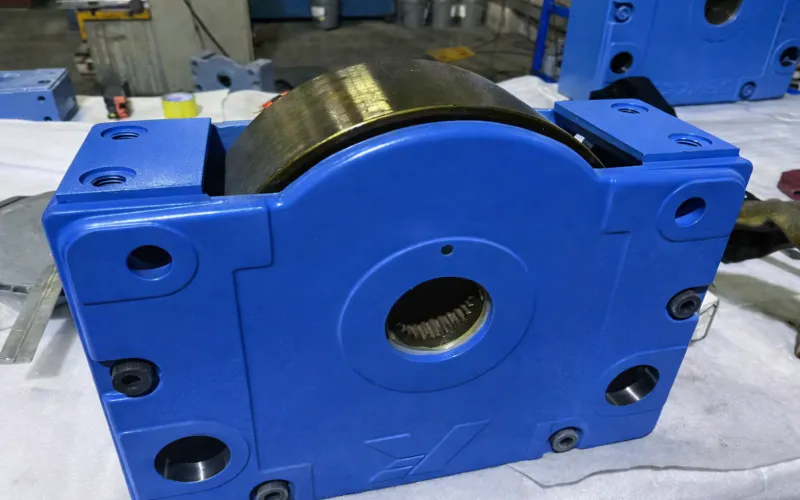
Exporting or manufacturing agricultural machinery in Brazil requires navigating a complex web of regulatory standards that are strictly enforced by labor inspectors. The most critical of these is NR-12 (Norma Regulamentadora 12), which governs the safety of machinery and equipment. Non-compliance can result in heavy fines and the embargo of equipment. For gearbox transmission systems, NR-12 mandates that all rotating components—specifically the input PTO shaft connection—must be completely shielded from accidental human contact. Agrinulear Nucleo Agro gearboxes are cast with integrated mounting bosses specifically designed to accept the yellow conical safety guards (Proteção de TDP) required by Brazilian law. We do not treat safety as an afterthought; the guard attachment points are load-rated to ensure the shield remains in place even if the machine is stepped on.
Looking beyond Brazil, our products are also compliant with the regulatory frameworks of neighboring MERCOSUR nations. For exports to Argentina, our gearboxes align with IRAM 8076 standards regarding agricultural machinery safety. For Paraguay and Uruguay, where mixed farming (livestock and crop) is common, our heavy-duty casing designs meet the durability expectations for clearing scrubland, often exceeding the implicit requirements of local import certifications. By standardizing on the strictest Brazilian NR-12 requirements, our gearboxes effectively offer a “passport” for your machinery to be sold across the entire South American continent without regulatory modification.
6. Engineer’s Notebook: Design Philosophy & Material Science
The “Sacrificial Fuse” Concept:
In the design labs of Agrinulear, we adhere to a philosophy that acknowledges a brutal truth: in the field, something will eventually break. The goal of good engineering is to control what breaks. A catastrophic failure of the central gearbox crown wheel is a disaster—it requires splitting the machine, hours of downtime, and expensive parts. To prevent this, we engineer our input shafts with a precise shear modulus. In the event of an immovable blockage (like a hidden granite boulder in the field), the input shaft or the friction clutch on the PTO is designed to yield before the internal gear teeth strip. This “mechanical fuse” approach saves the farmer thousands of Reais in repairs, turning a potential disaster into a simple shaft replacement.
Metallurgical Innovation – 20CrMnTiH:
We have moved beyond standard carbon steels. Our gears are forged from 20CrMnTiH, a Chinese-standard alloy steel that is essentially equivalent to the Western SAE 8620 but with optimized manganese and titanium content for better hardenability. We employ a “Gas Carburizing” heat treatment process that diffuses carbon into the surface of the gear teeth to a depth of 0.8mm to 1.2mm. This creates a dual-structure material: the surface is diamond-hard (HRC 58-62) to resist wear and pitting, while the core remains tough and ductile (HRC 30-40) to absorb the massive shock loads of rotary tillage without shattering like glass. This balance of hardness and toughness is the secret to longevity in the rocky soils of Southern Brazil.
7. Universal Compatibility: Engineered for the Global Fleet
Our central gearboxes serve as high-performance aftermarket upgrades for a wide array of global machinery brands. We respect the intellectual property of OEMs; our parts are engineered to fit seamlessly into existing drivetrains without modification.
*Disclaimer: All manufacturer names, symbols, and descriptions are used for reference purposes only. It is not implied that any part sold is the product of these manufacturers.
8. Customer Reviews
“We have tested the AG-BZ units on our 3-meter tillers in the rocky soils of Rio Grande do Sul. The durability of the bevel gears is impressive compared to the generic units we used to import. The seals held up perfectly through the wet winter season.”
“Excellent thermal management. In the Chaco region, heat is a killer. These gearboxes run noticeably cooler than our previous supplier’s. The technical support regarding gear ratios for our specific tractor speeds was very professional.”
“We integrated the Agrinulear central box into our new folding tiller line. The dimensional consistency is perfect—every bolt hole lines up exactly, which speeds up our assembly line significantly. A reliable partner.”
8. Why Choose Us?
Solutions complètes: Nous comprenons l'importance de disposer de composants fiables et compatibles pour vos machines. En proposant à la fois des boîtiers de transmission agricoles et des arbres de prise de force, nous garantissons que chaque pièce fonctionne parfaitement ensemble, améliorant ainsi l'efficacité et réduisant les temps d'arrêt.
2. Conçu pour la durabilitéNos arbres de prise de force sont construits avec des matériaux de haute qualité pour résister aux conditions de travail les plus difficiles. Que vous alimentiez des équipements lourds ou que vous entreteniez des machines agricoles à petite échelle, nos arbres de prise de force vous offrent la robustesse et la fiabilité dont vous avez besoin.
3. Intégration transparente: Conçus pour compléter parfaitement nos boîtiers agricoles, nos arbres de prise de force assurent une transmission de puissance fluide, améliorant ainsi les performances globales de votre équipement. Cette intégration transparente vous permet de maximiser votre productivité et de réduire les défaillances mécaniques.
4. Options personnalisables: Nous proposons une large gamme d'arbres de prise de force, des configurations standard aux solutions personnalisées, afin de répondre à vos besoins spécifiques. Que vous travailliez dans l'agriculture, la construction ou tout autre domaine connexe, nous avons l'arbre de prise de force parfait pour vous.
5. RentableEn s'approvisionnant en boîtes de vitesses agricoles et en arbres de prise de force auprès d'un seul fournisseur, vous réalisez des économies et simplifiez votre processus d'achat. Nos produits sont conçus pour offrir une valeur durable, réduisant ainsi le besoin de remplacements fréquents.
6. Service et support fiablesNotre équipe d'experts est toujours disponible pour vous aider dans la sélection des produits, l'installation et les conseils d'entretien. Nous nous engageons à garantir le bon fonctionnement et l'efficacité de vos machines, afin que vous puissiez vous concentrer sur votre travail sans interruption.
9. Related Products-PTO Shaft
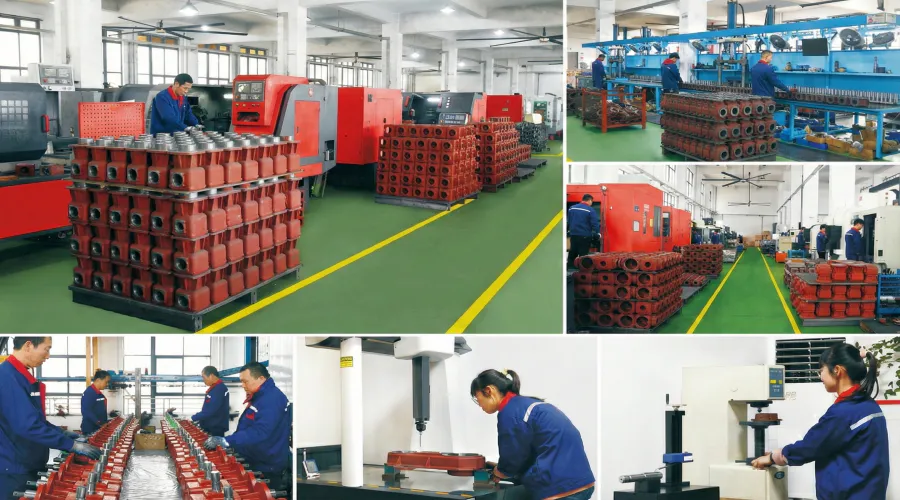
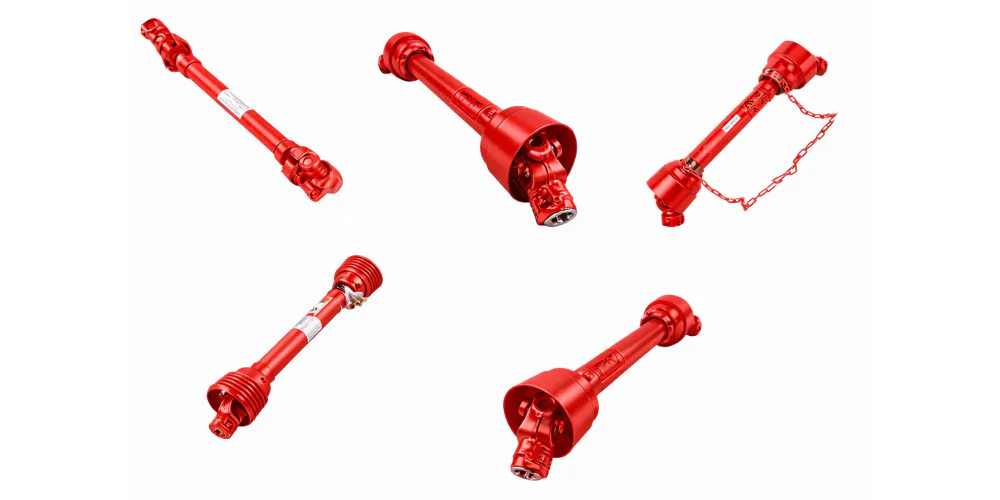
Chez EVER-POWER, nous ne nous concentrons pas uniquement sur la production de boîtes de vitesses agricoles de haute qualité, mais aussi sur la fabrication d'un composant essentiel qui alimente diverses applications agricoles et industrielles – l'arbre de prise de force (arbre de PDF). Nos arbres de PDF sont conçus pour répondre aux exigences rigoureuses des équipements agricoles modernes, offrant durabilité et efficacité pour un large éventail d'opérations. Compatible avec les industries locales brésiliennes.
Nos types de produits d'arbres de prise de force comprennent : Prise de force pour andaineurs à disques, Prise de force pour mélangeurs d'aliments, Arbre de prise de force pour broyeurs à fléaux, Prise de force pour presses rondes, et Prise de force pour presses carrées.
Frequently Asked Questions (B2B Procurement & Technical Support)
Q1: How does the “Tropicalized” cooling system work for Brazil’s high ambient temperatures?
A1: It’s not just about adding fins. We used Computational Fluid Dynamics (CFD) to map the airflow under the tiller deck. Our “Tropicalized” housings feature directional cooling channels that force air over the hottest part of the casing (the bearing pockets) using the turbulence generated by the tiller blades themselves, effectively reducing operating temps by 15-20°C compared to smooth housings.
Q2: Can I replace a Comer T-311 gearbox directly with your AG-BZ model without modifying the frame?
A2: Yes, absolutely. We have engineered the AG-BZ series as a “Drop-In” replacement. The mounting bolt pattern (typically 140x160mm or 150x170mm) and the shaft center heights are identical to industry standards like Comer, Bondioli, and Carraro. No cutting or welding of the implement frame is required.
Q3: What specific oil viscosity do you recommend for operation in Mato Grosso summer conditions?
A3: For the extreme heat of Mato Grosso, where ambient temps reach 40°C, we strongly recommend a high-quality SAE 85W-140 Mineral Oil with EP (Extreme Pressure) additives. Do not use thinner 90W oils, as they become too fluid at operating temperature, compromising the hydrodynamic wedge that protects the gear teeth.
Q4: Are spare parts like seals and bearings available locally in Brazil for quick repair?
A4: We understand that downtime is expensive. While we are an OEM supplier, we use standard ISO metric bearing sizes (e.g., 30210, 32212) and standard seal dimensions available at any major industrial supply house in São Paulo or Curitiba. You are not locked into proprietary, hard-to-find parts.
Q5: How do you prevent oil leakage when the tiller is working on steep slopes or terraces?
A5: This is a common issue with “Terracing” (Curvas de Nível). Our gearboxes feature a “Dual-Lip” seal design plus an internal oil baffle. This baffle prevents the entire oil volume from surging to one side during steep tilts, keeping the oil sump level relatively stable and preventing the seals from being overwhelmed by hydrostatic pressure.
Q6: What is the lead time for a container order to the Port of Santos?
A6: Typically, production takes 35-45 days. Ocean freight from China to Santos/Paranaguá is approximately 35-40 days. We recommend planning procurement 90 days in advance of the planting season. We can also arrange bonded warehousing in Brazil for long-term contract partners.
Q7: Do these gearboxes support bi-directional rotation for front-mounted applications?
A7: Standard models are mono-directional. However, we produce a specific “Bi-Directional” variant with symmetric bearing loads and seals for front-linkage PTOs. Please specify “Front Mount” when requesting a quote so we provide the correct internal configuration.
Q8: How does your warranty handle failure due to “operator abuse” or hitting rocks?
A8: We offer a 18-month manufacturing defect warranty. While we cannot warranty against gross abuse (like hitting a bedrock shelf at full speed), our engineers analyze failure photos. If a shaft shears cleanly (torque overload), we often provide replacement shafts at cost as a goodwill gesture to support our long-term partners.
Q9: Can you laser-etch our brand logo and part number on the casting?
A9: Yes, Private Labeling is a core service. We can cast your logo directly into the housing (requires new mold tooling) or laser-etch your logo and part numbers on the ID tag and the housing surface for full brand traceability.
Q10: What is the maximum torque the “Clutch-Pack” on the input shaft can handle?
A10: If you are using our integrated slip-clutch yoke, it is typically set to slip at 120% of the nominal gearbox torque rating (approx 2,200 Nm for the 85HP model). This setting is adjustable via the compression springs to suit specific soil conditions.
Éditeur : PXY