Beschrijving
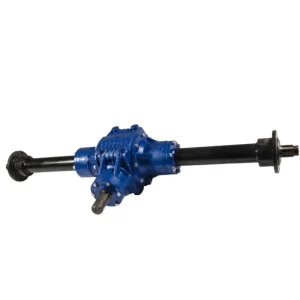
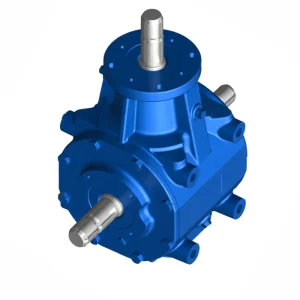
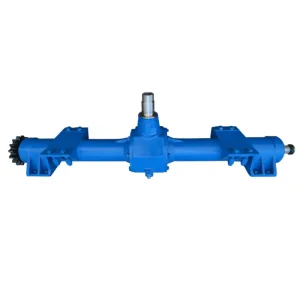
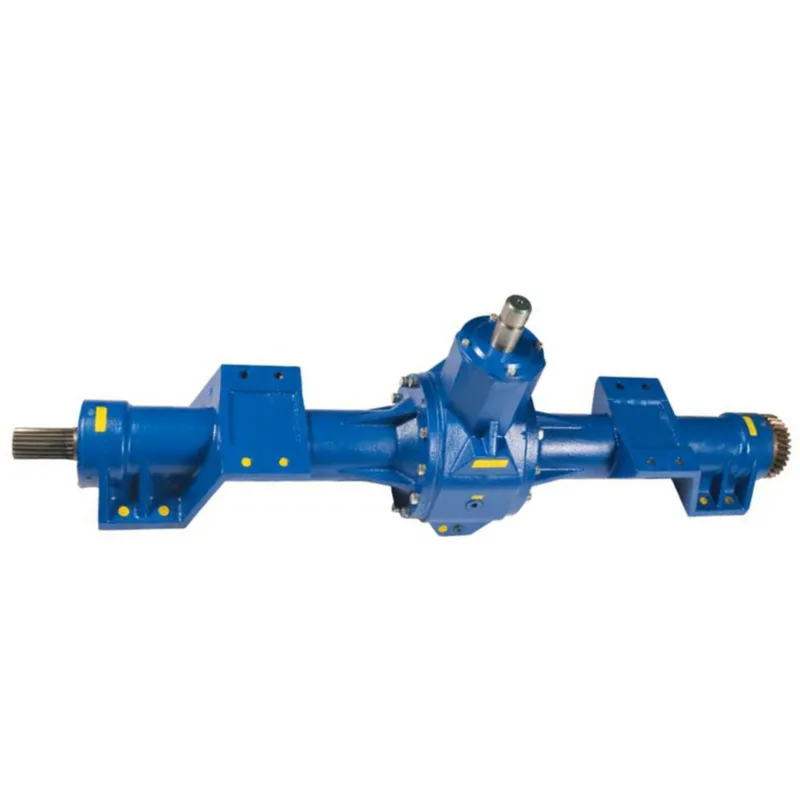
Round Baler Gearbox EP9.0 for Round Baler and Harvester
The EP9.0 is a heavy-duty round baler gearbox engineered for continuous high-load agricultural operations. Delivering 120 HP nominal power through a 1.92:1 Gleason helical gear reduction at 540 RPM PTO input, this gearbox handles the rigorous demands of large-scale round baling and harvesting across tropical and temperate crop environments — from the soybean corridors of Mato Grosso to the pasture lands of Rio Grande do Sul.
1. EP9.0 Technical Specifications
The table below presents 20 engineering parameters for the EP9.0 round baler gearbox in its standard production configuration. Custom parameters — including non-standard ratios, shaft diameters, and flange patterns — are available for OEM integration and retrofit applications upon request.
| Parameter | Specificatie |
|---|---|
| Model Designation | EP9.0 |
| Gear Ratio (i) | 1.92:1 (Deceleration) |
| Invoersnelheid | 540 r/min |
| Uitvoersnelheid | 282 r/min |
| Nominal Power | 120 HP (89.5 kW) |
| Maximum Power | 3000 HP (Peak) |
| Toothing Type | Gleason Helical Teeth |
| Rated Torque | 1580 Nm |
| Peak Torque | 2400 Nm |
| Service Factor (SF) | 1.5 |
| Huisvestingsmateriaal | QT450 Ductile Cast Iron |
| Materiaal tandwiel | 20CrMnTi Carburized Alloy Steel |
| Oppervlaktehardheid van tandwielen | HRC 58–62 |
| Gear Accuracy Grade | DIN 3962 Class 6 |
| Lagerconfiguratie | Tapered Roller (32212 / 32214) |
| Bearing L10 Life | ≥ 6000 hours at rated load |
| Smering | Oil Bath / Splash — 80W90 GL-5 |
| Oliecapaciteit | 2.2 L |
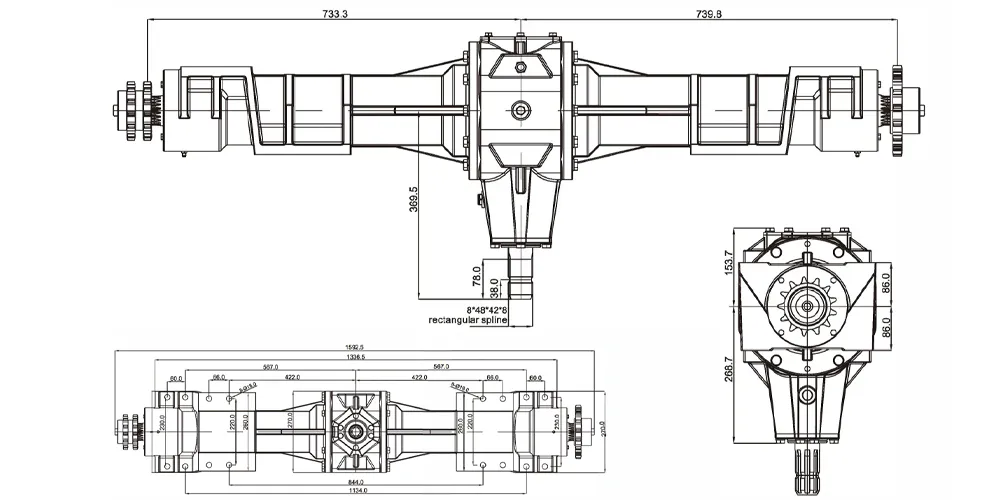
| Overall Dimensions (L × W × H) | 365 mm × 310 mm × 285 mm |
| Net Weight | 46 kg |
Remark: Custom configurations accepted. Contact the engineering team with specific requirements for non-standard ratios, output flange patterns, or PTO spline profiles.
2. Essential Facts at a Glance
✓ Gear Ratio: 1.92:1 deceleration with Gleason helical teeth — gradual engagement, lower noise, extended gear life.
✓ Power Capacity: 120 HP nominal / 3000 HP peak — adequate margin for large-format balers and high-throughput harvesters.
✓ Input/Output: 540 RPM PTO input, 282 RPM output — standard interface for mid-to-high-horsepower tractors used in Brazilian grain and livestock operations.
✓ Housing: High-strength cast iron construction rated for impact resistance and environmental sealing against field contaminants.
✓ Customization: Non-standard gear ratios, flange configurations, and shaft profiles available for OEM and retrofit projects.
3. Five Core Advantages of the EP9.0 Round Baler Gearbox
1. Superior Power Density for Large-Scale Operations
With a nominal rating of 120 HP and the ability to absorb peak loads up to 3000 HP, the EP9.0 sits at the upper end of round baler gearbox equipment capacity available for agricultural transmission applications. This power density is not merely a catalog figure — it reflects the gearbox ability to sustain torque output during the most demanding phase of bale formation, when the crop cylinder nears its full diameter and compression resistance reaches maximum. For operations across Goias, Mato Grosso do Sul, and Bahia where tractors commonly run 100 to 150 HP at the PTO, the EP9.0 provides a comfortable operating margin that avoids the thermal and mechanical stress that pushes lesser gearboxes into premature failure. The 1.92:1 Gleason helical gear mesh achieves this power transfer with efficiency losses below 3 percent, meaning more of the tractor engine output reaches the baler rollers rather than being converted to waste heat inside the gearbox housing.
2. Engineered for Tropical Agricultural Environments
Agricultural gearboxes operating in Brazilian territory face environmental conditions that would degrade standard industrial equipment within a single harvest cycle. Red laterite dust in the Cerrado region is highly abrasive; coastal humidity in Santa Catarina and Parana accelerates corrosion; ambient temperatures in the northern states regularly exceed 38 degrees C for weeks at a time. The EP9.0 addresses each of these factors through material and design choices: multi-lip NBR shaft seals prevent dust and moisture ingress, the cast iron housing receives a corrosion-resistant surface treatment, and the oil bath lubrication system is calibrated for stable viscosity performance across a -25 degrees C to +85 degrees C operating window. These are not afterthought modifications bolted onto a temperate-climate design — they are integral to the EP9.0 architecture, reflecting direct field experience across South American agricultural operations where this round baler gearbox type has been deployed over multiple growing seasons.
3. Reduced Downtime Through Serviceable Architecture
Downtime during peak harvest costs more than spare parts — it costs revenue. The EP9.0 housing uses a split-case design with precision-machined mating surfaces that can be opened in the field without disturbing shaft alignment. Bearings are press-fit into precisely bored seats but accessible without specialized hydraulic tooling, meaning a trained farm mechanic can perform round baler gearbox parts replacement on location. The magnetic drain plug captures ferrous wear debris between oil changes, providing an early warning of internal wear before it progresses to component failure. Oil level is monitored through a side-mounted sight glass, eliminating the need to remove fill plugs for routine checks. This design philosophy places the EP9.0 in a category of agricultural gearboxes that prioritize field serviceability alongside raw performance — an approach that farm managers across Argentina, Uruguay, and Brazil consistently rank among the most important factors in their round baler gearbox comparison evaluations.
4. Broad Cross-Compatibility with Existing Baler Platforms
Sourcing a round baler gearbox for tractor integration should not require structural modifications to the baler frame or custom adapter fabrication. The EP9.0 maintains standard North American and European PTO interface dimensions, accepting both 1-3/8 inch 6-spline and 1-3/4 inch 20-spline input shaft connections. The output flange bolt pattern aligns with widely deployed baler models including those from John Deere, Case IH, Krone, and Massey Ferguson platforms. This cross-compatibility substantially reduces installation labor and eliminates the risk of alignment errors that can occur when using non-standard adapter plates. Operators who have previously sourced a John Deere round baler gearbox or equivalent OEM unit will find that the EP9.0 bolt pattern and shaft centerline dimensions permit direct swap without additional machining — a practical consideration for fleet managers handling round baler gearbox replacement across multiple baler brands within the same agricultural operation.
5. Full Regulatory Compliance for International Markets
Every EP9.0 gearbox is manufactured within an ISO 9001:2015 certified quality management framework. The design conforms to essential health and safety principles referenced in the EU Machinery Regulation (EU) 2023/1230 — which replaces Directive 2006/42/EC effective January 2027 — and supports CE marking when integrated into complete machinery assemblies. For the Brazilian market, the EP9.0 Round Baler Gearbox is designed with mounting provisions that satisfy NR-12 (Norma Regulamentadora 12) PTO guard requirements specified in Annex XI for agricultural and forestry machinery. NR-12 compliance is legally mandatory for all machinery operated in Brazil; non-compliant equipment faces immediate interdiction by Ministry of Labor inspectors. In the United States, the gearbox design is compatible with ASABE S493 PTO guarding standards and OSHA 29 CFR 1928 agricultural safety provisions. This multi-jurisdiction compliance approach makes the EP9.0 a practical choice for round baler gearbox manufacturers and OEMs who distribute equipment across several international markets simultaneously.
4. Round Baler Gearbox Working Principle
The question of how does a round baler work at the drivetrain level begins and ends with the gearbox. The EP9.0 receives rotational input from the tractor PTO shaft — typically spinning at the standard 540 RPM — and translates it into a slower, higher-torque output suited for driving compression rollers, pickup reels, and feeding augers inside the baler or harvester body. Power enters through the splined input shaft, which meshes with a smaller driving pinion gear. This pinion engages a larger driven gear mounted on the output shaft; because the driven gear carries approximately 1.92 times the tooth count of the pinion, each revolution of the input produces only about 0.52 revolutions at the output — yielding 282 RPM at significantly higher torque.
The Gleason helical tooth geometry distinguishes the EP9.0 from simpler spur-gear designs. Helical teeth make contact progressively along an angled face rather than suddenly across a straight edge. This gradual engagement means that at any point during rotation, multiple tooth pairs share the transmitted load simultaneously, reducing stress concentration on individual teeth by roughly 30 to 40 percent compared to spur alternatives. The engineering trade-off is an axial thrust component generated by the helix angle, which the EP9.0 manages through tapered roller bearings rated for combined radial-axial loading. The net result is a quieter, smoother power transmission path that generates less vibration in the baler frame — a meaningful benefit across long operating days during Brazilian harvest seasons when equipment runs 10 to 14 hours continuously.
Lubrication within the EP9.0 follows a splash-feed oil bath arrangement. As the large driven gear rotates, its lower teeth dip into the oil reservoir and fling lubricant upward onto the pinion gear, bearing surfaces, and housing walls. Oil drains back into the reservoir by gravity, creating a continuous circulation loop without requiring an external pump or filter system — reducing both complexity and potential failure points in the field. The 80W90 GL-5 specification oil maintains adequate film strength across the full operating temperature range, preventing metal-to-metal contact between gear teeth even under peak loading conditions. Understanding the round baler gearbox working principle at this level helps operators make informed decisions about maintenance intervals, oil selection, and load management strategies that extend component life.
5. Material Composition and Metallurgy
What distinguishes a durable round baler gearbox from one that fails mid-season often comes down to metallurgy — the specific alloys chosen, how they are heat-treated, and the precision with which mating surfaces are finished. The EP9.0 Round Baler Gearbox housing is produced from QT450 ductile cast iron, selected because its spheroidal graphite microstructure resists crack propagation far more effectively than traditional grey iron. The minimum tensile strength of 450 MPa combined with elongation above 10 percent means the housing can absorb sudden impact loads — such as a baler striking a concealed obstacle — without fracturing. Interior surfaces are CNC-machined to bearing seat tolerances within 0.015 mm, maintaining shaft concentricity and gear mesh alignment across the full operating life of the gearbox even when subjected to the sustained vibration inherent in agricultural field work.
The gear pair is forged from 20CrMnTi chromium-manganese-titanium alloy steel, a formulation that responds exceptionally well to gas carburizing heat treatment. During carburizing at 920 degrees C over an 8 to 12 hour cycle, carbon diffuses into the gear tooth surfaces to a controlled depth of 1.0 to 1.4 mm, producing a hardened case of HRC 58 to 62 while the core remains ductile at HRC 28 to 35. This dual-hardness architecture means gear teeth surfaces resist abrasive wear and micropitting while the body of each gear absorbs cyclic bending fatigue without crack initiation. Final tooth profiles are ground to DIN Class 6 accuracy with flank roughness below Ra 0.8 micrometers — a surface quality that promotes hydrodynamic oil film formation between meshing teeth and substantially reduces friction-generated heat at the contact interface.
Shaft material is 40Cr alloy steel with induction-hardened journal surfaces at bearing contact zones, achieving HRC 50 to 55 localized hardness while maintaining a tough core. Seals throughout the gearbox use NBR (nitrile butadiene rubber) compounds rated for continuous duty across -30 degrees C to +110 degrees C, covering the full environmental spectrum from frost-prone mornings in the southern Brazilian states of Parana and Rio Grande do Sul to peak summer heat in the Cerrado interior. Bearing pre-load is factory-set using calibrated spacers to eliminate axial play without inducing excessive drag, ensuring consistent performance from the first operation through thousands of field hours without re-adjustment.
6. Application Scenarios
Round Baler — Forage, Hay, and Straw Baling
The EP9.0 drives the complete internal roller and belt system of round balers, providing the sustained torque necessary to compress crop material into uniform cylindrical bales. In large-scale cattle ranching operations throughout Minas Gerais and Goias, where Brachiaria and Tifton grass must be harvested and stored efficiently before the dry season, this round baler gearbox equipment operates for 10 to 14 hours daily during peak cutting windows. The 120 HP nominal rating exceeds the typical demand profile of mid-to-large format balers processing bales up to 1.8 meters in diameter, providing an operating safety factor that protects against overload when baling dense, moisture-laden silage crops. Pickup reel drive, bale chamber compression, and bale ejection mechanisms all draw power through the EP9.0 output shaft, making it the central power distribution node within the baler drivetrain architecture.
Harvester — Crop Cutting, Gathering, and Processing
Beyond baling, the EP9.0 finds application in forage harvesters and combined harvester-baler systems where the gearbox output powers cutting heads, crop conveyors, and initial processing stages. Sugarcane operations in Sao Paulo state and corn silage production in western Parana rely on harvester drivetrains that must handle thick, fibrous plant material without speed variation or torque interruption. The EP9.0 helical gear train delivers the smooth power curve these applications demand, avoiding the pulsating torque output characteristic of straight-cut gear designs that can cause uneven crop cutting and conveyor feed stalling. The gearbox manages crop conveyance from the cutting mechanism through to the collection or baling stage, maintaining consistent throughput rates that maximize field efficiency per operating hour.
Bale Wrapping and Net Application
Many modern round balers include integrated wrapping systems that apply net wrap or stretch film around the finished bale before ejection. These wrapping mechanisms require precisely controlled rotational speed — too fast causes film tearing, too slow results in loose wraps that unravel during transport or storage. The EP9.0 output delivers the stable 282 RPM that wrapping systems need, and the inherent smoothness of the helical gear mesh prevents the speed micro-fluctuations that can cause wrap inconsistencies. For dairy farms across the southern Brazilian highlands producing individually wrapped silage bales for year-round feeding programs, this consistency directly affects feed quality by maintaining the airtight seal necessary for proper fermentation inside the wrapped bale.
Grain Storage and Crop Processing Systems
In certain harvester configurations, the EP9.0 Round Baler Gearbox drives threshing and separation components that process grain crops — separating kernels from husks, chaff, and stalks — as well as mechanisms that route processed grain into storage hoppers within the harvester body. These applications demand uninterrupted torque delivery with minimal vibration, since excessive vibration in threshing systems can cause grain damage and reduce crop quality grades. The EP9.0 is suited for this role because its helical gear geometry inherently dampens torsional vibration before it reaches downstream components. Soybean harvest operations across Mato Grosso and Tocantins — regions that collectively account for a substantial share of global soybean production — benefit from this vibration-dampened power delivery during the intense April-through-June harvest window.
PTO-Driven Agricultural Implements
The EP9.0 Round Baler Gearbox also serves as a general-purpose PTO transmission component for agricultural implements beyond dedicated balers and harvesters. Rotary rakes, tedders, forage choppers, and TMR (total mixed ration) mixer wagons used in intensive livestock feeding operations can all accept the EP9.0 output. When asking how many HP does it take to pull a round baler, the answer typically ranges from 60 to 150 HP at the PTO depending on baler format and crop density. The EP9.0 120 HP nominal sits well within this range, and its 3000 HP peak capability absorbs the sudden load spikes that occur when any PTO-driven implement encounters an unexpected obstruction or material surge. This versatility makes the EP9.0 a practical inventory item for agricultural machinery dealers and cooperative workshops serving diverse farming operations across the Mercosur region.
7. Regulatory Standards and Legal Compliance
Agricultural equipment distributed internationally must satisfy region-specific safety regulations governing design, manufacture, and field operation. The EP9.0 round baler gearbox is designed to align with the regulatory frameworks of its primary markets, supporting smooth import, installation, and operational compliance for farms and OEM integrators.
Brazil — NR-12 Machinery Safety Regulation
NR-12 (Norma Regulamentadora 12) is Brazil’s mandatory workplace machinery safety standard, enforced by the Ministry of Labor. Annex XI specifically covers agricultural and forestry machinery, requiring adequate guarding around PTO connections and mechanical transmission devices. The EP9.0 gearbox includes factory-machined mounting provisions for PTO safety shields, enabling operators to achieve NR-12 compliance without aftermarket fabrication. Non-compliance with NR-12 carries immediate equipment embargo (interdiction) authority for labor inspectors, with administrative fines that can reach R$200,000 per non-conforming machine. Additionally, PROCONVE MAR-1 emission standards regulated by the National Environmental Council (Resolution 433/2011) govern the tractors and self-propelled agricultural machines that power the gearbox, establishing limits equivalent to Tier 3 / Stage IIIA levels for CO, HC, NOx, and particulate emissions.
European Union — Machinery Regulation (EU) 2023/1230
The EU Machinery Regulation replaces Directive 2006/42/EC and becomes mandatory on January 20, 2027. It establishes essential health and safety requirements for machinery marketed within EU member states, with specific attention to PTO drive shafts and guards which now require notified body validation when marketed as standalone components. The EP9.0 Round Baler Gearbox conforms to design principles supporting CE marking for integrated machinery assemblies and satisfies risk assessment methodologies referenced in ISO 12100. For round baler gearbox manufacturers exporting to EU markets, the EP9.0 documentation package includes dimensional drawings, material certifications, and load capacity declarations that facilitate the technical file assembly required under the regulation’s conformity assessment procedures.
International Standards — ISO, AGMA, ASABE
The EP9.0 is manufactured under ISO 9001:2015 quality management protocols. Gear load rating calculations follow ISO 6336 and AGMA 2001-D04 methodologies. Gear accuracy is verified per DIN 3961/3962. In the United States, agricultural PTO equipment safety is governed by OSHA 29 CFR 1928 and voluntary ASABE S493 guarding standards. The EP9.0 shaft dimensions are compatible with standard North American PTO guard assemblies, simplifying compliance for OEMs distributing baler equipment across the Americas. For operations spanning the Mercosur agricultural corridor — covering Brazil, Argentina, Paraguay, and Uruguay — these international standards provide a shared technical vocabulary that facilitates cross-border equipment procurement and maintenance coordination between farm operations in different national jurisdictions.
8. EP9.0 Component Structure
Understanding the individual round baler gearbox parts and their function within the EP9.0 Round Baler Gearbox assembly enables operators to perform effective maintenance, identify wear patterns early, and make informed decisions about how to use round baler gearbox units for maximum field life. The EP9.0 consists of six primary functional groups.
Housing: The QT450 ductile iron housing protects all internal mechanisms from field contaminants while serving as the structural mount between the baler frame and the gearbox assembly. The two-piece split design permits full internal access for service without removing the gearbox from the machine, and precision-machined gasket faces ensure oil-tight re-assembly. All external mounting bosses are cast integral to the housing, eliminating bolted-on brackets that can loosen under sustained vibration during field operation.
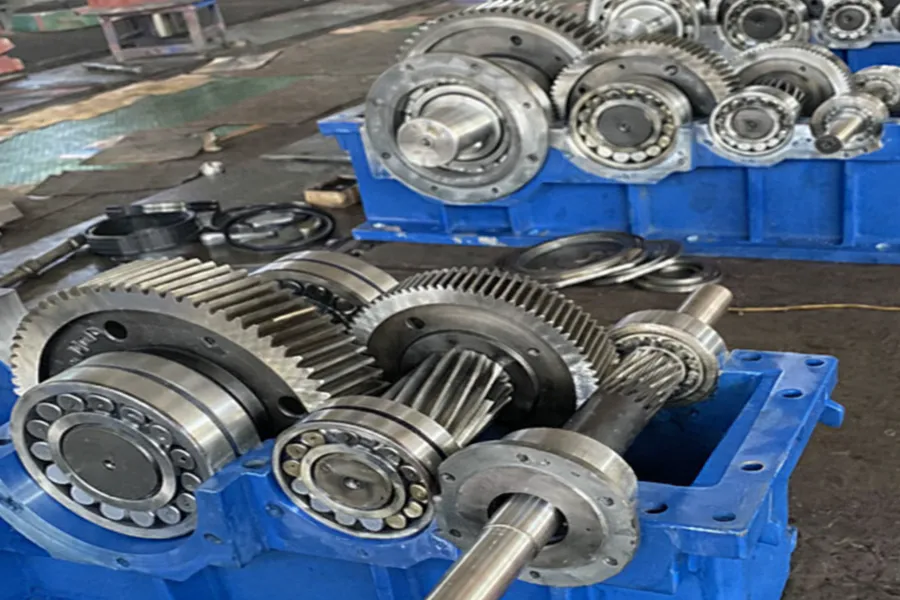
Gears: A mated pair of Gleason helical gears performs the 1.92:1 speed reduction and torque multiplication. The smaller input pinion drives the larger output gear, with tooth contact occurring progressively along the angled face. After carburizing and precision grinding, the gear set undergoes dynamic mesh testing on a dedicated test rig to verify contact pattern, noise level, and backlash before installation into the housing.
Bearings: Four tapered roller bearings (32212 and 32214 series) support the input and output shafts, handling both radial gear mesh forces and axial thrust from the helical tooth angle. Factory pre-load is set using calibrated spacer shims to eliminate shaft play while maintaining free rotation. The L10 rated life exceeds 6000 hours under nominal load, spanning multiple harvest seasons before scheduled replacement becomes necessary under normal operating conditions.
Shafts: The input shaft connects to the tractor PTO via a splined coupling (1-3/8 inch 6-spline or 1-3/4 inch 20-spline). The output shaft delivers power to baler components through a keyed or flanged connection. Both shafts are machined from 40Cr alloy steel with induction-hardened journal surfaces at bearing zones, achieving HRC 50–55 localized hardness to resist surface fatigue and fretting corrosion.
Seals: Multi-lip NBR seals at each shaft penetration point block dust, moisture, and crop debris from entering the housing while retaining lubricant under temperature cycling. Housing joint gaskets are fiber composite material compressed to controlled thickness during torqued assembly. All seal materials are rated for continuous duty from -30 degrees C to +110 degrees C.
Lubrication System: The oil bath arrangement holds 2.2 liters of 80W90 GL-5 gear oil. Splash distribution from gear rotation carries lubricant to all bearing surfaces and tooth contact zones without requiring an external pump. A magnetic drain plug traps ferrous particles between service intervals, and a side-mounted sight glass enables visual level checks without disassembly. The breather vent equalizes internal pressure during thermal cycling to prevent seal blow-out.
9. Installation Guidance and Troubleshooting
Proper installation of the EP9.0 Round Baler Gearbox begins with confirming that the input shaft spline profile matches your tractor PTO output and that the output connection type (keyed or flanged) corresponds to your baler drivetrain configuration. Align the gearbox input shaft with the PTO driveline within 1 degree of angular deviation — misalignment beyond this threshold accelerates bearing wear and generates vibration that transmits through the baler frame. Secure all mounting bolts to specified torque values using a calibrated wrench, and verify that PTO safety guards are installed and secured before initial operation per NR-12 requirements in Brazil and equivalent regulations in other jurisdictions. Fill with 2.2 liters of fresh 80W90 GL-5 gear oil to the sight glass midpoint before first start.
Common field issues and their troubleshooting paths include: grinding or clicking noise during operation — check oil level first, as insufficient lubricant causes metal-on-metal contact between gear teeth; overheating of the housing — verify that field debris is not blocking airflow around the housing exterior, and confirm the baler is not operating above rated load capacity for extended periods; oil leakage at shaft seals — inspect seal lips for wear or foreign object scoring, and replace if damaged; difficulty engaging PTO — check the input shaft spline for burrs or corrosion buildup, and lubricate lightly with anti-seize compound before reconnection; excessive vibration — verify driveline alignment and inspect for bent or unbalanced PTO shaft components upstream of the gearbox input. Performing these checks systematically before escalating to internal disassembly avoids unnecessary downtime and expense during critical harvest periods. The EP9.0 round baler gearbox best serves operators who follow the prescribed maintenance schedule and address minor issues before they compound into major component failures.
10. About Us
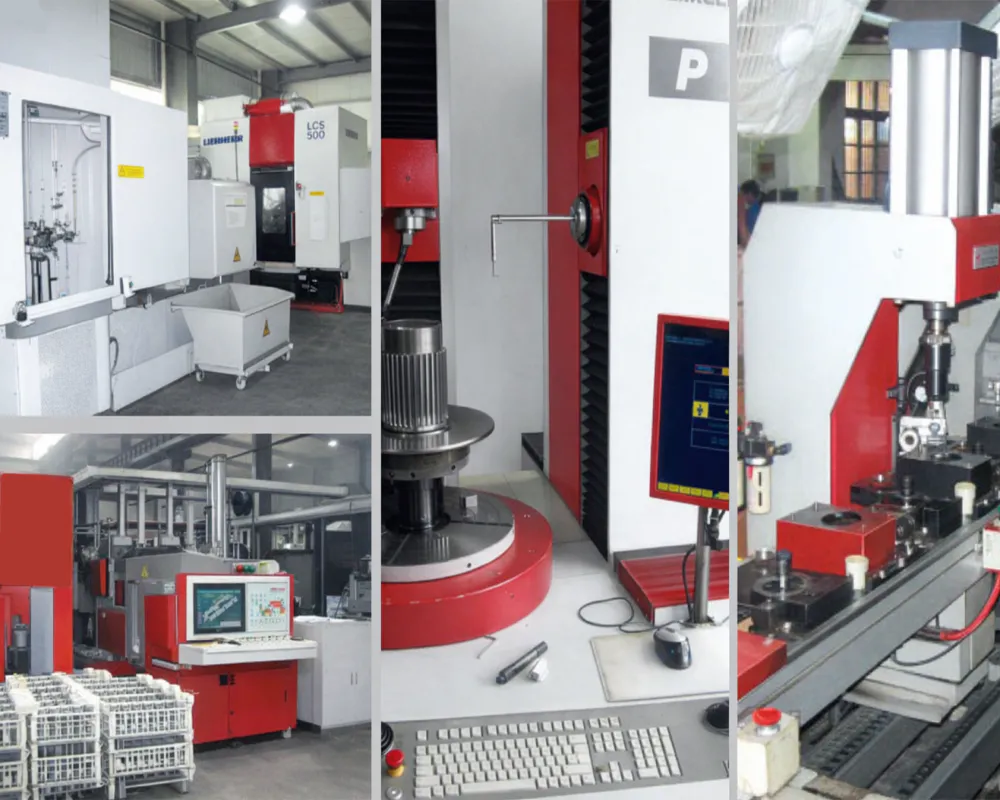
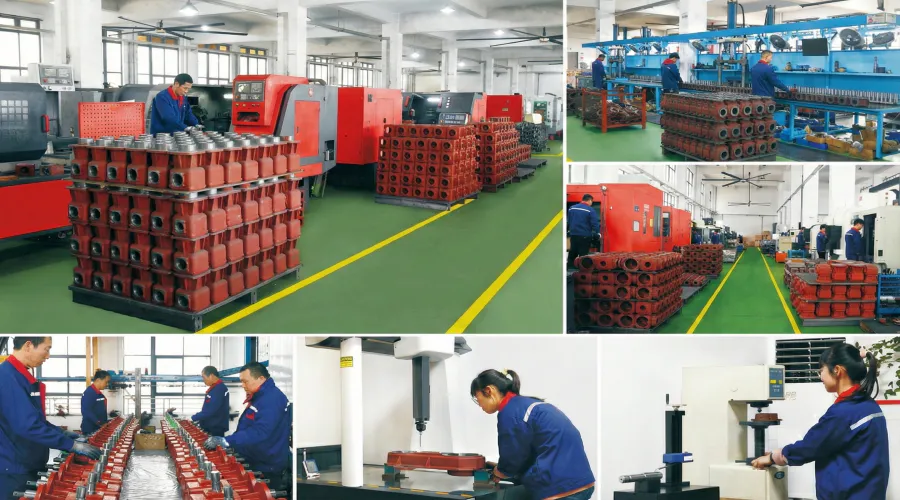
We are a production-focused manufacturer with decades of hands-on experience engineering and producing agricultural power transmission components. Our facility operates under ISO 9001:2015 quality management certification, with dedicated gear cutting, grinding, heat treatment, and CNC machining departments working under one roof. Every EP9.0 round baler gearbox undergoes dynamometer load testing before shipment, verifying torque capacity, thermal behavior, and seal integrity against published specifications. Our engineering team includes specialists in gear geometry, bearing system design, and agricultural application engineering who consult directly with OEM customers and aftermarket distributors.
WorkShop
11. Related Products — Integrated Drivetrain Solutions
A round baler gearbox does not operate in isolation — it is one component within a power transmission chain that begins at the tractor PTO and ends at the baler rollers or harvester cutting head. We produce the full range of complementary components needed to build and maintain this chain, offering system-level compatibility and the procurement efficiency of a one-stop agricultural drivetrain supplier. From PTO shafts to drive chains, sprockets, and auxiliary motors, every component in our catalog is dimensioned and rated to integrate seamlessly with gearboxes like the EP9.0.
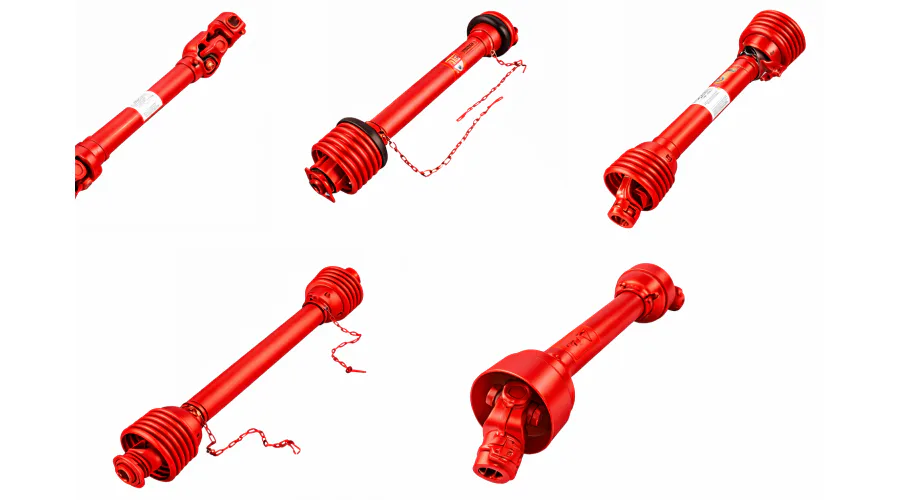
PTO Shaft — Tractor-to-Gearbox Power Link
Our PTO shafts feature precision-forged yokes, hardened cross-journal assemblies, and integrated overload protection mechanisms (shear bolt or friction clutch) that safeguard both the tractor drivetrain and the gearbox from sudden torque spikes. Telescoping designs accommodate varying tractor-to-implement distances, and every shaft ships with matching safety guards for NR-12 and ASABE compliance. These shafts are dimensioned to mate directly with the EP9.0 Round Baler Gearbox input shaft spline without adapter sleeves.
Agricultural Chain and Sprockets
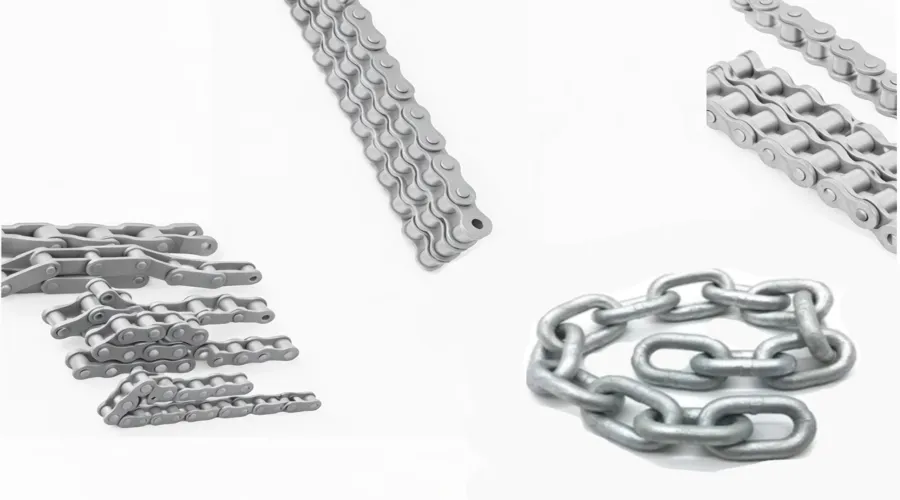
For flail mower decks that use chain-and-sprocket secondary drive arrangements between the gearbox output and the cutting rotor, we supply agricultural roller chain and sprocket sets dimensioned to common flail mower OEM specifications. Using matched chain, sprockets, and gearbox from a single source ensures that rated torque figures are consistent across the full driveline — critical for correct service life predictions during equipment design or refurbishment projects.
Veelgestelde vragen
Q1. What is an round baler gearbox and why is it critical for baler performance?
A round baler gearbox is the central mechanical transmission unit that converts high-speed PTO input from the tractor into the lower-speed, higher-torque rotation needed to drive baler rollers, pickup reels, and wrapping mechanisms. Without a properly functioning gearbox, the baler cannot compress crop material into uniform cylindrical bales at the density required for transport and storage. The EP9.0 performs this function through a 1.92:1 Gleason helical gear reduction, producing 282 RPM output from 540 RPM input at a rated 120 HP — sufficient for mid-to-large format round baling operations across diverse crop types and field conditions.
Q2. What factors should I evaluate when making a round baler gearbox comparison between competing suppliers?
A thorough round baler gearbox comparison should evaluate five categories: first, rated torque and peak torque capacity relative to your baler model and crop type; second, gear tooth type and accuracy grade — helical gears with DIN Class 6 or better offer superior longevity; third, bearing type and L10 rated life under your projected operating hours per season; fourth, housing material and environmental sealing quality matched to your regional climate conditions; fifth, supplier after-sales capability including parts lead time, technical support language availability, and experience with your country’s import and compliance requirements. Request dynamometer test reports and oil analysis data from reference installations when available, as these provide objective performance evidence beyond catalog specifications.
Q3. How many HP does it take to pull a round baler in large-scale South American operations?
PTO horsepower requirements for round balers range from 60 to 150 HP depending on bale size format, crop type, and moisture content. Large-format balers producing bales up to 1.8 meters in diameter processing dense tropical grasses like Brachiaria typically require 90 to 130 HP at the PTO. The EP9.0 Round Baler Gearbox is rated at 120 HP nominal, placing it squarely within this operating range while offering peak capacity headroom for surge loads during wet or heavy crop conditions common in Brazilian growing seasons.
Q4. What is the difference between round baler gearbox designs using helical versus spur gears?
Spur gears engage abruptly across their full tooth width, creating impact loading and relatively high noise levels. Helical gears — like the Gleason type in the EP9.0 Round Baler Gearbox — engage progressively along an angled tooth face, distributing load across multiple tooth pairs simultaneously. This gradual contact pattern reduces individual tooth stress by 30 to 40 percent, lowers operating noise, and generates smoother torque delivery. The engineering trade-off is axial thrust produced by the tooth angle, managed in the EP9.0 Round Baler Gearbox through tapered roller bearings rated for combined radial-axial loads. For agricultural applications involving extended daily operating hours, helical gear designs consistently demonstrate longer service life and lower vibration-related maintenance costs.
Q5. How does a round baler work when the gearbox needs to handle variable crop density throughout the bale cycle?
During a bale formation cycle, torque demand increases progressively as the crop cylinder grows in diameter and compression resistance rises. The EP9.0 handles this variable load profile through its combination of a high service factor (1.5) and a peak torque capacity well above the nominal rating. As the bale approaches full diameter, the gearbox draws more power from the tractor PTO without speed droop at the output shaft, maintaining consistent roller rotation speed for uniform bale density. If paired with a PTO driveline slip clutch, the system provides additional protection against sudden overload events — effectively creating a round baler gearbox automatic transmission response without requiring electronic controls.
Q6. Which round baler gearbox replacement fits John Deere and Case IH balers without frame modification?
The EP9.0 Round Baler Gearbox is designed with standardized PTO input splines and output flange bolt patterns that align with multiple OEM baler platforms, including popular John Deere (567, 568, 569 series) and Case IH (RB455, RB465, RB565 series) models. The shaft centerline height and mounting bolt hole spacing match the OEM gearbox footprint, so the EP9.0 drops into the existing frame without adapter plates, bracket welding, or frame drilling. Before ordering, confirm your specific PTO spline count and output connection type by consulting the baler service manual or contacting our technical team with the existing gearbox part number for cross-reference verification.
Redacteur: PXY