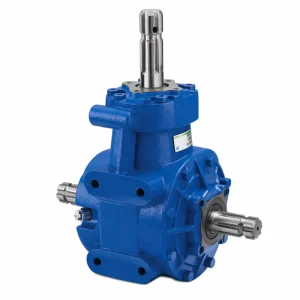
Beschrijving
EP-RC71 Rotary Cutter Gearbox – Replacement of Omni Code
1. Technical Specifications – EP-RC71 rotary cutter gearbox
The table below lists 20 verified technical parameters for the EP-RC71 rotary cutter gearbox. Operators sourcing rotary cutter gearbox replacement parts or evaluating this unit for a new installation should confirm that the ratio and shaft configuration match their specific cutter deck and tractor PTO specification before ordering.
| Parameter | Waarde / Specificatie |
|---|---|
| Model | EP-RC71 |
| Type versnelling | Kegelwiel |
| Available Ratios | 1.21:1 / 1:1 / 1:1.21 / 1:1.46 / 1:1.93 |
| Minimum Output Torque | 461 Nm (4,083 lb.-in.) |
| Maximum Output Torque | 1,093 Nm (9,683 lb.-in.) |
| Afichtingstype | Triple Lip Spring-Loaded |
| Lagertype | Conische rol |
| Oliecapaciteit | 1.04 L (35 fl. oz.) |
| Net Weight | 37.7 kg (83 lbs.) |
| Huisvestingsmateriaal | Cast Iron / High-Strength Steel |
| Input Shaft Standard PTO Speed | 540 rpm / 1,000 rpm (application dependent) |
| Recommended Lubricant | SAE 85W-140 Gear Oil |
| First Oil Change Interval | 50 operating hours |
| Subsequent Oil Change Interval | 200 h or once per season |
| Shaft Angle | 90° |
| Protection Class (IP Rating) | IP65 |
| Bedrijfstemperatuurbereik | -15 °C to +65 °C |
| Input / Output Shaft Configuration | Multiple options available on request |
| Mounting Bolt Circle | Omni RC-71 compatible pattern |
| Overall Dimensions (L × W × H) | 320 mm × 270 mm × 295 mm |
Note: The unit is supplied dry. Fill to the specified level with SAE 85W-140 gear oil before commissioning. Contact us if you require a ratio or shaft configuration not listed above — custom builds are available to order.
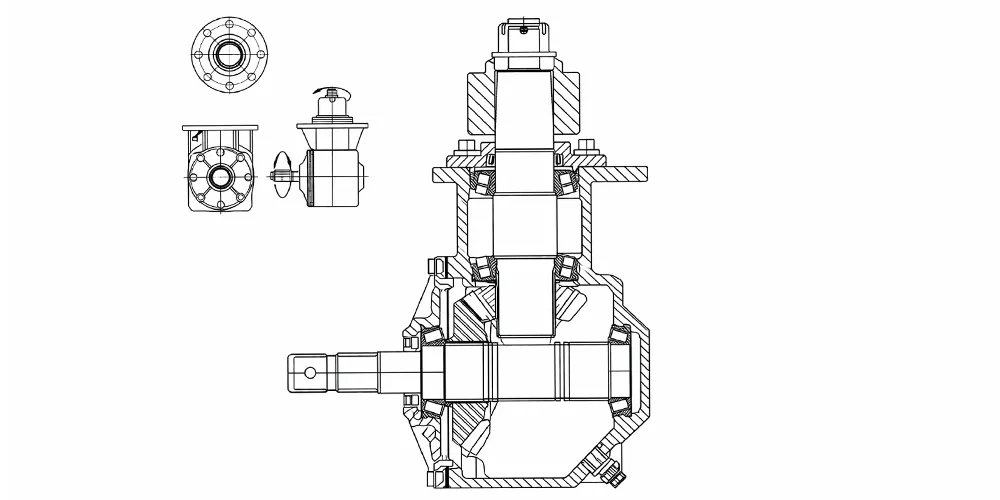
2. Five Key Product Advantages
These advantages reflect the priorities of professional equipment operators and fleet maintenance engineers who depend on a reliable rotary cutter gearbox across demanding seasonal schedules. Each point addresses a failure mode or operational challenge that comes up consistently in field feedback from farms and machinery workshops throughout South America, Europe, and the United States.
01 — Drop-In Omni Code Compatibility
The EP-RC71 rotary cutter gearbox is dimensionally matched to the Omni Code RC-71 interface, replicating the bolt circle, shaft profile, and deck mounting geometry of the original unit. This means workshops servicing fleets of Omni-framed rotary cutters — common in large-scale Brazilian pasture operations — can complete a gearbox swap during a standard maintenance shift with no machining, adapter plates, or custom hardware. Downtime during the seasonal cutting window is minimised, and the cost of adaptation labour is eliminated entirely.
02 — Five Selectable Gear Ratios
With ratio options of 1.21:1, 1:1, 1:1.21, 1:1.46, and 1:1.93, the EP-RC71 rotary cutter gearbox covers a genuinely broad application envelope. A 40 hp rotary cutter gearbox application running light grass management on a smaller tractor will use a different ratio than a 100 hp rotary cutter gearbox installation clearing heavy secondary growth. The ability to select the appropriate ratio at time of order — rather than retrofitting — ensures that the gearbox is matched correctly to the specific PTO speed and blade tip speed requirements of each implement, reducing thermal loading and extending service life.
03 — Triple Lip Spring-Loaded Seals
Standard single or double lip seals are adequate for clean environments, but rotary cutter operation generates a continuous stream of cut vegetation, soil particles, and moisture that accumulates around the output shaft housing. The triple lip seal configuration on the EP-RC71 rotary cutter gearbox places three successive barrier lips — each spring-loaded for consistent contact pressure — between the internal lubrication volume and the external environment. This architecture effectively blocks contaminant ingress even when the gearbox is operating in dense grass or wet conditions, which is critical for maintaining oil cleanliness and preventing premature bearing and gear wear.
04 — Tapered Roller Bearings
The bevel gear configuration of a rotary cutter gearbox generates significant combined radial and axial (thrust) loads at the shaft bearings, particularly during blade impact events when cutting through woody stems or embedded rocks. Ball bearings are adequate for light-duty scenarios, but the tapered roller bearings used in the EP-RC71 rotary cutter gearbox are specifically rated for combined load conditions. The tapered profile of the rollers distributes contact stress over a larger surface area, resists both radial cutting loads and the axial forces generated by the bevel gear mesh, and delivers a longer rated fatigue life under the cyclic impact loading that characterises brush-clearing work.
05 — High Torque Capacity for Demanding Work
With a maximum output torque rating of 1,093 Nm (9,683 lb.-in.), the EP-RC71 rotary cutter gearbox sits at the upper end of the rotary cutter gearbox market segment it serves. This torque headroom matters in practice — when a rotary cutter blade strikes a concealed hardwood stump or a dense thicket, the momentary spike in drivetrain torque can exceed steady-state ratings by a factor of three or more. A gearbox with conservative torque margins absorbs these spikes without tooth fracture or bearing overload, whereas an undersized unit will exhibit premature fatigue cracking at the gear roots. The EP-RC71’s rated capacity provides meaningful operational protection against the high-impact loads that field conditions in Brazil’s Cerrado and Pampa biomes regularly produce.
3. Working Principle of the Rotary Cutter Gearbox
Understanding what is a rotary cutter gearbox and how it functions is essential for operators who need to make informed decisions about maintenance schedules, ratio selection, and replacement timing. The EP-RC71 rotary cutter gearbox operates on a bevel gear transmission principle in which the input shaft — driven by the tractor’s PTO at 540 rpm or 1,000 rpm depending on the tractor specification and gear ratio selected — meshes with the output bevel gear at a 90-degree shaft angle. This right-angle transmission converts the horizontal rotational input from the PTO shaft into a vertical output rotation that drives the blade hub directly beneath the cutter deck.
The gear ratio determines the relationship between input speed and output blade speed. When the question arises of what is the gearbox ratio for a rotary cutter, the answer depends on the target blade tip speed and the PTO speed of the specific tractor. For a standard 540 rpm PTO input with a 1:1.93 ratio, the output shaft rotates at approximately 1,042 rpm — a typical blade speed for aggressive brush-clearing work on a 75 hp rotary cutter gearbox installation. For lighter applications or when running a higher-RPM PTO at 1,000 rpm, the operator selects a lower-output-speed ratio to keep blade tip velocity within the safe operating envelope of the cutter deck and blade assembly.
Inside the housing, the tapered roller bearings carry the combined radial and thrust loads generated by the bevel gear mesh and by the inertia of the spinning blade assembly. The 1.04 litre oil bath lubricates the gear faces, bearing races, and seal contact surfaces continuously during operation. The triple lip output seal maintains the oil boundary while preventing fibrous material and abrasive particles from reaching the bearing races from below. The entire lubrication system is self-contained and sealed, requiring only periodic oil changes and visual inspection of the seal integrity to maintain full operating performance.
4. Material & Construction
The material selection for the EP-RC71 is driven by the specific load and environmental conditions of rotary cutter operation, which are meaningfully different from the demands placed on lighter agricultural gearboxes. The housing is produced from grey cast iron, selected for its combination of high compressive strength, natural vibration-damping characteristics, and resistance to the fatigue cracking that can develop in thinner-walled aluminium housings when subjected to the repetitive impact loads generated by blade strikes on embedded debris. The cast iron housing also provides a stable, dimensionally predictable bore for the tapered roller bearing outer races, maintaining bearing preload across the operating temperature range.
The bevel gears are machined from medium-alloy case-hardening steel — typically a chromium-molybdenum or nickel-chromium-molybdenum grade — and subjected to a carburising and case-hardening heat treatment cycle that produces a surface hardness in the range of 58–62 HRC on the tooth flanks, over a core hardness in the 30–35 HRC range. This combination delivers the hard, wear-resistant tooth surface needed to sustain the high-contact-stress conditions of bevel gear meshing under high torque, while retaining the ductile core toughness that resists tooth root fracture during impact loading. Gear teeth are finish-ground after heat treatment to a controlled profile tolerance that ensures smooth, quiet meshing and minimises dynamic excitation at the tooth engagement frequency — an important factor in reducing gearbox noise and housing fatigue in the high-RPM 1:1.93 ratio configuration.
The triple lip output shaft seals are moulded from fluoroelastomer (FKM) compound, chosen over standard nitrile (NBR) for its superior resistance to the high oil temperatures that can develop in a heavily loaded rotary cutter gearbox during prolonged continuous operation in thick brush. FKM retains its elasticity and lip contact force at temperatures up to approximately 200 °C, compared to the approximately 120 °C ceiling for standard NBR seals, providing a meaningful safety margin during demanding field work. All fastening hardware is zinc-nickel plated carbon steel, offering enhanced corrosion resistance in the humid tropical conditions encountered across southern and central Brazil.
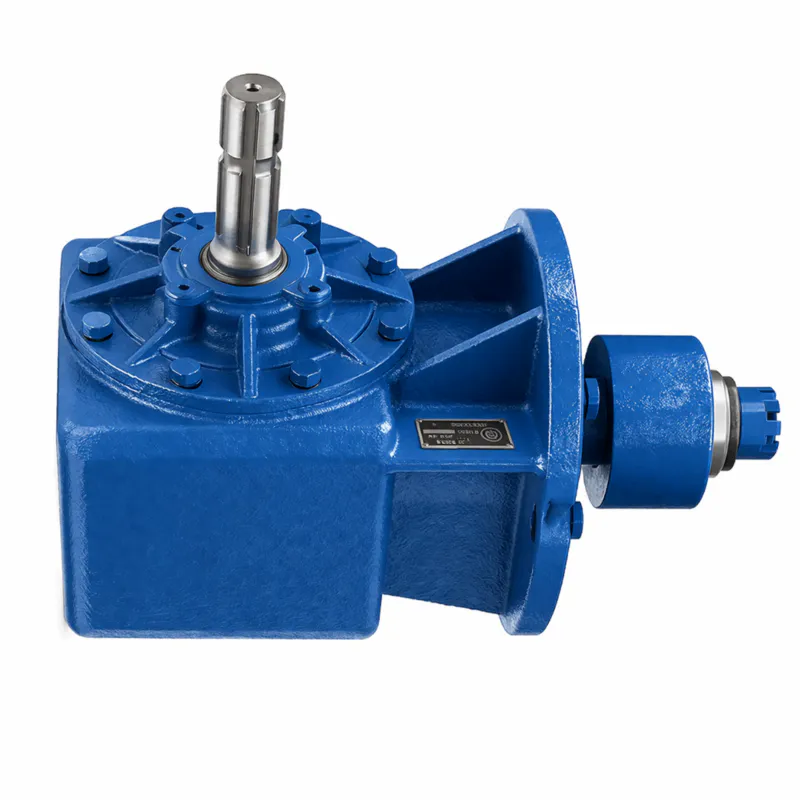
5. Application Scenarios
The EP-RC71 rotary cutter gearbox is a genuinely versatile unit, deployed across a wider range of settings than the agricultural market alone. The following scenarios represent the primary environments where this model is in active use, with particular attention to the conditions found across South American and North American operating theatres.
Pasture Clearing & Maintenance – Brazil & Argentina
Across the vast cattle ranches of Brazil’s Mato Grosso do Sul, Minas Gerais, and the Argentine Pampas, rotary cutters equipped with the EP-RC71 are used to knock back invasive shrubs, manage pasture height for Brachiaria and Tifton grass species, and clear fence line corridors. The gearbox’s high torque ceiling handles the mixed-density vegetation typical of semi-improved pasture — alternating between fine grass stems and woody regrowth from Cerrado species — without protective shutdowns or overloading events.
Roadside Vegetation Management
Municipal and state highway departments across Brazil, the United States, and southern Europe use tractor-mounted rotary cutters to maintain sight-line clearance, manage drainage channel vegetation, and control invasive species along roadsides and embankments. These applications demand equipment that can sustain continuous duty cycles in alternating light and heavy vegetation, manage blade strikes on embedded rocks and guardrail bases, and operate reliably without constant workshop attention. The EP-RC71’s robust housing and high-grade bearings are well suited to this pattern of use.
Forestry Edge Management & Land Clearing
Secondary forest edges and reforestation preparation sites — common in Brazil’s Atlantic Forest restoration zones and in eucalyptus plantation management corridors in Espírito Santo and Bahia — present the most mechanically demanding conditions for a rotary brush cutter gearbox. Young woody regrowth up to 80 mm diameter, tangled vine material, and uneven ground surfaces create high-frequency blade strike events that stress the gearbox drivetrain far beyond steady-state cutting loads. The EP-RC71’s torque headroom and impact-rated bevel gears are specifically appropriate for this category of work.
Sports Turf & Large-Area Landscaping
Commercial landscaping contractors managing large format sites — corporate campuses, regional parks, and sports complex surrounds — use batwing mower gearbox configurations and single-deck rotary cutters to cover large areas efficiently. In these lower-impact applications, the EP-RC71’s five ratio options allow operators to run at lower blade speeds appropriate for fine turf finishing, while retaining access to higher ratio settings when the terrain shifts from maintained lawn to rough grass or shrubby areas at site boundaries.
Sugarcane Pre-Harvest Trash Management
In mechanised sugarcane harvest systems — particularly those operating the green-cane harvesting protocols adopted across São Paulo, Goiás, and Minas Gerais states — rotary cutters are used to manage trash mulch layers and lodged cane in certain operational contexts. The EP-RC71’s high cutting power and sealed lubrication system make it suitable for use in the high-humidity, fibre-rich conditions of the sugarcane crop environment, where seal integrity and lubrication cleanliness are the primary factors determining gearbox service life.
6. How to Replace a Rotary Cutter Gearbox
A well-executed rotary cutter gearbox replacement requires the right sequence, appropriate tools, and attention to a few details that are easy to overlook in a busy workshop environment. The procedure below covers the standard replacement of an Omni-pattern gearbox with the EP-RC71 and is intended for trained agricultural mechanics or workshop engineers with experience in PTO-driven implement servicing.
Step 1 — Disconnect the PTO Shaft. With the tractor engine off and the PTO fully disengaged, disconnect the PTO shaft from the gearbox input flange. Slide the PTO shaft forward onto the tractor PTO stub and secure it to prevent it from falling when the gearbox is removed.
Step 2 — Remove the Blade Pan Assembly. Working from below the cutter deck, remove the blade pan retaining hardware. Keep all fasteners organised by location, as they may differ in length or grade across positions. Lower the blade pan carefully — it is heavier than it appears when combined with the blade carrier weight — and set it clear of the work area.
Step 3 — Drain the Old Gearbox Oil. Before removing the old unit, drain the gear oil into an appropriate container. This prevents oil spillage onto the cutter deck surface and surrounding soil. Dispose of used gear oil in accordance with local waste oil regulations — in Brazil, this falls under CONAMA Resolution No. 362/2005 (used lubricating oil management).
Step 4 — Unbolt and Remove the Old Gearbox. Remove the deck mounting bolts. Have an assistant support the gearbox weight as the final bolts are removed. At 37.7 kg, the EP-RC71 requires two people or a mechanical lift to remove safely without risking back injury or dropping the unit onto the cutter deck.
Step 5 — Position and Bolt the New EP-RC71. Lower the new gearbox onto the deck mounting face, align the bolt holes, and install the mounting fasteners finger-tight before torquing to the cutter manufacturer’s specification. Verify that the output shaft spline or hub profile is correctly engaged with the blade carrier before applying final torque.
Step 6 — Reinstall the Blade Pan and PTO Shaft. Refit the blade pan in the reverse order of removal. Reconnect the PTO shaft, confirming correct spline engagement and locking collar engagement. Check PTO shaft length — the shaft must not be fully compressed or fully extended at any point in the implement’s operating range of motion.
Step 7 — Fill with Gear Oil and Test. Fill the EP-RC71 to the specified level with SAE 85W-140 gear oil (1.04 L / 35 fl. oz.). Run the cutter at low PTO speed for five minutes in a clear area, then stop and check for oil seepage at all seal faces before returning to normal operating speed.
7. Regulatory & Compliance Framework
Operators deploying PTO-driven rotary cutter equipment in professional or commercial settings are subject to safety, environmental, and equipment standards that vary by region. The following is an overview of the principal regulatory frameworks applicable to rotary cutter gearbox equipment and its operation across major markets.
Brazil – NR-31 & ABNT Standards
In Brazil, the operation of agricultural machinery — including PTO-driven rotary cutters — is governed by Norma Regulamentadora No. 31 (NR-31), which establishes workplace safety requirements for rural activities and mandates equipment guarding, operator training, and maintenance record-keeping for PTO shafts and rotating implement components. ABNT NBR standards govern equipment construction quality for machinery sold commercially in Brazil. Disposal of used gear oil from maintained gearboxes must comply with CONAMA Resolution No. 362/2005, which regulates the collection and proper disposal of used lubricating oils.
European Union – Machinery Directive 2006/42/EC
Within the EU, rotary cutter equipment and its mechanical sub-components must conform to the essential health and safety requirements of the Machinery Directive 2006/42/EC before CE marking can be applied. Relevant harmonised standards include EN ISO 4254-1 (general safety requirements for agricultural machinery) and EN ISO 11684 (safety signs and hazard pictograms for agricultural machinery). PTO shaft guarding requirements are addressed specifically under EN 1152, which sets minimum guard dimensions and retention force requirements for the PTO shaft protective cover.
United States – OSHA 29 CFR 1928 & ASABE Standards
In the United States, PTO-driven agricultural equipment is regulated under OSHA 29 CFR Part 1928, which covers guarding of agricultural equipment in farm employment settings. The American Society of Agricultural and Biological Engineers (ASABE) publishes ASABE S318 (PTO shaft standards) and ASABE S493 (rotary cutter test protocol), which are referenced by major manufacturers and used as procurement specifications by commercial operators. A 75 hp rotary cutter gearbox of 100 hp rotary cutter gearbox installation must be sized and guarded in accordance with these standards to maintain OSHA compliance.
Argentina – SENASA & IRAM
In Argentina, agricultural equipment safety is overseen by SENASA (Servicio Nacional de Sanidad y Calidad Agroalimentaria) and equipment construction standards are published by IRAM (Instituto Argentino de Normalización y Certificación). Operators in Argentina running commercial vegetation management services with PTO-driven rotary cutters should verify that their equipment meets IRAM standards applicable to agricultural machinery and that operators are trained in accordance with provincial rural worker safety regulations.
ISO International Standards for Gearboxes
Regardless of national market, the design and manufacturing quality of rotary cutter gearboxes is benchmarked against ISO 6336 (load capacity calculation for bevel and spur gears), ISO 23509 (bevel and hypoid gear geometry), and ISO 9001:2015 (Quality Management Systems). Products manufactured under a certified quality management system carry documented process control at every stage of production — from raw material verification through final dimensional inspection and oil-fill testing — providing buyers with traceable evidence of conformance to published specifications.
8. About Us
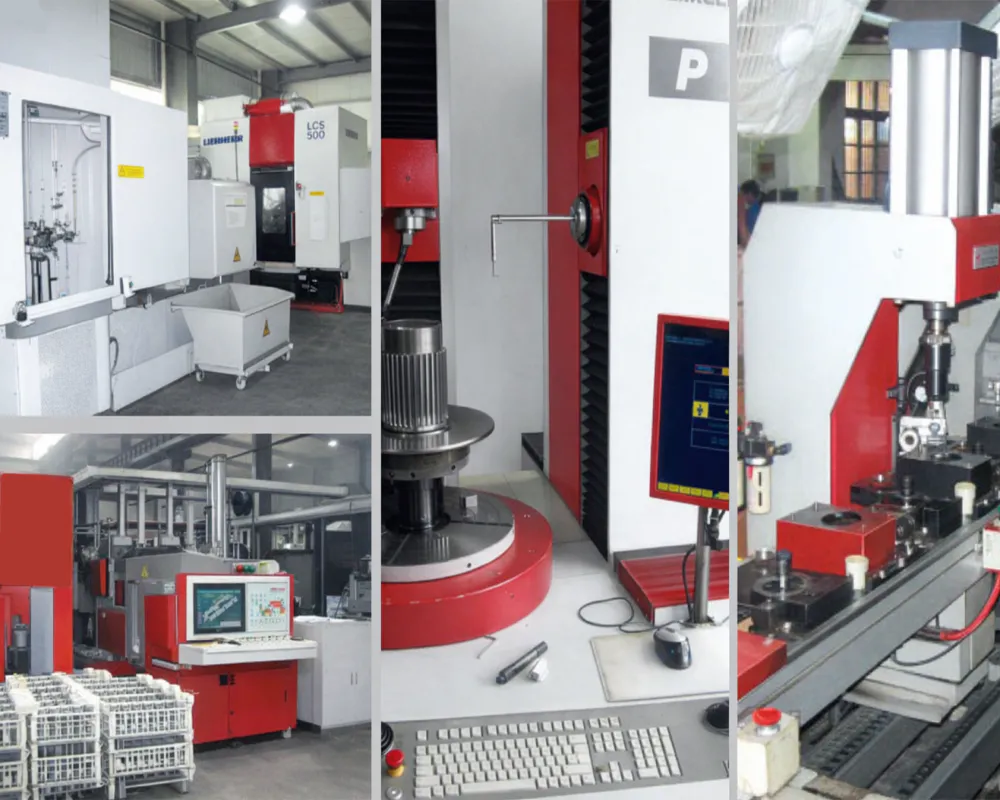
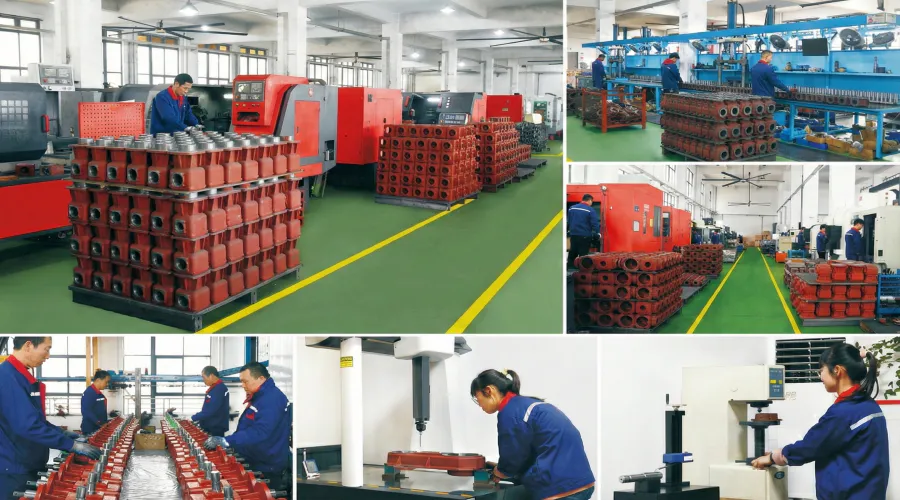
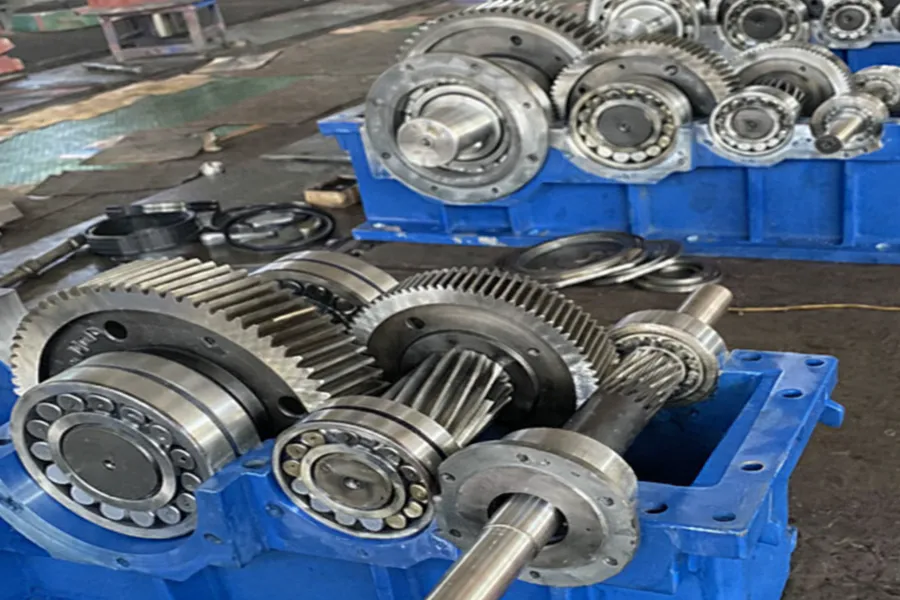
We are a specialist manufacturer of agricultural power transmission components with a product portfolio spanning the full range of rotary cutter gearbox designs, bevel gearboxes, PTO-driven implement gearboxes, and matched drivetrain accessories. Our production infrastructure centres on CNC gear-cutting and gear-grinding equipment, precision machining centres, and multi-stage quality control processes that ensure dimensional consistency and mechanical reliability across every unit we produce.
Our engineering team has extensive experience with rotary cutter gearbox design across the full power spectrum, from 40 hp rotary cutter gearbox configurations for compact utility tractor applications through to heavy-duty 100 hp rotary cutter gearbox units for commercial land-clearing operations. Our quality management system is certified to ISO 9001:2015, and all products undergo gear mesh verification, oil-seal integrity testing, and dimensional inspection prior to dispatch.
WorkShop
9. Related Products & System Compatibility
A complete rotary cutter drivetrain depends on the compatibility and quality of every component in the power flow path — from the tractor’s PTO output to the cutter blade hub. We produce and supply the full range of components needed to build or service a matched drivetrain, enabling one-stop procurement and eliminating the dimensional compatibility uncertainty that arises when sourcing from multiple suppliers. Our full-series agricultural gearbox catalogue — covering rotary cutter gearboxes, mower gearboxes, rotary tiller gearboxes, and fertilizer spreader configurations — is supported by compatible drive components for complete system supply.
PTO Shaft – Matched Drive Line for Rotary Cutters
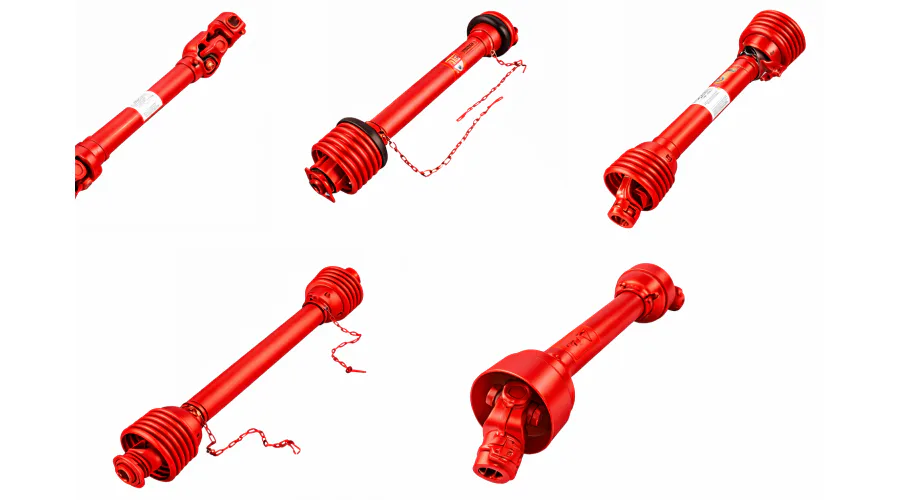
The connection between the tractor and the EP-RC71 is only as reliable as the PTO shaft bridging them. We manufacture a comprehensive range of PTO shafts engineered for compatibility with heavy-duty rotary cutter gearbox inputs, available in 6-spline and 21-spline profiles, adjustable telescoping lengths, and with overrunning clutch, friction clutch, or shear bolt safety options to match the drivetrain protection requirements of different cutter configurations and tractor power classes. Matching your EP-RC71 with a PTO shaft from the same manufacturer ensures consistent dimensional tolerance at the connection interface and simplifies spare parts procurement across the service life of the implement.
Chains & Sprockets – Agricultural Drivetrain Components
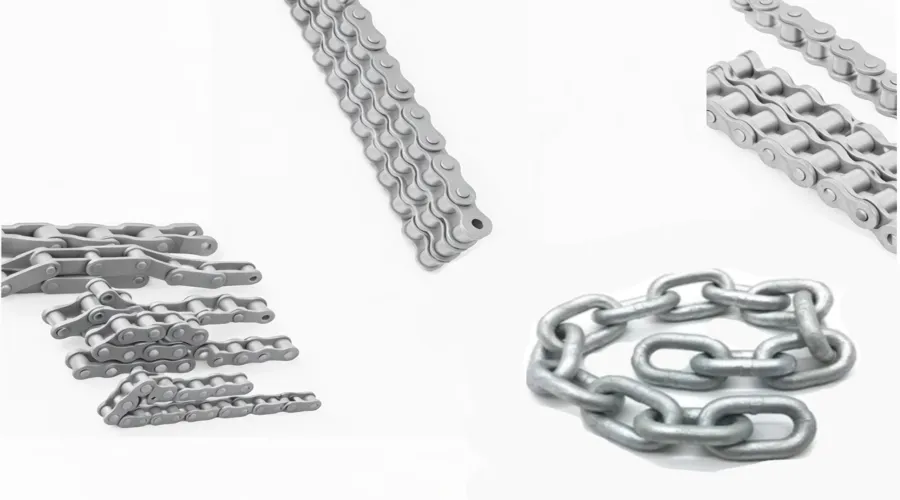
Some rotary cutter configurations incorporate roller chain secondary drives between the gearbox output and the blade carrier or auxiliary attachments. We supply agricultural roller chains and sprockets in all standard pitches, manufactured to ANSI and DIN/ISO dimensional standards for reliable engagement and extended fatigue life under the cyclic loading of field implement operation. Using matched chain and sprocket sets from the same supplier as your gearbox simplifies the selection process and provides assurance of dimensional compatibility between connected components.

Veelgestelde vragen
Q1. What is a rotary cutter gearbox and how does it work in a tractor-mounted brush cutter system?
A rotary cutter gearbox is the mechanical power transmission component that converts the horizontal rotational output of the tractor’s PTO shaft into a vertical rotation that drives the cutter blade hub. Inside the housing, a pair of bevel gears mesh at 90 degrees, transmitting torque from the input shaft to the output shaft while changing the shaft angle. The gear ratio determines whether the output shaft spins faster or slower than the PTO input — in most agricultural rotary cutter applications, an increasing ratio (e.g., 1:1.21 or 1:1.93) is used to boost blade speed beyond the PTO speed for effective vegetation cutting. The gearbox also houses bearings, oil seals, and a lubrication oil bath, all of which need periodic maintenance to sustain reliable operation.
Q2. What is the gearbox ratio for a rotary cutter when running a 540 rpm PTO tractor on heavy brush in Brazil’s Cerrado region?
For heavy brush clearing on a 540 rpm PTO tractor in dense Cerrado vegetation, the 1:1.93 ratio is the most commonly used configuration in the EP-RC71. This ratio delivers a blade hub speed of approximately 1,042 rpm from a 540 rpm PTO input, which provides adequate blade tip velocity for cutting woody regrowth up to approximately 50–80 mm diameter in single passes. For lighter, grassier pasture management in the same region, operators often step down to the 1:1.46 ratio to reduce wear on blade tips and decrease the energy demand on the tractor hydraulic system. The correct ratio depends on the specific vegetation density and blade diameter of the cutter being used.
Q3. How does the EP-RC71 compare to a standard batwing mower gearbox for large-area roadside management contracts in Brazil?
A batwing mower gearbox is typically found in a centre-deck and wing-deck configuration where the centre gearbox drives the outer wing decks via secondary gearboxes or chain drives. The EP-RC71 is a single-deck unit that serves as either the primary deck gearbox or a wing deck gearbox in a batwing configuration, depending on the machine’s design. For large-area roadside management contracts, where the batwing configuration is common because it maximises single-pass cut width, the EP-RC71’s ratio range and torque capacity make it suitable as a wing gearbox replacement on heavy-duty batwing mowers. Verify the ratio used on the original wing deck gearbox before ordering to ensure the replacement matches the original blade speed target.
Q4. What are the typical signs that a rotary cutter gearbox replacement is needed on a machine operating in the Mato Grosso do Sul cattle region?
The most reliable early warning signs of gearbox deterioration in heavy-use rotary cutter operations include: audible gear whine or bearing rumble that increases with PTO speed and load; oil seepage at the output shaft seal, particularly after the first season of operation; visible play or wobble at the blade carrier hub when the blade assembly is loaded laterally; and oil that turns dark grey or black within the first 50 hours after an oil change (indicating metallic particle contamination from gear or bearing wear). In a high-duty-cycle operation in Mato Grosso do Sul, where cutters may run 8–12 hours per day during peak pasture management periods, monitoring these indicators at each weekly service interval is a practical approach to preventing in-field failure during a critical maintenance window.
Q5. Which rotary cutter gearbox sizes are available and how do I match the right size to my 75 hp tractor for pasture management in southern Brazil?
For a 75 hp rotary cutter gearbox application on a pasture management programme in Rio Grande do Sul or Santa Catarina, the EP-RC71 in the 1:1.21 or 1:1.46 ratio configuration is generally the appropriate match — it sits within the rated torque range for standard pasture-density vegetation at typical PTO speeds, and its torque capacity headroom provides meaningful protection against peak loads from concealed rocks or hardwood stumps that are common in the improved pasture landscapes of southern Brazil. If your operation regularly encounters heavier secondary brush or woody regrowth, the 1:1.93 ratio configuration of the same unit provides higher blade speed for more aggressive cutting performance without changing the gearbox hardware.
Redacteur: PXY