Beschrijving
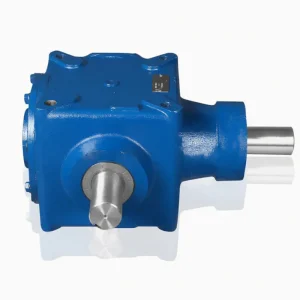
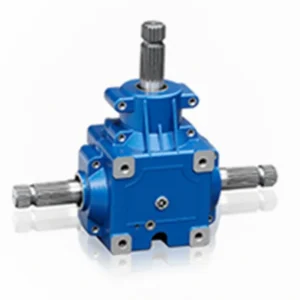
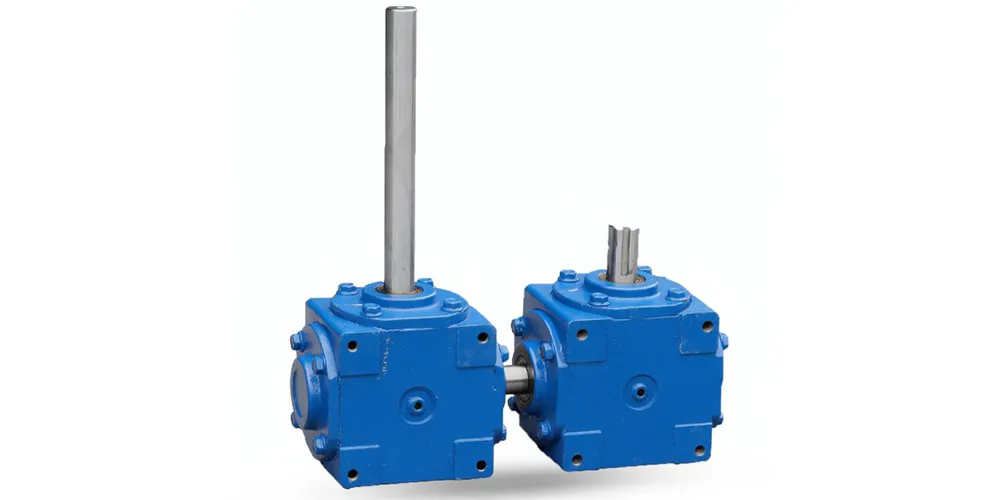
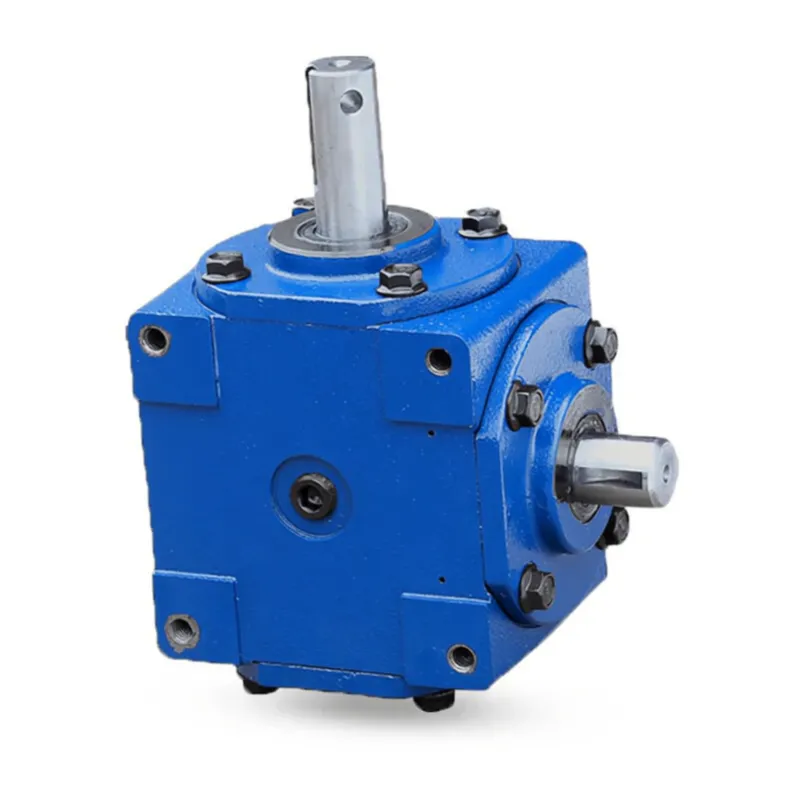
EP-1003 Grain Storage Gearbox for Agricultural Grain Storage
Robust Drive Solution for Conveyors, Elevators and Augers in Brazilian Grain Handling Operations
1. Technical Specifications — EP-1003 Grain Storage Gearbox
The table below summarises the mechanical, metallurgical and performance parameters of the EP-1003 grain storage gearbox as supplied for agricultural grain storage applications. Custom output ratios, shaft extensions and flange patterns are available on request.
| Parameter | Specificatie |
|---|---|
| Productnaam | Grain Storage Gearbox |
| Model | EP-1003 |
| Toepassing | Agricultural grain storage, conveyors, elevators, augers |
| Huisvestingsmateriaal | HT250 Grey Cast Iron |
| Gear Shaft Material | 20CrMnTi, case-hardened |
| As Hrdheid | HRC 58 – 62 (surface) |
| Type versnelling | Helical / Bevel combination |
| Rated Input Power | 4 – 15 kW |
| Rated Input Speed | 1450 rpm |
| Output Speed Range | 35 – 180 rpm |
| Rated Output Torque | 450 N·m |
| Versnellingsbakverhoudingen Opties | 1:8, 1:12, 1:20, 1:30, 1:40 |
| Lagertype | Tapered roller + deep groove ball |
| Afdichtingsmateriaal | FKM (Viton) dual-lip |
| Smeermiddel | SAE 90 GL-5 gear oil |
| Oliecapaciteit | approx. 1.8 L |
| Bedrijfstemperatuur | -15 °C to +80 °C |
| Geluidsniveau | ≤ 75 dB(A) at 1 m |
| Beschermingsklasse | IP65 |
| Oppervlaktebehandeling | Sandblasted + agricultural powder coating |
| Kleur | Customisable per buyer request |
| Overall Dimensions (L×W×H) | 285 mm × 240 mm × 210 mm |
| Net Weight | approx. 22 kg |
| Garantie | 12 months from commissioning |
Remark: Customisation of ratio, shaft geometry and colour is available. Please confirm your conveyor or elevator interface drawing when requesting a quote.
2. Five Key Advantages of the EP-1003 Grain Storage Gearbox
1. Sealed Against Grain Dust and Humidity
Grain handling is a dusty, humid, and chemically active environment. Soybean dust, corn fines and rice hull particles are abrasive, and moisture from ventilation cycles condenses on cooler metal surfaces. The EP-1003 grain storage gearbox uses a dual-lip shaft seal system combined with a labyrinth deflector at each output, keeping abrasive particles out of the bearing chamber and locking lubricant inside. For storage managers in Mato Grosso and Paraná who have seen cheaper grain storage gearbox equipment fail from seal contamination, this sealing architecture is the most practical durability upgrade available.
2. High-Torque Output with Smooth Running
Starting a loaded bucket elevator or a partially filled drag conveyor is the toughest moment in a storage cycle. The gear train in the EP-1003 is cut with precision helical profiles that engage progressively, delivering steady torque at start-up without the shock spike of straight-cut gears. The result is smoother belt acceleration, longer conveyor chain life, and less mechanical stress on grain kernels — a real advantage when export-grade soybean quality depends on minimising broken grain counts.
3. Maintenance Designed for Harvest Windows
Brazilian cooperatives cannot afford a gearbox that needs specialist tools every 250 hours. The EP-1003 offers externally accessible drain, fill and inspection plugs, standardised bearing dimensions available locally, and a recommended oil change interval aligned with the harvest rhythm — once between the safrinha and the main crop. This simple service logic keeps a grain storage gearbox for tractor-driven auger carts and fixed plant equipment alike running through peak receiving season without unplanned shutdowns.
4. Versatile Mounting for Multiple Grain Handling Machines
Foot-mount, flange-mount and shaft-mount configurations are available from the same base casting. That means a single grain storage gearbox model can be integrated into bucket elevator head drives, horizontal drag conveyors, rotary silo sweeps and auger discharge systems without redesigning the drive platform. For fabricators building storage plants across Goiás and Bahia, this flexibility consolidates spare-parts inventory and simplifies installation training.
5. Compliant Documentation for Brazilian and MERCOSUR Import
The EP-1003 is manufactured under an ISO 9001:2015 quality system and supplied with material certificates, heat-treatment records and a declaration of conformity that aligns with ISO 6336 (gear load capacity) and ISO 281 (bearing life). This documentation supports INMETRO review in Brazil, streamlines customs clearance across MERCOSUR, and satisfies the technical file requirements typically requested by Argentine, Uruguayan and Paraguayan cooperatives during supplier qualification.
3. How the Grain Storage Gearbox Works?
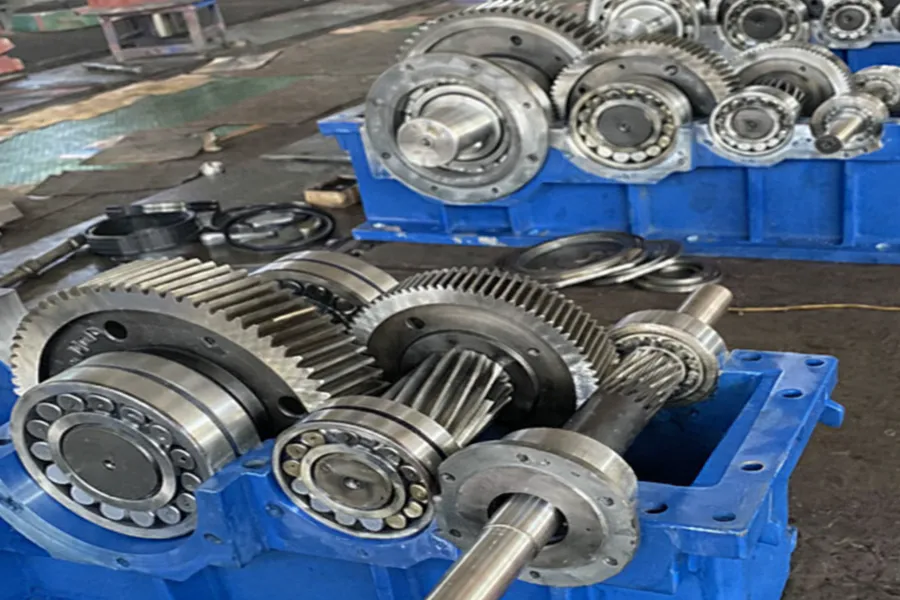
The working principle of this grain storage gearbox follows the classical power-flow sequence of an industrial agricultural drive, but each step is tuned for the realities of grain handling. Power enters the unit through a keyed input shaft coupled to an electric motor or, in some auger-cart configurations, a tractor PTO drive. The rotational energy immediately meets the first helical gear stage, where the input speed of roughly 1450 rpm is stepped down and torque is multiplied. Helical teeth engage gradually along a diagonal line of contact, which is why the EP-1003 starts loaded conveyors smoothly instead of jerking them into motion.
From the first stage, motion passes to a second gear set — either bevel or helical depending on the mounting orientation requested — that redirects the torque axis and further trims the output speed into the 35 to 180 rpm range that grain handling equipment actually uses. The output shaft then couples to the driven machine: a bucket elevator head pulley, an enclosed drag chain conveyor sprocket, a horizontal screw conveyor auger, or a silo sweep arm. Throughout this chain, tapered roller bearings absorb combined radial and thrust loads, while FKM shaft seals prevent the abrasive grain dust outside from migrating into the oil bath inside.
The continuous operation cycle of a grain storage gearbox working in a Brazilian receiving plant can run eight to fourteen hours per day during peak safra. Oil inside the housing is circulated by splash lubrication, carrying heat away from the gear mesh and flushing wear particles toward the magnetic drain plug. A breather valve equalises pressure as temperatures rise and fall, preventing seal deformation. Operators who understand this working principle can spot early warning signs — unusual noise, temperature rise, oil film changes — and act before a routine oil change turns into a full bearing replacement. That understanding is what separates a grain storage gearbox that lasts twelve years from one that struggles through three safras.
4. Materials and Construction
Material selection defines whether a grain storage gearbox endures a decade of abrasive service or fails in its third harvest. The EP-1003 housing is cast from HT250 grey iron, a material valued for its natural damping of mechanical vibration and its excellent machinability at critical bearing bores. After casting, the housing is stress-relieved, machined to tight tolerances on CNC horizontal centres, and finished with a sandblasted surface that anchors a heavy agricultural powder coating against the acidic dust of soybean and maize environments.
Internal gears are forged from 20CrMnTi alloy steel — the standard choice for industrial gearing where both surface fatigue resistance and core toughness matter. After teeth are hobbed and shaved to the required profile, the gears are gas-carburised, quenched and tempered to yield a surface hardness of HRC 58 – 62 with a tougher core around HRC 30. This combination handles contact stress at the tooth flank while tolerating the bending stress at the tooth root during the start-stop duty typical of grain handling equipment.
Around those rotating components, every supporting element is selected for field reliability. Shafts are 42CrMo quenched and tempered for uniform tensile properties. Bearings are tapered roller and deep groove ball types from established manufacturers whose dimensional standards are interchangeable worldwide — a practical advantage for Brazilian technicians who prefer to source replacement bearings locally. Seals are FKM dual-lip for resistance to elevated ambient temperatures and lubricant additives. Fasteners are Class 10.9 rolled-thread bolts chosen to resist loosening under continuous vibration. Together these choices turn a good drawing into a grain storage gearbox that earns its place in demanding agricultural service.
5. Application Scenarios
The EP-1003 grain storage gearbox is specified across a wide variety of grain handling duties. Below are the application scenarios most relevant to Brazilian cooperatives, commercial armazéns, port terminals and integrated feed plants.
Bucket Elevator Head Drives
Vertical bucket elevators lift grain from the receiving pit to the top of silos or to pre-cleaning equipment. The grain storage gearbox for harvesting machine downstream applications sits at the elevator head and provides the steady torque needed to keep the belt moving under full buckets. The EP-1003 delivers the low-speed, high-torque output that avoids belt slip during start-up and keeps grain flow uniform throughout the lift.
Horizontal Drag and Belt Conveyors
Long runs of enclosed drag chain conveyor and belt conveyor move grain between silos, dryers and loadout stations. In these systems, the grain storage gearbox must maintain steady speed under variable load, absorbing the torque spikes that occur when a conveyor starts under grain. The EP-1003 handles those shock loads without chatter, reducing wear on chain links and sprockets across the whole plant.
Screw Auger Drives for Silo Discharge
Screw augers unload grain from flat storage and silo bottoms into truck loading spouts or downstream conveyors. Here the gearbox must survive frequent start-stop cycles and sudden spikes when the auger hits a compacted column of grain. The grain storage gearbox parts inside the EP-1003 — particularly the tapered roller bearings and case-hardened gears — are chosen precisely for this duty profile.
Silo Sweep Systems
Silo sweeps clear the final residual grain from the floor of flat-bottom silos. Sweep arms move slowly and must deliver high torque to advance through settled grain. The EP-1003 provides the high reduction ratios required for this low-speed, high-torque service, and its dust-tight sealing protects the gear train from the fine particulate typical of a silo nearing empty.
Aeration and Dryer Fan Drives
Stored grain requires controlled aeration to prevent spoilage. Belt-driven centrifugal fans and axial fans rely on reduction gearboxes to match motor speed to fan design speed. The EP-1003 grain storage gearbox design handles this continuous-running service profile, with a lubrication system engineered for long intervals and a housing geometry that dissipates heat effectively.
Mobile Auger Carts and Portable Conveyors
A grain storage gearbox for tractor-driven auger carts and portable conveyors must withstand shock from transport as well as operational load. The EP-1003 is rugged enough for mobile service in Brazilian fazendas, where mobile augers shuttle grain from field bins to central storage during the soybean and corn harvest.
6. Regional Compliance and Regulatory Framework
Grain storage equipment is regulated under a patchwork of national and international standards. For Brazilian buyers, the primary references are NR-12 (Norma Regulamentadora 12 — Segurança no Trabalho em Máquinas e Equipamentos), which governs guarding and lockout requirements for rotating machinery, and NR-31 for rural labour safety. The Ministério da Agricultura (MAPA) regulates storage facilities that handle grain intended for the food and feed supply chain, while INMETRO conformity procedures apply to imported mechanical components. ABNT NBR standards further define materials and testing practices recognised within Brazil.
Beyond Brazil, the European Union applies Machinery Directive 2006/42/EC (and its successor 2023/1230) to agricultural and storage machinery, with harmonised standards such as EN 617 covering silo and conveyor safety. In the United States, OSHA 29 CFR 1910.272 governs grain handling facilities and is supported by ANSI/ASABE agricultural equipment standards. Argentina applies IRAM mechanical safety norms, while Australia and New Zealand reference AS/NZS versions of the ISO series. Canada follows CSA standards for industrial gearing.
For a grain storage gearbox manufacturer exporting worldwide, this means more than just quality control — it means delivering the documentation package that proves compliance. The EP-1003 ships with material certificates, heat-treatment records, dimensional inspection reports and a declaration of conformity referencing ISO 6336, ISO 281 and ISO 9001:2015. Brazilian importers can use this package directly for customs clearance at Santos, Paranaguá and Rio Grande, while MERCOSUR buyers receive the equivalent support for regional entry.
7. About Us
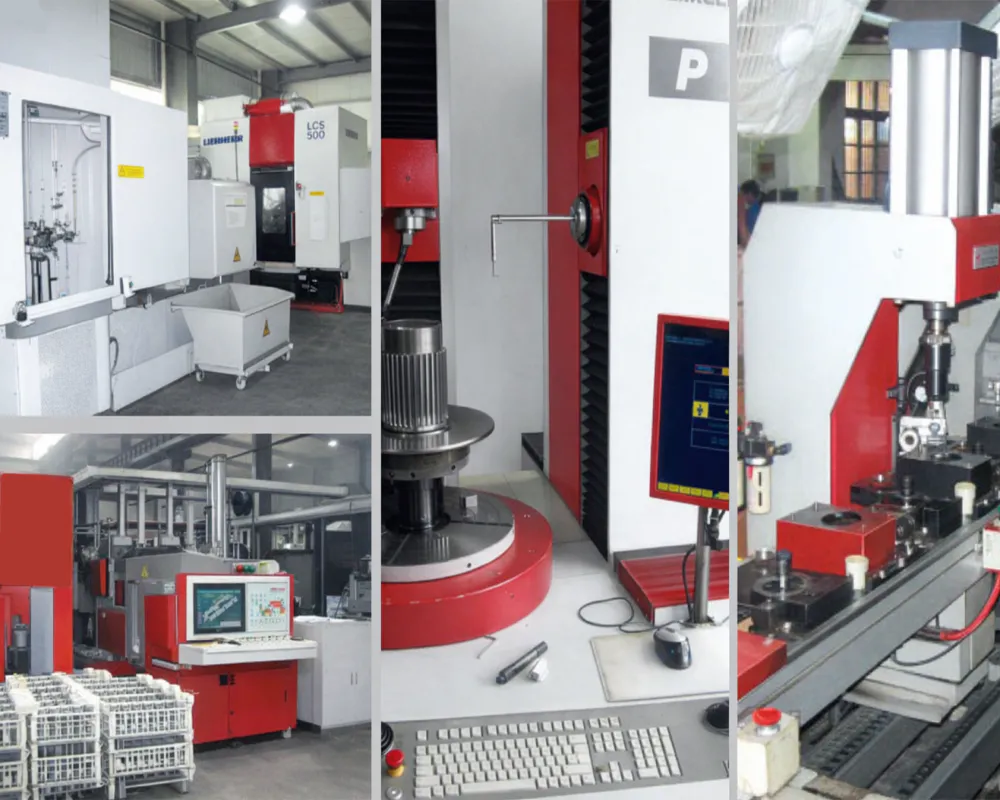
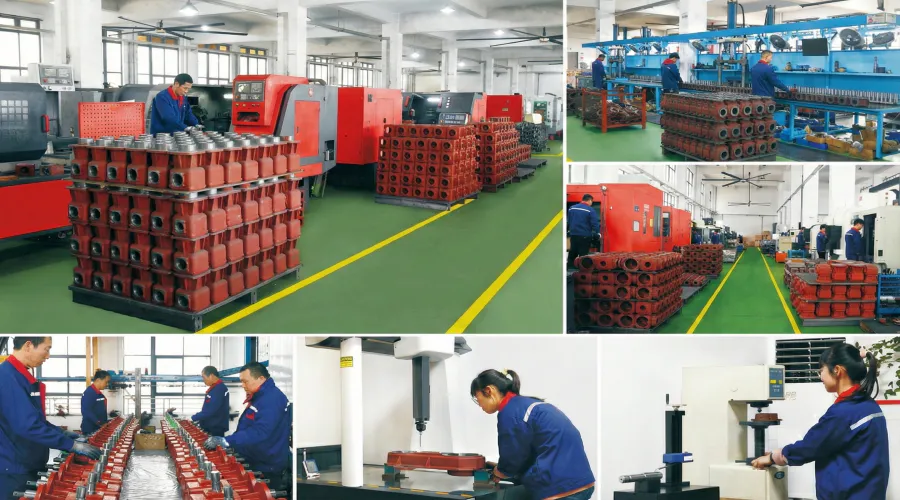
We are a dedicated manufacturer of agricultural gearboxes with decades of continuous production experience. Our facility integrates CNC gear hobbing, gear grinding, heat treatment, CNC housing machining and a dynamometer test bench under one roof. Every grain storage gearbox is built from raw forging to finished unit on the same site, which keeps engineering, production, quality control and export documentation tightly coordinated. That internal integration is what lets us respond quickly to technical questions from Brazilian cooperatives, port terminals and equipment builders.
WorkShop
8. Related Products — Full Agricultural Driveline Support
The grain storage gearbox is one element of a larger drive system. We also produce compatible PTO shafts and pair the gearbox with motors and drive components selected for agricultural and grain handling duty. This one-stop supply approach shortens procurement cycles, simplifies compatibility checks, and gives Brazilian and Latin American buyers a single engineering point of contact for the entire drive package — from motor to driven shaft.
Aftakas — Compatible with Mobile Grain Handling Equipment
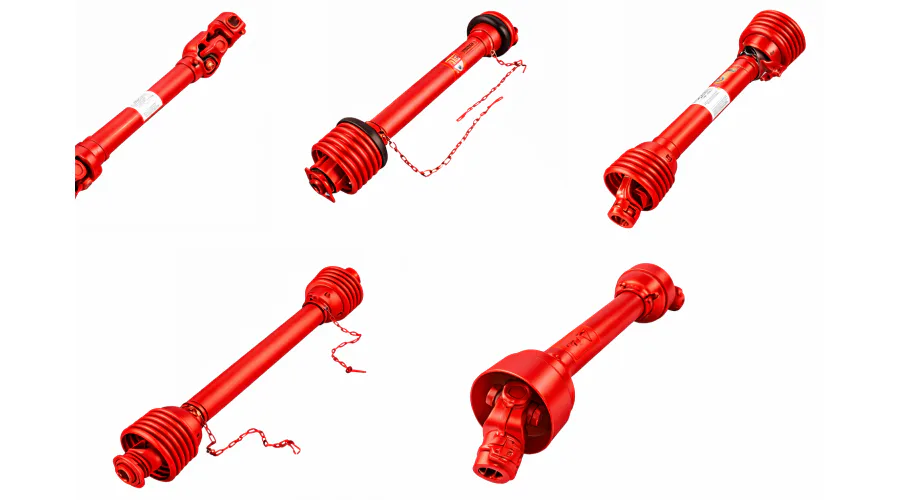
Our PTO shafts are designed to pair directly with the EP-1003 grain storage gearbox in tractor-mounted auger carts, mobile conveyors and portable grain handling systems. Telescopic tubes, cross-journal couplings and agricultural safety guards conform to ISO 5674, giving Brazilian fazendeiros a complete, code-compliant drivetrain from tractor PTO to auger shaft.
Sprockets and Agricultural Roller Chains
Alongside the grain storage gearbox, we supply induction-hardened sprockets and agricultural roller chains used on drag conveyors, bucket elevators and silo sweeps. Tooth profiles are cut to ANSI standards, and shaft bores are finish-machined to match common grain storage gearbox options across the Brazilian market, simplifying replacement parts stocking.

Veelgestelde vragen
Q1. How do I confirm the correct EP-1003 grain storage gearbox specification for my soybean receiving plant in Mato Grosso?
A1. Share your elevator or conveyor load curve, motor rating and target output speed with our technical team. We cross-check the data against the EP-1003 torque envelope and confirm the right gear ratio, mounting flange and shaft extension before your Brazilian cooperative places the order.
Q2. What installation steps should a Paraná cooperative follow when fitting a new grain storage gearbox to an existing bucket elevator drive?
A2. Align the input shaft with the motor within 0.05 mm, verify that the output coupling matches the elevator head shaft, torque mounting bolts to 90 N·m, fill with SAE 90 GL-5 gear oil to the sight glass level, and run unloaded for fifteen minutes before introducing grain.
Q3. What lubricant specification should a Bahia grain terminal use for this grain storage gearbox in tropical operating conditions?
A3. We recommend SAE 90 API GL-5 mineral gear oil for ambient temperatures up to 35 °C. In consistently hot regions such as Bahia and Maranhão, SAE 140 GL-5 or a synthetic PAO-based equivalent offers better film strength under sustained high-temperature operation typical of tropical grain handling.
Q4. Where should operators locate the inspection, fill and drain plugs when servicing this grain storage gearbox in the field?
A4. The fill plug and breather sit on the upper housing face, the oil level sight glass is mounted on the side wall at the centreline, and the drain plug is positioned at the lowest point of the housing. All three are accessible without removing the unit from its driven machine.
Q5. How does the EP-1003 grain storage gearbox design minimise damage to soybean and corn kernels during handling?
A5. Smooth helical gear engagement delivers steady torque without start-up shock, which prevents belt slip and chain jerk on driven equipment. Stable conveyor speed translates directly into less kernel cracking, preserving export-grade quality in soybean, corn, rice and wheat handling lines.
Q6. What warning signs indicate that a grain storage gearbox equipment inspection is urgently needed before safra starts?
A6. Watch for audible whining or grinding at steady speed, visible oil seepage around input or output seals, perceptible play when rocking the output shaft by hand, and oil temperature rising above 80 °C after one hour of continuous operation under normal load.
Q7. Which grain storage gearbox options are available for custom conveyor builders serving Brazilian armazéns gerais?
A7. Standard options include foot-mount, flange-mount and shaft-mount configurations, multiple gear ratios from 1:8 to 1:40, solid or hollow output shafts, torque-arm anti-rotation brackets, optional backstop clutches, and custom shaft lengths cut to the customer’s installation drawing.
Q8. How long does shipping of a grain storage gearbox to Itajaí or Rio Grande port typically take from the manufacturing plant?
A8. Standard production lead time for the EP-1003 is approximately three to four weeks, followed by roughly thirty to forty days of sea freight to Brazilian ports. For urgent breakdown scenarios during safra, air freight to São Paulo GRU is available at a premium cost.
Redacteur: PXY