Beschrijving
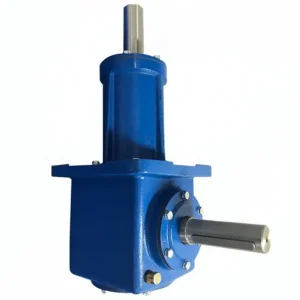
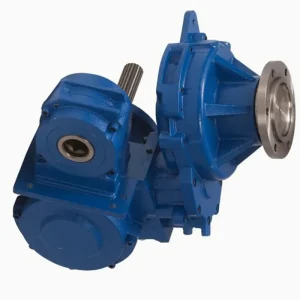
EP-QGXR/L3500 Silage Machine Gearbox for German Champion Four Disc (Type 3500)
Heavy-Duty Forage Harvester Gearbox Engineered for Brazilian Silage Operations
1. Technical Specifications — EP-QGXR/L3500 Silage Machine Gearbox
The data below summarises the mechanical, metallurgical and operational parameters of the silage machine gearbox as supplied for the German Champion Four Disc Type 3500. Custom configurations are accepted upon request.
| Parameter | Specificatie |
|---|---|
| Model | EP-QGXR/L3500 |
| Product Category | Silage Machine Gearbox / Cutting Box |
| Suitable Machine | German Champion Four Disc, Type 3500 |
| Header Series | 3 Series |
| Rotation | Left Turn / Dextrorotation |
| Gear Toothing | Gleason Helical Teeth |
| Rated Input Speed | 1000 rpm (540 rpm optional) |
| Rated Input Power | 55 – 75 kW |
| Nominal Torque | 720 N·m |
| Huisvestingsmateriaal | HT250 Cast Iron, ribbed |
| Materiaal tandwiel | 20CrMnTi, case-hardened HRC 58-62 |
| Schachtmateriaal | 42CrMo alloy steel, tempered |
| Lagertype | Tapered Roller + Deep Groove Ball |
| Afdichtingsmateriaal | FKM (Viton) double-lip |
| Smeermiddel | SAE 80W/90 GL-5 gear oil |
| Oliecapaciteit | approx. 2.4 L |
| Bedrijfstemperatuur | -20 °C to +85 °C |
| Oppervlaktebehandeling | Sandblasted + Powder Coating |
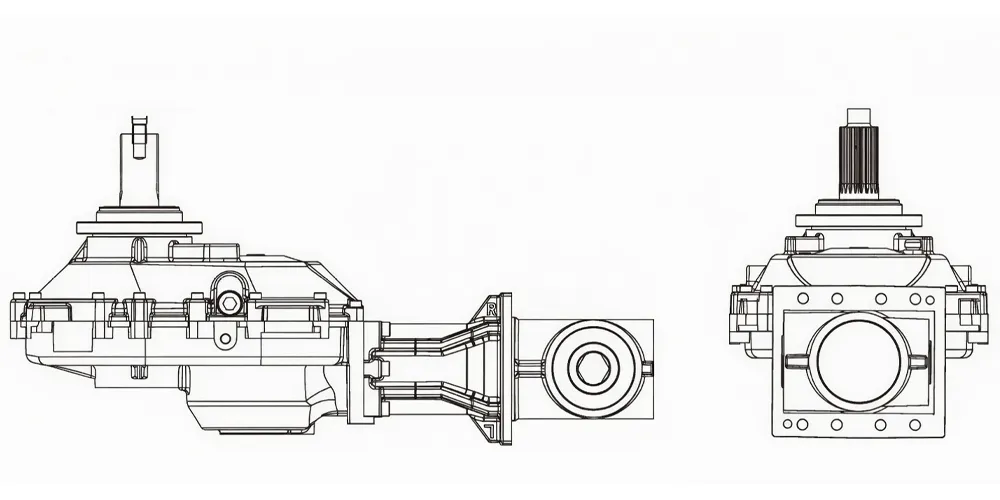
| Overall Dimensions (L×W×H) | 310 mm × 280 mm × 245 mm |
| Net Weight | approx. 28 kg |
| Mounting Flange | OEM pattern, matches Type 3500 header |
| Service Interval | 500 operating hours / seasonal |
| Garantie | 12 months from commissioning |
Remark: If special customisation is required (shaft diameter, output ratio, flange pattern), tailored silage machine gearbox parts are available on request.
2. Five Key Advantages of the EP-QGXR/L3500 Silage Machine Gearbox
1. Precision Fit for the Champion Type 3500 Architecture
The silage machine gearbox is dimensionally identical to the original equipment installed on the German Champion Four Disc Type 3500. Bolt pattern, input spline, output flange and rotation direction all match factory specification, so Brazilian workshops can swap the unit in under two hours without reworking the header frame, the cutting discs or the drive shaft guards. This drop-in compatibility is the reason the EP-QGXR/L3500 is a preferred replacement gearbox for silage harvester fleets that cannot afford extended downtime during a narrow harvest window.
2. High Torque Density for Dense Tropical Forage
Brazilian capim-elefante, BRS sorghum and high-moisture corn silage deliver shock loads that undersized units cannot absorb for long. This heavy duty forage harvester gearbox uses Gleason helical teeth paired with case-hardened 20CrMnTi gear blanks, giving it a torque margin that handles sudden stalk clusters, stones and foreign objects without tooth deflection or early pitting. The result is a silage machine gearbox that sustains continuous operation through the full April-to-September harvest block.
3. Sealed Against Dust, Moisture and Vegetative Debris
Harvest conditions in Mato Grosso, Bahia and the southern Pampa routinely combine abrasive dust with relative humidity above 80%. The gearbox is protected by FKM (Viton) double-lip shaft seals and a pressure-compensating breather that lets the housing equalise with ambient temperature swings without drawing contaminated air inward. Clean oil stays in, field debris stays out, and the corn silage harvester gearbox keeps running through dusty afternoons and dew-soaked mornings alike.
4. Serviceable in the Field Without Removing the Unit
Drain plug, fill plug and inspection plug are positioned so Brazilian farm mechanics can check and change oil without unbolting the unit from the header. The recommended 500-hour oil interval aligns neatly with typical harvest blocks, meaning the forage harvester drive gearbox can be serviced between plots rather than during an off-season teardown. This matters for cooperatives and contract harvesters who need predictable service logistics.
5. Built to International Agricultural Transmission Standards
The unit is manufactured under an ISO 9001:2015 quality system and verified against ISO 5674 agricultural PTO driveline principles and ANSI/ASABE performance guidelines. The documentation package supports INMETRO compliance for Brazilian import, CE marking for the wider MERCOSUR territory, and customs clearance in Argentina, Paraguay, Uruguay, Colombia and Chile. Buyers get a silage harvester gearbox that is traceable from foundry to field.
3. How the EP-QGXR/L3500 Silage Machine Gearbox Works
The working principle of this silage harvester gearbox is best understood as a chain of energy conversions that begins at the tractor PTO and ends at the cutting edge of each disc knife. When the operator engages the PTO, rotational energy at 540 or 1000 rpm travels down the drive shaft and enters the gearbox through a splined input stub. Inside the housing, a pair of Gleason helical bevel gears redirects the torque through the required angle and adjusts the output speed so that the four cutting discs on the Champion Type 3500 spin at the correct peripheral velocity for clean forage severance.
Helical engagement matters in this application because straight-cut teeth would clatter under the irregular impact load typical of forage harvesting. A helical mesh distributes load progressively across multiple teeth at once, damping shock and reducing audible noise. The output shaft turns on paired tapered roller bearings that absorb both the axial thrust from the helix angle and the radial load imposed by the cutter head mass. From that output, motion is carried through a short intermediate shaft into the disc hubs, where the knives make contact with standing forage.
Every revolution of the silage machine gearbox drives the cutting discs through thousands of clean shearing events per minute. Lubricant circulated by gear splash reaches every mesh and bearing, carrying away heat and flushing wear particles toward the magnetic drain plug where they can be inspected at each service interval. The design intentionally keeps the internal architecture simple, because simplicity in a silage harvester machine gearbox replacement is what keeps Brazilian farms running during the concentrated weeks when forage must be cut, chopped and ensiled before quality drops.
4. Materials and Construction
Material selection is the quiet reason a silage machine gearbox either lasts a decade in tropical fieldwork or fails within two seasons. The EP-QGXR/L3500 housing is cast from HT250 grey iron, a grade whose graphite microstructure dampens vibration and absorbs the micro-shocks transmitted from the cutting discs. The casting is then normalised and machined to controlled tolerances before being sandblasted and coated with an epoxy-based powder finish that resists the acidic juices released by ensiling corn and sorghum.
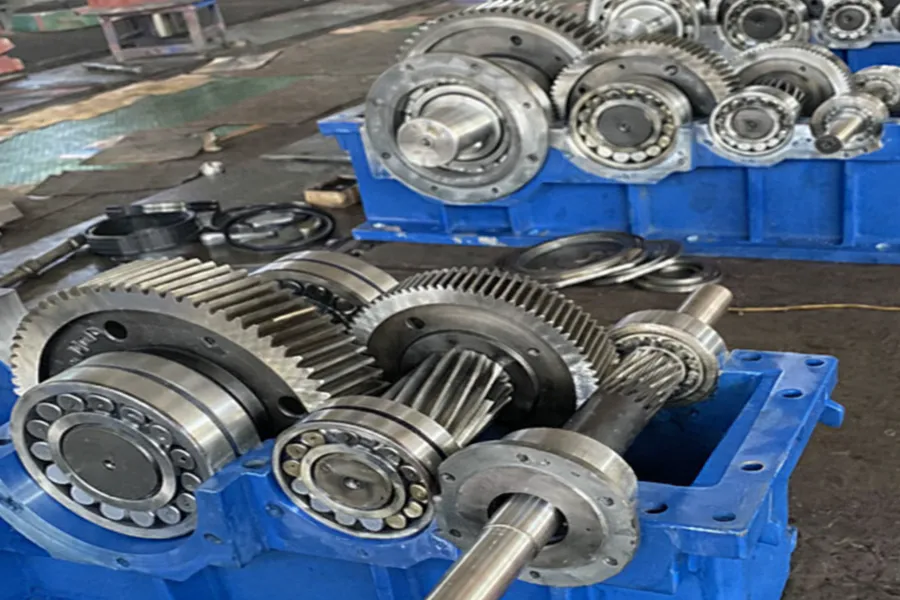
The gear set is forged from 20CrMnTi alloy steel, carburised to a surface hardness of HRC 58–62 and a tough core of roughly HRC 30–35. This combination delivers the contact fatigue resistance required at the tooth flank without sacrificing bending strength at the tooth root. Input and output shafts are machined from 42CrMo, quenched and tempered for a uniform tensile profile that tolerates the bending and torsional loads imposed by the four-disc header.
Around those rotating components, the seals, bearings and fasteners are chosen for field reality, not catalogue optimism. Shaft seals are FKM to survive contact with lubricant additives and hot ambient air; bearings are from established tapered-roller suppliers whose dimensional standards are interchangeable worldwide; fasteners are rolled-thread Class 10.9 to resist vibration loosening. The result is a silage machine gearbox built to live outdoors, at altitude, in dust, and under continuous load.
5. Application Scenarios
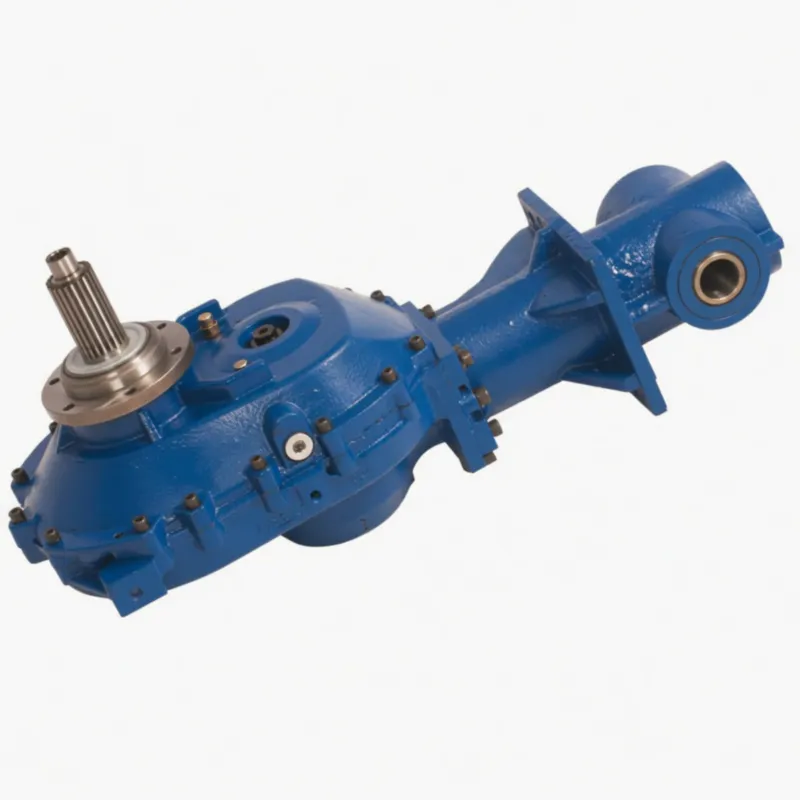
The EP-QGXR/L3500 silage machine gearbox is deployed wherever the Champion Type 3500 forage harvester works. Below are the most common production contexts where this agricultural forage harvester transmission earns its place.
Corn Silage Production on Commercial Dairy Farms
Brazilian dairy operations in Minas Gerais, Goiás and the Paraná plateau rely on high-volume corn silage to maintain milk yields through the dry season. The silage machine gearbox drives the cutting discs that reduce whole-plant corn into 15–25 mm chop lengths, which are then fermented in bunker or trench silos. This forage harvester drive gearbox maintains consistent disc speed even as plant density changes across a field.
Sorghum and Sugarcane Tops Harvesting
In Mato Grosso and the Brazilian northeast, sorghum and sugarcane residues are increasingly cut as silage feedstock for confined beef operations. Both crops present tough, fibrous stalks that demand reliable torque at the header. The maize silage harvester gearbox configuration of the EP-QGXR/L3500 handles this denser material without oil temperature spikes.
Tropical Grass Silage — Capim-Elefante and Mombaça
Pennisetum purpureum (capim-elefante) and Panicum maximum cv. Mombaça produce extraordinary biomass in tropical Brazil but are abrasive on cutting systems. The pto driven silage harvester gearbox supplies the steady torque needed to sever these tough grasses cleanly, reducing knife wear and extending header service life across multiple cuts per year.
Alfalfa and Legume Silage in Southern Brazil
In Rio Grande do Sul and parts of Santa Catarina, alfalfa and clover mixtures are harvested for premium dairy rations. These softer crops require precise chop length rather than brute force. The silage harvester transmission inside the EP-QGXR/L3500 maintains the tight speed tolerance needed for uniform forage length and minimal leaf shatter.
Contract Harvesting and Agricultural Cooperatives
Contract harvesters operating across multiple farms in a single season cannot afford breakdowns. Cooperatives in Paraná and São Paulo equip their fleets with the EP-QGXR/L3500 as a reliable silage harvester gearbox replacement, knowing a standardised unit simplifies spares inventory and training for mechanics across several service depots.
Biomass and Biogas Feedstock Production
Emerging biogas plants in Brazil and other Latin American countries use chopped grass and corn silage as anaerobic digestion feedstock. The forage harvester parts gearbox sitting at the heart of the cutting head determines the consistency of chop length, which in turn affects digester performance and methane yield.
6. Regional Compliance and Regulatory Context
Agricultural machinery gearboxes are governed by a growing set of national and international rules. For Brazilian buyers, the primary references are NR-12 (Norma Regulamentadora 12 — Segurança no Trabalho em Máquinas e Equipamentos), which defines guarding and safety requirements for power transmission components, and INMETRO conformity procedures that apply when imported machinery components are placed on the Brazilian market. The Ministério da Agricultura (MAPA) further regulates how agricultural equipment interacts with feed production for dairy and beef supply chains. The EP-QGXR/L3500 silage machine gearbox is supplied with documentation that supports compliance review under these frameworks.
Beyond Brazil, the European Union applies Machinery Directive 2006/42/EC and its successor 2023/1230 to agricultural drivelines, with CE marking proving conformance to harmonised standards such as EN ISO 4254-1 and EN ISO 5674 for PTO guards. In the United States, ANSI/ASABE S205 and ASABE S318 define torque ratings and test methods for agricultural PTO gearboxes. Argentina applies IRAM standards for mechanical safety, while Australia and New Zealand operate under AS/NZS adaptations of ISO. Countries in Southeast Asia typically reference ISO 5674 and ISO 500 directly.
For exporters and importers, the practical consequence is that a forage harvester gearbox supplier must be able to deliver both the physical unit and a traceable document package — material certificates, heat-treat records, dimensional inspection reports and a declaration of conformity referencing the applicable ISO clauses. The EP-QGXR/L3500 silage machine gearbox ships with this package as standard, simplifying customs clearance in Brazil, across MERCOSUR, and in destination markets that require pre-import verification.
7. About Us
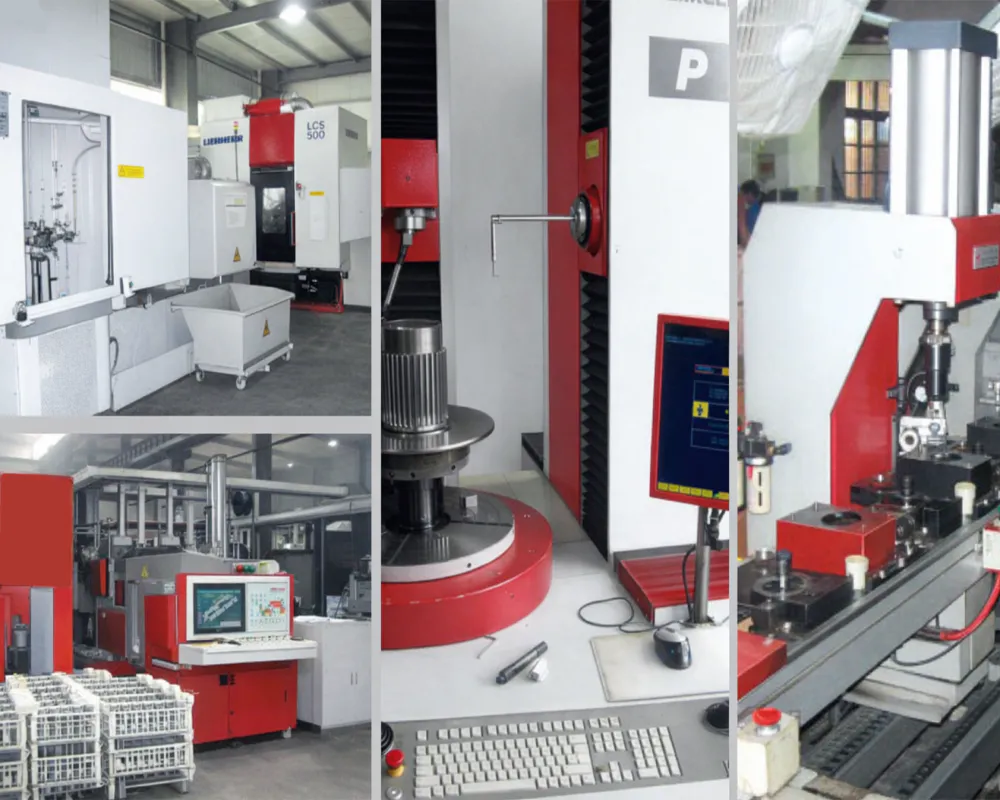
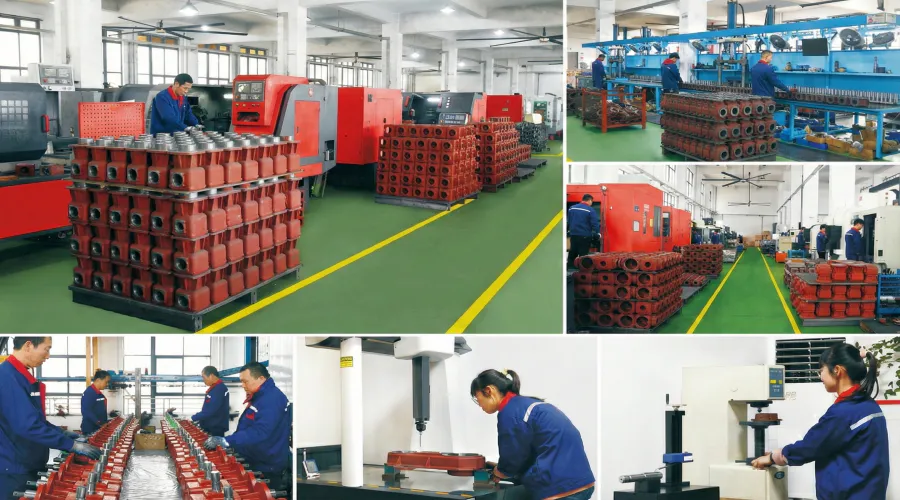
We are a dedicated manufacturer of agricultural gearboxes with decades of continuous production experience. Our workshop is equipped with CNC gear hobbing, grinding and inspection lines, an in-house heat-treatment facility, and a dynamometer bench used to run-in every silage machine gearbox before it leaves the plant. Engineering, production, quality control and export documentation sit under one roof, which shortens the distance between a buyer’s question and a clear technical answer.
We operate under ISO 9001:2015, and our quality team maintains inspection records for each production batch, including raw material traceability, heat-treat curves, dimensional verification and final test torque.
WorkShop
8. Related Products — Full Agricultural Driveline Support
The silage machine gearbox is only one element of a complete forage harvester driveline. We also manufacture compatible PTO shafts and pair the gearbox with motors and sprockets selected for agricultural duty. This one-stop supply model shortens procurement, simplifies compatibility checks, and gives Brazilian and Latin American buyers a single engineering contact for the full agricultural forage harvester transmission package.
Aftakas — Compatible with Four Disc Silage Headers
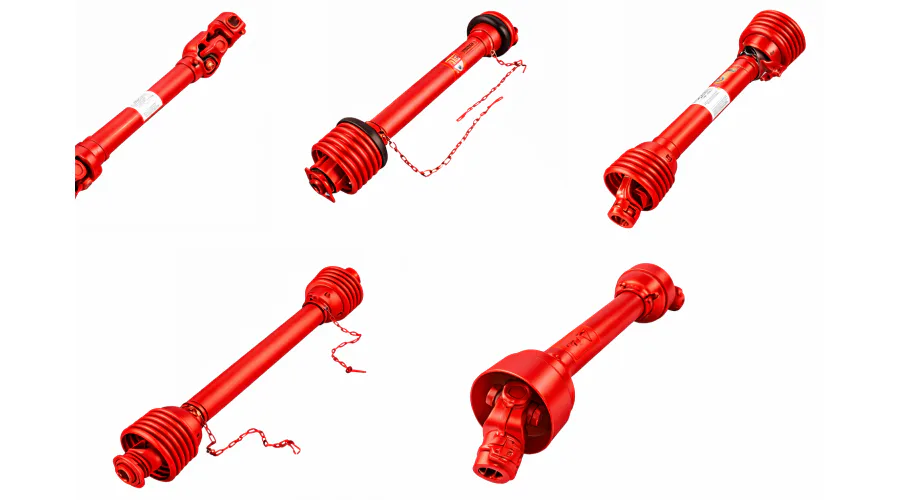
Our heavy-duty PTO shafts are engineered to match the rotation, length and torque profile of the EP-QGXR/L3500 silage machine gearbox. Telescopic tubes, universal joints, slip clutches and shear-pin safety couplings are available in standard and custom specifications, fully guarded to ISO 5674 for agricultural use.
Sprockets and Chains for Forage Harvester Feed Systems
Alongside the silage harvester gearbox, we supply hardened sprockets and agricultural roller chains that drive the feed rolls, conveyors and discharge augers of the Champion Type 3500. Teeth are induction-hardened for extended life in dusty silage conditions, and dimensions match OEM replacement profiles.
Veelgestelde vragen
Q1. How do I confirm that the EP-QGXR/L3500 silage machine gearbox is the correct replacement for my Champion Four Disc harvester in Brazil?
A1. Verify three things against your existing unit: header series (3 Series for Type 3500), rotation direction (left turn / dextrorotation), and input flange pattern. Our technical team can cross-check serial photos sent by WhatsApp and confirm compatibility before your Brazilian workshop places the order.
Q2. What lubricant specification should a Brazilian dairy farm use for this forage harvester gearbox during the wet harvest season?
A2. We recommend SAE 80W/90 API GL-5 mineral or semi-synthetic gear oil. In consistently warm regions like Mato Grosso and Bahia, SAE 85W/140 GL-5 offers additional film strength under prolonged high-temperature operation typical of tropical silage windows.
Q3. How does the Gleason helical toothing inside this silage harvester gearbox improve cutting performance compared with straight-cut gears?
A3. Helical teeth engage progressively across multiple flank lines at once, which distributes shock load, reduces noise, and tolerates the irregular torque spikes typical of dense forage. Straight-cut bevel gears would chatter and wear far faster under identical harvesting conditions.
Q4. Which rotation direction is correct when installing the silage machine gearbox on the German Champion Type 3500 header?
A4. The factory specification for the Champion Four Disc Type 3500 is left turn / dextrorotation when viewed from the input shaft end. Installing the wrong rotation will cause the cutting discs to spin in reverse, damaging knives and the forage conveying system.
Q5. Where should Brazilian farm mechanics install grease fittings and check oil on the tractor mounted forage harvester gearbox daily?
A5. The fill plug sits on the upper housing face, the drain plug at the lowest point, and the inspection plug mid-housing for visual level checks. All three are accessible without removing the unit from the Champion Type 3500 header during daily field service.
Q6. What are the typical warning signs that a corn silage harvester gearbox needs service before the next harvest window begins?
A6. Watch for audible whining at steady PTO speed, visible oil seepage around input or output seals, perceptible play when rocking the output shaft by hand, and rising oil temperature measured after one hour of continuous cutting in medium-density forage.
Q7. How can a Brazilian farm confirm it is receiving a genuine high torque forage harvester gearbox rather than a non-specified copy?
A7. Every genuine EP-QGXR/L3500 ships with a serial-number plate, a material and heat-treat certificate traceable to the production batch, and a signed inspection report. Buyers can request production photos of their specific batch before shipment to verify authenticity.
Q8. Which certifications should a heavy duty forage harvester gearbox carry for smooth import clearance into Brazil and MERCOSUR?
A8. Brazilian buyers benefit from a declaration of conformity referencing ISO 5674 and ISO 9001, material certificates for the gear and shaft alloys, and a commercial invoice with the correct NCM code for agricultural gearboxes. CE marking supports wider MERCOSUR distribution.
Q9. What maintenance schedule do agricultural engineers recommend for pto driven silage harvester gearbox units in tropical climates like Bahia?
A9. Check oil level and seal condition every ten operating hours, drain and replace lubricant every 500 hours or once per season, inspect the breather filter after every 100 hours, and perform a full bearing and shaft inspection at the end of each harvest cycle.
Redacteur: PXY