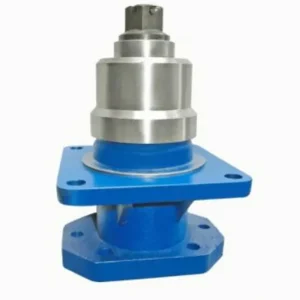
Beschrijving
EP-MDH65 Hydraulic Drive Spindle for Gearbox
SKU: EP-MDH65 | Category: Hydraulic Drive Gearbox | Agricultural Gearbox | Bevel Gearboxes
High-Torque Bearing Housing for Silage & Forage Harvesting Equipment
1. Technical Specifications
The table below presents 20 key technical parameters for the EP-MDH65 Hydraulic Drive Spindle under standard operating conditions. These are reference values — contact the engineering team for application-specific calculations or customized specifications beyond standard catalogue parameters.
| # | Parameter | Specificatie / Waarde |
|---|---|---|
| 1 | Model Number | EP-MDH65 |
| 2 | Product Type | Hydraulic Drive Spindle (Bearing Housing) |
| 3 | Applicable Equipment | Silage Machine Gearbox, Forage Harvester, Agricultural Chopper |
| 4 | Huisvestingsmateriaal | High-Strength Cast Iron HT250 |
| 5 | Gear & Shaft Material | 20CrMnTi Legeringsstaal |
| 6 | Oppervlaktebehandeling | Gas Carburizing + Quenching + CNC Fine Grinding |
| 7 | Oppervlaktehardheid van tandwielen | 58 – 62 HRC |
| 8 | Maximale ingangsnelheid | 1,500 RPM |
| 9 | Maximum Output Torque | 650 N·m |
| 10 | Transmissie-efficiëntie | ≥ 95% |
| 11 | Noise Level (Full Load) | ≤ 72 dB(A) |
| 12 | Design Service Life (Main Components) | ≥ 20,000 hours |
| 13 | Lagertype | Tapered Roller Bearing (ISO 355) |
| 14 | Smeertype | Splash Lubrication — ISO VG 220 Gear Oil |
| 15 | Afsluitingsclassificatie | IP65 |
| 16 | Bedrijfstemperatuurbereik | -20°C to +80°C |
| 17 | Ingaande as diameter | Ø 40 mm |
| 18 | Asdiameter | Ø 55 mm |
| 19 | Mounting Flange Standard | ISO 9409-1 |
| 20 | Overall Dimensions (L × W × H) | 285 × 210 × 175 mm |
* Values are reference figures under standard operating conditions. Custom parameters are available on request.
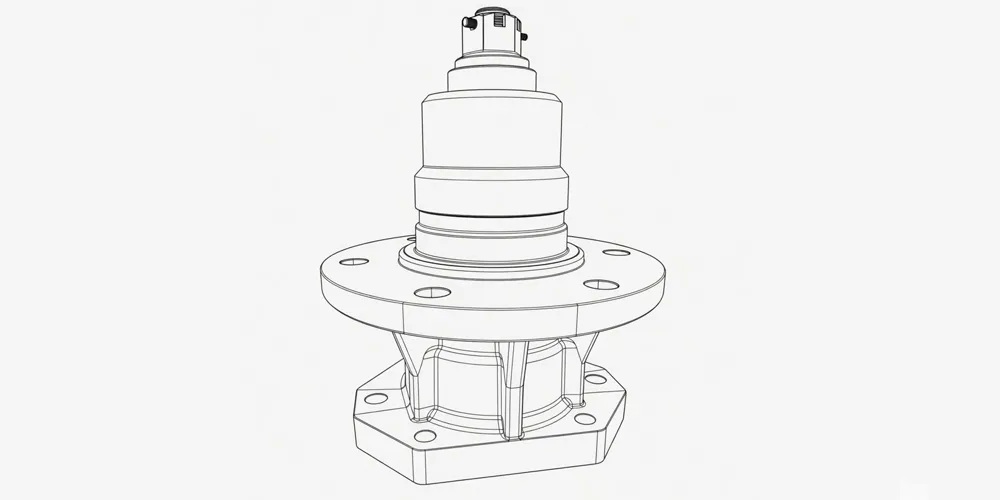
2. Five Key Advantages of the EP-MDH65
Selecting the right hydraulic drive spindle for gearbox integration requires looking beyond catalogue specifications. The EP-MDH65 distinguishes itself in the following five areas that matter most for operational performance and long-term cost efficiency.
1. High Output Torque Rated at 650 N·m
The EP-MDH65 delivers a sustained maximum output torque of 650 N·m — sufficient for the continuous, high-resistance cutting loads encountered in corn silage, sorghum, and grass harvesting operations. Unlike spindles that are rated at peak torque only achievable for short bursts, this component is designed to maintain torque delivery throughout extended shifts without thermal degradation or bearing overload. For high-throughput commercial silage operations where stoppages cost money, consistent torque output from the hydraulic drive gearbox is a non-negotiable baseline requirement, and the EP-MDH65 meets it.
2. Service Life of 20,000+ Hours on Primary Components
Under correct model selection and standard operating and maintenance conditions, the main structural components of the EP-MDH65 — housing, gear shaft, bearings — are rated for a service life of no less than 20,000 hours. This benchmark substantially exceeds what most comparable components in the market offer and translates directly to a reduced total cost of ownership over the equipment’s working life. Consumable items including oil seals, lubricant, and bearings are replaceable at standard service intervals, keeping the unit in service between major rebuilds. For Brazilian farm operators running equipment through the harvest season seven days a week, this longevity matters.
3. Low Noise Operation at ≤ 72 dB(A)
Gear noise is fundamentally a product of gear tooth geometry accuracy and assembly quality. The EP-MDH65 achieves noise levels at or below 72 dB(A) at full load through precision CNC gear grinding and strict manufacturing quality control, keeping each unit within specified gear geometry tolerances before dispatch. Beyond operator comfort, low vibration and noise in a hydraulic drive gearbox are engineering indicators of reduced dynamic load — which in practical terms means less stress on connecting shafts, mounting brackets, and adjacent driveline components. Equipment with quieter gearboxes tends to have fewer cascade failures originating from vibration-induced fatigue.
4. Unlimited Mounting Position — High Modular Flexibility
Many gearbox components require specific mounting orientations to ensure oil coverage of gears and bearings through splash lubrication. The EP-MDH65 is designed with a sealed bearing arrangement and lubrication geometry that supports operation in any orientation — horizontal, vertical, or angled — without modifying the lubrication system or adding supplementary oil pumps. This makes it significantly easier to integrate into a diverse range of machine frames and custom implement designs. The same model can also be configured with different hydraulic motor sizes and mounting flanges, offering genuine modularity within the hydraulic drive gearbox product family without the need to carry multiple housing variants.
5. Custom Manufacturing to Drawing or Sample — Full OEM Support
For machinery manufacturers and equipment rebuilders whose requirements fall outside standard dimensions, the EP-MDH65 platform supports full custom manufacturing based on client engineering drawings or physical sample components. This covers modified shaft bore diameters, altered flange bolt circles, non-standard keyway configurations, and special surface treatments such as nickel plating or specialized paint systems for corrosive environments. The engineering team has experience handling non-standard orders for markets across South America, Southeast Asia, and Europe, making this a practical one-stop solution for OEM procurement of hydraulic drive gearbox parts with custom specifications.
3. How Does a Hydraulic Drive Gearbox Work?
Understanding the operating principle of a hydraulic drive gearbox begins with the hydraulic circuit upstream of the spindle. In a typical agricultural machine configuration, a hydraulic pump — driven by the tractor’s PTO or an engine-mounted auxiliary drive — generates pressurized fluid flow at working pressures typically ranging from 150 to 350 bar. This pressurized flow is directed through a control valve block to a hydraulic motor, where fluid pressure energy is converted back into rotational mechanical energy at the motor’s output shaft.
De Hydraulic Drive Spindle — the bearing housing assembly — forms the physical junction between the hydraulic motor output shaft and the gearbox input. As hydraulic pressure drives motor rotation, torque is transmitted through the spindle shaft into the gearbox housing. Internally, gear sets (bevel, helical, or worm, depending on gearbox design) multiply or redirect this input torque to the output shaft, which drives the cutting drum, auger, or other working implement at the required speed and torque ratio.
Within the EP-MDH65 specifically, a pair of tapered roller bearings in the housing manage the combined radial loads — from rotor imbalance and cutting reaction forces — and the axial thrust loads generated during steady-state cutting. The splash lubrication system ensures continuous oil film distribution across bearing races and gear contacts without requiring an external pump or pressurized lubrication circuit. This self-contained design reduces system complexity, maintenance points, and the risk of lubrication failure during field operation.
Speed control in a hydraulic gear drives system is achieved by varying hydraulic flow rate through the control valve, which adjusts motor RPM — and therefore gearbox input speed — without mechanical gear changes or operator intervention. This stepless speed control is a core practical advantage over mechanical PTO-driven systems, particularly for operators working through varying crop density conditions in Brazil’s soybean, corn, and sugarcane fields where crop density can change significantly across a single field pass.
4. Material Composition & Build Quality
Material selection in the EP-MDH65 reflects a clear engineering priority: maximize strength and wear resistance per unit of housing volume, while maintaining dimensional stability across the full operating temperature range. The outer housing is cast from HT250 high-strength grey cast iron — a material chosen specifically for gearbox applications because of its high compressive strength, superior vibration damping characteristics, and proven machinability for precision bore and flange surfaces. HT250’s dense pearlitic matrix resists the surface fatigue and micro-cracking that develops in softer alloy housings under the sustained cyclical loading typical of agricultural chopper drives.
The internal gear and input shaft components are manufactured from 20CrMnTi alloy steel — a chromium-manganese-titanium case-hardening grade that is the de facto standard for heavily loaded hydraulic drive gearbox parts requiring simultaneous surface hardness and core toughness. Following rough machining to near-net shape, each gear and shaft undergoes gas carburizing at controlled atmospheric temperatures to build a carbon-enriched case depth of 0.8 to 1.2 mm. Quenching fixes the microstructure and elevates surface hardness to 58–62 HRC at the gear tooth flanks — the contact zone most susceptible to pitting fatigue failure. The ductile core (approximately 35–40 HRC) retained beneath the case provides resistance to impact loads from sudden crop density changes or foreign object contact during harvesting. Final tooth geometry is achieved by CNC profile grinding, which holds gear accuracy within ISO 6336 quality grade standards.
Oil seals throughout the assembly are manufactured from Nitrile Rubber (NBR), selected for its broad compatibility with mineral petroleum-based gear oils across the EP-MDH65’s operating temperature range. NBR seals perform reliably at the shaft surface speeds involved and resist hardening or cracking under UV exposure during field storage. Tapered roller bearings are sourced to ISO 355 dimensional standards, ensuring interchangeability with standard bearing suppliers worldwide — important for operators in remote agricultural regions of Brazil’s Mato Grosso, Goiás, or Pará states where specialist bearing inventory may be limited.
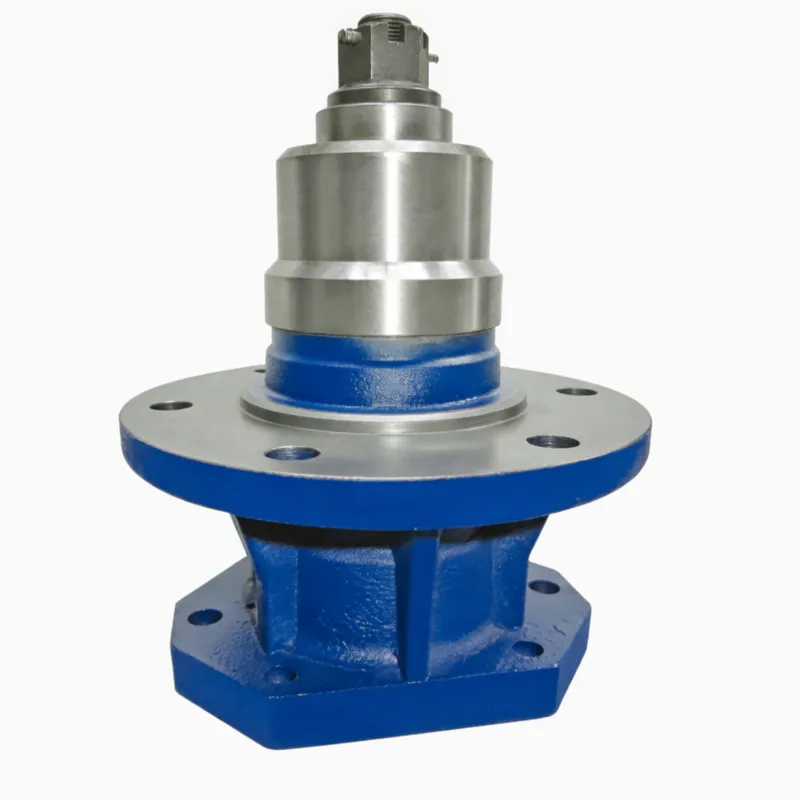
5. Application Scenarios
The EP-MDH65 is designed to serve a range of agricultural machinery environments where high-torque hydraulic drive transmission is required. Each application scenario below reflects real deployment environments where this bearing housing spindle assembly has been used successfully.
Silage Harvesting Machines
The core application for the EP-MDH65 is within self-propelled and tractor-mounted forage and silage harvesters operating on corn, sorghum, and pasture grass crops. In Brazil’s Cerrado and southern agricultural belts — where silage production for dairy cattle and beef feedlots has been expanding alongside the growth of intensive livestock operations — the hydraulic drive gearbox is the primary power transmission path to the chopping drum assembly. Reliable spindle performance here determines whether harvest throughput targets are met across the entire season without unplanned drivetrain repairs.
Rotary Tillers & Soil Cultivation Equipment
Rotary tillers and power harrows using hydraulic drive configurations require precise speed control and high torque at moderate RPM — especially when working clay-heavy or compacted soils common in parts of Brazil’s agricultural south. The EP-MDH65’s mounting flexibility and rated torque output make it suitable for OEM manufacturers building soil cultivation equipment for South American markets where soil profiles vary significantly across production zones. The component installs cleanly into standard hydraulic motor flange configurations, reducing assembly complexity at the manufacturer level.
Agricultural Mulchers & Residue Shredders
Mulching equipment used for post-harvest residue management in soybean and corn production — and for orchard floor management in tropical fruit growing areas of Brazil’s northeast — places high intermittent shock loads on drive spindles during rotor contact with dense stubble, stones, or branches. The HT250 housing and hardened gear components of the EP-MDH65 are well-suited to absorbing these impact loads without propagating cracks into the bearing bore seats, preserving bearing alignment geometry even after seasons of demanding residue processing work. This makes it a preferred choice for contractors and farm workshops sourcing hydraulic drive gearbox replacement parts for mulching equipment.
Forage Choppers & Feed Preparation Units
Stationary and mobile forage choppers used in intensive livestock production — dairy farms, beef feedlots, and poultry compound operations — rely on hydraulic motor gearbox configurations for their processing drums and blower fans. These units run on fixed daily feed preparation schedules that cannot accommodate equipment downtime, placing a premium on component reliability. The EP-MDH65’s rated service life and low-maintenance splash lubrication system support continuous operation through daily feeding cycles without requiring the kind of frequent attention that would disrupt farm workflows.
Straw & Biomass Processing Equipment
Brazil’s expanding agricultural biomass sector — including sugarcane straw recovery, soybean straw baling, and biomass pellet production — requires drive components capable of handling tough, fibrous material processing loads over extended production runs. The EP-MDH65’s IP65-rated sealed housing performs effectively in the dusty, high-debris environments that characterize biomass processing facilities. Its robust construction supports the heavier, less predictable loading profiles of biomass shredding and densification equipment where hydraulic drive planetary gearbox configurations are increasingly common in high-power installations.
6. Global Regulatory & Legal Compliance Framework
Agricultural machinery components — including hydraulic drive gearboxes and their sub-assemblies — are governed by safety, environmental, and performance regulations across all major import markets. Buyers, importers, and OEM manufacturers should be familiar with the applicable requirements in their target markets before specifying or procuring drivetrain components.
Brazil — MAPA, ABNT & INMETRO
In Brazil, agricultural machinery and components fall under the regulatory oversight of the Ministério da Agricultura, Pecuária e Abastecimento (MAPA) and are subject to technical standards published by the Associação Brasileira de Normas Técnicas (ABNT). Key standards with relevance to hydraulic drive systems include ABNT NBR ISO 11684 (safety signs and hazard pictograms for agricultural machinery) and ABNT NBR 14990 (general safety requirements for agricultural equipment). Product documentation and technical manuals for commercial agricultural machinery sold in Brazil must be available in Portuguese. The Instituto Nacional de Metrologia, Qualidade e Tecnologia (INMETRO) may require conformity assessments for safety-critical machine sub-assemblies entering the Brazilian market through registered importers. Buyers sourcing hydraulic drive gearbox for sale from overseas suppliers should request an appropriate conformity declaration or certificate of analysis as part of the procurement documentation package.
European Union — CE Marking & Machinery Directive
Components and assemblies sold into the EU market must comply with the Machinery Directive 2006/42/EC (to be superseded by EU Machinery Regulation 2023/1230 from January 2027), which mandates risk assessment and Documentation of Incorporation for machinery sub-assemblies. ISO 4413 governs safety requirements for hydraulic fluid power systems — covering pressure ratings, hose specifications, and cleanliness standards for hydraulic circuits connected to drive spindles. CE-marked gearbox assemblies must be accompanied by a Declaration of Conformity and appropriate technical file documentation. Buyers in EU member states should verify that their supplier can provide these documents as part of product delivery.
United States — ASABE & OSHA
In the United States, the American Society of Agricultural and Biological Engineers (ASABE) publishes voluntary engineering practice standards widely adopted by equipment manufacturers, including EP496 for agricultural machinery guarding and S216.13 for PTO drive shaft safety. OSHA 29 CFR 1910.217 and related standards govern mechanical power transmission equipment used in commercial agricultural operations. Importers and resellers of hydraulic pump drive gearbox components in the US should verify alignment with applicable ASABE standards and OSHA power transmission safety requirements.
Australia & New Zealand
Agricultural equipment in Australia is regulated under the AS 4024 Safeguarding of Machinery series and associated Safe Work Australia codes of practice. In New Zealand, the Health and Safety at Work Act 2015 and related agricultural equipment standards apply. Hydraulic system components must carry pressure ratings and materials certifications compatible with AS/NZS frameworks, particularly for hydraulic pump with gearbox assemblies in commercial harvesting equipment operated by contractors working under Work Health and Safety obligations.
International ISO Standards
At the international level, ISO 4413 (hydraulic systems safety), ISO 9409-1 (mounting flanges for rotating tool holders), ISO 6336 (gear load capacity calculations), and ISO 11684 (safety signs for agricultural machinery) collectively define the design, testing, and documentation requirements for hydraulic drives and bearing housing assemblies in global trade. Products designed to these standards facilitate regulatory compliance across multiple jurisdictions and provide a consistent technical basis for buyer-supplier technical communication regardless of the target market.
7. About Our Manufacturing Capability
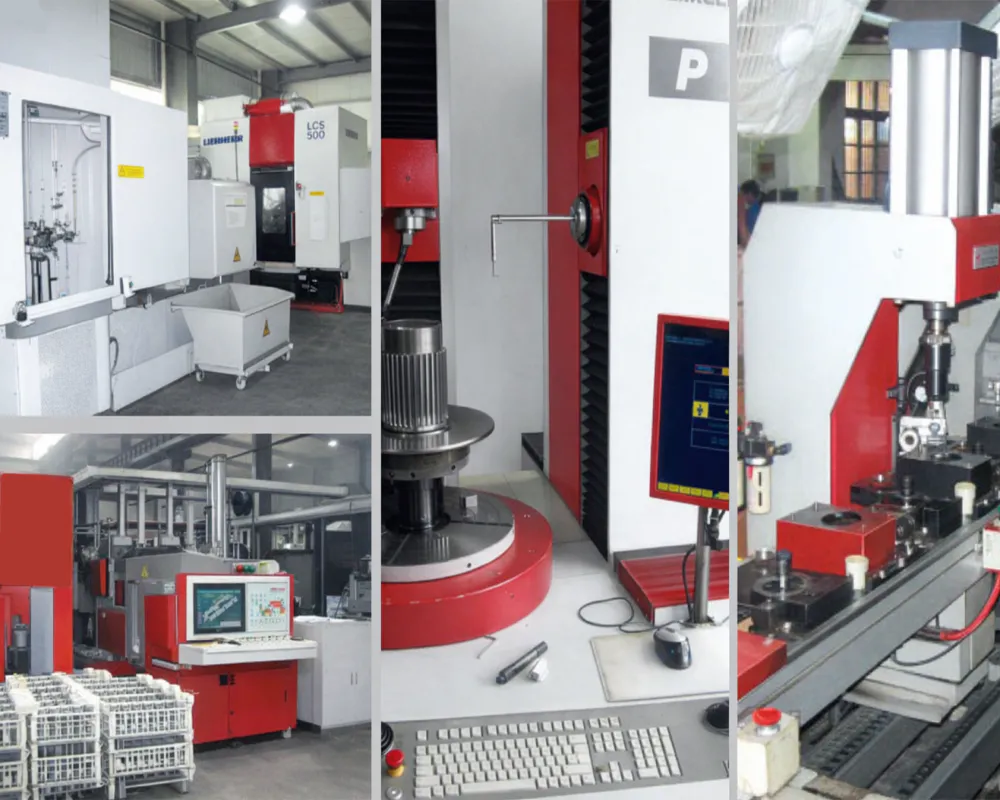
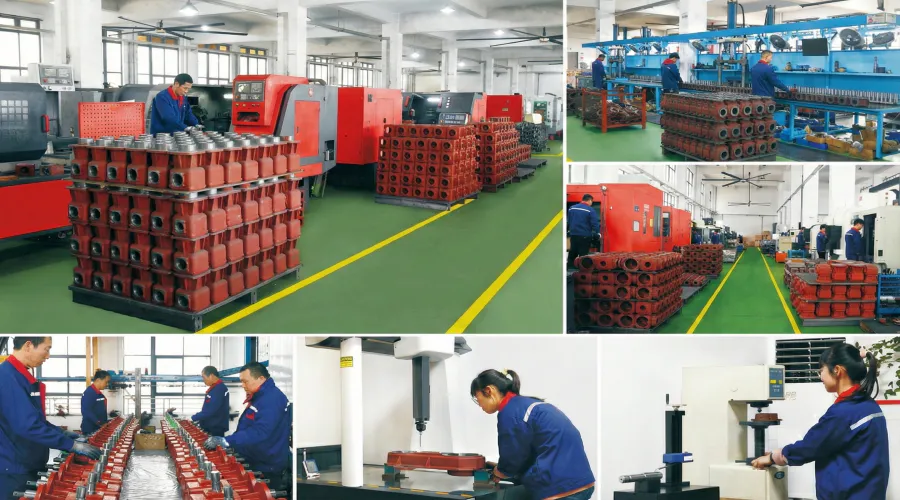
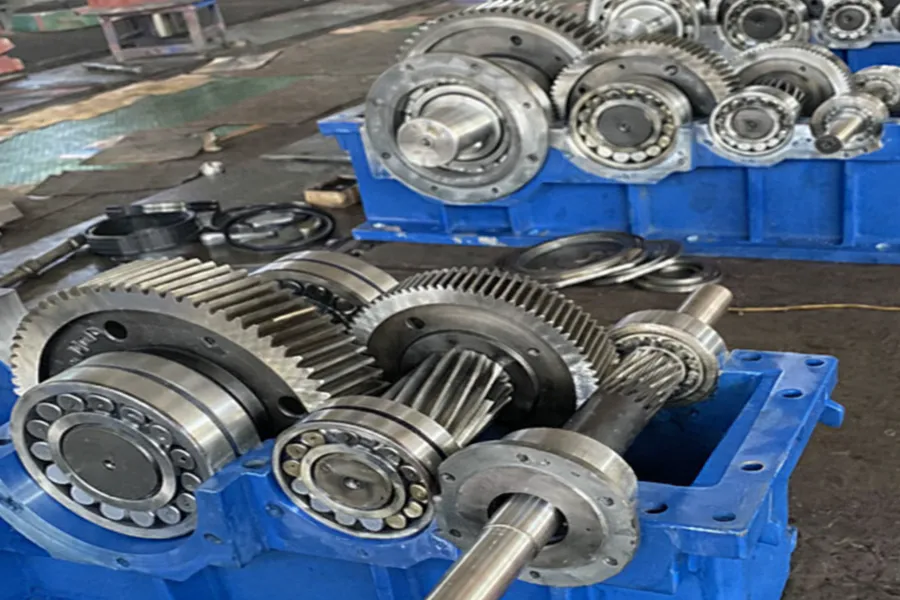
We specialize in the design and manufacture of agricultural gearbox components, with production capabilities spanning hydraulic drive gearbox spindles, bevel gearboxes, worm gearboxes, and associated power transmission accessories. Our production facilities operate CNC machining centers, gear hobbing and profile grinding machines, controlled atmosphere heat treatment furnaces, and coordinate measuring instruments that support consistent, high-precision output across both volume production runs and small-batch custom orders.
WorkShop
8. Related Products & System Compatibility
A well-specified hydraulic drive gearbox system depends on every component in the driveline working in coordination. Beyond the EP-MDH65 bearing housing spindle, we manufacture and supply a full range of complementary agricultural power transmission components — from PTO shafts and drive chains through to precision sprockets. Sourcing all driveline components from a single supplier reduces interface compatibility risks, simplifies aftersales support, and shortens lead times for replacement parts. Explore our complete agricultural gearbox accessory range at agricultural-gearbox.
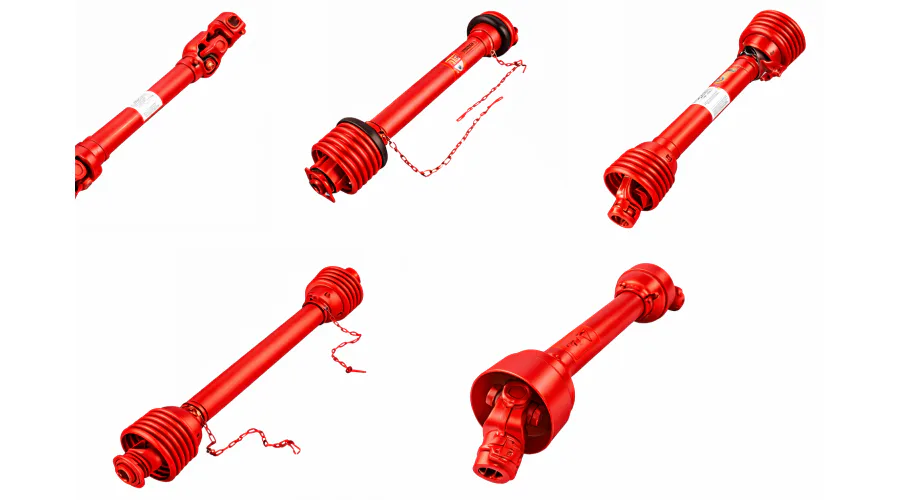
PTO Shafts for Agricultural Gearboxes
PTO shafts for agricultural use are engineered for the high-load, variable-torque operating profiles of implement drives. Telescopic designs with safety guards and precision-ground universal joint ends manage the constant shaft compression forces that are the primary cause of shaft failure in field applications. Compatible across standard 540 RPM and 1,000 RPM PTO speed ratings and available in a range of lengths and torque capacities, these shafts are fully compatible with the EP-MDH65-equipped gearboxes for complete driveline assembly. Visit our PTO shaft product range for current specifications and available profiles.
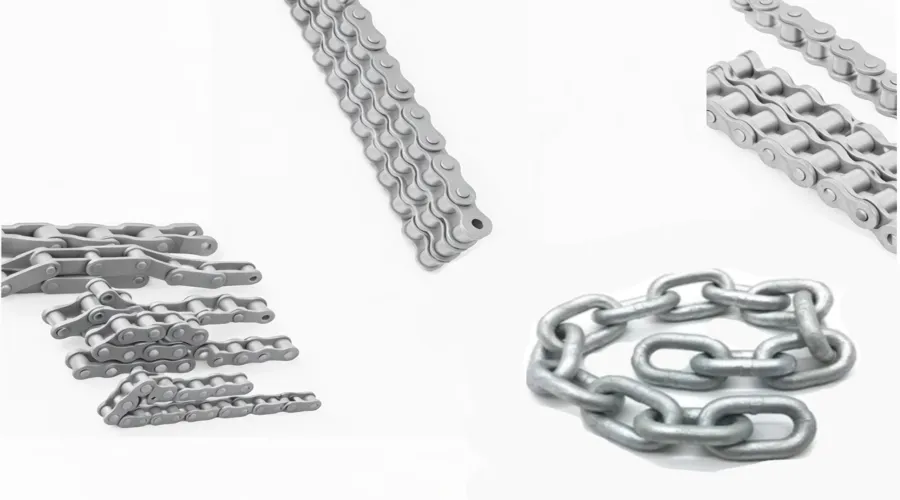
Drive Chains & Precision Sprockets
Agricultural drive chains and matched sprockets complete the secondary transmission from gearbox output shafts to implement working components. Our chain products are manufactured in standard ANSI and ISO pitch configurations from case-hardened alloy steel with corrosion-resistant finishes, rated for continuous operation in the outdoor agricultural environments common across Brazil’s major farming regions. Precision-machined sprockets in matching pitch configurations ensure smooth chain engagement and minimize the accelerated wear that occurs when chain and sprocket geometry are mismatched — a surprisingly common issue when chains and sprockets are sourced from different suppliers. Full system compatibility is assured when both are sourced together with the EP-MDH65 spindle assembly.
Veelgestelde vragen
Redacteur: PXY