
1. Technical Specifications: “River-Master” Dredge Gearbox Series
Data engineered for Centrifugal Sand & Slurry Pump Drives.
| Technische parameter | Specificatie / Waarde | Eenheid / Context |
|---|---|---|
| Ingangsvermogen | 200 – 1500 | kW (Diesel/Electric) |
| Reductieverhouding | 1.5:1 to 6.3:1 | Single/Double Stage |
| Uitgaand koppel | 5,000 – 85,000 | Nm |
| Invoersnelheid | 1200 – 2100 | RPM (Engine Std) |
| Uitvoersnelheid | 350 – 750 | RPM (Pump Impeller) |
| Dienstfactor | 2.0 – 3.5 | Zware schokbelasting |
| Huisvestingsmateriaal | Nodular Iron QT500-7 | Trillingsdemping |
| Type versnelling | Helical, Case Hardened | Grinding Class 5/6 |
| Materiaal tandwiel | 17CrNiMo6 / 20CrMnTi | Forged Alloy Steel |
| Lager Levensduur (L10) | 50,000+ | Uren |
| Druk- of stuwlager | Integrated Spherical Roller | Absorbs Pump Thrust |
| Smeersysteem | Forced Feed + Cooler | External Pump |
| Oliecapaciteit | 40 – 250 | Liters |
| Clutch Integration | Optional Hydraulic Clutch | Engage/Disengage |
| Efficiëntie | ≥ 98% | Per Stage |
| Geluidsniveau | ongeveer 85 | dB(A) op 1m |
| Paint Specification | Marine Epoxy 300µm | Salt Spray Resistant |
| Afichtingstype | Taconite / Labyrinth | Sand Exclusion |
| As Hrdheid | HB 280 – 320 | Toughened Core |
| Gewicht | 850 – 4500 | kg |
2. Powering the Pulse of Hydraulic Dredging: Torque vs. Resistance
In the demanding environments of Brazil’s hydraulic infrastructure maintenance, from the silt-heavy irrigation canals of Rio Grande do Sul to the alluvial gold mining operations in Pará, the Dredge Pump Gearbox is the critical link between power and production. A dredge pump (bomba de dragagem) operates under uniquely punishing conditions where the load is never constant. As the suction head encounters varying densities of sand, clay, or gravel, the torque requirement spikes instantaneously. A standard industrial reducer is ill-equipped for these shock loads, leading to gear tooth fracture or bearing delamination. For an landbouwfabrikant focusing on rural infrastructure, reliability means ensuring that irrigation channels remain open and floodwaters are managed without mechanical downtime.
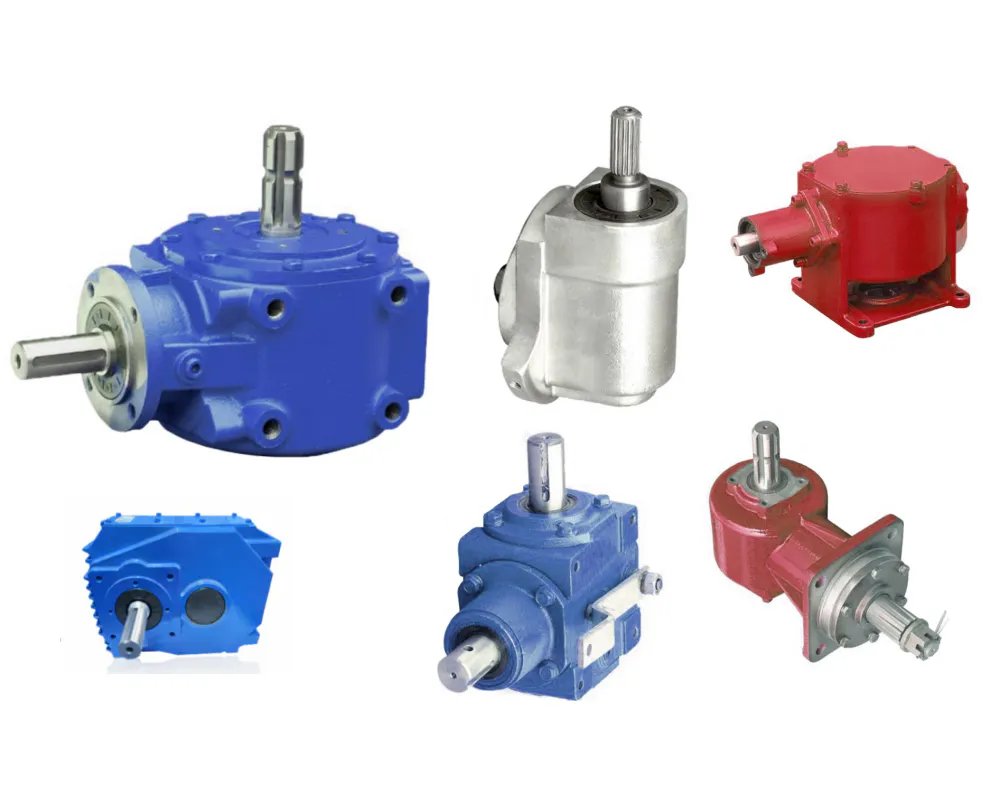
Kern Agrarisch has developed the “River-Master” series landbouw tandwielkast specifically for these amphibious applications. Unlike generic gearboxes, our units feature an oversized service factor (typically >2.0) and a reinforced housing cast from Nodular Iron (QT500-7) to absorb vibration. Crucially, given the semi-submerged or splash-zone operation typical of river dredging barges, we implement a “Marine-Spec” sealing system. This includes triple-lip seals protected by a physical slinger ring to prevent the ingress of abrasive silica sand, which is the primary cause of seal failure in the Amazon basin. Whether driving a cutter-suction head or a main booster pump, our gearboxes ensure that the torque is delivered smoothly, maximizing the solids-handling capacity of your operation.
3. The Kinetics of Slurry Transport: Speed Reduction for Impeller Efficiency
A dredge pump works on the principle of centrifugal force, but unlike water pumps, it must move a mixture that is significantly heavier and more viscous. To do this effectively, the pump impeller must rotate at a specific speed (Tip Speed) to create enough suction without causing excessive cavitation or wear. Most industrial diesel engines operate most efficiently at 1800-2100 RPM, which is far too fast for a large 12-inch or 18-inch dredge pump (typically 400-600 RPM). The Dredge Pump Gearbox acts as the precise negotiator in this powertrain. It reduces the engine speed while multiplying the torque, allowing the impeller to shear through the riverbed material.
Agrinulear’s mechanism includes a critical safety feature: the “Thrust Block.” A working dredge pump generates massive axial forces pushing back towards the driver as it sucks in water and sand. Standard electric motors or diesel flywheels cannot withstand this load. Our gearboxes integrate a heavy-duty spherical roller thrust bearing on the output shaft that isolates these forces, preventing them from traveling back into the precise gear mesh or the engine crankshaft. This integration simplifies the drivetrain design for Brazilian barge builders, eliminating the need for a separate, expensive external bearing assembly.
4. Engineered for the Tropics: Surviving the Amazon and Pantanal
Dredging in Brazil is a unique challenge. The waters of the Rio Madeira are notoriously loaded with abrasive sediments, while the Pantanal wetlands require shallow-draft equipment that can withstand high temperatures. A standard aftakasoverbrenging adapted for this use often fails due to overheating. Agrinulear landbouwfabrikant engineers have addressed this by equipping our “River-Master” units with a forced-lubrication system that includes an oversized oil cooler (water-to-oil or air-to-oil). This ensures that even when the barge deck temperature hits 50°C in the tropical sun, the gear oil remains below the critical oxidation threshold.
Furthermore, environmental compliance with IBAMA (Brazilian Institute of Environment) requires that no oil leaks into the waterway. A blown seal on a dredge pump drive is not just a mechanical failure; it is an environmental violation. We utilize a “Zero-Leak” sealing architecture that combines a mechanical face seal with a pressurized grease barrier. This positive pressure keeps the river water and sand out, while keeping the lubricating oil securely inside, ensuring that your operation remains compliant and eco-friendly.
5. The Gearbox Advantage: Efficiency vs. Belt & Hydraulic Drives
In the Brazilian dredging market, many smaller operators still rely on V-belt drives or direct hydraulic motors. While cheap initially, V-belts slip significantly when wet or under shock loads (like hitting a submerged log), leading to a 10-15% loss in production. Hydraulic drives, while versatile, suffer from inherent heat losses and require complex cooling systems. Agrinulear landbouw tandwielkast units offer a mechanical efficiency of over 98%, delivering virtually all the engine’s power to the pump. We offer drop-in compatibility for major global and local pump configurations:
- Warman™ Pump Drives: Heavy-duty flange matches for slurry pumps.
- Damen™ Dredge Spec: Replacement gearboxes for cutter suction heads.
- IHC™ Configurations: Custom ratio builds for booster stations.
- Local “Bomba de Areia” OEMs: Flexible couplings for Brazilian-made pumps.
Disclaimer: All original equipment manufacturer (OEM) names, trademarks, and model numbers (e.g., Warman, Damen, IHC) are for reference and identification purposes only. Agrinulear Nucleo Agro is an independent manufacturer and is not affiliated with, endorsed by, or sponsored by these brands.
6. [Field Engineer’s Log] Dredging Performance Report
Case 1: Brazil (Rio Grande do Sul) – Irrigation Canal
“Cleaning rice irrigation channels requires torque. We hit clay banks often. The belt drives used to burn up smoke. The Agrinulear gearbox just powers through. We’ve doubled our daily dredging distance.”
– Maintenance Chief, Sr. Roberto
Case 2: Brazil (Pará) – Alluvial Mining
“Sand is the enemy. It destroys everything. The labyrinth seals on the ‘River-Master’ are the only ones that have lasted a full season without leaking. It’s built like a tank.”
– Site Supervisor, João D.
Case 3: Brazil (Santos Port) – Maintenance
“Downtime in the port costs thousands per hour. We swapped to Agrinulear for the main booster pumps. The integrated oil cooler kept temps down during our 24/7 campaign.”
– Fleet Manager, Engineer Silva
Case 4: Colombia (Magdalena River) – Flood Control
“We needed a gearbox that could handle the shock of hitting submerged timber. The case-hardened gears in this unit have survived impacts that shattered our previous coupling.”
– Project Lead, Mateo G.
Case 5: Brazil (Mato Grosso) – Wetlands
“Operating in the Pantanal means strict environmental rules. No leaks allowed. The zero-leak guarantee of the Agrinulear unit helped us pass the IBAMA inspection.”
– Compliance Officer, Luiza M.
7. Complete Drivetrain Ecosystem for Marine & Agriculture
A dredging barge is a complex system of interconnected machinery. Beyond the main pump drive, Agrinulear Nucleo Agro supplies the essential components to keep your auxiliary systems running. For winch drives and cutter head positioning, our high-strength Chains offer superior corrosion resistance. For auxiliary power take-offs to drive hydraulic pumps or generators, our PTO-assen are the industry standard for durability. We also manufacture precision Tandwielen for conveyor loading systems. Trust Agrinulear for a complete, compatible power transmission solution.
8. Veelgestelde vragen
Q1: How do I calculate the correct service factor for a sand suction application?
A1: For sand suction, the load is relatively steady, but start-up can be heavy. We recommend a service factor of 1.5 to 1.75. However, if you are dredging gravel or areas with potential rocks (shock loads), you should increase this to 2.0 or 2.5 to protect the gear teeth from fracture.
Q2: Can your gearboxes handle the axial thrust from the pump impeller?
A2: Yes, our “River-Master” series includes an integrated thrust block with heavy-duty spherical roller bearings. This design is specifically engineered to absorb the hydraulic thrust from the pump, eliminating the need for you to install a separate external thrust bearing assembly.
Q3: Do you offer cooling systems for operation in tropical Brazilian heat?
A3: Absolutely. For operation in regions like the Amazon or Pantanal, we provide gearboxes with integrated oil coolers. You can choose between an air-blast radiator or a water-cooled heat exchanger that utilizes the raw water from the river (filtered) to cool the gear oil.
Q4: What ratio options are available for matching diesel engines to pumps?
A4: We offer a wide range of standard ratios from 1.5:1 to 6.3:1. This allows you to match a standard 1800 RPM or 2100 RPM diesel engine to the optimal impeller speed of your pump, whether it’s a slow 400 RPM gravel pump or a faster 700 RPM sand pump.
Q5: Are replacement parts available in Brazil to minimize downtime?
A5: Yes, Agrinulear Nucleo Agro maintains a strategic parts inventory in São Paulo. We stock seal kits, bearings, and gear sets for our most popular models. We understand that in dredging, time is money, and we aim for 24-48 hour dispatch for critical spares.
Q6: How does the “Marine-Spec” sealing system differ from standard industrial seals?
A6: Standard seals often fail due to abrasive sand ingress. Our system uses a “Taconite” style seal which combines a grease purgeable labyrinth with triple-lip contact seals. The grease acts as a barrier, pushing contaminants out and preventing sand from reaching the shaft surface.
Q7: Can I drive the gearbox with an electric motor instead of a diesel engine?
A7: Yes, our gearboxes come with standard SAE flywheel housings for diesel engines, but we also offer IEC or NEMA flange adapters for electric motor inputs. This is becoming popular for stationary electric dredges used in mining tailings ponds.
Q8: Do you provide a warranty suitable for the harsh dredging environment?
A8: We stand behind our “River-Master” series with a 12-month or 2000-hour warranty. We also offer an extended warranty program if you utilize our recommended synthetic lubricants and oil analysis program to monitor gearbox health.
Q9: Is it possible to integrate a hydraulic clutch for pump engagement?
A9: Yes, we offer models with integrated hydraulic multi-plate clutches. This allows the operator to engage and disengage the pump from the bridge without stopping the main diesel engine, which is essential for clearing blockages safely.
Q10: What information do you need to quote a replacement gearbox?
A10: To provide an accurate quote, we need the engine power (HP/kW) and speed (RPM), the required pump speed (RPM), the mounting orientation (horizontal/vertical), and any existing ratio details. A photo of the existing data plate is also very helpful.
Redacteur: PXY