Description
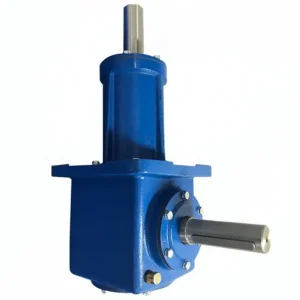
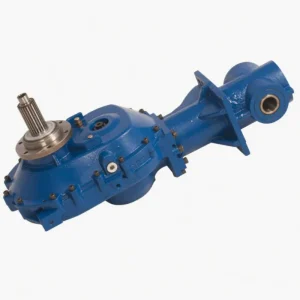
1. EP-WR500 silage machine gearbox Technical Specifications
The table below presents 20 verified technical parameters for the EP-WR500 silage machine gearbox standard configuration. Values are measured under bench-test conditions at 25°C ambient temperature with fresh 80W-90 GL-5 gear oil. Custom shaft sizes, rotation directions, and header-series interfaces are available on written request.
| Paramètre | Specification |
|---|---|
| Model Number | EP-WR500 silage machine gearbox |
| Gearbox Type | Feeding Box, Right-Angle Helical Drive |
| Host Platform | German Champion Four-Disc Harvester |
| Rotation Direction | Left Turn (standard) |
| Header Series | 3 Series |
| Toothing Type | Gleason Helical Teeth |
| Nominal Power | 80 HP (59.7 kW) |
| Maximum Power | 100 HP (74.6 kW) |
| Input Speed (Standard PTO) | 540 RPM or 1000 RPM (application dependent) |
| Gear Material | 20CrMnTi Alloy Steel, Carburized |
| Surface Hardness (Teeth) | HRC 58–62 |
| Core Hardness | HRC 33–38 |
| Matériaux de construction | Gray Cast Iron HT250 (GB/T 1348-2009) |
| Bearing Type | Tapered Roller Bearings, 30200 Series |
| Bearing L10 Life | >5,000 hours at rated load |
| Lubrication | 80W-90 GL-5 Gear Oil, Splash Feed |
| Capacité d'huile | 1.8 L |
| Operating Temperature Range | -20°C to +85°C |
| Protection Rating | IP54 (dust-protected, splash-resistant) |
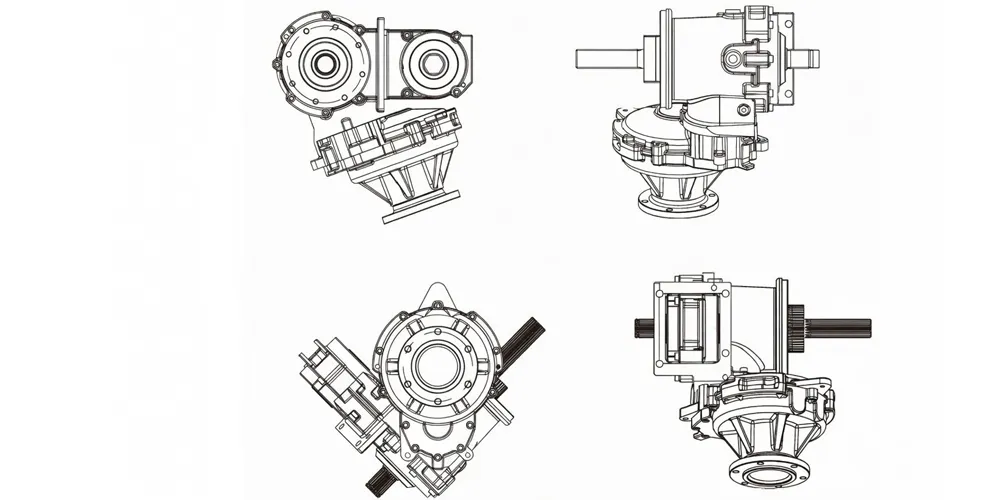
| Overall Dimensions (L × W × H) | 410 mm × 285 mm × 265 mm |
| Net Weight | 34 kg |
| Mounting Interface | 3-Series Header Bolt Pattern |
| Gear Accuracy Grade | AGMA Class 10 / DIN Grade 6 |
| Noise Level (Rated Speed) | ≤ 73 dB(A) |
| Surface Roughness (Tooth Flank) | Ra ≤ 0.8 μm |
All values represent the standard production specification. OEM integration drawings, 3D STEP models, and custom configuration quotes are available upon request.
2. Essential Specifications – EP-WR500 silage machine gearbox at a Glance
● Configuration: Feeding-box gearbox, left-hand rotation, 3-series header interface
● Tooth Geometry: Gleason Helical Teeth for smooth, high-load power transmission
● Power Rating: 80 HP nominal (59.7 kW) / 100 HP maximum (74.6 kW)
● Host Platform: German Champion four-disc silage harvesters and compatible OEM machines
● Custom Options: Alternate rotation directions, header series interfaces, and ratio adjustments available
3. What Is a Silage Machine Gearbox and How Does the EP-WR500 Serve Four-Disc Harvesters?
Silage production is one of the most time-critical and mechanically demanding operations in modern livestock farming. A silage machine gearbox sits inside the harvester header, taking rotational power from the tractor PTO and distributing it across multiple cutting discs or drums at the precise speed and torque the crop material requires. The EP-WR500 silage machine gearbox is specifically configured as a feeding-box gearbox for the German Champion four-disc harvester platform, a widely used forage harvester design found across European, South American, and Asian dairy and beef operations. Its role is to accept PTO input, redirect it through Gleason helical gear meshes, and deliver left-hand rotation output to the four cutting discs in a synchronized pattern that keeps each disc spinning at the correct speed relative to its neighbors. Without this synchronization, the chopping action produces uneven particle size, the crop feed stalls, and the entire harvesting operation suffers throughput loss. For Brazilian dairy farm silage harvester gearbox buyers in Mato Grosso do Sul, Goiás, and Minas Gerais who rely on corn silage and tropical grass silage as the foundation of their feeding programs, a reliable silage machine gearbox is not an optional upgrade but an operational necessity that determines feed quality and animal performance.
The EP-WR500 silage machine gearbox occupies a specific niche within the broader silage harvester gearbox category. Unlike the main driveline gearbox that sits between tractor and machine, the feeding-box gearbox works inside the header itself, dealing directly with the torque demands of the cutting disc assembly. Four-disc configurations place especially high load on the gearbox because each disc encounters crop material independently – one disc may be cutting dense corn stalks while another momentarily runs lighter on thinner material. The gear train inside the EP-WR500 silage machine gearbox must absorb these asymmetric torque fluctuations without allowing backlash to accumulate between discs, which would create dangerous vibration and uneven cutting. The Gleason helical tooth form addresses this by keeping multiple teeth in contact at any instant, distributing load across a wider portion of the gear face and smoothing out the instantaneous torque spikes that would otherwise stress the gearbox housing and shafts. This is the core engineering reason why a high torque forage harvester gearbox built with helical teeth outperforms a straight-cut alternative in demanding multi-disc harvester applications.
4. Five Key Advantages of the EP-WR500 silage machine gearbox
1. Gleason Helical Teeth Engineered for Disc-Harvester Loads
The helical tooth form inside the EP-WR500 silage machine gearbox was selected because four-disc silage harvesters generate a distinctive loading pattern: each disc encounters crop material at a slightly different phase, producing overlapping torque pulses that a straight-tooth gearbox converts into vibration and noise. Helical teeth smooth these pulses because multiple teeth share the load simultaneously, with each new tooth entering contact gradually along a helix rather than all at once. Measured at rated speed, the EP-WR500 silage machine gearbox runs at least 4 to 5 decibels quieter than comparable straight-tooth designs, and bearing load oscillation is reduced proportionally. For operators harvesting 10-to-14-hour shifts during Brazil’s tight corn silage window, this reduction in vibration and noise translates directly into less operator fatigue and longer bearing intervals between service events.
2. Left-Hand Rotation Matched to German Champion Four-Disc Layout
Rotation direction in a forage harvester is not arbitrary – it determines how crop material flows from the cutting disc edges into the chopping drum or conveyor feed throat. The EP-WR500 silage machine gearbox’s left-hand output rotation is factory-configured to match the German Champion four-disc platform’s material flow path, ensuring that cut stalks feed inward from the outermost discs toward the center throat without bunching or bridging. Mismatched rotation reverses this flow and creates blockages that force the operator to stop, clear the header, and restart – an expensive interruption during peak harvest. By specifying a gearbox with the correct rotation from the factory, distributors avoid the field problems that plague operators who try to retrofit generic units.
3. 3-Series Header Compatibility for Broad OEM Coverage
The EP-WR500 silage machine gearbox carries a 3-series header interface specification, which aligns with a widely adopted mounting and drive standard used by multiple European and South American forage harvester manufacturers. This means the gearbox can serve as a replacement gearbox for silage harvester units on several OEM platforms beyond the German Champion family, provided the rotation direction and mounting bolt pattern match. For aftermarket distributors stocking forage harvester spare parts gearbox inventory, this compatibility range reduces the number of unique SKUs needed to cover common service demand across a regional fleet. The standardized interface also simplifies installation, because technicians are already familiar with the bolting pattern and alignment procedure from having worked on other 3-series header machines.
4. Sealed and Reinforced for Debris-Heavy Forage Conditions
A forage harvester gearbox sits in one of the dirtiest working environments in agriculture. The cutting header is surrounded by flying crop fragments, soil particles kicked up by the cutting discs, sap and juice from fresh-cut forage, and constant exposure to morning dew and rain. The EP-WR500 silage machine gearbox addresses this with a fully enclosed cast-iron housing, double-lip NBR shaft seals rated to IP54, and a filtered breather valve that prevents pressure-driven contamination ingress during thermal cycling. The exterior housing receives a two-coat epoxy finish rated for agricultural exposure in tropical conditions. These features are especially relevant for forage harvester operations in Brazil’s humid subtropical zones, where high ambient moisture and abrasive red-dust contamination are daily realities during the corn silage harvester season between February and May.
5. Full Compliance Documentation for Regulated Export Markets
The EP-WR500 silage machine gearbox is manufactured under an ISO 9001:2015 quality management system, with each unit receiving individual bench verification before leaving the production line. For Brazilian importers, the documentation package supports NR-12 (Norma Regulamentadora 12) compliance with Portuguese-language installation and maintenance manuals, safety labeling references, and guard-design specifications for exposed rotating components per ABNT NBR ISO 13855. European Union customers receive documentation compatible with the Machinery Directive 2006/42/EC for CE marking purposes. The United States applies OSHA machine guarding standards and ANSI/ASABE S318 for agricultural equipment shielding. This multi-market documentation approach makes the EP-WR500 a practical choice for any silage harvester gearbox manufacturer or distributor serving regulated international markets.
5. How the EP-WR500 Works – Power Path from PTO to Cutting Disc
The working principle of this silage machine gearbox follows the power from the tractor PTO through to the four cutting discs in a sequence that is worth understanding in detail, because each stage determines the harvester’s cutting quality and throughput. Power enters through the tractor’s PTO shaft, typically rotating at 540 or 1000 RPM depending on the tractor configuration and the specific harvester model. A splined coupler connects the PTO shaft to the EP-WR500 silage machine gearbox’s input shaft, which enters the gearbox housing through a double-lip seal and is supported on tapered roller bearings. Inside the housing, the input shaft carries a driving pinion with Gleason helical teeth. This pinion meshes with a larger driven gear mounted on an intermediate or output shaft oriented at a right angle to the input. The helical tooth engagement is progressive: as the shaft rotates, each tooth pair enters contact along a diagonal line across the tooth face, so the load ramps up smoothly rather than hitting the tooth all at once. This is the fundamental reason why a pto driven silage harvester gearbox built with helical teeth produces less vibration and handles shock loads better than a straight-tooth alternative.
Once the output shaft reaches its target speed, it drives a distribution gear train within the header that splits power to each of the four cutting discs. Each disc spins at the same governed speed, and the gear mesh between them prevents any individual disc from speeding up or slowing down independently – a critical feature because an unsynchronized disc would chop at a different particle length and disrupt the feed stream into the chopping drum. During operation, the gears generate heat from sliding contact and rolling friction. The EP-WR500 silage machine gearbox’s oil bath absorbs this heat and circulates it to the housing walls through splash lubrication, where it radiates to the surrounding air. Oil level is maintained through a sight glass on the housing exterior, and a magnetic drain plug captures ferrous wear particles at each oil change. The operator controls the entire system through the tractor PTO clutch: engaging it starts the discs, and disengaging it stops the forage harvester drive gearbox within seconds, allowing the operator to clear blockages, adjust cut height, or move between fields without complex shutdown procedures. This straightforward controllability is one reason the PTO-driven feeding-box architecture remains the dominant design in disc-type silage harvester transmission systems worldwide.
6. Materials and Manufacturing Process
The helical gear set in the EP-WR500 silage machine gearbox is machined from 20CrMnTi chromium-manganese-titanium alloy steel, a grade developed specifically for carburizing applications where both surface hardness and core toughness are needed in the same component. Raw billets are forged, rough-turned, then hobbed on dedicated CNC helical gear generators that produce the Gleason tooth profile to AGMA Class 10 tolerances. After gear cutting, the parts enter gas carburizing furnaces at approximately 920°C, where carbon diffuses into the surface layer to a depth of 0.8 to 1.2 millimeters. Oil quenching and low-temperature tempering follow, producing a case hardness of HRC 58 to 62 over a ductile core at HRC 33 to 38. This metallurgical profile is what allows the EP-WR500’s gear teeth to resist the pitting and micro-spalling generated by the rolling-and-sliding contact action at gear mesh, while the softer core absorbs the impact shocks from sudden crop loading changes without initiating a fatigue crack at the tooth root.
The housing is sand-cast from HT250 gray iron per GB/T 1348-2009 and CNC-machined on horizontal machining centers. Bearing bores, flange faces, and seal counterbores are finished to tolerances that maintain shaft alignment within 0.05 mm across the full operating load range. Gray iron was chosen for three practical reasons: its graphite-flake microstructure provides excellent vibration damping, it machines easily to tight tolerances without specialized tooling, and it holds dimensional stability under sustained bolt-clamping loads. All shaft seals are double-lip NBR rated for continuous operation to 100°C and compatible with GL-5 gear oil. External surfaces are sand-blasted and coated with a high-build epoxy primer plus agricultural topcoat engineered for UV exposure, humidity, and light chemical contact typical in silage harvest environments. All fasteners are property-class 10.9 alloy steel with locking washers to maintain clamp force under vibration. Each completed EP-WR500 undergoes loaded run-in testing on a dedicated bench, verifying gear mesh contact pattern, seal integrity, and bearing temperature rise before approval for shipment.
7. Field Application Scenarios for the EP-WR500 silage machine gearbox
Corn Silage Harvesting
Corn silage forms the nutritional backbone of dairy and beef cattle feeding programs across Brazil, Argentina, and the southern United States. The silage machine gearbox drives the four cutting discs that sever corn stalks near the base, feeding the entire plant into the chopping mechanism at a controlled rate. This silage machine gearbox handles the sustained load of dense standing corn at ground speeds typical of commercial harvesting, while the 100 HP peak capacity absorbs the torque spikes that occur when discs encounter lodged stalks, volunteer plants, or particularly thick stems. This corn silage harvester gearbox application drives the primary demand driver for the EP-WR500 silage machine gearbox across South American markets.
Grass and Alfalfa Silage
Grass and alfalfa silage operations present a different challenge than corn: the crop is lighter per unit volume but must be cut more rapidly to maintain throughput. The silage machine gearbox’s helical gear train delivers consistent disc speed under these lighter but continuous loads, preventing the speed fluctuations that would cause inconsistent chop length. In Brazil’s southern dairy regions – Paraná, Santa Catarina, and Rio Grande do Sul – mixed-grass silage is a standard component of total mixed ration feeding systems, making the silage machine gearbox a critical part of the region’s forage harvester transmission infrastructure.
Crop Residue Management and Mulching
After grain harvest, silage harvesters equipped with the EP-WR500 can be redeployed to chop and incorporate crop residue into the soil surface. This secondary application extends the gearbox’s productive season beyond the primary silage window and supports conservation farming practices by returning organic matter to the topsoil instead of burning it. Maize silage harvester operators in the Brazilian cerrado frequently use their machines in this dual role, chopping sorghum and millet stubble in the winter crop rotation before the ground is prepared for the next planting cycle.
Whole-Crop Cereal Silage
In mixed-crop regions, four-disc harvesters equipped with the EP-WR500 silage machine gearbox are used to harvest entire cereal plants – wheat, barley, triticale, or oat – at the dough stage for ensiling. This whole-crop approach captures both grain and stem energy in a single pass, maximizing nutrient recovery per hectare. The gearbox handles the variable loading pattern inherent in whole-crop work, where stem density and grain fill change across the field depending on seeding rate, soil fertility, and rainfall distribution. Self-propelled and tractor mounted forage harvester configurations both benefit from the EP-WR500’s consistent torque delivery in these mixed-material conditions.
8. International Regulations and Compliance Standards
Brazil’s NR-12 (Norma Regulamentadora 12) is the primary safety regulation affecting silage machine gearbox imports and installations. Enforced by the Ministry of Labor through on-site inspections, NR-12 mandates risk assessment documentation per ISO 12100, Portuguese-language technical manuals covering installation, operation, and maintenance (per clause 12.128), safety labels on the machinery, and adequate guarding for all exposed rotating components per ABNT NBR ISO 13855 safety-distance calculations. Non-compliance results in machine embargo and administrative fines from R$2,000 to beyond R$200,000. Beyond NR-12, INMETRO certification may apply depending on the final equipment category. For forage harvester gearbox supplier businesses selling into Brazil, these regulatory touchpoints must be addressed during product design, not after the product reaches the customer site.
Outside Brazil, the EP-WR500 silage machine gearbox must satisfy a distinct regulatory framework for each destination. The European Union requires CE marking per the Machinery Directive 2006/42/EC, backed by a Declaration of Conformity and documentation in the destination-country language. Germany, the home market of the Champion platform, also applies DIN standards for gear quality and Berufsgenossenschaft safety requirements for agricultural machinery. The United States follows OSHA 29 CFR 1910.147 for machine guarding and ANSI/ASABE S318 for agricultural equipment shielding. Canada applies CSA Z432 with provincial enforcement. Australia uses AS 4024 for machinery safeguarding. Argentina follows IRAM standards closely aligned to ISO. The EP-WR500’s design references ISO 12100 (safety of machinery), ISO 6336 (gear load capacity), and AGMA 2003 (bevel gear rating), creating a strong multi-standard baseline that satisfies most regulated markets with region-specific labeling additions.
9. Installation and Maintenance Protocols
Installation begins with confirming that the EP-WR500 silage machine gearbox’s 3-series header bolt pattern matches your harvester header frame. Mount the gearbox using grade 10.9 bolts torqued to 85 Nm in a cross-pattern sequence, ensuring the housing sits flush against the header mounting face without shimming. Connect the PTO driveshaft to the input spline, confirm that the locking collar is fully engaged, and verify that all safety shields covering exposed rotating elements are properly installed. Before first use, fill the gearbox to the correct oil level (1.8 liters) through the filler port, check the sight glass to verify the level, and run the harvester at low PTO speed for five minutes to circulate oil and seat the seals. Monitor for any leakage at the input and output seal zones during this initial run-in period.
The recommended silage machine gearbox maintenance schedule is straightforward. Drain and replace the gear oil after the first 50 hours of new-unit break-in service, then at 500-hour intervals or at the start of each silage season. At every oil change, inspect the magnetic drain plug for ferrous particles – a thin film of fine debris is normal, but visible chips warrant further investigation. Check shaft seal condition twice per season, especially the output seals closest to the cutting discs, because these are exposed to the highest concentration of crop debris and moisture. Clean the external breather valve filter whenever dust accumulation is visible; a blocked breather pressurizes the housing during operation and can push oil past the shaft seals. Keep the gearbox exterior clean of crop sap, residue, and soil accumulation, particularly around the mounting flange area, as trapped organic material holds moisture against the housing and accelerates corrosion. For off-season storage, drain the used oil while warm, refill with fresh oil, and store the harvester in a covered location. If the machine will sit for several months, rotate the PTO shaft periodically to redistribute oil and prevent localized seal bonding.
10. About Us
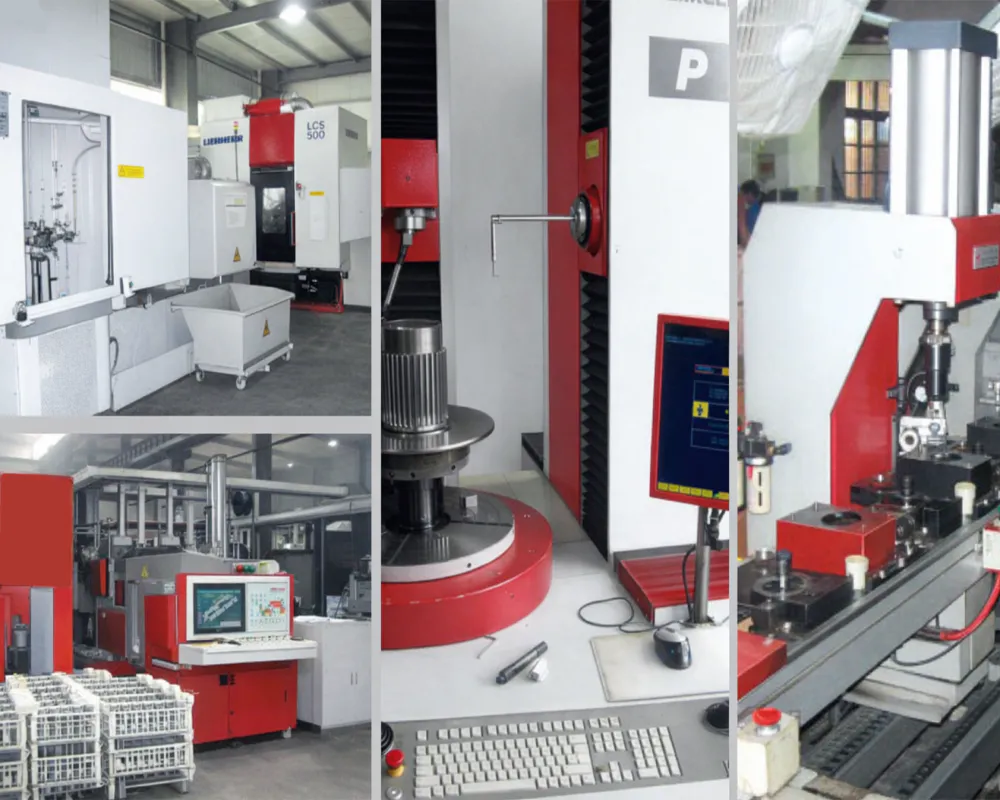
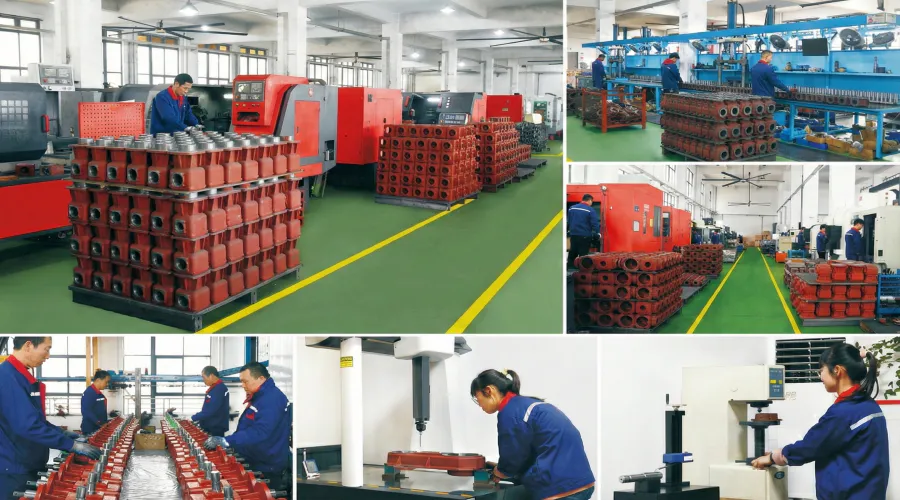
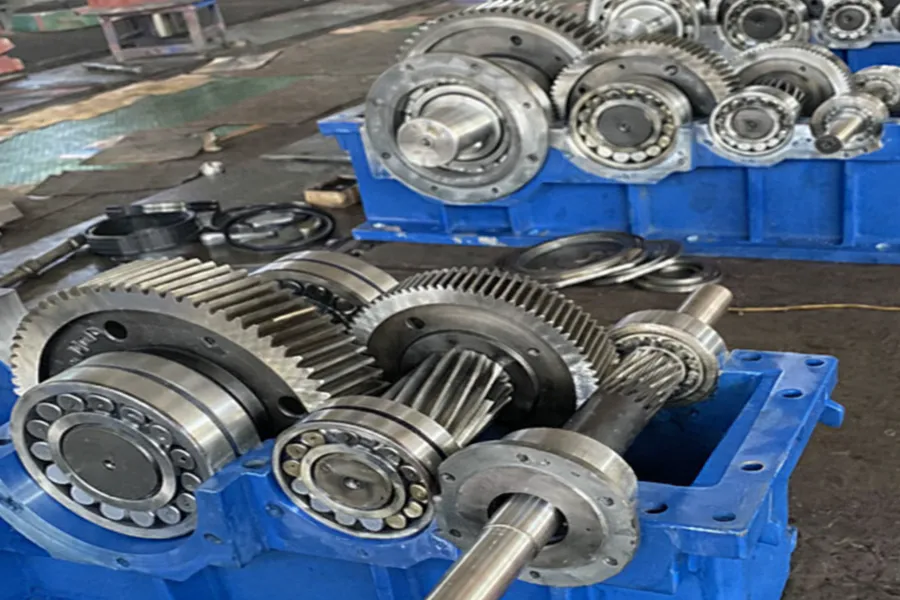
We are a specialized manufacturer of agricultural power transmission components, with years of direct factory experience designing and producing gearboxes, gear assemblies, and complete driveline systems for forage harvesting, tillage, baling, and general implement applications. Our facility operates CNC helical gear generators, gas carburizing furnaces, coordinate measuring machines, and a dedicated loaded run-in test bench. Each finished gearbox is individually tested under simulated field load before leaving the production floor. We serve OEM equipment builders and aftermarket distributors in North America, South America, Europe, Southeast Asia, and Oceania, offering both standard catalog units and custom-engineered configurations for specialized platform requirements. Quality is managed under ISO 9001:2015, and products are designed with reference to CE, AGMA, DIN, and ISO technical standards for broad international market acceptance.
WorkShop
11. Related Products – Full Driveline Support for Forage Harvesting
The EP-WR500 is one component in a complete agricultural forage harvester transmission ecosystem. Matching the gearbox with PTO shafts, couplings, and drive accessories designed for the same duty cycle ensures the entire driveline ages consistently and avoids premature failure of the weakest link. Our catalog extends across the full range of agricultural gearbox applications: rotary cutter gearboxes, rotary tiller gearboxes, fertilizer spreader gearboxes, feed mixer gearboxes, square baler gearboxes, round baler gearboxes, grader-driven rake gearboxes, universal PTO gearboxes, and forage harvester parts gearbox assemblies including the silage machine series described here.
PTO Shaft Assemblies
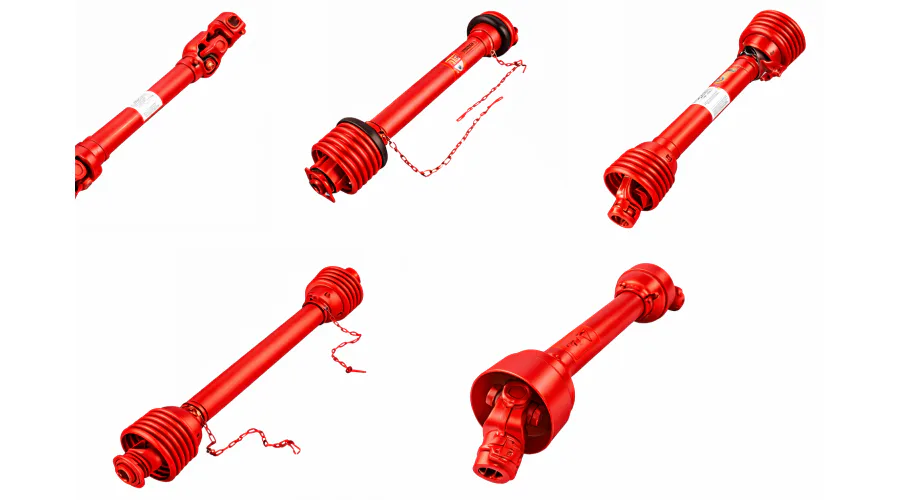
The PTO shaft is the physical link between tractor and harvester, and its specification directly affects gearbox longevity. Our catalog covers standard, wide-angle, and constant-velocity PTO shaft configurations with shear-bolt or friction-clutch overload protection. All shafts ship with safety guards compliant with EU and Brazilian regulatory requirements.
Sprockets and Chain Drive Components
For harvesters that use chain-driven secondary systems – feed roll drives, header height adjustment, or auxiliary conveyors – we produce ANSI and DIN/ISO roller chains with induction-hardened side plates and precision sprockets. Common agricultural chain pitches including #50, #60, and #80 are available from stock. Combined with the EP-WR500 gearbox, these components form a synchronized power transmission package with aligned maintenance intervals for the complete gearbox for forage harvester system. This 3-series header gearbox replacement compatibility also extends to chain-driven subsystems.
Frequently Asked Questions About the EP-WR500 Silage Gearbox
Q1: How does a silage machine gearbox work inside a four-disc forage harvester driven by a tractor PTO system?
A1: The PTO shaft delivers rotational power at 540 or 1000 RPM into the gearbox input shaft through a splined coupling. Inside the gearbox, a helical pinion on the input shaft meshes with a larger gear at a right angle, redirecting rotation and adjusting speed and torque. The output drives a distribution gear train in the header that splits power to the four cutting discs, keeping them synchronized so crop material feeds evenly into the chopping mechanism. The gearbox also absorbs the shock loads caused by varying crop density across the four disc positions.
Q2: Which other harvester platforms besides the German Champion use the 3-series header interface compatible with the EP-WR500?
A2: The 3-series header bolt pattern is used by several European and South American OEM forage harvester manufacturers for their disc-type headers. While we cannot list every platform due to ongoing design changes across the industry, the mounting bolt circle, shaft interface, and rotation direction should be verified against the EP-WR500 silage machine gearbox specification sheet before ordering. Our engineering team can review your harvester header drawings and confirm compatibility within 24 hours of receiving the documentation. This verification step prevents field-installation surprises and ensures correct fit on the first attempt.
Q3: How should I store a forage harvester gearbox during the off-season in southern Brazil or Argentina to prevent corrosion and seal damage?
A3: Before storage, run the gearbox briefly to warm the oil, then drain and refill with fresh 80W-90 GL-5 to the correct level. Clean the housing exterior of all crop sap, residue, and soil. Apply corrosion-preventive spray to exposed machined surfaces like the output shaft and flange faces. Store under cover in a dry location. Rotate the PTO input a few turns monthly during the off-season to redistribute oil across internal surfaces. At the start of the next season, check the oil level and inspect all seals before returning to service.
Q4: What tractor horsepower range works best with the EP-WR500 silage machine gearbox on a four-disc harvester platform?
A4: The EP-WR500 silage machine gearbox is rated at 80 HP nominal and 100 HP peak. It pairs well with tractors delivering 70 to 100 engine HP at the PTO. Tractors at the lower end of this range load the gearbox conservatively, extending component life. Tractors near the top take advantage of the peak capacity for heavy standing corn or dense alfalfa. Operating consistently above 100 HP PTO output risks chronic overload during shock events and is not recommended without consulting our engineering team about an uprated alternative.
Q5: Which silage machine gearbox parts are most commonly replaced during routine maintenance on a disc-type forage harvester?
A5: The most frequently replaced service items are shaft seals (typically every 1,500 to 2,000 hours depending on operating environment), tapered roller bearings (at approximately 4,000 to 5,000 hours), gear oil (every 500 hours), and the breather valve filter element (annually or when visibly clogged). The helical gears themselves rarely need replacement under normal conditions because the case-hardened 20CrMnTi teeth are engineered for extended service life. Always confirm model and serial number when ordering replacement parts.
Q6: How can I verify that a gearbox for self-propelled forage harvester meets Brazilian NR-12 safety requirements before installation?
A6: Practical verification involves four steps. First, confirm the supplier provides installation and maintenance manuals in Portuguese as required by NR-12 clause 12.128. Second, verify the existence of a risk assessment document aligned with ISO 12100 methodology. Third, check that safety labeling and guard mounting provisions are present on the physical gearbox. Fourth, for in-country installations, confirm a local CREA-registered engineer can issue the required Laudo de Validação and ART documents after the machine is assembled and ready for operation.
Éditeur : PXY