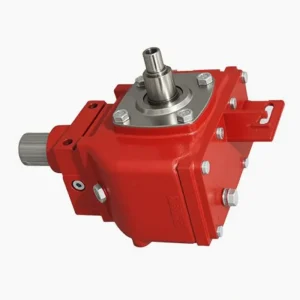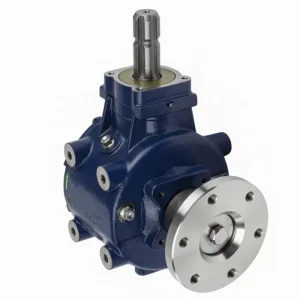
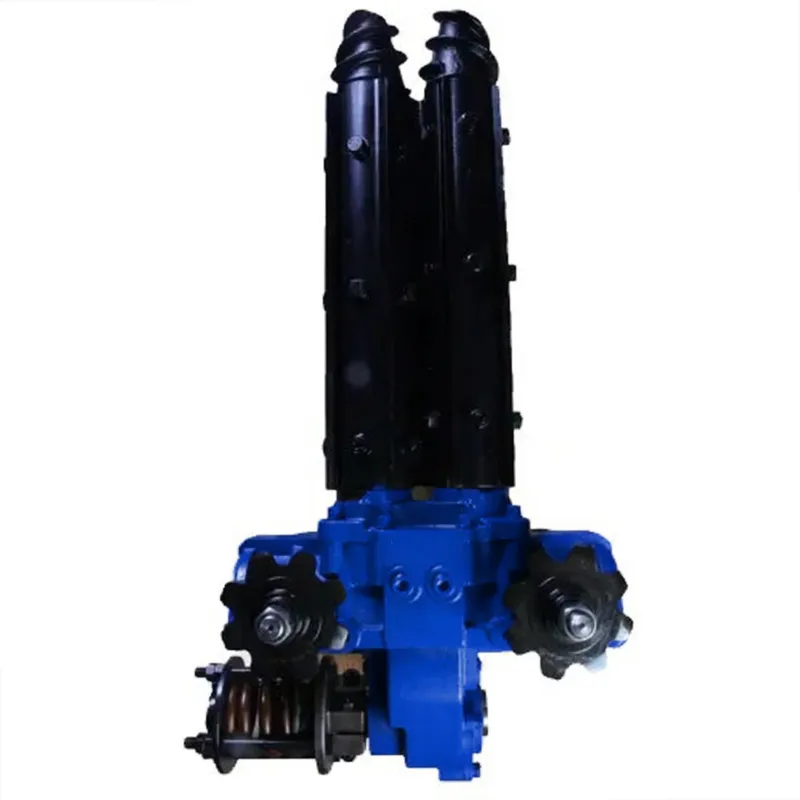
Description
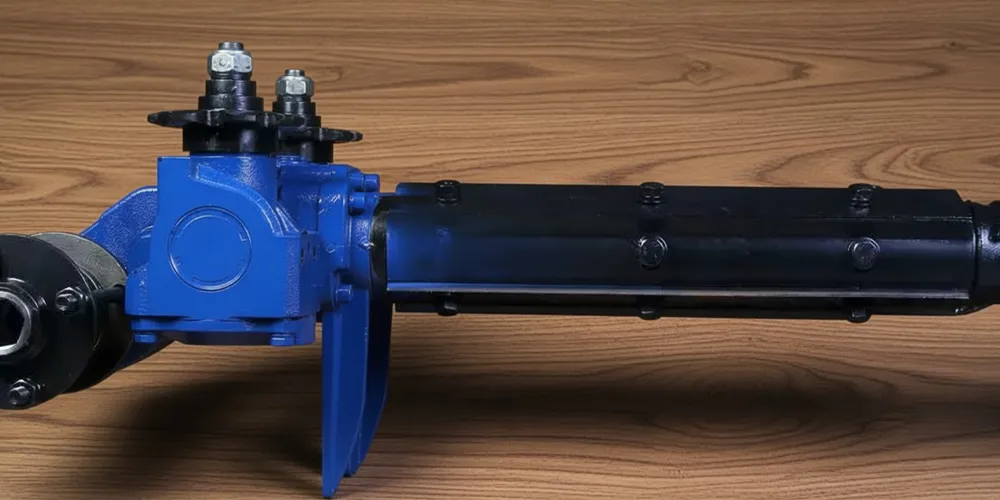
1. Technical Specifications of the EP-N669 Corn Headers Gearbox
| Paramètre | Specification |
|---|---|
| Modèle | EP-N669 |
| Reference Code | Replacement of Comer N669-J |
| Product Type | Corn Header Gearbox |
| Gearing Arrangement | Bevel / Miter |
| Vitesse d'entrée | 1000 RPM |
| Chain Wheel Ratio | 1.91:1 |
| Stalk Pulled Roller Ratio | 1:1.2 |
| Couple de sortie | As per Application Drawing |
| Vitesse de sortie | As per Application Drawing |
| Noise Level | Less than 92 dB at 1 metre |
| Net Weight | 82 kg |
| Matériaux de construction | HT250 Grey Cast Iron |
| Gear Material | 20CrMnTi Alloy Steel, Carburised |
| Shaft Material | 42CrMo Alloy Steel |
| Gear Tooth Hardness | 58-62 HRC |
| Bearing Type | Tapered Roller Bearings |
| Lubrication | Oil Bath, SAE 80W-90 GL-4 |
| Operating Temperature | -25°C to +95°C |
| Surface Finish | Customer-Specified Paint Color |
| Overall Dimensions (L × W × H) | 385 × 240 × 310 mm |
| Warranty | 2 Years for Correct Operation |
| Primary Application | Corn Harvester Header Drive |
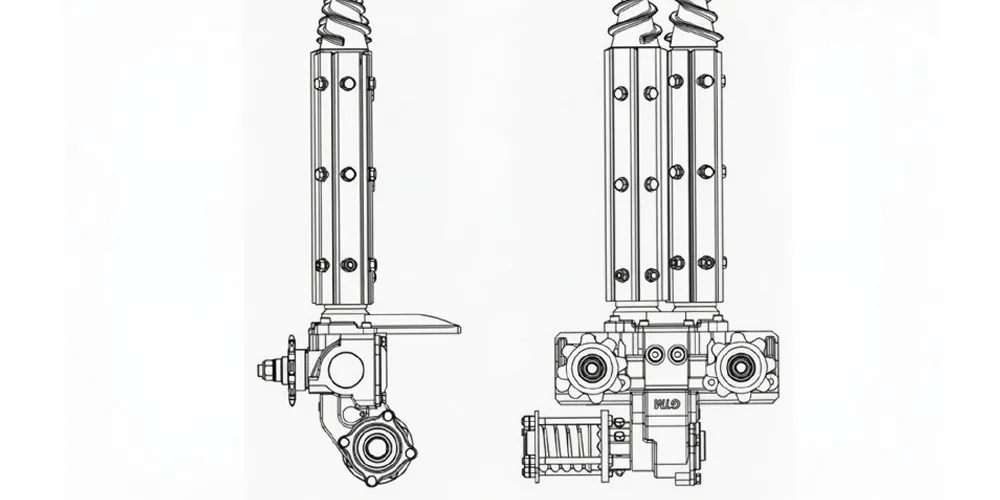
2. Five Key Advantages of the EP-N669 Corn Headers Gearbox
1. Quiet Operation Under 92 Decibels
Measured less than 92 dB at one metre in front of the housing, this Corn Headers Gearbox runs quietly enough that combine operators finish full shifts without the accumulated fatigue caused by gear whine. Bevel gears are lapped in matched pairs after carburising, and contact patterns are verified individually so tooth engagement stays smooth across the full load spectrum. Quiet running also extends lip-seal life because less vibration reaches the rubber elements during each rotation.
2. Direct Comer N669-J Fitment
The EP-N669 adopts identical bolt spacing, shaft projection, and flange register dimensions to the Comer N669-J original, so workshop technicians can perform the Corn Headers Gearbox Replacement of Comer Code in under two hours using ordinary combine service tools. No adapter plates, shaft extensions, or custom machining are required — the old unit comes out, the new unit goes in, the oil gets filled, and the combine heads back to the field ready for work.
3. Dual Ratio Design for Stalk Processing
Twin internal ratios — a 1.91:1 chain wheel drive combined with a 1:1.2 stalk pulled roller ratio — deliver the exact peripheral speeds needed for both the gathering chain and the snap rolls at the same time. This separation of ratios is fundamental to clean ear separation and reduces shelling losses during the critical first half-metre of stalk pull-through. It also limits mechanical stress peaks across the Corn Headers Gearbox parts when field load conditions change suddenly.
4. Reinforced Cast Iron Housing
At 82 kg total weight, the housing is deliberately substantial — thick wall sections absorb shock loads caused by rocks, broken stalks, or dense weed mats entering the row unit unexpectedly. Reinforced mounting bosses carry bolt-torque forces without deformation, and internal ribbing reduces flex under full torque. This robust construction is a key Corn Headers Gearbox quality marker that separates long-life units from cheaper alternatives operating in harsh Brazilian field conditions.
5. Custom Configuration Available
Where a Brazilian combine fleet uses non-standard input powers or alternative transmission ratios, the engineering desk can prepare a custom gearbox drawing matched to the exact application. This flexibility is especially valuable for refit shops rebuilding older combine platforms whose original specifications have drifted over decades of repairs. Custom drawing service ensures every replacement Corn Headers Gearbox behaves exactly like the original unit without compromise.
3. Working Principle – How Does the Corn Headers Gearbox Work
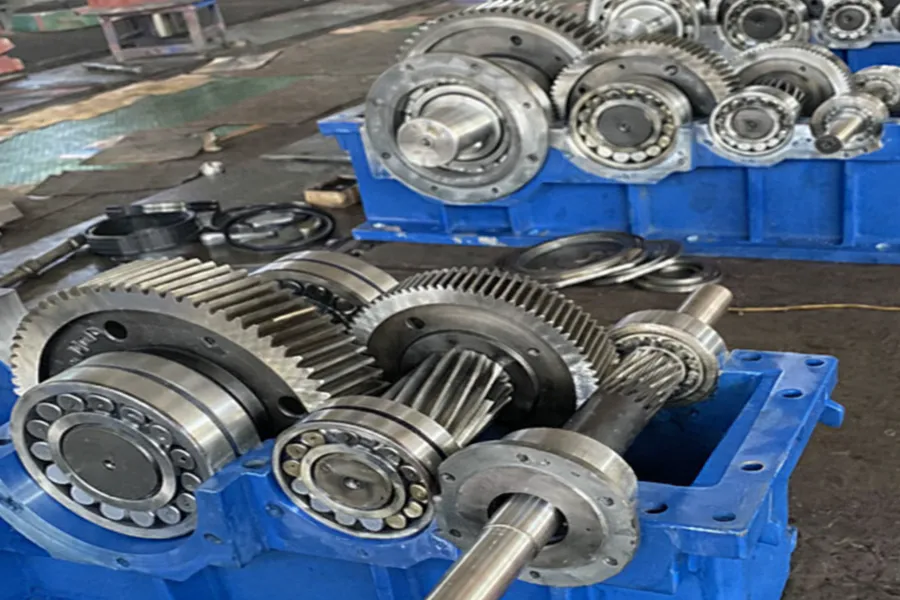
Understanding the Corn Headers Gearbox working principle allows mechanics to diagnose issues quickly and perform preventive maintenance intelligently. Inside the cast housing, power enters through the input shaft connected to the combine’s main drive chain and rotates at roughly 1000 RPM during normal operation. A precision-ground spiral bevel gear on the input shaft meshes with a mating bevel gear on the intermediate shaft, redirecting rotation by ninety degrees while simultaneously adjusting rotational speed. The chain wheel output on the secondary shaft then drives the gathering chain at the 1.91:1 reduction, which is exactly the belt velocity required to catch each stalk and feed it toward the snap rolls without bunching or rope-up.
Meanwhile, a second output path within the Corn Headers Gearbox drives the stalk-pulling rollers at a 1:1.2 ratio, giving the rolls a slightly higher peripheral velocity than the gathering chain. This speed differential causes the stalk to be pulled downward faster than the ear can move, which mechanically separates the corn ear from the stalk — the exact event that defines a clean harvest. The Corn Headers Gearbox operation depends on this speed relationship remaining consistent, which is why tapered roller bearings preset at the factory hold the shafts in exact alignment over thousands of hours. Oil-bath lubrication coats every gear tooth continuously while the heavy cast housing absorbs vibration before it can reach the combine chassis or the operator cabin.
4. Materials Used in the EP-N669 Corn Headers Gearbox
Material choice determines almost every measurable outcome of a Corn Headers Gearbox over its service life, so each internal component of the EP-N669 is specified with deliberate metallurgical intent. The main housing is sand-cast from HT250 grey cast iron because this grade offers excellent vibration damping, natural sliding-surface lubricity, and forgiving machinability. Grey iron also resists the micro-stress cracking that thin aluminium housings tend to develop after years of thermal cycling on hot Brazilian combine platforms that work from early-morning dew all the way through to mid-afternoon temperatures above forty degrees. The ribbing pattern on the casting is designed to add stiffness without creating oil pocket traps.
The spiral bevel gears themselves are forged from 20CrMnTi chromium-manganese-titanium alloy steel, then gas-carburised, oil-quenched, and tempered to achieve a 0.9-1.3 mm case depth with 58-62 HRC surface hardness while retaining a tough core. Shafts are machined from 42CrMo chromium-molybdenum alloy steel, induction-hardened at the bearing journals and spline zones. Tapered roller bearings arrive as matched pairs and are seated with factory-set preload. Lip seals are nitrile butadiene rubber rated for agricultural gear oil, and external fasteners are grade 8.8 zinc-plated to resist the salty coastal atmosphere surrounding the Santos and Paranaguá ports. This material discipline is why the Corn Headers Gearbox benefits show up measurably on the bottom line of long-season operations.
5. Application Scenarios for the Corn Headers Gearbox
The Corn Headers Gearbox functions across several distinct harvesting environments, each placing slightly different demands on the drivetrain. The EP-N669 was designed with the four scenarios below clearly in mind — all of them common throughout the Brazilian and wider Mercosur agricultural calendar where combine utilisation is measured in hectares per shift.
Commercial Grain Corn Harvesting
The dominant application across Mato Grosso and Goiás involves combine harvesters fitted with 8, 12, or 16-row corn header attachments processing dryland grain corn at planting densities above 75,000 plants per hectare. Here the Corn Headers Gearbox operates continuously for 10-14 hour shifts, with the 1.91:1 chain wheel ratio matching the ground speed typical of mature dryland corn. The two-year warranty on correct operation gives fleet managers confidence during the peak safrinha window.
Silage Corn Chopping Operations
When a corn crop is destined for whole-plant silage rather than dry grain, the combine runs at different ground speeds and the gearbox must still deliver clean stalk feeding into the snap rolls. Dairy operations in Rio Grande do Sul and Santa Catarina use the tractor pto driven Corn Headers Gearbox configuration on trailed forage harvesters, giving smaller operations the productivity of a dedicated silage machine without the capital cost of a self-propelled unit.
Seed Corn Production Harvests
Seed production farms demand particularly gentle stalk handling to avoid mechanical damage to the cob, because damaged kernels are rejected during seed grading. The EP-N669 Corn Headers Gearbox low-noise profile and smooth running characteristics reduce vibration transmitted into the header frame, protecting ear integrity during the critical first pass through each row. Seed producers across Paraná value this smoother behaviour enough to justify premium specification across their combine fleet.
Contract Harvesting Fleet Use
Independent contractors moving from farm to farm during the harvest season accumulate hours faster than any owner-operator, which means replacement component consumption is proportionally higher. Contractors across Argentina, Paraguay, and southern Brazil stock spare Corn Headers Gearbox units on their service trucks so that a field failure can be resolved in one afternoon rather than losing two full harvesting days waiting for parts to be delivered from distant distributors.
6. Regulatory Compliance and International Standards
Modern agricultural equipment trades across borders constantly, and a responsible Corn Headers Gearbox Manufacturer must navigate several overlapping regulatory frameworks to serve global customers properly. The EP-N669 is engineered with these requirements clearly in mind, supporting importers and distributors who need compliant documentation for smooth customs clearance.
Brazil: Agricultural machinery operating on Brazilian farms falls under NR-12 (Norma Regulamentadora 12) issued by the Ministry of Labour and Employment, covering machine safety, guarding, and emergency stops. NR-31 addresses rural work health and safety specifically, including protection around rotating drive components on combine headers. ABNT NBR technical standards, issued by the Associação Brasileira de Normas Técnicas, provide detailed rules for tractor-implement interfaces. INMETRO certification may be required at implement level, and customs clearance through SISCOMEX requires complete commercial invoices and packing documentation for every shipment.
European Union: CE marking under Machinery Directive 2006/42/EC applies to agricultural implements entering any EU member state, covering mechanical hazards, noise emission limits (which is why the under-92-dB noise specification matters), and technical documentation. ISO 500 governs PTO shaft dimensions and connection profiles worldwide. Directive 2000/14/EC covers outdoor noise emission from equipment used in the open, which directly intersects with combine Corn Headers Gearbox operation during the harvest window.
United States: ASABE/ANSI S205.3 defines PTO shaft standards for North America, OSHA 29 CFR 1928.57 requires appropriate guarding on agricultural machinery, and SAE J1362 covers agricultural tractor PTO guards. EPA Tier 4 engine regulations indirectly affect header gearbox specifications through torque and speed requirements applied to newer combine platforms.
Global Quality Systems: ISO 9001:2015 quality management certification and ISO 14001:2015 environmental management certification are expected from any serious Corn Headers Gearbox Manufacturer, confirming that production processes, inspection protocols, and environmental handling of used gear oil and metal swarf all meet international norms.
7. Corn Headers Gearbox Advantages and Disadvantages
A fair review of the Corn Headers Gearbox advantages and disadvantages helps buyers match the right component to the right application. On the advantage side, a dedicated header gearbox provides purpose-engineered speed ratios, bevel gear 90-degree redirection within a compact housing, simple oil-bath lubrication, and the ability to isolate header drive failures from the rest of the combine. The EP-N669 adds direct Comer N669-J compatibility, low-noise running, and a two-year warranty covering correct operation. These Corn Headers Gearbox benefits translate directly into less downtime during the harvest window when every hour counts.
On the disadvantage side, bevel gearbox designs remain sensitive to contamination from water or foreign material in the gear oil, require periodic oil changes to maintain gear-surface protection, and must be kept close to level during operation so lubrication reaches the upper bearing. Any failure of the Corn Headers Gearbox effects the entire header row unit it drives, which means preventive maintenance matters far more than reactive repair. Fortunately these limits are well understood, and straightforward Corn Headers Gearbox maintenance habits eliminate most in-service failures before they start.
8. About Us
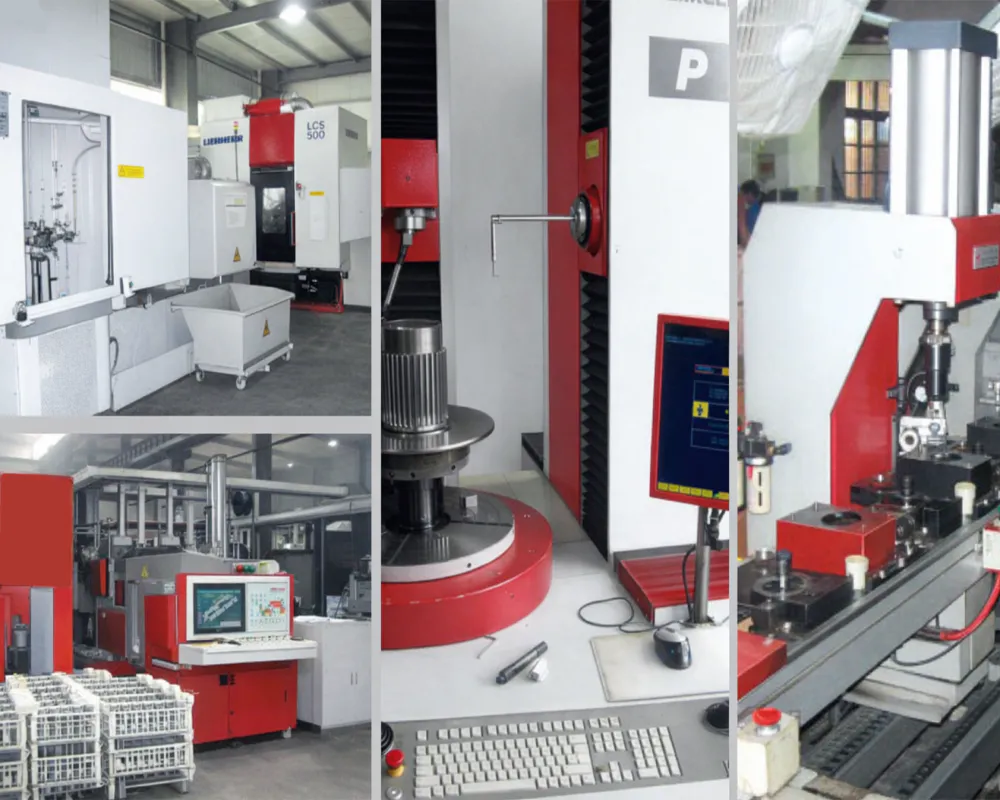
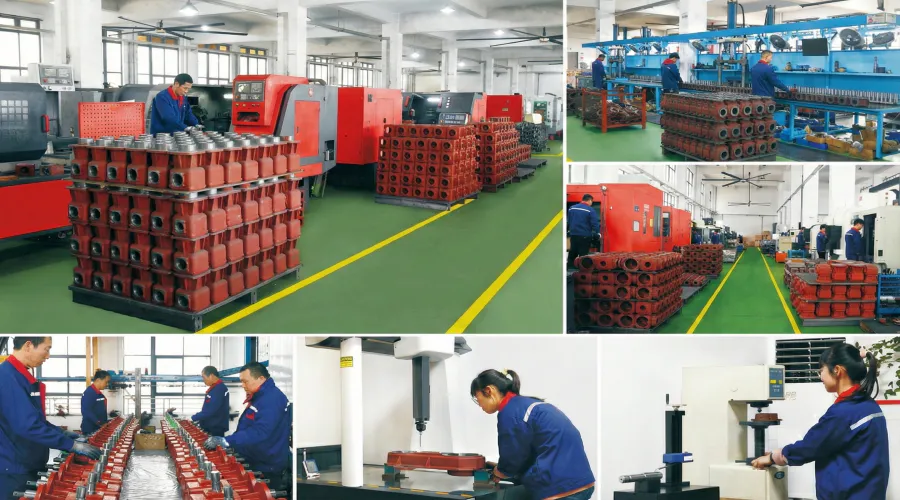
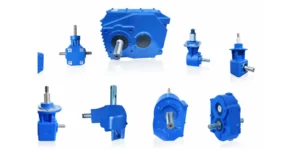
Our expertise spans the complete lifecycle of a Corn Headers Gearbox — from forged steel bar arriving at partner mills, through CNC gear hobbing, gas carburising, oil quenching, precision grinding, housing casting, machining, and final assembly in a dedicated clean-area workshop.
Our commitment extends well beyond manufacturing. A technical support desk responds to engineering enquiries within one business day in Portuguese, Spanish, and English, and ISO 9001:2015 and ISO 14001:2015 certifications are current and independently audited.
Workshop
9. Related Products – One-Stop Agricultural Transmission Solutions
Beyond the Corn Headers Gearbox family, we manufacture the full range of matched power transmission components designed to work together as a coordinated combine drivetrain system. Purchasing PTO shafts, sprocket sets, and auxiliary motors alongside your gearbox order simplifies inventory management, guarantees shaft-to-gearbox compatibility, and reduces total landed cost for the receiving warehouse. Single-source supply also simplifies warranty claims and technical support coordination across the entire drivetrain package.
PTO Shaft for Corn Header Drive
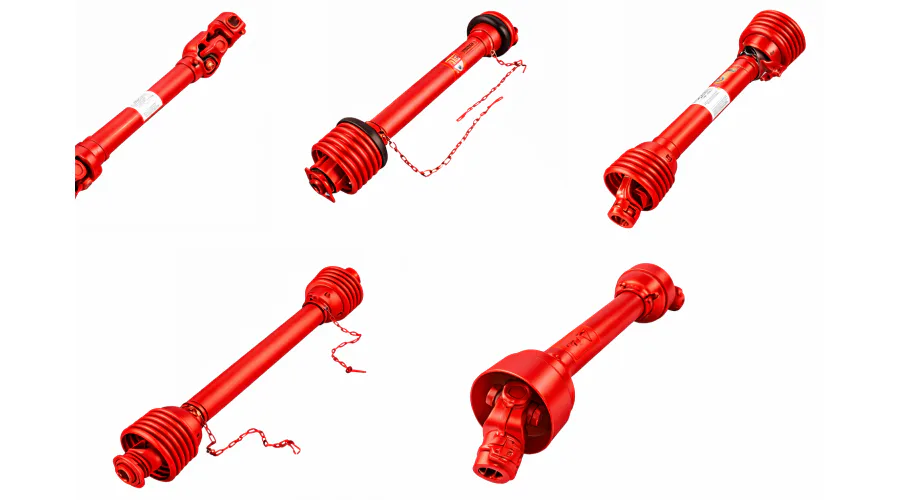
A properly matched PTO Shaft is the critical link between tractor power output and the gearbox input on trailed corn header configurations. Telescoping driveshafts with wide-angle joints suit the sharp headland turns that combine operators make routinely, ensuring the Corn Headers Gearbox receives clean torque delivery without binding or vibration at the spline.aaAa
Sprockets and Chain Drive Components
Gathering chain sprockets, idler pulleys, and tensioner components form the downstream drive path from the Corn Headers Gearbox output to the row unit gathering chains. Correctly specified sprocket profiles prevent premature chain wear and maintain consistent pitch engagement during high-volume harvesting operations across long daily shifts on combine platforms.

Foire aux questions
Q1. How does the Corn Headers Gearbox work inside a combine harvester during the Brazilian corn safrinha season?
A1. Power enters the Corn Headers Gearbox input shaft from the combine main drive at around 1000 RPM, flows through precision spiral bevel gears that redirect rotation by ninety degrees, then splits into two output paths. One output drives the gathering chain at a 1.91:1 reduction, while the second drives the stalk pulled rollers at a 1:1.2 ratio, giving the speed differential that mechanically separates each corn ear from its stalk during field operation.
Q2. How do Corn Headers Gearbox benefits compare between oil-bath lubricated designs and grease-packed alternatives on combine row units?
A2. Oil-bath lubrication provides continuous coating of every gear tooth and bearing surface during operation, transferring heat away from the contact zones more efficiently than grease can. Grease-packed designs simplify seal requirements but tend to overheat under the long work shifts typical of Brazilian corn harvesting, which is why serious combine platforms specify oil-bath Corn Headers Gearbox units for main row drive.
Q3. What are the main Corn Headers Gearbox advantages and disadvantages for Brazilian farms running large combine fleets during harvest?
A3. Advantages include compact ninety-degree power redirection, dedicated speed ratios for chain and roller drives, oil-bath lubrication simplicity, and quiet operation below 92 dB. Disadvantages include sensitivity to oil contamination, the need for level operation to maintain lubrication, and the fact that any single gearbox failure stops the entire row unit until replacement is completed in the workshop.
Q4. What should workshop managers check when diagnosing a noisy Corn Headers Gearbox on a combine harvester before the next harvest run?
A4. First confirm oil level and oil condition, then check input and output shafts for axial play that indicates bearing wear, inspect external bolts for loosening, and verify mounting flange alignment. If noise persists despite correct oil and tight fasteners, schedule a Corn Headers Gearbox replacement before field work resumes to avoid a mid-harvest failure that would stop the entire combine.
Q5. Which Corn Headers Gearbox parts require the most frequent inspection on combines working continuous shifts in Mato Grosso?
A5. The most frequently inspected items are the input and output lip seals for oil weep signs, the oil level sight glass for fluid condition, external bolt torque at the mounting flange, and the input spline for wear patterns. Gear oil should be sampled for metal content during mid-season preventive maintenance to catch any abnormal internal wear before it becomes a field failure.
Q6. What is the correct Corn Headers Gearbox operation procedure for mechanics performing first start-up after installation?
A6. Fill the housing to the marked level with fresh SAE 80W-90 GL-4 gear oil, rotate the input shaft by hand to confirm smooth meshing, then engage the combine PTO at low idle for two to three minutes before gradually increasing speed. Monitor external seal areas for weep and listen for unusual noise during the first hour of field work to catch any misalignment issue early.
Q7. How does a quality Corn Headers Gearbox Manufacturer confirm dimensional compatibility with the Comer N669-J reference code?
A7. A professional Corn Headers Gearbox Manufacturer maintains the original Comer reference drawings in its engineering archive, measures each EP-N669 unit against critical dimensional features during quality inspection, and publishes a detailed fitment sheet for customer technical review. Dimensional audit reports are available on request to support workshop confidence before any combine refit program begins.
Q8. Which type of tractor pto driven Corn Headers Gearbox configuration suits medium-sized family farms in southern Brazilian dairy regions?
A8. For medium operations running trailed forage harvesters behind 80-120 HP tractors, the tractor pto driven Corn Headers Gearbox configuration with 1000 RPM input and bevel gear architecture is the mainstream choice. This setup provides the productivity needed for whole-plant silage harvesting without the capital cost of a self-propelled forage harvester, making it popular across Santa Catarina and Rio Grande do Sul dairy country.
Éditeur : PXY